September 3, 2026
What Is Ubiquinone? Its Equivalent Herbs In Ayurveda
Abstract
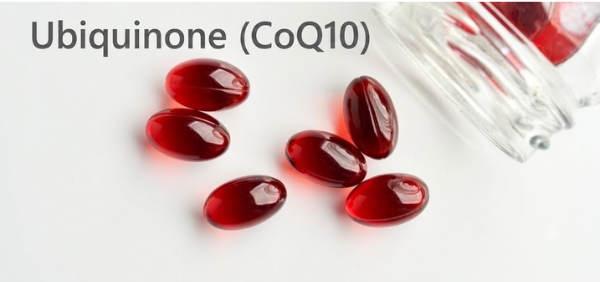
Ubiquinone, widely recognised as Coenzyme Q10 (CoQ10), is a fat-soluble, vitamin-like quinone compound concentrated within cellular mitochondria. It plays an indispensable role as an electron carrier in the respiratory chain, facilitating the synthesis of adenosine triphosphate (ATP) while operating as a potent lipid-soluble antioxidant. Because heart tissue, skeletal muscle, the liver, and the brain possess immense metabolic demands, they rely heavily on adequate ubiquinone levels to sustain functional vitality and combat oxidative damage. As human ageing and metabolic stress lead to a decline in endogenously synthesised ubiquinone, interest in cellular energy restoration has grown. While classical Ayurveda does not identify ubiquinone by its modern chemical nomenclature, its fundamental physiological actions directly correlate with Prana (vital life force), Ojas (cellular essence and immunity), and Agni (metabolic fire operating at the tissue or Dhatu level). This article explores the biochemical role, mechanisms, and clinical significance of ubiquinone alongside its botanical and mineral counterparts in Ayurvedic phytotherapy, including Arjuna, Shilajit, Ashwagandha, Amla, and Bala.
Introduction
Modern physiology recognises cells as highly organised systems that continuously require energy to maintain their functions. First isolated in 1957, its name originates from the word “ubiquitous,” highlighting its presence across virtually all human tissues and living organisms. Much of this energy is produced inside mitochondria, which are often described as the energy-producing organelles of the cell. Coenzyme Q10 is an important component of this mitochondrial system. CoQ10 occurs naturally in the body and is particularly concentrated in tissues with substantial energy requirements. According to the National Centre for Complementary and Integrative Health, CoQ10 is naturally present throughout the body, with comparatively high levels in the heart, liver, kidneys, and pancreas. The term ubiquinone refers specifically to the oxidised form of CoQ10. It continuously undergoes oxidation and reduction within cells, allowing it to participate in electron transfer and antioxidant processes. Its ability to move between these forms is fundamental to its biological activity. Interest in CoQ10 has increased because mitochondrial dysfunction and oxidative stress are involved in many chronic conditions. However, this does not mean that CoQ10 supplementation is universally beneficial. Clinical research has produced mixed findings, and its usefulness depends on the particular health condition, formulation, dose, and individual characteristics.
What Is Ubiquinone?
Ubiquinone is a quinone compound with a long isoprenoid side chain that allows it to function within the lipid environment of mitochondrial membranes. In humans, the predominant form is commonly referred to as CoQ10 because it contains ten isoprenoid units. The word “ubiquinone” reflects its widespread distribution in biological tissues. It is synthesised within the body and is also present in certain foods. CoQ10 exists mainly in two interconvertible forms:
- Ubiquinone: the oxidised form.
- Ubiquinol: the reduced form.
During mitochondrial electron transport, CoQ10 accepts and transfers electrons between different components of the respiratory chain. It therefore functions as a mobile electron carrier within the inner mitochondrial membrane. Its biological importance extends beyond energy production. Reduced CoQ10, particularly ubiquinol, contributes to antioxidant defence by participating in the management of oxidative processes within lipid membranes.
Biochemical Functions and Pathophysiology of Ubiquinone
Ubiquinone exists in three redox states: fully oxidised (ubiquinone), an intermediate semiquinone radical, and fully reduced (ubiquinol). This capacity to accept and donate electrons governs its physiological utility:
Mitochondrial ATP Synthesis
Ubiquinone accepts electrons derived from Complex I (NADH dehydrogenase) and Complex II (succinate dehydrogenase) and transfers them to Complex III (cytochrome bc1 complex) along the electron transport chain. This transfer generates the proton gradient across the inner mitochondrial membrane necessary for ATP synthase to generate ATP.
Lipid Antioxidant Defence
In its reduced ubiquinol form, it neutralises free radicals within the lipid bilayers of cellular membranes and lipoprotein particles. It also regenerates other antioxidants, such as alpha-tocopherol (Vitamin E) and ascorbate (Vitamin C), back into their active forms.
Endothelial and Cardiovascular Protection
Ubiquinone protects vascular endothelial cells from oxidative damage, inhibits low-density lipoprotein (LDL) oxidation, supports nitric oxide bioactivity, and preserves myocardial contractility.
Mitochondrial Permeability Modulation
It aids in regulating the opening of the mitochondrial permeability transition pore, thereby preventing stress-induced apoptotic cell death.
When ubiquinone synthesis drops below critical levels, cells experience mitochondrial dysfunction, increased oxidative stress, reduced contractile force in cardiac muscle, and metabolic fatigue.
Dietary Sources and Body Synthesis
The human body synthesises CoQ10 through a complex biochemical pathway. Dietary sources provide additional amounts, although food generally contributes much less than endogenous synthesis. CoQ10 is present in foods such as meat, oily fish, organ meats, nuts, seeds, and certain vegetable oils. Because it is fat-soluble, absorption is influenced by the food matrix and gastrointestinal conditions. CoQ10 concentrations and tissue availability can change with age, health status, and certain medications. Statins have received particular attention because they inhibit the mevalonate pathway, which is involved in the synthesis of both cholesterol and CoQ10. Despite this biochemical relationship, clinical trials have produced inconsistent findings regarding whether CoQ10 supplementation reliably improves statin-associated muscle symptoms.
Ubiquinone and Ubiquinol: What Is the Difference?
Ubiquinone and ubiquinol are not two completely separate nutrients. They are different redox states of the same CoQ10 system. Ubiquinone is the oxidised form, while ubiquinol is the reduced form. Inside cells, CoQ10 continuously moves between these forms as it participates in electron transfer. Supplement products may contain either form. Ubiquinol is sometimes promoted as having superior absorption, particularly in older adults, but the practical significance of differences between formulations depends on the product, dose, individual absorption, and clinical objective. Therefore, the terms should not be used as though they represent two unrelated substances.
Ayurvedic Insight: Bioenergetics, Agni, and Ojas
Ayurvedic physiology interprets cellular mechanics through functional, non-material concepts. The mitochondrial electron transport system aligns closely with Dhatvagni—the micro-metabolic fire governing cellular digestion, energy transformation, and tissue synthesis. When Dhatvagni (tissue-level metabolic fire) is robust, cells efficiently transform nutrients (Ahara Rasa – digested nutritional essence) into healthy tissue structures (Dhatus – body tissues) and produce Ojas (vital essence). Ojas (vital essence) represents the refined essence of all body tissues, providing immunological defence, physical endurance, cellular stability, and vitality. Ubiquinone’s dual capacity to generate cellular energy (ATP) and shield membranes from oxidative destruction correlates directly with the functions of Dhatvagni (tissue-level metabolic fire) and Ojas (vital essence). Furthermore, the decline of ubiquinone due to age or stress reflects a state of Vata dominance (Vata aggravation) and Dhatu Kshaya (tissue depletion). In Ayurvedic pathology, an accumulation of metabolic waste (Ama – metabolic toxins/waste) or a weakening of Agni blocks the subtle channels (Srotas – bodily transport channels), potentially impairing cellular nourishment. Rejuvenative interventions (Rasayanas – rejuvenative therapies) are traditionally designed to support healthy channels, strengthen Dhatvagni, and nourish Ojas—conceptually paralleling the goal of supporting cellular energy and resilience.
Ayurvedic Equivalent Herbs and Bio-Complexes
While no single plant yields pure ubiquinone in isolated pharmaceutical quantities, several Ayurvedic plants and mineral complexes contain naturally occurring coenzymes, phytosterols, quinones, and potent antioxidant polyphenols that reproduce or enhance ubiquinone’s physiological actions.
1. Arjuna (Terminalia arjuna)
Arjuna is the primary herb for cardiovascular health (Hridya) in Ayurveda. Modern phytochemical studies reveal that Terminalia arjuna bark naturally contains trace amounts of CoQ10 alongside bioflavonoids, arjunolic acid, and oligomeric proanthocyanidins. Like ubiquinone, Arjuna enhances myocardial contractility, improves left ventricular function, prevents lipid peroxidation, and protects cardiac tissues against ischemic injury. It strengthens cardiac muscle energy output, making it the closest functional equivalent to ubiquinone in cardiac care.
2. Shilajit (Asphaltum punjabianum)
Shilajit is a mineral-rich organo-complex exuded from high-altitude rocks, renowned as a potent Rasayana. It is abundant in fulvic acid, humic acids, and dibenzo-alpha-pyrones (DAPs). Dibenzo-alpha-pyrones in Shilajit act as electron reservoirs, preserving and restoring ubiquinone levels inside mitochondria. Clinical and experimental research demonstrates that combining Shilajit with ubiquinone dramatically boosts cellular ATP production compared to ubiquinone alone. Shilajit prevents the degradation of CoQ10 into its inactive forms, facilitating continuous electron transport during metabolic stress.
3. Ashwagandha (Withania somnifera)
Ashwagandha is an adaptogenic herb that mitigates physical and mental fatigue while supporting cellular vitality. It is rich in withanolides, and it preserves mitochondrial enzyme complexes (such as succinate dehydrogenase and cytochrome c oxidase) under oxidative stress. It upregulates endogenous antioxidant enzymes—including superoxide dismutase (SOD), catalase, and glutathione peroxidase—mirroring ubiquinone’s protective role against free-radical damage.
4. Amla (Emblica officinalis / Phyllanthus emblica)
Amla is one of the richest natural sources of vitamin C, low-molecular-weight hydrolyzable tannins (emblicanin A and B), and polyphenols. Emblicanins create a cascading antioxidant effect similar to the ubiquinone-ubiquinol recycling loop. Amla protects mitochondrial membranes from lipid peroxidation, scavenges hydroxyl radicals, supports lipid metabolism, and promotes endothelial integrity.
Conclusion
Ubiquinone, or Coenzyme Q10, is an essential endogenous compound involved primarily in mitochondrial electron transport and cellular energy production. Its reduced form, ubiquinol, also participates in antioxidant protection. Because tissues such as the heart and skeletal muscles have substantial energy requirements, CoQ10 has attracted considerable interest in cardiovascular, metabolic, neurological, and mitochondrial research. Ayurveda does not contain a direct equivalent of ubiquinone. Instead, several traditional substances show functional areas of overlap with some biological roles associated with CoQ10. Arjuna is particularly relevant to cardiovascular support, while Ashwagandha, Amalaki, and Shilajit are traditionally associated with Rasayana, resilience, antioxidant activity, or energy-related functions. The scientifically accurate way to describe these herbs is as Ayurvedic substances with complementary or overlapping functional properties, rather than as replacements for CoQ10. Understanding this distinction allows traditional Ayurvedic knowledge and modern mitochondrial biochemistry to be discussed together without equating two fundamentally different medical frameworks.

Dr. Vikram Chauhan
https://www.planetayurveda.comDr. Vikram Chauhan (MD - Ayurveda) is a Globally Renowned Ayurveda Physician with Expertise of more than 25 Years. He is the CEO & Founder of http://www.PlanetAyurveda.com, a leading Ayurveda Brand, Manufacturing, and Export Company with a Chain of Clinics and Branches in the US, Europe, Africa, Southeast Asia, India, and other parts of the World. He is also an Ayurveda Author who has written Books on Ayurveda, translated into Many European Languages. One of his Books is "Ayurveda – God’s Manual for Healing". He is on a Mission to Spread Ayurveda All Over the Planet through all the Possible Mediums. With his Vast Experience in Herbs and their Applied Uses, he is successfully treating Numerous Patients suffering from Various Ailments with the help of the Purest Herbal Supplements, Diet, and Lifestyle, according to the Principles of Ayurveda. For More Details, visit - www.planetayurveda.com, www.alwaysayurveda.com
View more posts from this author