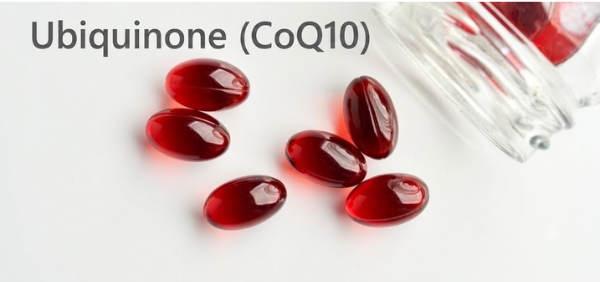
What Is Ubiquinone? Its Equivalent Herbs In Ayurveda
Abstract
The human body depends on a continuous supply of energy to perform essential functions such as maintaining heartbeat, supporting brain activity, moving muscles, and carrying out cellular metabolism. Mitochondria play a central role in this process by converting nutrients into usable cellular energy. Ubiquinone, commonly known as Coenzyme Q10 (CoQ10), is an important naturally occurring compound involved in mitochondrial energy production and antioxidant protection. It is found throughout the body, with higher concentrations in organs that have greater energy requirements. Ubiquinone exists in an oxidized form, while its reduced form is known as ubiquinol. Both forms participate in the CoQ10 cycle and contribute to cellular function. CoQ10 has attracted interest in cardiovascular health, mitochondrial function, neurological wellness, physical energy, and certain other health conditions. Ayurveda does not contain a herb that is chemically identical to CoQ10, but several herbs possess overlapping properties related to antioxidant protection, cardiovascular health, nervous-system support, vitality, and healthy aging. This article explains ubiquinone, its functions, its dietary sources, and Ayurvedic herbs that can be considered functional counterparts rather than direct chemical substitutes.

Introduction
Every cell in the human body requires energy. The heart continuously contracts, the brain maintains electrical activity, muscles perform movement, and organs carry out thousands of metabolic reactions throughout the day. These activities depend on ATP, the primary energy currency of cells. Mitochondria are responsible for a major part of ATP production. During this process, nutrients derived from food undergo a series of biochemical reactions that ultimately transfer energy into ATP. Coenzyme Q10 is one of the important molecules participating in this mitochondrial process. Coenzyme Q10 is naturally synthesized by the body and is also obtained in smaller amounts from food. It is particularly abundant in tissues with high energy requirements, including the heart, kidneys, liver, and skeletal muscles. CoQ10 is also associated with antioxidant protection because it participates in the protection of lipid-containing cellular structures from oxidative damage. These two properties, energy metabolism and antioxidant activity form the basis for much of the interest surrounding ubiquinone.
At the same time, Ayurveda contains numerous herbs used for promoting vitality, supporting cardiovascular health, nourishing the nervous system, maintaining digestion, and protecting the body from oxidative stress. Some of these herbs have biological activities that overlap with particular functions associated with CoQ10. The comparison is based on overlapping biological functions rather than identical molecular mechanisms.
What Is Ubiquinone?
Ubiquinone is the oxidized form of Coenzyme Q10, a fat-soluble quinone compound naturally present in human tissues. The word “ubiquinone” reflects its widespread distribution in living cells. It is found particularly within mitochondrial membranes, where it acts as an electron carrier during cellular respiration.
CoQ10 can exist in two interconvertible forms:
- Ubiquinone: oxidized form
- Ubiquinol: reduced form
The body continuously converts one form into the other depending on the metabolic reactions taking place within cells. CoQ10 is therefore not simply an antioxidant. Its fundamental biological importance comes from its participation in mitochondrial electron transport and energy production.
Why Is Coenzyme Q10 Important?
CoQ10 has two major biological roles.
The first is its participation in mitochondrial energy production. The second is its contribution to antioxidant protection.
These functions are closely connected because mitochondria generate energy through reactions involving electron transfer, and normal mitochondrial metabolism also produces reactive oxygen species.
CoQ10 helps maintain the appropriate redox balance required for normal cellular function.
Ubiquinone and Mitochondrial Energy Production
The mitochondria contain an electron transport chain consisting of several protein complexes. Electrons generated during the metabolism of carbohydrates, fats, and proteins move through this system.
Ubiquinone acts as a mobile electron carrier within the mitochondrial inner membrane. It accepts electrons from Complex I and Complex II and transfers them toward Complex III.
This electron movement contributes to the generation of a proton gradient across the mitochondrial membrane. ATP synthase subsequently uses this gradient to produce ATP.
In simple terms, ubiquinone helps the mitochondria transfer energy efficiently during cellular respiration.
This function is particularly important in tissues that consume large amounts of energy, such as:
- Heart muscle
- Skeletal muscles
- Brain
- Kidneys
- Liver
The body’s ability to synthesize CoQ10 is therefore an important component of normal cellular metabolism.
Ubiquinone as an Antioxidant
Normal cellular metabolism produces reactive oxygen species. The body has several antioxidant systems that help maintain balance between oxidants and antioxidants.
CoQ10 participates in this antioxidant network, particularly within lipid-containing cellular membranes.
The reduced form, ubiquinol, has an important antioxidant role because it can donate electrons and participate in the regeneration of antioxidant capacity.
This is one reason CoQ10 has attracted interest in conditions associated with oxidative stress.
It is important, however, to distinguish between having antioxidant activity and proving that supplementation treats a particular disease. A compound can have an established physiological role without supplementation producing the same benefit in every health condition.
Ubiquinone and Ubiquinol: What Is the Difference?
Ubiquinone and ubiquinol are two forms of the same CoQ10 system.
Ubiquinone
Ubiquinone is the oxidized form. It accepts electrons during mitochondrial electron transport and can subsequently be converted into ubiquinol.
Ubiquinol
Ubiquinol is the reduced form of CoQ10. It participates in antioxidant reactions and can donate electrons before being converted back to ubiquinone.
The two forms continuously undergo oxidation and reduction within the body.
This means that the distinction between ubiquinone and ubiquinol should not be interpreted as two completely different substances. They are different metabolic states of the same CoQ10 molecule.
Where Is CoQ10 Found Naturally?
The body produces CoQ10, but dietary sources also contribute smaller quantities. Food sources include:
- Meat
- Organ meats
- Fatty fish
- Nuts
- Seeds
- Vegetable oils
- Whole grains
- Certain vegetables
Organ meats and some oily fish generally contain higher amounts than most plant foods.
Dietary intake, however, is not the primary source of the body’s total CoQ10 because endogenous synthesis contributes substantially to tissue CoQ10 levels.
CoQ10 and Age
CoQ10 production and tissue concentrations change over the course of life. Age-related changes in mitochondrial function have therefore contributed to interest in CoQ10 and healthy aging.
The heart, brain, skeletal muscles, and other metabolically active tissues have particularly high energy requirements. Maintaining normal mitochondrial function is therefore an important part of overall cellular health.
This does not mean that every older adult requires CoQ10 supplementation. The need for supplementation depends on individual circumstances, dietary intake, medical conditions, medications, and the reason for considering CoQ10.
Potential Health Applications of CoQ10
Because CoQ10 participates in energy production and antioxidant protection, it has been studied in several areas of health.
Cardiovascular Health
The heart is one of the most energy-demanding organs in the body. Cardiac muscle requires continuous ATP production to maintain contraction.
This explains the interest in CoQ10 in relation to cardiovascular health and heart function.
Evidence regarding CoQ10 supplementation for cardiovascular disease is not uniform. Some studies have reported benefits in selected settings, while other evidence remains inconclusive. CoQ10 should therefore not be presented as a replacement for established cardiovascular treatment.
Migraine
CoQ10 has also been investigated for migraine prevention. Some evidence indicates a reduction in migraine frequency and duration in certain individuals, although the available evidence is not sufficient to consider CoQ10 a universal migraine treatment.
The proposed relevance relates partly to mitochondrial energy metabolism and oxidative balance.
Mitochondrial Disorders
CoQ10 has particular importance in disorders involving mitochondrial energy metabolism. Individuals with diagnosed CoQ10 deficiency can require targeted supplementation under medical supervision.
This is an important distinction because a person with a confirmed deficiency is not in the same situation as someone taking CoQ10 simply as a general wellness supplement.
Muscular Function
Skeletal muscles have substantial energy requirements. CoQ10 has consequently been investigated for physical performance, muscular energy, and fatigue.
Results across different populations have varied, and CoQ10 should not be regarded as a guaranteed solution for unexplained fatigue or weakness.
What Are the Ayurvedic Equivalents of Ubiquinone?
The concept of an “Ayurvedic equivalent” needs to be understood carefully.
There is no Ayurvedic herb that contains ubiquinone as its active principle or performs exactly the same mitochondrial electron-carrier function.
Ubiquinone is a defined biochemical molecule. Ayurvedic herbs are complex botanical preparations containing multiple constituents.
Therefore, the most appropriate comparison is based on functional similarity.
Several Ayurvedic herbs have properties relevant to the areas in which CoQ10 is commonly discussed, including:
- Antioxidant protection
- Cardiovascular wellness
- Nervous-system support
- Stress management
- Cellular resilience
- Physical vitality
- Healthy aging
Among these, Ashwagandha, Arjuna, Amalaki, Brahmi, Guduchi, and Shatavari are particularly relevant.
Ashwagandha: Support for Energy and Stress Resilience
Ashwagandha (Withania somnifera) is an important Ayurvedic herb containing biologically active compounds known as withanolides.
Ashwagandha has been investigated for its effects on stress response, physical performance, antioxidant activity, metabolic function, and neurological health.
Its relationship with CoQ10 is functional rather than biochemical. CoQ10 participates directly in mitochondrial electron transport, whereas Ashwagandha works through a broader range of biological pathways.
Ashwagandha is particularly relevant when the objective is to support:
- Physical resilience
- Stress adaptation
- Nervous-system balance
- Healthy sleep
- General vitality
For these reasons, it can be considered one of the more useful Ayurvedic herbs when discussing natural approaches to overall cellular resilience.
Arjuna: Ayurvedic Support for Cardiovascular Health
Arjuna (Terminalia arjuna) is especially relevant when the discussion involves CoQ10 and cardiovascular wellness.
The bark contains several groups of phytochemicals, including triterpenoids, flavonoids, tannins, glycosides, and phenolic compounds.
Arjuna has been studied for its cardiovascular properties and is widely used in Ayurvedic practice for supporting healthy cardiac function.
CoQ10 and Arjuna should not be considered interchangeable. Their chemistry and mechanisms are different. However, both are relevant to discussions concerning cardiovascular health and antioxidant protection.
Arjuna is therefore one of the strongest Ayurvedic candidates for a functional comparison with some cardiovascular applications of CoQ10.
Amalaki: Antioxidant and Rejuvenative Support
Amalaki (Emblica officinalis), commonly known as Amla, is another important Ayurvedic herb for comparison.
Amla contains vitamin C, tannins, polyphenols, flavonoids, and other phytochemicals. Its antioxidant profile makes it relevant to maintaining protection against oxidative stress.
CoQ10’s antioxidant activity occurs particularly within lipid environments and mitochondrial membranes. Amla works through a different collection of phytochemicals.
Nevertheless, both are relevant to the broader concept of maintaining cellular protection against oxidative damage.
Amla is therefore a valuable dietary and Ayurvedic option for supporting antioxidant nutrition.
Brahmi: Supporting the Nervous System
Brahmi (Bacopa monnieri) is one of the important Ayurvedic Medhya herbs.
Its characteristic compounds include bacosides, which have been investigated for effects on cognitive function, neuronal signaling, antioxidant activity, and stress-related processes.
The brain has high energy requirements and depends heavily on mitochondrial function. CoQ10 is therefore biologically relevant to brain energy metabolism.
Guduchi: Cellular and Metabolic Support
Guduchi (Tinospora cordifolia) contains several classes of phytochemicals, including diterpenoids, alkaloids, glycosides, and other compounds.
It has been investigated for antioxidant, immunomodulatory, and metabolic properties.
Guduchi is therefore relevant when discussing herbs that support overall physiological resilience rather than attempting to reproduce the precise biochemical activity of CoQ10.
Its broad Ayurvedic profile makes it an interesting component of formulations aimed at maintaining general wellness.
Shatavari: Nourishment and Vitality
Shatavari (Asparagus racemosus) contains steroidal saponins known as shatavarins along with other phytochemicals.
Ayurveda associates Shatavari with nourishment, rejuvenation, strength, and tissue support.
Its role in this comparison is different from that of CoQ10. Rather than acting as an electron carrier, Shatavari is considered a nourishing herb that supports physiological resilience.
It can therefore be included in a broader discussion of Ayurvedic approaches to maintaining vitality and healthy aging.
How Do Ayurvedic Herbs Differ From Ubiquinone?
The biggest difference is their chemical nature.
Ubiquinone is a single defined molecule with a specific role in mitochondrial electron transport. Ayurvedic herbs contain dozens or hundreds of naturally occurring compounds, each contributing to the overall pharmacological profile of the plant.
For example, the principal compounds associated with:
- Ashwagandha include withanolides
- Brahmi include bacosides
- Amla include vitamin C, tannins, and polyphenols
- Arjuna include triterpenoids and flavonoids
- Guduchi include diterpenoids and alkaloids
- Shatavari include steroidal saponins
These constituents do not function as CoQ10. Their potential value comes from their own biological properties.
Ubiquinone and the Ayurvedic Concept of Rasayana
There is an interesting conceptual connection between CoQ10 and the Ayurvedic idea of Rasayana. Rasayana approaches are concerned with maintaining tissue quality, vitality, resilience, healthy aging, and overall physiological balance.
CoQ10 contributes to cellular energy production and antioxidant defense, both of which are relevant to maintaining normal cellular function.
Several Ayurvedic Rasayana herbs, including Ashwagandha, Amalaki, Brahmi, and Shatavari, have their own antioxidant, nourishing, adaptogenic, or neurological properties.
The two concepts should not be equated. Rasayana is an Ayurvedic therapeutic framework, while CoQ10 is a defined biochemical compound. The similarity lies in the broader objective of maintaining cellular and physiological resilience.
Factors That Support Natural CoQ10 Status
Healthy lifestyle habits also contribute to maintaining normal energy metabolism.
A balanced diet containing adequate protein, healthy fats, vitamins, minerals, and antioxidant-rich foods supports the biochemical pathways involved in cellular metabolism.
Regular physical activity supports mitochondrial adaptation, while adequate sleep helps maintain normal metabolic and neurological function.
Other useful habits include:
- Eating a varied whole-food diet
- Maintaining adequate hydration
- Avoiding excessive alcohol
- Avoiding smoking
- Maintaining a healthy body weight
- Exercising regularly
- Managing chronic stress
- Getting adequate sleep
These measures do not replace CoQ10 but support the broader physiological environment in which mitochondrial energy metabolism takes place.
Safety and Supplementation
CoQ10 supplements are generally well tolerated. Some people experience mild digestive symptoms, reduced appetite, nausea, or sleep disturbance.
An important consideration is interaction with certain medicines. CoQ10 can interfere with the action of warfarin, an anticoagulant, and can also interact with some medicines used for diabetes and other conditions.
People taking regular prescription medicines should therefore consult a healthcare professional before beginning CoQ10 supplementation.
The same principle applies to herbal products. Herbs contain biologically active compounds and can interact with medicines. A qualified healthcare professional can help determine whether a particular herb or formulation is appropriate.
When Should CoQ10 Be Considered?
CoQ10 should be considered in context rather than as a universal energy supplement. There is a particularly strong rationale for medical evaluation when a person has:
- Suspected or diagnosed CoQ10 deficiency
- A mitochondrial disorder
- Certain unexplained metabolic problems
- A medical condition for which CoQ10 has been specifically recommended
For general wellness, dietary and lifestyle factors remain fundamental. A persistent lack of energy should also not automatically be attributed to low CoQ10. Fatigue can result from anemia, thyroid disorders, sleep problems, nutritional deficiencies, infections, medication effects, psychological stress, and numerous other causes.
Conclusion
Ubiquinone, or Coenzyme Q10, is a naturally occurring compound with a unique role in mitochondrial energy production. It functions as an electron carrier within the mitochondrial respiratory chain and contributes to antioxidant protection. Its reduced form, ubiquinol, participates in the same CoQ10 cycle and has an important role in antioxidant activity. There is no direct Ayurvedic equivalent of ubiquinone because no Ayurvedic herb performs the same biochemical electron-transfer function. However, several Ayurvedic herbs have overlapping functional properties. Ashwagandha (Withania somnifera) is particularly relevant to stress resilience and vitality, Arjuna (Terminalia arjuna) to cardiovascular wellness, Amalaki (Emblica officinalis) to antioxidant nutrition, Brahmi (Bacopa monneiri) to neurological health, Guduchi to broader cellular and metabolic wellness, and Shatavari (Asparagus racemosus) to nourishment and physiological resilience. The most accurate way to describe these herbs is therefore as Ayurvedic functional counterparts, not chemical replacements for CoQ10. Understanding this distinction allows modern nutritional biochemistry and Ayurveda to be discussed together without incorrectly equating fundamentally different substances.