Herbal Remedies of Seasonal Affective Disorder (SAD) – Causes, Symptoms, Diagnosis & Treatment
ABSTRACT
Seasonal Affective Disorder (SAD) is a form of recurrent mood disturbance in which depressive symptoms appear during a particular season and improve when the season changes. It is commonly associated with reduced exposure to natural daylight, especially during autumn and winter, and may present with persistent sadness, low motivation, fatigue, increased sleep, changes in appetite, difficulty concentrating, and social withdrawal. Alterations in the body’s circadian rhythm, melatonin secretion, serotonin activity, and sleep-wake cycle may contribute to its development. Although SAD is often considered a subtype of major depressive disorder, its predictable seasonal pattern distinguishes it from many other depressive conditions. Diagnosis requires careful assessment of the timing, duration, severity, and recurrence of symptoms while excluding other medical or psychiatric causes.
STATISTICS FOR SEASONAL AFFECTIVE DISORDER
- SAD affects approximately 1%–10% of the general population.
- Pooled prevalence is about 5.01%, while subsyndromal SAD is around 9.37%.
- Summer-pattern SAD accounts for approximately 0.57%.
- SAD may represent around 10% of diagnosed depressive episodes.
- Symptoms generally persist for 4–5 months each year.
- SAD most commonly begins during young adulthood, particularly between 18 and 30 years.
INTERESTING FACTS ABOUT SEASONAL AFFECTIVE DISORDER
- It can follow a calendar: SAD often returns around the same time each year, making its pattern surprisingly predictable.
- Location matters: SAD tends to be more common in regions with greater seasonal changes in daylight.
- Summer SAD exists: SAD is not limited to winter; a smaller group of people experience a seasonal pattern during summer.
- It can occur in children: Although commonly recognized in adults, seasonal mood changes can also affect children and adolescents.
- It is more than the “winter blues”: SAD is a clinically recognized condition, whereas ordinary wintertime low mood may not meet diagnostic criteria.
- Daylight can influence biological timing: Seasonal changes in daylight can interact with the body’s internal clock, which helps explain why SAD follows a seasonal rhythm.
- The pattern can change: A person’s seasonal mood pattern may vary over different stages of life rather than remaining identical every year.
- Geography does not tell the whole story: Latitude, climate, lifestyle, individual susceptibility, and access to daylight can all contribute to differences in how frequently SAD is reported.
INTRODUCTION
Seasonal Affective Disorder (SAD) is a clinically recognized mood disorder characterized by a recurring relationship between depressive episodes and a particular time of the year. Unlike depressive conditions that may occur without a recognizable seasonal pattern, SAD follows a temporal rhythm, with periods of emotional disturbance occurring during specific months and remission during other parts of the year. This recurring nature makes seasonality an important component of clinical assessment. SAD is most commonly associated with the autumn and winter months, although a smaller proportion of individuals experience symptoms during spring or summer. Its occurrence varies across geographical regions, and differences in daylight exposure across seasons have contributed to considerable interest in the relationship between environmental changes and mental health. The condition may influence daily functioning, interpersonal relationships, academic or professional performance, and overall quality of life.
CAUSES AND RISK FACTORS OF SEASONAL AFFECTIVE DISORDER
This disorder develops through a combination of biological, environmental, genetic, and lifestyle-related factors. The causes and risk factors are as follows in detail:
Seasonal changes in daylight
Reduced daylight during certain seasons may affect brain systems involved in mood regulation and biological timing.
Circadian rhythm disruption
Changes in the light-dark cycle can disturb the body’s internal biological clock and alter normal sleep-wake regulation.
Altered serotonin activity
Seasonal changes may influence serotonin pathways involved in emotional regulation, potentially contributing to depressive symptoms in susceptible individuals.
Melatonin changes
Variations in light exposure can affect melatonin production and timing, influencing sleep patterns and circadian regulation.
Genetic susceptibility
A family history of depression, bipolar disorder, or SAD may increase an individual’s vulnerability.
Female sex
SAD has been reported more frequently among women than men, although the reasons for this difference remain incompletely understood.
Higher latitude
Living farther from the equator, where seasonal differences in daylight are greater, is associated with higher reported rates of winter-pattern SAD.
Bipolar disorder
People with bipolar disorder may experience a seasonal pattern in the timing of depressive or manic/hypomanic episodes.
Environmental and lifestyle factors
Seasonal changes in daily routine, physical activity, social interaction, and outdoor exposure may contribute to vulnerability in susceptible individuals.
SIGNS AND SYMPTOMS OF SEASONAL AFFECTIVE DISORDER
The clinical presentation of SAD can extend beyond ordinary low mood. Its recurring seasonal pattern and distinctive changes in biological and behavioral functioning are particularly important when recognizing the disorder. The signs and symptoms include:
Atypical depressive features
Winter-pattern SAD may show increased sleep, increased appetite, carbohydrate cravings, and weight gain rather than the reduced sleep and appetite often associated with typical depression.
Seasonal hypersomnia
A person may sleep substantially longer than usual yet continue to feel unrefreshed or excessively sleepy during the day.
Season-linked energy shift
A noticeable reduction in physical and mental drive may develop during the affected season, often interfering with normal daily activities.
Carbohydrate-focused cravings
Some individuals develop a strong preference for carbohydrate-rich foods, particularly during the colder or darker months.
Seasonal social withdrawal
Individuals may progressively reduce social interaction and participation in activities that they normally maintain.
Distinctive cognitive slowing
Thinking, concentration, decision-making, and mental responsiveness may feel noticeably slower during the affected season.
Seasonal hypersensitivity to environmental change
Mood and functioning may fluctuate noticeably as daylight duration and seasonal conditions change.
Functional impairment with repetition
The symptoms become clinically significant when they repeatedly interfere with occupational, academic, interpersonal, or everyday functioning across seasonal cycles.
Summer-pattern presentation
Although less common, summer SAD can present with a different pattern, including reduced sleep, decreased appetite, weight loss, agitation, and increased restlessness.
DIAGNOSIS OF SEASONAL AFFECTIVE DISORDER
The diagnosis of Seasonal Affective Disorder (SAD) is primarily clinical and depends on identifying a consistent relationship between depressive episodes and a particular season. There are various diagnostic tests that are as follows:
Clinical History
The clinician records the onset, duration, severity, and recurrence of depressive symptoms. Changes in mood, sleep, appetite, energy, concentration, and daily functioning are assessed.
Assessment of Winter or Summer Pattern
Winter pattern may identify hypersomnia, increased appetite, carbohydrate cravings, and seasonal weight gain. Summer patterns may reveal insomnia, reduced appetite, weight loss, agitation, or increased restlessness.
Symptom Questionnaires
Standardized depression or SAD-related questionnaires may be used to measure symptom severity and support the clinical assessment. Questionnaires are supportive tools rather than substitutes for professional diagnosis.
Functional Assessment
The clinician evaluates whether seasonal symptoms interfere with work, education, relationships, self-care, or everyday responsibilities. This helps distinguish clinically significant SAD from temporary seasonal changes in mood.
Psychiatric Evaluation
Current or previous episodes of major depression and bipolar disorder should be explored because SAD can occur in association with these conditions.
MANAGEMENT OF SEASONAL AFFECTIVE DISORDER
It should be individualized according to the seasonal pattern, severity of depression, functional impairment, previous episodes, and coexisting psychiatric or medical conditions. The management may require various approaches like:
Bright Light Therapy
It is a major treatment for winter-pattern SAD. A light box providing approximately 10,000 lux is commonly used. It is generally used in the morning, often for about 20–45 minutes daily, according to clinical guidance and the device’s instructions. The device should be designed specifically for SAD and should filter out potentially harmful ultraviolet (UV) radiation.
Cognitive Behavioral Therapy
It can help modify negative seasonal thoughts and unhelpful behavioral patterns. CBT for SAD may incorporate behavioral activation, encouraging regular engagement in meaningful activities. It can also help improve coping skills, stress management, sleep habits, and adherence to healthy routines.
Antidepressant Medications
These may be considered when symptoms are moderate to severe, persistent, or inadequately controlled with non-drug approaches. Bupropion extended-release has been used for prevention of recurrent seasonal depressive episodes. Selective serotonin reuptake inhibitors (SSRIs) and other antidepressants may also be considered depending on the clinical presentation.
Vitamin D Assessment
Vitamin D supplementation may be considered particularly in winter-pattern SAD when deficiency is present. Spending time outdoors during daylight hours can increase exposure to natural light. Morning outdoor activity may be incorporated into the daily routine, particularly during seasons with reduced daylight.
Structured Sleep Routine
Maintaining consistent sleep and wake times can help support regular circadian rhythms. Excessive daytime sleeping and prolonged naps should generally be avoided when they worsen the sleep-wake pattern.
Management of Summer-Pattern SAD
It generally focuses on evidence-based treatments for depression, including psychotherapy and appropriate medication when indicated.
Social and Behavioral Support
Maintaining regular contact with family, friends, colleagues, and supportive social networks can help counter seasonal withdrawal. Relaxation practices such as meditation, yoga, and stress-management techniques may complement the primary treatment plan.
AYURVEDA INSIGHTS
From an Ayurvedic perspective, Seasonal Affective Disorder can be understood through the interaction of Manas (mind), Dosha, Agni (metabolic and digestive function), and seasonal changes (Ritucharya). The transition between seasons may influence Vata and Kapha, particularly when changes in coldness, dryness, reduced sunlight, inactivity, and daily routine disturb the body’s physiological balance. Kapha aggravation may be associated with heaviness, lethargy, excessive sleep, and reduced motivation, while Vata imbalance may contribute to mental restlessness, irregular sleep, and emotional instability. Ayurveda also emphasizes the role of Sattva (mental clarity and balance) and considers regular sleep, appropriate diet, physical activity, exposure to natural daylight, meditation, yoga, Abhyanga (oil massage), and adherence to seasonal routines as supportive measures for maintaining mental and physiological equilibrium. Individual assessment of Prakriti (constitution), Vikriti (current imbalance), Agni, and lifestyle can help guide a personalized Ayurvedic approach.
PATHOGENESIS OF SEASONAL AFFECTIVE DISORDER
From an Ayurvedic viewpoint, the development of seasonal mood disturbance may be conceptualized as a Samprapti (disease process) arising from an incompatibility between the individual’s internal state and recurring seasonal influences. Kala (time) and Ritu (season) can modify Dosha activity and bodily functions, while disruption of Ritucharya (seasonal regimen) may interfere with the body’s natural adaptation. In susceptible individuals, this may initiate Dosha Vaishamya (functional imbalance), followed by disturbance in the normal functions of Manas (mind). Predominance of Tamas may manifest as mental inertia and reduced engagement, whereas disturbed Rajas may interfere with emotional steadiness and mental organization. Continued imbalance can affect Manovaha Srotas, producing dysfunction in the pathways responsible for mental activity and emotional regulation. If these changes persist, Dhi (intellectual discrimination), Dhriti (mental restraint), and Smriti (memory) may become functionally impaired, influencing motivation, decision-making, and adaptation to routine activities.
HERBAL REMEDIES FOR SEASONAL AFFECTIVE DISORDER BY PLANET AYURVEDA
Planet Ayurveda is a well-established Ayurvedic healthcare organization that works to promote the ancient knowledge of Ayurveda through natural remedies and holistic health solutions. The company develops a wide range of herbal formulations using pure, high-quality ingredients and standardized herbal extracts, with a focus on maintaining safety, authenticity, and effectiveness. Following the principles of classical Ayurveda, Planet Ayurveda aims to support overall health by addressing the underlying causes of health concerns and encouraging balance in the body, mind, and emotions. With an emphasis on quality, natural ingredients, and traditional approaches supported by modern research, the organization works toward making Ayurvedic wellness solutions available globally. We will explore various herbal approaches used for the management of Seasonal Affective Disorder according to Ayurvedic principles. The herbal formulations are:
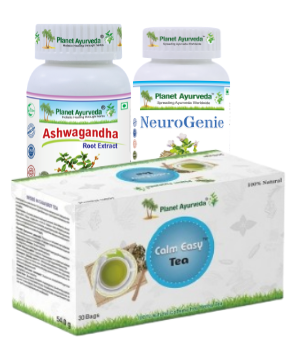
- Neurogenie Capsules
- Ashwagandha Capsules
- Calm Easy Tea
Herbal Remedies For Seasonal Affective Disorder (SAD)

PRODUCT DESCRIPTION
1. Neurogenie Capsules
These contain Brahmi (Bacopa monnieri) and Ashwagandha (Withania somnifera), two traditionally used Ayurvedic herbs associated with mental and nervous-system support. In the context of Seasonal Affective Disorder, this formulation may be considered as a supportive Ayurvedic approach for maintaining mental balance, coping with stress, and supporting healthy sleep and cognitive function during seasonal changes. Brahmi is traditionally valued as a Medhya Rasayana (cognitive rejuvenative), while Ashwagandha is regarded as a Rasayana with adaptogenic properties.
Dosage: 2 capsules twice a day after meals with plain water.
2. Ashwagandha Capsules
These contain Ashwagandha (Withania somnifera), an Ayurvedic Rasayana (rejuvenative herb) traditionally used to support resilience, mental balance, and overall wellbeing. In the context of Seasonal Affective Disorder, Ashwagandha may be considered as a supportive Ayurvedic option for individuals experiencing stress, disturbed sleep, low energy, or difficulty adapting to seasonal changes. Its traditional use is particularly associated with promoting calmness and supporting healthy nervous-system function.
Dosage: 1 capsule twice a day after meals with plain water.
3. Calm Easy Tea
It contains a combination of Ashwagandha (Withania somnifera), Brahmi (Bacopa monnieri), Licorice (Glycyrrhiza glabra), Green Tea (Camellia sinensis), Ginger (Zingiber officinale), and Cinnamon (Cinnamomum verum). In an Ayurvedic supportive approach to Seasonal Affective Disorder, this herbal tea may be incorporated into a wellness routine aimed at maintaining mental calmness, relaxation, and daily balance during seasonal changes. Ashwagandha and Brahmi are traditionally valued for supporting mental wellbeing, while ginger and cinnamon are traditionally used to support digestion. Green tea provides a mild source of caffeine and antioxidants.
Dosage: 1 cup daily.
DIETARY TIPS FOR SEASONAL AFFECTIVE DISORDER
The foods which can be included in the diet are as follows:
- Green leafy vegetables: Kale, spinach and similar greens supply folate and other micronutrients that support overall brain health.
- Whole grains: Oats, barley, and quinoa provide B-group vitamins that contribute to normal nervous-system function.
- Dairy foods: Fresh milk, curd, and other dairy products can provide protein, calcium, and other nutrients as part of a balanced diet.
- Nuts and seeds: Almonds, flaxseeds, and other nuts and seeds offer healthy fats, including plant-based omega-3 fatty acids, along with minerals that support neurological health.
- Fruits: Avocados, berries, and other nutrient-dense fruits provide vitamins, minerals, fiber, and antioxidant compounds that contribute to overall wellbeing.
The foods to avoid in this disorder include:
- Highly processed foods and added sugars: Frequent intake may cause rapid fluctuations in blood glucose and energy levels, which can affect overall mood and wellbeing.
- Excessive caffeine and alcohol: High caffeine intake may interfere with sleep, while alcohol can disrupt normal sleep quality and emotional balance.
- Excessively spicy foods: Very spicy meals may aggravate Pitta and, in susceptible individuals, contribute to digestive discomfort and imbalance of Vata.
- Heavy and excessively fatty meats: These may feel difficult to digest and, from an Ayurvedic perspective, can aggravate Kapha, contributing to heaviness and sluggishness.
- Stale or repeatedly reheated foods: Ayurveda recommends favoring freshly prepared meals, as stale foods may be considered less supportive of balanced digestion.
CONCLUSION
Early recognition, regular monitoring, and an individualized care plan are important for maintaining emotional wellbeing and preventing seasonal disturbances from affecting daily life. Consistent sleep, balanced nutrition, physical activity, adequate daylight exposure, meaningful social interaction, and appropriate psychological support can contribute to better overall functioning. Preventive strategies may also be considered when a recurring seasonal pattern is established. From an Ayurvedic perspective, following Ritucharya (seasonal regimen), supporting Agni (digestive and metabolic function), and promoting Sattva (mental clarity and stability) may offer complementary support for maintaining balance through seasonal transitions.