Research Shows That 97% of Herniated Discs Do Not Require Surgery? How Ayurveda Can Help
Abstract
Back pain and pain radiating into the leg are among the most common musculoskeletal complaints affecting adults. A frequent structural finding behind these symptoms is herniation of an intervertebral disc, in which disc material extends beyond its normal boundary and can irritate or compress an adjacent spinal nerve. The diagnosis can sound alarming, and the presence of an abnormality on MRI is sometimes interpreted as an automatic indication for surgery. The available evidence tells a more nuanced story: most patients with uncomplicated lumbar disc herniation improve with non-surgical care, and disc material can undergo spontaneous regression over time. A meta-analysis found spontaneous resorption in approximately 70.4% of conservatively treated lumbar disc herniations overall, with higher rates in extruded and sequestered discs. Another systematic review reported regression rates of 96% for sequestration and 70% for extrusion. Current spine recommendations emphasize that, in the absence of cauda equina syndrome, significant motor weakness, or other serious neurological deficits, conservative treatment should generally be the first-line approach. Surgery becomes important when urgent neurological indications exist or when disabling symptoms persist despite an appropriate course of non-surgical management. In this article, we shall discuss this herniated disc in detail, why many patients recover without surgery, when surgery becomes necessary, and how Ayurveda can be incorporated into a structured approach to pain, stiffness, mobility, and functional recovery.

Introduction
An intervertebral disc is a specialized structure positioned between adjacent vertebrae. It acts as a shock absorber and allows the spine to move while distributing mechanical loads. Each disc has an outer fibrous ring called the annulus fibrosus and an inner gel-like nucleus pulposus. Repeated loading, age-related degeneration, sudden strain, poor lifting technique, trauma, or a combination of these factors can weaken the annulus. Disc material can then protrude or escape beyond its usual anatomical boundary. When the displaced material contacts an adjacent nerve root, symptoms such as radiating pain, numbness, tingling, and weakness can develop. The lumbar spine is particularly susceptible because it bears substantial mechanical load. Lumbar disc herniation is therefore one of the most common structural causes of sciatica, particularly at the L4-L5 and L5-S1 levels. An important point for patients is that an MRI abnormality and a surgical emergency are not the same thing. Imaging tells us what the spine looks like; the clinical examination tells us what the lesion is doing.
What Exactly Is a Herniated Disc?
A herniated disc develops when part of the nucleus pulposus moves through a weakened or torn annulus fibrosus. Disc pathology is commonly described using terms such as:
Disc Bulge
The disc extends beyond its normal margins over a broad area. A bulging disc does not necessarily represent a focal herniation.
Protrusion
A focal disc herniation in which the base of the displaced material is broader than the portion extending beyond the disc margin.
Extrusion
The displaced disc material extends beyond the disc space and has a narrower connection with the remaining disc material.
Sequestration
A fragment becomes separated from the main disc and can migrate within the spinal canal. These distinctions are clinically relevant because larger, extruded, and sequestered herniations demonstrate greater rates of spontaneous regression than simple bulges.
Why Does a Herniated Disc Cause Pain?
Pain is not caused purely by the physical size of a disc abnormality. Two mechanisms are particularly important:
Mechanical Nerve Compression
A herniated fragment can narrow the space around a spinal nerve root. This can produce:
- Leg pain
- Numbness
- Tingling
- Weakness
- Altered reflexes
Inflammation
The nucleus pulposus contains inflammatory substances that can provoke an inflammatory reaction around the affected nerve root. Consequently, a relatively modest amount of compression can sometimes produce substantial pain. This is one reason why symptoms do not always correspond directly to the size of the MRI finding.
Why Do So Many Herniated Discs Improve Without Surgery?
A herniated disc is not necessarily a permanent mass that remains unchanged forever. The body can gradually reduce and resorb displaced disc material. A systematic review found spontaneous regression in:
- 96% of sequestrated discs
- 70% of extruded discs
- 41% of protruded discs
- 13% of bulging discs
A subsequent meta-analysis involving more than 2,200 conservatively treated patients found an overall spontaneous resorption rate of approximately 70.4%, with resorption occurring more frequently in ruptured discs than contained disc abnormalities. Another systematic review and meta-analysis found a pooled regression rate of approximately 63% after non-surgical treatment.
Causes of Herniated Disc
A herniated disc usually results from a combination of disc degeneration and mechanical stress.
Age-Related Degeneration : Discs gradually lose water and elasticity with age. The annulus becomes more vulnerable to fissures and tears.
Improper Lifting : Repeatedly lifting heavy objects, especially with bending and twisting, increases spinal loading.
Sudden Trauma : A fall, accident, sports injury, or forceful movement can precipitate acute herniation.
Repetitive Mechanical Stress : Occupations involving:
- Heavy lifting
- Repeated bending
- Rotational movements
- Prolonged vibration
can increase spinal stress.
Poor Physical Conditioning : Weak trunk musculature and reduced physical fitness can make the spine less capable of handling repeated loads.
Excess Body Weight : Increased mechanical loading can place additional stress on the lumbar spine.
Smoking : Smoking is associated with disc degeneration and impaired tissue health.
Risk Factors
Important risk factors include:
- Increasing age
- Occupations involving lifting
- Repetitive spinal loading
- Obesity
- Smoking
- Sedentary lifestyle
- Poor core strength
- Previous disc disease
- Family susceptibility
- Recurrent spinal strain
Signs and Symptoms
Symptoms depend upon the location and severity of the herniation.
Low Back Pain : Pain may be localized to the lumbar region.
Sciatica : When a lumbar nerve root is irritated, pain can travel from the lower back into the buttock and down the leg.
Numbness : Patients can experience reduced sensation along the distribution of the affected nerve.
Tingling : A pins-and-needles sensation can occur.
Muscle Weakness : Significant nerve compression can produce weakness in:
- Foot dorsiflexion
- Toe extension
- Plantar flexion
- Knee extension
depending on the affected nerve root.
Movement-Related Pain : Pain can intensify during:
- Coughing
- Sneezing
- Bending
- Lifting
- Prolonged sitting
Red Flag Symptoms: When Surgery Cannot Be Delayed
The fact that many patients recover conservatively should never encourage someone with neurological red flags to postpone medical treatment.
Cauda Equina Syndrome : Urgent medical attention is required when a patient develops:
- New bladder dysfunction
- Urinary retention or loss of bladder control
- Bowel dysfunction
- Saddle-area numbness
- Severe or progressive bilateral leg symptoms
A large lumbar disc herniation is one of the common causes of cauda equina syndrome, and it is treated as a surgical emergency.
Progressive Motor Weakness : Increasing weakness of the foot, ankle, knee, or leg requires urgent specialist assessment.
Severe Neurological Deficit : Significant motor impairment changes the treatment pathway and can favor early decompression. Current recommendations specifically identify progressive neurological impairment and severe motor deficits as important indications for surgery.
Investigations
Clinical Examination : A neurological examination evaluates:
- Muscle strength
- Reflexes
- Sensation
- Gait
- Straight-leg-raising response
- Nerve-root distribution
MRI : MRI is the preferred imaging modality when imaging is clinically indicated because it provides detailed information about:
- Disc morphology
- Nerve compression
- Spinal canal narrowing
- Soft tissues
- Other structural pathology
Imaging should always be interpreted together with the clinical picture.
X-Ray : Plain radiographs can identify:
- Vertebral alignment
- Degenerative changes
- Spondylolisthesis
- Structural abnormalities
However, X-rays do not directly visualize the disc and nerve root as effectively as MRI.
Electrodiagnostic Testing : EMG and nerve-conduction studies can be useful when the diagnosis is unclear or when symptoms need to be distinguished from other peripheral nerve disorders.
Contemporary Management: Why Conservative Care Comes First
The World Federation of Neurosurgical Societies Spine Committee recommends conservative management as first-line treatment for lumbar disc herniation when there is no cauda equina syndrome, motor deficit, or other serious neurological deficit. The recommended approach combines appropriate medication, activity modification, and physical therapy.
Stay Active Within Tolerance
Complete prolonged bed rest is generally not the goal. Appropriate activity helps prevent:
- Muscle deconditioning
- Stiffness
- Fear of movement
- Loss of physical capacity
Activity should be modified according to pain and neurological symptoms.
Physiotherapy
A structured exercise program can focus on:
- Core stabilization
- Postural correction
- Spinal mobility
- Neural mobilization
- Gradual strengthening
Evidence reviews identify exercise therapy, patient education, mobilization, and selected rehabilitation strategies as important components of conservative care for lumbar disc herniation with radiculopathy.
Medicines
Depending on individual circumstances, physicians can use:
- NSAIDs
- Analgesics
- Selected neuropathic pain medicines
- Short-term medications for severe symptoms
Epidural Injections
In selected patients with persistent radicular pain, an epidural steroid injection can be considered.
Surgery
Surgery is not simply an alternative to every MRI-confirmed disc herniation. It becomes particularly relevant when there is:
- Cauda equina syndrome
- Progressive neurological deficit
- Significant motor weakness
- Persistent disabling radicular pain despite appropriate conservative management
Current recommendations identify failure of conservative treatment, cauda equina syndrome, and progressive neurological impairment among the principal indications for surgery. Surgery generally provides faster symptom relief in appropriately selected patients, although longer-term differences between surgery and non-surgical care can become smaller.
How Long Can Recovery Take?
Recovery varies according to:
- Disc morphology
- Degree of nerve irritation
- Neurological deficit
- Duration of symptoms
- Physical condition
- Treatment adherence
A review published in 2024 reported symptom resolution in approximately 60–80% of patients within 6–12 weeks and 80–90% over the longer term, in the absence of major neurological deficits. Disc regression itself can occur over several months, with substantial resorption occurring during the first six months in the literature reviewed.
Can Ayurveda Treat Herniated Disc?
Ayurveda does not describe MRI-defined disc herniation as a separate anatomical diagnosis. However, the most appropriate single Ayurvedic correlation for lumbar disc herniation presenting with radiating leg pain, stiffness, restricted movement, and nerve-related symptoms is Vataja Gridhrasi. Gridhrasi is characterized by pain that follows the pathway of the lower limb and can include stiffness, pricking sensations, and difficulty in movement. The presentation therefore provides a useful Ayurvedic framework for the clinical symptom complex of lumbar radiculopathy. Ayurvedic pathology can be understood as a Vata-dominant disorder affecting the Snayu (ligaments), Kandara (tendons), Asthi and Majja-related structures of the lower back and lower limb.
Excessive physical exertion, improper posture, lifting, repetitive strain, irregular lifestyle, inadequate nourishment, and depletion of tissues aggravate Vata Dosha. Aggravated Vata enters the vulnerable lumbar and lower-limb structures, disturbing normal movement and producing Shoola (pain), Stambha (stiffness), Toda (piercing pain), Supti (numbness), and restricted movement. When the Vata disturbance follows the pathway of the sciatic nerve, the presentation corresponds closely with Vataja Gridhrasi.
The Ayurvedic pathogenesis can therefore be represented as:
Vata Prakopa → localization in Kati-Pradesha and associated Snayu/Kandara → obstruction and dysfunction of normal movement → Gridhrasi-like radicular pain → stiffness, sensory disturbance and impaired mobility.
Ayurvedic Management
Ayurvedic management focuses on Vata Shamana (pacification of Vata dosha), Srotoshodhana (channel cleansing), pain reduction, restoration of mobility, and strengthening of the musculoskeletal system. Internal formulations are selected according to the patient’s constitution and symptom pattern, while external therapies such as Abhyanga (medicated massage), Swedana (fomentation), Kati Basti (ayurvedic therapy), Patra Pinda Sweda (ayurvedic therapy), Pizhichil (ayurvedic therapy), and appropriately planned Basti (enema) therapy can form part of a physician-supervised protocol. Gentle physiotherapy and progressive strengthening are integrated as symptoms settle. Dietary measures focus on warm, nourishing, easily digestible meals and avoidance of excessive fasting, highly irregular eating patterns, and activities that aggravate pain. The overall Ayurvedic strategy is to calm Vata, improve functional mobility, reduce pain and stiffness, strengthen supporting tissues, and facilitate a gradual return to normal activity.
Ayurvedic Therapies Commonly Used in a Herniated-Disc Program
Depending on the patient’s condition, an Ayurvedic physician can select therapies such as:
Abhyanga
Warm medicated oil massage is used to pacify Vata, relax muscles, and promote comfortable movement.
Swedana
Controlled herbal fomentation provides warmth and relaxation to stiff musculature.
Kati Basti
Warm medicated oil is retained over the lower back within a localized herbal-dough enclosure. It is frequently incorporated into Ayurvedic programs for lumbar pain and stiffness.
Patra Pinda Sweda
Herbal leaf boluses provided localized warmth and massage to painful or stiff regions.
Basti
Appropriately selected Basti therapy has an important place in Ayurvedic Vata management and is planned according to individual strength, disease stage, digestion, and medical suitability. These procedures should be performed by trained Ayurvedic professionals after assessment rather than self-administered.
Dietary Guidance
Food does not physically “push” a herniated disc back into place, but a healthy dietary routine contributes to recovery by supporting body weight, digestion, nutritional status, and overall physical health.
Prefer
- Warm freshly prepared meals
- Adequate protein
- Whole grains
- Cooked vegetables
- Pulses according to digestive tolerance
- Nuts and seeds
- Adequate hydration
- Moderate healthy fats
Reduce
- Repeated overeating
- Highly processed foods
- Excessive alcohol
- Smoking
- Very irregular meal patterns
Exercise During Recovery
Exercise should be progressive rather than aggressive.
During the painful phase, focus on:
- Short walks
- Comfortable positional changes
- Gentle mobility
- Therapist-guided exercises
As symptoms improve, progress toward:
- Core strengthening
- Glute strengthening
- Hip mobility
- Back stabilization
- Functional training
Evidence supports exercise as an important component of conservative treatment for lumbar disc herniation and associated radicular symptoms.
Herbal Remedies for Herniated Disc by Planet Ayurveda
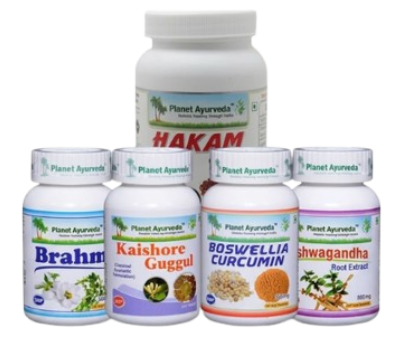
Planet Ayurveda is a globally recognized Ayurvedic healthcare company dedicated to promoting natural wellness through authentic herbal formulations. The company combines the wisdom of Ayurveda with modern manufacturing standards to develop products prepared from carefully selected herbs. Its wide range of capsules, tablets, powders, syrups, oils, and specialized herbal combinations addresses various aspects of health and well-being. Planet Ayurveda emphasizes purity and quality, offering formulations free from unnecessary synthetic additives. Planet Ayurveda is pleased to present its Disc Care Pack for an Ayurvedic approach to herniated disc and associated back and nerve discomfort.
Product list
- Boswellia Curcumin
- Yograj Guggul
- Hakam Churna
- Aamvatantak Churna
- Mahatriphala Ghrit
Herbal Remedies for Herniated Disc


Product description
1. Boswellia Curcumin Capsules
Planet Ayurveda’s Boswellia Curcumin contains two focused herbal ingredients: Shallaki (Boswellia serrata) and Curcumin (Curcuma longa), listed at 250 mg each per capsule. Shallaki supplies boswellic acids associated with modulation of inflammatory pathways, while curcuminoids from Haridra provide antioxidant and inflammation-modulating activity. Their combination is particularly suited to maintaining comfortable movement and supporting muscles, joints, tendons, and other musculoskeletal structures.
Dosage: 2 capsules twice daily after meals with warm water.
2. Yograj Guggul
Yograj Guggul is a classical multi-herbal formulation centered on Shuddha Guggulu (Commiphora mukul). It contains Chitraka (Plumbago zeylanica), Pippali (Piper longum), Haritaki (Terminalia chebula), Amalaki (Emblica officinalis), Mustaka, Ardraka (Zingiber officinale), and other digestive and Vata-balancing ingredients. Guggulu is the principal Vata-pacifying component, while the digestive herbs support Agni (digestion) and help maintain efficient metabolism. The formulation therefore aimed at reducing stiffness, supporting mobility, and maintaining healthy musculoskeletal function.
Dosage: 2 tablets twice daily after meals with warm water.
3. Hakam Churna
Hakam Churna is a product of Planet Ayurveda and is a four-herb combination containing Chandershoor (Lepidium sativum), Kalaunji (Nigella sativa), Methi (Trigonella foenum-graecum), and Ajwain (Trachyspermum ammi). The combination is a Tridoshic Rasayana supporting healthy digestion and general body functions. These ingredients provide an important digestive component. Ayurveda places considerable emphasis on maintaining healthy Agni (digestive), particularly when managing Vata-related disorders. Better digestive balance complements the broader musculoskeletal regimen and supports a healthy metabolic environment. It also acts as an analgesic and relieves tingling sensation. It pacifies vata dosha, which makes hakam Churna an effective remedy for Herniated disc.
Dosage: 1 teaspoon twice daily with warm water after meals.
4. Aamvatantak Churna
Aamvatantak Churna contains Ashwagandha (Withania somnifera), Methi (Trigonella foenum-graecum), Suranjaan (Colchicum autumnale), Gorakhmundi (Sphaeranthus indicus), Haridra (Curcuma longa), and Sonth (Zingiber officinale). The formulation helps maintain joint health and manage Ama-related blockages. Ashwagandha contributes strengthening and restorative support, Haridra provides curcuminoids with antioxidant and inflammation-modulating properties, while Sonth and Methi support digestive metabolism. Suranjaan is an important classical ingredient used in Ayurvedic joint formulations. The combination fits the Ayurvedic approach of addressing Ama and Vata while promoting comfortable movement and healthier joint and musculoskeletal function.
Dosage: 1 teaspoon twice daily with warm water after meals.
5. Mahatriphala Ghrit
Mahatriphala Ghrit is a ghrita-based Ayurvedic formulation containing Triphala—Amalaki (Emblica officianlis), Bibhitaki (Terminalis bellirica), and Haritaki (Terminalia chebula), along with Bhringraj (Eclipta alba), Vasa (Adhatoda vasica), Shatavari (Asparagus racemosus), Giloy (Tinospora cordifolia), Mulethi (Glycyrrhiza glabra), Nilofer (Nymphaea alba), and other ingredients, prepared with cow’s ghee and goat milk. The unctuous nature of Ghrita helps in Vata aggravation management, while Triphala supports digestion and regular elimination. Shatavari and the other nourishing herbs add a restorative dimension to the formulation. Mahatriphala Ghrit has a Vata-anulomana role and helps in the management of pain associated with herniated-disc care.
Dosage: 1 teaspoon twice daily with warm water after meals.
Conclusion
A diagnosis of herniated disc does not automatically mean that an operation is required. The available evidence demonstrates substantial spontaneous regression of lumbar disc herniations, particularly extruded and sequestered discs, and modern spine recommendations place conservative treatment first when there is no cauda equina syndrome, serious neurological deficit, or progressive motor weakness. The frequently quoted 97% figure should not be presented as a universal medical statistic. A more accurate and clinically useful conclusion is that the majority of uncomplicated lumbar disc herniation cases can initially be managed without surgery, while a smaller but important group requires urgent or elective surgical intervention based on neurological findings and the response to conservative treatment. Surgery also remains valuable because it can provide faster relief for appropriately selected patients. Ayurveda offers a structured framework for these non-operative cases by correlating the pain-radiation pattern with Vataja Gridhrasi and addressing Vata aggravation, stiffness, pain, impaired movement, tissue support, digestion, and functional recovery. A combination of appropriate internal formulations, Ayurvedic therapies, postural correction, physiotherapy, gradual strengthening, and lifestyle regulation creates a comprehensive approach. Planet Ayurveda’s Disc Care Pack brings musculoskeletal comfort, Vata balance, mobility, and overall functional support. The strongest approach to herniated disc is neither “surgery for everyone” nor “surgery for nobody.” It is an individualized pathway in which neurological safety comes first, conservative care is given an appropriate opportunity when suitable, and Ayurveda and rehabilitation are used strategically to support pain control, mobility, strength, and return to normal life.