April 24, 2026
Ramelteon vs Alprax & Sleeping Pills: Safety, Effects & Natural Sleep Solutions
Abstract
Insomnia is a prevalent sleep disorder affecting physical and mental well-being. Pharmacological management includes newer agents like Ramelteon and conventional sedatives such as Alprax. These drugs differ significantly in their mechanism, safety profile, and long-term impact. Ramelteon works by regulating the circadian rhythm through melatonin receptors, whereas Alprax induces sedation by depressing the central nervous system. While both provide symptomatic relief, their long-term implications vary greatly. Ayurveda offers a holistic perspective by addressing the root cause of insomnia through dosha balance, mental calmness, and lifestyle correction. An integrative approach combining modern pharmacology with Ayurvedic principles may provide safe and sustainable management of sleep disorders.
Understanding Sleep Disturbances in Modern Life
- Sleep disturbances are becoming very common due to stress, irregular routines, excessive screen exposure, and mental overactivity.
- These factors disturb the body’s natural sleep–wake cycle.
- Insomnia may present as difficulty falling asleep, frequent awakenings, or unrefreshing sleep.
- Modern medicine focuses mainly on symptom relief.
- Ayurveda links insomnia to Vata and Pitta imbalance.
- Holistic care includes routine, diet, and mental relaxation.
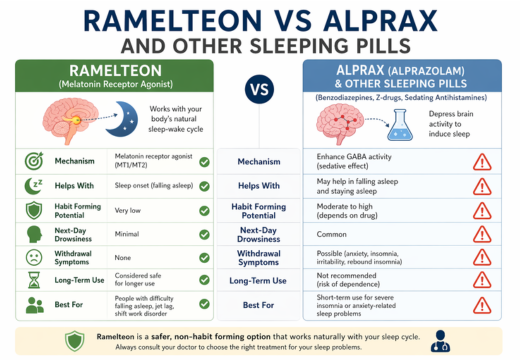
Ramelteon as a Circadian Rhythm Regulator
- Acts on MT1 and MT2 melatonin receptors.
- Regulates natural sleep–wake cycle.
- Promotes natural sleep onset.
- Low risk of dependence.
- No next-day drowsiness.
Alprax and Sedative Hypnotics
Alprax (alprazolam) is a benzodiazepine that enhances GABA activity, producing sedation and relaxation. It is useful for anxiety-related insomnia but induces sedative rather than natural sleep. Long-term use may cause dependence, tolerance, and withdrawal symptoms.
Key Differences
- Mechanism: Ramelteon regulates circadian rhythm; Alprax suppresses CNS.
- Sleep Type: Ramelteon promotes natural sleep; Alprax causes sedative sleep.
- Safety: Ramelteon has low dependency risk; Alprax has higher risk.
- Use: Ramelteon for long-term; Alprax for short-term relief.
Safety & Long-Term Impact
- Ramelteon: Safe, non-habit forming, supports natural sleep.
- Alprax: Risk of dependence, withdrawal, and cognitive effects.
Ayurvedic Understanding of Insomnia
- Called Nidranasha or Anidra.
- Caused by Vata and Pitta imbalance.
- Linked to stress, poor routine, and improper diet.
Ayurvedic Herbs for Sleep
- Ashwagandha: Reduces stress and improves sleep quality.
- Tagar: Calms the nervous system.
- Brahmi: Reduces overthinking and improves mental calmness.
- Jatamansi: Promotes deep and uninterrupted sleep.
Lifestyle Recommendations
- Maintain a consistent daily routine.
- Practice yoga, meditation, and breathing exercises.
- Eat light and early dinners.
- Reduce screen exposure before bedtime.
- Follow calming bedtime habits.
Conclusion
Ramelteon and Alprax represent two different approaches to insomnia management. Ramelteon supports natural sleep regulation, making it suitable for long-term use, while Alprax provides quick relief but carries risks with prolonged use. Ayurveda emphasizes treating the root cause through lifestyle, diet, and mental balance. An integrative approach combining both systems offers a safer and more sustainable solution for improving sleep and overall well-being.

Dr. Vikram Chauhan
https://www.planetayurveda.comDr. Vikram Chauhan (MD - Ayurveda) is a Globally Renowned Ayurveda Physician with Expertise of more than 25 Years. He is the CEO & Founder of http://www.PlanetAyurveda.com, a leading Ayurveda Brand, Manufacturing, and Export Company with a Chain of Clinics and Branches in the US, Europe, Africa, Southeast Asia, India, and other parts of the World. He is also an Ayurveda Author who has written Books on Ayurveda, translated into Many European Languages. One of his Books is "Ayurveda – God’s Manual for Healing". He is on a Mission to Spread Ayurveda All Over the Planet through all the Possible Mediums. With his Vast Experience in Herbs and their Applied Uses, he is successfully treating Numerous Patients suffering from Various Ailments with the help of the Purest Herbal Supplements, Diet, and Lifestyle, according to the Principles of Ayurveda. For More Details, visit - www.planetayurveda.com, www.alwaysayurveda.com
View more posts from this author