Holter Monitor – What Is It? Why Is It Done? How Can Ayurveda Support Heart Rhythm Health?
ABSTRACT
A Holter Monitor is a portable cardiac monitoring device used to continuously record the heart’s electrical activity, usually for 24 to 48 hours or longer. Unlike a standard electrocardiogram (ECG), which records heart activity for a few seconds, a Holter monitor tracks heart rhythms during daily activities and sleep. It is mainly used to detect irregular heartbeats (arrhythmias), unexplained palpitations, dizziness, fainting episodes, or to evaluate treatment effectiveness. Continuous monitoring helps doctors identify rhythm disturbances that may not appear during a routine ECG.
WHAT IS A HOLTER MONITOR?
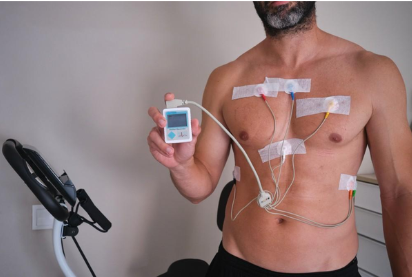
A Holter Monitor is a small, wearable medical device that continuously records the electrical signals of the heart. It works similarly to an ECG but provides long-duration monitoring.
It consists of:
- Small adhesive electrodes attached to the chest
- Wires connecting electrodes to a portable recorder
- A battery-operated recording device worn on a belt or shoulder strap
The device records every heartbeat during the monitoring period, allowing detailed rhythm analysis.
HISTORY AND DEVELOPMENT
The Holter Monitor is named after Norman J. Holter, who developed portable cardiac telemetry in the 1950s. His invention revolutionized cardiac diagnostics by enabling long-term ambulatory monitoring outside hospital settings.
Today, modern Holter monitors are lightweight, digital, and capable of storing large volumes of cardiac data.
WHY IS A HOLTER MONITOR DONE?
Doctors recommend a Holter Monitor for:
Detection of Arrhythmias
- Atrial fibrillation
- Bradycardia (slow heart rate)
- Tachycardia (fast heart rate)
- Premature ventricular contractions (PVCs)
Evaluation of Symptoms
- Palpitations
- Dizziness
- Fainting (syncope)
- Chest discomfort
Monitoring Treatment Effectiveness
- After starting anti-arrhythmic medications
- After pacemaker insertion
- Post heart procedures
Assessing Risk After Heart Attack
Continuous monitoring helps evaluate rhythm abnormalities following myocardial infarction.
HOW DOES A HOLTER MONITOR WORK?
The device records the heart’s electrical impulses continuously. Patients are usually asked to:
- Continue normal daily activities
- Maintain a diary of symptoms
- Note time of dizziness, palpitations, or chest pain
After 24–48 hours, the device is returned, and the data is analyzed using specialized software to detect abnormalities.
WHAT CONDITIONS CAN IT DETECT?
A Holter Monitor can detect:
- Atrial fibrillation
- Supraventricular tachycardia
- Ventricular tachycardia
- Heart blocks
- Silent ischemia
- Intermittent rhythm disturbances
Some rhythm problems occur only occasionally and may not appear during a short ECG. Holter monitoring increases diagnostic accuracy.
PROCEDURE – STEP BY STEP
- Skin is cleaned to ensure proper electrode attachment.
- Electrodes are attached to the chest.
- The device is connected and secured.
- The patient goes home and resumes routine activities.
- The device is removed after a monitoring period.
- Data is analyzed by a cardiologist.
- The procedure is painless and non-invasive.
ARE THERE ANY RISKS?
Holter monitoring is very safe. Minor issues may include:
- Mild skin irritation from electrodes
- Slight discomfort due to device attachment
- There is no radiation exposure.
LIMITATIONS OF HOLTER MONITOR
- It records only during the monitoring period
- If symptoms do not occur during that time, diagnosis may be missed
- For rare symptoms, longer-term monitors like event recorders may be recommended
AYURVEDIC OVERVIEW OF COMMON CARDIAC RHYTHM DISORDERS
In Ayurveda, heart disorders are broadly described under Hridroga. The heart (Hridaya) is considered the seat of Ojas, Prana Vata, Vyana Vata, and consciousness. Any disturbance in Vata, especially Prana and Vyana Vata can lead to irregular heartbeat, altered circulation, palpitations, or instability in cardiac rhythm.
Atrial Fibrillation
In Ayurveda, this may correlate with Vataja Hridroga, where aggravated Vata and weakened Ojas lead to irregular and unstable heart rhythm. Management focuses on Vata pacification and strengthening of Ojas.
Supraventricular Tachycardia (SVT)
This condition can be linked to imbalance of Prana Vata and Sadhaka Pitta, often triggered by stress and emotional disturbance. The Ayurvedic approach emphasizes calming the mind and balancing Pitta.
Ventricular Tachycardia
Considered a severe Vyana Vata disturbance with possible Ojas depletion. It requires immediate modern medical care, while Ayurveda may support long-term cardiac nourishment and stability.
Heart Blocks
Viewed as Margavarodha (obstruction) where Kapha blocks the channels, restricting Vata movement and affecting conduction. Treatment principles include channel cleansing and balancing Vata and Kapha.
Silent Ischemia
May relate to Rakta Dushti and blockage in Rasavaha and Raktavaha Srotas due to Kapha and Meda accumulation. The goal is to improve circulation and reduce metabolic obstruction.
Intermittent Rhythm Disturbances
Often associated with mild Vata aggravation caused by stress, irregular routine, or sleep disturbance. Management focuses on lifestyle
HOW AYURVEDA SUPPORTS COMMON CARDIAC RHYTHM DISORDERS?
Ayurveda supports cardiac rhythm disorders by primarily balancing Vata Dosha, especially Prana Vata and Vyana Vata, which govern heart rhythm and circulation. The approach focuses on stabilizing the nervous system, reducing stress, nourishing Ojas, and clearing subtle channel obstructions (Srotas). This is achieved through a Vata-pacifying diet (warm, freshly cooked foods), regular daily routine, adequate sleep, stress management practices like meditation and Pranayama, and the use of classical heart-supportive herbs such as Arjuna, Ashwagandha, Brahmi, and Jatamansi. While serious arrhythmias require proper modern medical care, Ayurveda plays a valuable supportive role in strengthening the heart, improving circulation, and promoting long-term rhythm stability.
Herbs to support common cardiac rhythm Disorders:
1. Arjuna (Terminalia arjuna)
Arjuna is one of the most revered Hridya (cardiac-supportive) herbs in Ayurveda. It strengthens the heart muscle, improves coronary circulation, and supports healthy cardiac rhythm. Classical texts describe it as Kashaya Rasa dominant and Kapha-Pitta balancing. Modern research highlights its antioxidant and cardioprotective properties, which may help reduce palpitations and enhance myocardial function. It is commonly used in conditions correlated with Hridroga and rhythm instability.
2. Ashwagandha (Withania somnifera)
Ashwagandha is a powerful Rasayana and adaptogenic herb known for balancing aggravated Vata, a key factor in irregular heart rhythm. It supports nervous system stability, reduces stress, and promotes autonomic balance. By calming anxiety and improving resilience to stress, it may indirectly help manage stress-induced palpitations. Its antioxidant and cardioprotective effects further contribute to maintaining overall heart health and rhythm stability.
3. Jatamansi (Nardostachys jatamansi):
Jatamansi is valued for its Medhya and calming properties, helping to regulate nervous system overactivity linked to arrhythmias. It pacifies Vata and Pitta, promotes mental tranquility, and supports stable heart rhythm. Preclinical studies suggest antioxidant and mild calcium channel–modulating activity, which may contribute to its cardioprotective potential. Traditionally, it is used in conditions involving palpitations, anxiety, and emotional stress affecting cardiac function.
4. Sarpagandha (Rauvolfia serpentina)
Sarpagandha is traditionally used for calming excessive cardiac excitability and managing hypertension. It contains active alkaloids that influence autonomic nervous system regulation, which may affect heart rate and rhythm. In Ayurveda, it is considered useful in Vata-Pitta aggravated states associated with restlessness and tachycardia. Due to its potent pharmacological effects, it should be administered strictly under professional supervision.
5. Pushkarmoola (Inula racemosa)
Pushkarmoola is described in classical texts for Hridroga and Shwasa disorders. It supports healthy circulation, reduces chest discomfort, and promotes efficient oxygen utilization. Known for its Vata-Kapha pacifying action, it may help maintain rhythm stability in stress-related or circulation-linked disturbances. Modern investigations suggest cardioprotective and antioxidant properties, aligning with its traditional use as a supportive herb for heart function.
WHEN TO SEEK IMMEDIATE MEDICAL HELP
Seek emergency care if experiencing:
- Severe chest pain
- Sudden fainting
- Severe breathlessness
- Sustained rapid heart rate
Holter Monitor helps in early detection, but urgent symptoms require immediate evaluation.
CONCLUSION
A Holter Monitor is a valuable and non-invasive diagnostic tool that continuously records heart rhythm over an extended period. It plays a crucial role in detecting intermittent arrhythmias and guiding treatment decisions. While modern cardiology offers advanced diagnostic solutions, Ayurveda emphasizes balancing Vata, managing stress, and strengthening heart health naturally. An integrative approach combining timely diagnosis with lifestyle and herbal support can promote optimal cardiac rhythm stability and overall well-being.