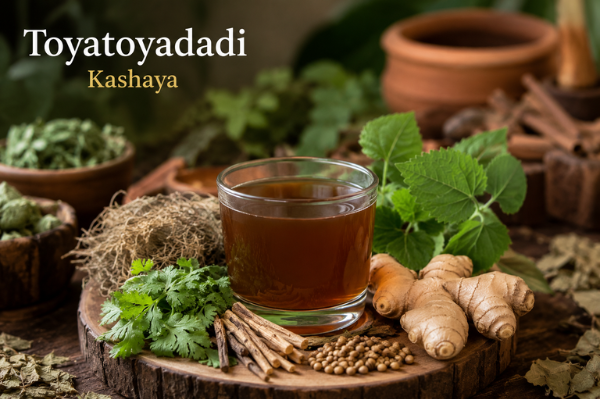
Toyatoyadadi Kashaya – Benefits, Ingredients, Uses & Preparation
Introduction
Toyatoyadadi Kashaya is a traditional Ayurvedic decoction classified as a Pachana Kashaya, meaning a formulation traditionally used to support the digestion and processing of accumulated Ama (metabolic toxins) and disturbed metabolic products. The formulation combines six ingredients with predominantly digestive, bitter, aromatic, and light qualities. It is described for use in Jvara (fever), particularly when impaired digestion and incomplete metabolic processing accompany the febrile state. The formulation contains Hribera (Coleus vettiveroides), Musta (Cyperus rotundus), Bhunimba (Andrographis paniculata), Patha (Cissampelos pareira), Dhanyaka (Coriandrum sativum), and Shunthi (Zingiber officinale). These herbs are traditionally selected to support Agni (digestion), improve digestive function, and assist the body in processing the pathological factors associated with fever. The decoction is prepared by the classical eightfold reduction method and administered in a lukewarm state.
Classical Reference
तोय तोयद भूनिंबपाठा धान्यमहौषधैः ।
कृतः कषायः सर्वेषां ज्वराणां पाचनः परम् ।।
(Sahasrayogam)
The verse describes this combination as a particularly useful digestive decoction for fever, emphasizing its Pachana (digestive) action. The formulation is also known as Pachana Kashaya, reflecting its traditional role in supporting digestion during febrile illness.
Ingredients
The formulation contains the following ingredients in equal proportions:
- Hribera (Coleus vettiveroides) – Fragrant aromatic herb – 1 part
- Musta (Cyperus rotundus) – Nut Grass – 1 part
- Bhunimba (Andrographis paniculata) – King of Bitters – 1 part
- Patha (Cissampelos pareira) – Velvetleaf – 1 part
- Dhanyaka (Coriandrum sativum) – Coriander – 1 part
- Shunthi (Zingiber officinale) – Dry Ginger – 1 part
- Water – 16 parts of the total herbal mixture
Hribera requires attention because its botanical identity has historically varied between different Ayurvedic traditions. The Ayurvedic Formulary-related identification used in Indian practice includes Coleus vettiveroides, while botanical literature documents considerable historical disagreement regarding the identity of Hribera.
Method of Preparation
The ingredients are cleaned and made into a coarse powder. The powdered mixture is placed in a suitable vessel and sixteen times the quantity of water is added. The preparation is then boiled over gentle heat until the liquid is reduced to one-eighth of its original volume. After sufficient reduction, the decoction is filtered through a clean cloth to remove the coarse herbal material. The resulting Kashaya should preferably be consumed lukewarm. Fresh preparation is preferred because it provides the characteristic aroma, taste, and consistency expected from a freshly prepared decoction.
Dose and Administration
Dose: 40 ml twice daily
The dose may be individualized according to age, digestive capacity, severity of illness, and the patient’s overall clinical condition by a qualified Ayurvedic physician.
Ayurvedic Properties of the Ingredients
Hribera (Coleus vettiveroides)
Hribera is an aromatic medicinal herb traditionally associated with cooling and digestive-supportive actions. It is used in Ayurvedic preparations involving fever, thirst, nausea, and digestive discomfort. Its inclusion provides an aromatic and balancing component to the decoction. Ayurvedic sources from Kerala identify Hribera with Coleus vettiveroides, although historical botanical identification has been disputed.
Musta (Cyperus rotundus)
Musta is traditionally valued for supporting digestion and reducing disturbances associated with impaired gastrointestinal function. It is frequently used in Ayurvedic fever preparations, particularly when poor appetite, nausea, loose stools, or digestive sluggishness accompany the illness. Its light and digestive nature makes it appropriate for a formulation centered on Pachana.
Bhunimba (Andrographis paniculata)
Bhunimba is a strongly bitter herb traditionally used in fever and digestive disorders. Its bitter character is considered useful for supporting Agni while helping process Ama. Modern literature identifies Andrographis paniculata as the botanical source of Bhunimba and reports pharmacologically active constituents such as andrographolide.
Patha (Cissampelos pareira)
Patha is traditionally used in digestive and febrile disorders. It is associated with Pachana and supports the management of gastrointestinal disturbances accompanying fever. Classical reviews also document Patha-containing Kashayas for fever and digestive disorders.
Dhanyaka (Coriandrum sativum)
Dhanyaka, or coriander, contributes aromatic and digestive properties. It is traditionally used when fever is accompanied by reduced appetite, digestive discomfort, thirst, or nausea. Its mild nature complements the stronger bitter and pungent ingredients of the formulation.
Shunthi (Zingiber officinale)
Shunthi is dry ginger and is one of the most widely used digestive herbs in Ayurveda. It supports Agni, helps counter digestive sluggishness, and is traditionally useful when Kapha-associated heaviness accompanies impaired digestion. Its warming and aromatic character also enhances the overall digestive profile of the Kashaya.
Ayurvedic Mode of Action
The principal therapeutic concept behind Toyatoyadadi Kashaya is Pachana, or support of the physiological processing of Ama and impaired digestive products. During fever, Ayurveda recognizes that digestion may become weakened, leading to poor appetite, heaviness, coated tongue, nausea, and other manifestations associated with impaired Agni (digestion). A formulation dominated by digestive and bitter herbs is traditionally selected in such circumstances rather than relying exclusively on symptomatic suppression of fever. Musta (Cyperus rotundus) and Dhanyaka (Coriandrum sativum) provide digestive and aromatic support, while Shunthi (Zingiber officinale) strengthens the warming digestive component. Bhunimba (Andrographis paniculata) contributes a pronounced bitter action, and Patha (Cissampelos pareira) adds further traditional support for gastrointestinal regulation. Hribera provides an aromatic, cooling component that balances the stronger qualities of the preparation. The six herbs therefore work as a coordinated digestive combination rather than as isolated ingredients.
Indications
The principal traditional indication is:
- Jvara (Fever), particularly when digestive impairment is present
- Poor appetite associated with fever
- Digestive sluggishness during febrile illness
- Heaviness associated with impaired digestion
- Nausea or digestive discomfort accompanying fever
- Conditions in which Ama Pachana is considered therapeutically appropriate
The formulation is traditionally described as a Pachana preparation for fever. It should not, however, be interpreted as a universal treatment for every cause of fever. Fever may result from infections, inflammatory disorders, medication reactions, or other conditions requiring specific medical evaluation.
Precautions
- Use the formulation under the supervision of a qualified Ayurvedic physician.
- Persistent, severe, or unexplained fever requires appropriate medical assessment.
- Adequate fluid intake should be maintained during febrile illness.
- Individuals with marked weakness, dehydration, or poor oral intake may require a modified therapeutic approach.
- The decoction should preferably be prepared fresh and consumed at a suitable lukewarm temperature.
- Self-treatment should not delay evaluation when fever is prolonged or accompanied by serious symptoms.
Conclusion
Toyatoyadadi Kashaya is a traditional Ayurvedic Pachana Kashaya composed of Hribera (Coleus vettiveroides), Musta (Cyperus rotundus), Bhunimba (Andrographis paniculata), Patha (Cissampelos pareira), Dhanyaka (Coriandrum sativum), and Shunthi (Zingiber officinale). Prepared by reducing sixteen parts of water to one-eighth, the decoction is traditionally administered lukewarm at 40 ml twice daily. Its classical emphasis is on supporting digestion during Jvara, particularly when impaired Agni and Ama are considered important components of the clinical picture.