September 17, 2026
Herbal Remedies of Squint Eyes – Causes, Symptoms, Diagnosis & Treatment
Abstract
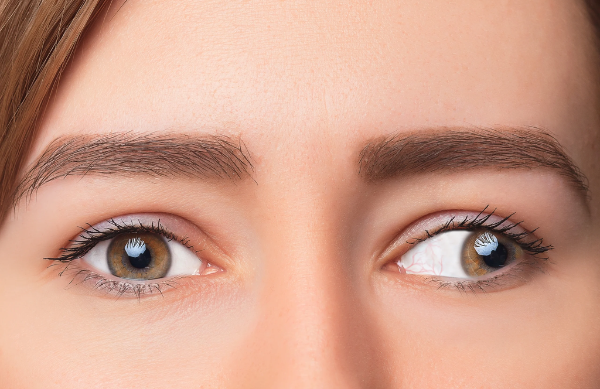
Squint, medically known as Strabismus, is a condition characterized by the misalignment of the eyes, where both eyes fail to focus on the same point simultaneously. It may present as inward, outward, upward, or downward deviation of one eye and can affect both children and adults. If not identified and managed early, squint may lead to visual disturbances such as double vision, reduced depth perception, eye strain, and amblyopia (lazy eye). This article provides an overview of the causes, types, symptoms, and risk factors associated with squint. It also highlights the Ayurvedic perspective, which associates the condition with imbalance of Vata Dosha and impaired coordination of eye muscles and nerves. Furthermore, the article discusses supportive Ayurvedic herbs, therapies, dietary measures, and lifestyle practices that may help maintain eye health and promote overall visual wellness.
Introduction
Healthy vision depends on the coordinated movement of both eyes, allowing the brain to combine two separate images into one clear and focused picture. When this coordination is disturbed, the eyes may not move together in harmony, making it difficult to maintain proper visual balance. Such imbalance can interfere with daily activities like reading, driving, judging distances, and maintaining visual concentration. Squint is not merely a cosmetic concern; it can influence visual development, especially in children, and may affect confidence and quality of life in adults. Understanding the condition, its underlying causes, and the available supportive care options is essential for preserving long-term eye health and visual function.
Statistics About Squint (Strabismus)
- Squint (Strabismus) affects approximately 2–4% of the global population.
- It is one of the most common eye disorders in children, affecting about 1 in every 25–50 children.
- Esotropia (inward turning of the eye) is the most common type of squint seen in young children.
- Exotropia (outward turning of the eye) is more commonly observed in older children and adults.
- Nearly 50% of children with untreated squint may develop amblyopia (lazy eye), leading to reduced vision in one eye.
- Early treatment before the age of 7 years offers the best chance of improving vision and preventing permanent visual impairment.
- Squint can occur at any age, but many cases are diagnosed before the age of 5 years.
- Adults may develop squint due to neurological disorders, diabetes-related nerve damage, stroke, head injury, or thyroid eye disease.
- Family history increases the likelihood of developing squint, indicating a significant genetic component in some cases.
- With timely diagnosis and appropriate management, many individuals with squint can achieve improved eye alignment and better visual function.
Facts About Squint (Strabismus)
The brain may ignore one eye
In some people with long-standing squint, the brain suppresses the image from the misaligned eye to avoid double vision, which can gradually reduce the eye’s visual participation.
It can affect posture
Children and adults with squint may unknowingly tilt or turn their head to achieve clearer vision, which can sometimes lead to neck and shoulder discomfort over time.
Squint is not always constant
Some forms of strabismus appear only when a person is tired, stressed, ill, or focusing on distant objects for a long time.
Depth perception can be altered
Even a mild eye misalignment may affect the brain’s ability to judge distances accurately, influencing activities such as sports, driving, and climbing stairs.
Adults can suddenly develop squint
A new onset of squint in adulthood may sometimes signal an underlying neurological or metabolic condition and should be evaluated promptly.
Early treatment changes visual development
Treating squint during childhood can help the brain develop better binocular vision, improving both eye alignment and visual function.
Causes of Squint (Strabismus)
Squint can develop due to several factors that affect the coordination of the eye muscles or the nerves controlling them. In many cases, the exact cause may not be clearly identified, especially in children.
Eye muscle imbalance
Weakness or improper coordination of the muscles responsible for eye movement can cause one eye to deviate.
Refractive errors
Uncorrected vision problems such as farsightedness, nearsightedness, or astigmatism may contribute to squint.
Family history
A genetic tendency can increase the likelihood of developing squint, especially if close family members are affected.
Congenital factors
Some children are born with squint or develop it during early infancy due to developmental abnormalities.
Nerve disorders
Conditions affecting the nerves that control eye muscles can lead to misalignment of the eyes.
Eye injuries
Trauma to the eye or surrounding structures may damage muscles or nerves involved in eye movement.
Neurological conditions
Disorders such as cerebral palsy, stroke, brain tumors, or other neurological diseases may be associated with squint.
Amblyopia (lazy eye)
Reduced vision in one eye can sometimes cause the affected eye to drift from its normal position.
Thyroid eye disease
In adults, thyroid-related eye disorders may affect eye muscle function and cause squint.
Diabetes-related nerve damage
In some adults, diabetes can affect the nerves controlling eye movements, leading to sudden squint.
Symptoms of Squint (Strabismus)
The symptoms of squint may vary depending on the type and severity of eye misalignment. Some individuals may have obvious visible signs, while others may experience subtle visual difficulties.
- Visible misalignment of one or both eyes
- One eye turning inward, outward, upward, or downward
- Double vision (seeing two images of the same object)
- Difficulty focusing on objects
- Reduced depth perception or trouble judging distances
- Frequent eye strain or fatigue
- Headaches, especially after reading or visual tasks
- Tilting or turning the head to see more clearly
- Closing or covering one eye in bright sunlight
- Reduced vision in one eye, particularly in children with amblyopia (lazy eye)
- Difficulty with reading, driving, or sports activities requiring accurate visual coordination
Diagnosis of Squint (Strabismus)
The diagnosis of squint is usually made through a comprehensive eye examination performed by an ophthalmologist or eye specialist. Early diagnosis is particularly important in children to prevent complications such as amblyopia (lazy eye).
Visual acuity test
Measures the clarity of vision in each eye.
Cover test
One eye is covered at a time to observe movement and detect hidden or obvious squint.
Refraction test
Determines the presence of refractive errors such as nearsightedness, farsightedness, or astigmatism.
Eye movement examination
Evaluates how well the eye muscles function in different directions.
Binocular vision assessment
Checks the ability of both eyes to work together as a team.
Retinal and optic nerve examination
Helps rule out underlying eye diseases that may contribute to squint.
Neurological evaluation
May be recommended if sudden squint occurs in adults or if nerve-related causes are suspected.
Ayurvedic Overview on Squint (Strabismus)
In Ayurveda, squint or strabismus is understood as a condition involving improper alignment and coordination of the eyes. It is considered to be associated with an imbalance in the doshas, particularly Vata, which governs movement and neuromuscular control. Disturbance in the doshas affecting vision and weakness of the ocular muscles may contribute to the inability of both eyes to focus on the same object simultaneously. Ayurvedic principles suggest that factors such as congenital weakness, trauma, excessive eye strain, improper nutrition, stress, and imbalance of the body’s natural energies can influence the delicate structures responsible for eye movement. When these factors disturb the normal functioning of the eye muscles and nerves, one or both eyes may deviate inward, outward, upward, or downward. The Ayurvedic approach focuses on restoring balance within the body, nourishing the nervous system, and strengthening the muscles around the eyes. Supportive therapies may include specialized eye care procedures, gentle eye exercises, stress management, adequate rest, and a wholesome diet rich in nutrients beneficial for eye health.
Ayurvedic Therapies Which May Help
Certain Ayurvedic therapies may be used as supportive measures to promote relaxation, improve circulation around the eyes, and strengthen the neuromuscular coordination involved in eye movement. These therapies should always be performed under the supervision of a qualified Ayurvedic practitioner.
Netra Tarpana
A nourishing therapy in which medicated ghee is retained around the eyes for a specific duration to help soothe dryness, reduce eye strain, and support ocular muscle health.
Shirodhara
A gentle stream of medicated liquid poured over the forehead, which may help calm the nervous system, reduce stress, and improve overall relaxation.
Nasya
Administration of medicated oil through the nasal passages, traditionally used to support the health of the head, neck, and sensory organs.
Abhyanga
Therapeutic oil massage that may improve circulation, relax muscles, and support neuromuscular balance.
Gentle Eye Exercises
Guided eye movements and focusing exercises may help improve eye muscle coordination and reduce strain.
Shiro Abhyanga
Head massage with medicated oils may help relieve tension and support nervous system function.
Shashtika Shali Pinda Sweda
Shashtika Shali Pinda Sweda is a nourishing Ayurvedic therapy that uses warm boluses prepared from medicated rice and herbal decoctions. When applied around the face, forehead, and neck under expert supervision, it may help improve circulation, relax facial and ocular muscles, and support neuromuscular coordination. This therapy may provide supportive benefits for overall eye health by nourishing the tissues and helping reduce stiffness and strain around the eyes.
While these therapies may provide supportive benefits, they are not a substitute for conventional treatment. Persistent or severe squint, especially in children, requires proper evaluation by an eye specialist to determine the appropriate medical or surgical management.
Herbal Remedies by Planet Ayurveda for Squint (Strabismus)
Planet Ayurveda is dedicated to promoting holistic health through authentic Ayurvedic principles and carefully formulated herbal products. With a focus on natural wellness, Planet Ayurveda combines traditional Ayurvedic wisdom with modern quality standards to support overall well-being. Its approach emphasizes balancing the body’s natural energies, nourishing the tissues, and maintaining harmony between the body and mind. Now, let’s learn about some Ayurvedic remedies and supportive therapies that may help in managing squint (strabismus) by promoting eye muscle strength, improving neuromuscular coordination, and supporting overall eye health.
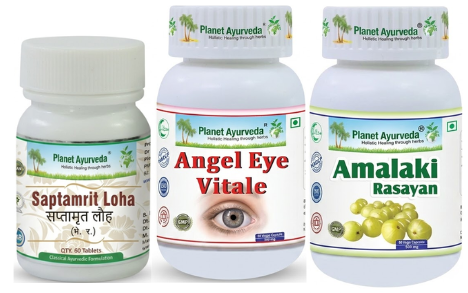
- Saptamrit Loha
- Angel Eye Vitale
- Amalaki Rasayan
Herbal Remedies of Squint Eyes

Product Description
1. Saptamrit Loha
Saptamrit Loha is a classical Ayurvedic formulation traditionally valued for supporting eye health and maintaining healthy vision. It includes ingredients such as Yasthimadhu (Glycyrrhiza glabra), Amalaki (Emblica officinalis), Loha Bhasma (Iron Calx), etc., which are known for their nourishing and rejuvenating properties. This formulation may help nourish the delicate ocular tissues, support visual clarity, reduce eye strain, and promote the overall strength and wellness of the eyes.
Dosage: 2 capsules twice daily with plain water after meals.
2. Angel Eye Vitale
Angel Eye Vitale: Angel Eye Vitale is a carefully formulated Ayurvedic supplement designed to support overall eye health and visual comfort. It contains Amla (Emblica officinalis), Gotu Kola (Centella asiatica), and Bhringraj (Eclipta alba), etc. These herbal ingredients are valued for their nourishing and rejuvenating properties, which may help support healthy vision, reduce eye strain, promote circulation to the ocular tissues, and maintain overall ocular wellness.>
Dosage: 1 capsule twice daily with plain water after meals.
3. Amalaki Rasayan
Amalaki Rasayan is a rejuvenating Ayurvedic formulation containing Amalaki (Emblica officinalis), commonly known as Amla. Rich in natural antioxidants and nourishing properties, it may help support eye health by nourishing the delicate ocular tissues, promoting visual wellness, reducing oxidative stress, and maintaining the overall vitality and strength of the eyes.
Dosage: 1 capsule twice daily with plain water after meals.
Conclusion
Squint (strabismus) is a condition that affects the proper alignment and coordination of the eyes, which may influence visual clarity, depth perception, and overall eye comfort. A supportive Ayurvedic approach focuses on nourishing the ocular tissues, promoting neuromuscular balance, and maintaining overall eye wellness through herbal remedies, specialized therapies, a wholesome diet, and healthy lifestyle practices. Formulations such as Saptamrit Loha, Angel Eye Vitale, and Amalaki Rasayan may help support eye health and visual comfort when used under professional guidance. However, persistent or severe squint, especially in children, should always be evaluated by an ophthalmologist, as early diagnosis and appropriate medical care are essential for preserving healthy vision and preventing long-term complications.

Dr. Vikram Chauhan
https://www.planetayurveda.comDr. Vikram Chauhan (MD - Ayurveda) is a Globally Renowned Ayurveda Physician with Expertise of more than 25 Years. He is the CEO & Founder of http://www.PlanetAyurveda.com, a leading Ayurveda Brand, Manufacturing, and Export Company with a Chain of Clinics and Branches in the US, Europe, Africa, Southeast Asia, India, and other parts of the World. He is also an Ayurveda Author who has written Books on Ayurveda, translated into Many European Languages. One of his Books is "Ayurveda – God’s Manual for Healing". He is on a Mission to Spread Ayurveda All Over the Planet through all the Possible Mediums. With his Vast Experience in Herbs and their Applied Uses, he is successfully treating Numerous Patients suffering from Various Ailments with the help of the Purest Herbal Supplements, Diet, and Lifestyle, according to the Principles of Ayurveda. For More Details, visit - www.planetayurveda.com, www.alwaysayurveda.com
View more posts from this author