Adult Still’s Disease Symptoms, Causes, And Treatment By Ayurveda
Abstract
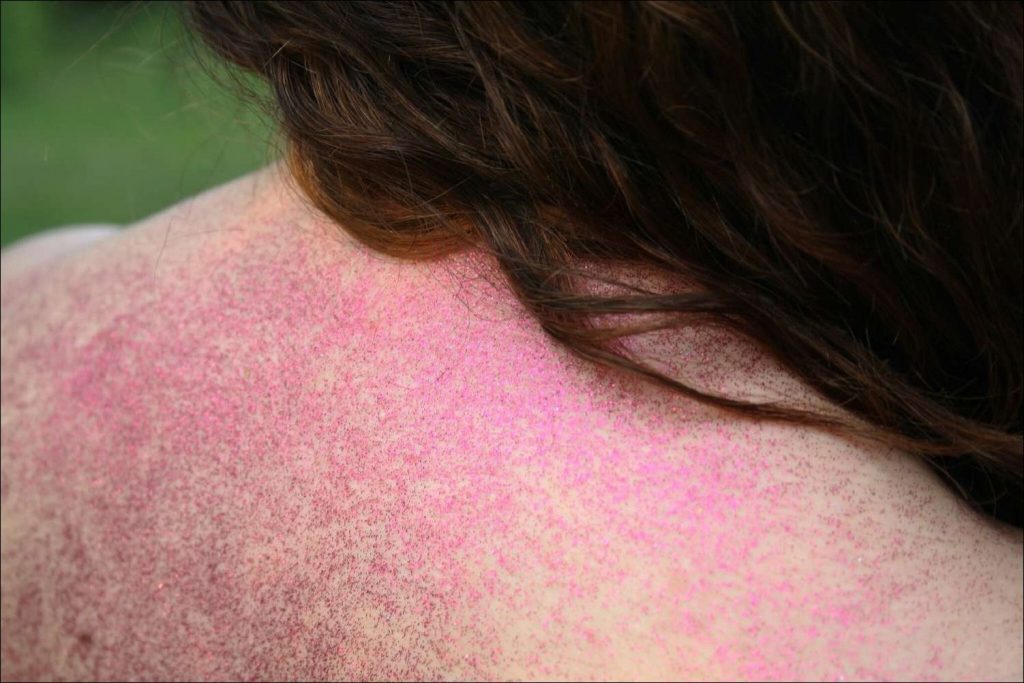
Adult Still’s disease as the name suggests is a disease that affects adults and is an uncommon inflammatory problem that can impact the whole body. The reason for the problem is obscure. Affected people might develop a classical triad of high fevers, a pink or salmon-hued rash, and joint aches. The other features may include muscle aches, sore throat, and other symptoms related to systemic inflammatory conditions. In the text below we shall see this condition in detail and we shall also see its management in the contemporary system of medicine and traditional system of Ayurvedic management. Let’s see !!
Introduction
Adult Still’s disease is an uncommon kind of inflammatory arthritis characterized by rash, joint pain, and high-grade fever. Certain individuals have just one episode of Adult Still’s disease whereas, in others, the condition continues or repeats. This inflammation can destroy the affected joints, especially the wrist joints. Adult Still’s disease is also known as Wissler-Fanconi syndrome. The correlation of Adult Still’s disease can be best established with Yamagata. We shall see its details further in this article. Now let’s see the causes, classification, features, management, and Ayurvedic aspect of the condition.
Causes of Adult Still’s Disease
There is no cause found to date that causes Adult Still’s disease.
Researchers believe that the condition might be due to two types of patterns:
- An extreme that debilitates the patient with patterns of fevers, pain, and other systemic discomforts
- A less severe pattern whose main symptoms are chronic joint pain and arthritis.
Signs and symptoms
- Joint pains
- High-grade fever – 102 F
- Salmon pink maculopapular or macular rash
- Enlarged liver and spleen
- Swollen lymph nodes
- Sore throat
- Neutrophil-predominant elevated white blood cells
- Extreme fatigue and muscle pain
- A less common feature is an accumulation of fluid in the lungs and heart
Pathophysiology
- The exact cause of Adult Still’s disease is unknown. Though it possibly involves interleukin-1.
Investigations
- The diagnosis is completely based on clinical manifestation rather than serological findings.
Management
- Anti-inflammatory medications are used to treat inflammation.
- Steroids for overall systemic symptoms and inflammation.
- Immunosuppressants
- Antirheumatic drugs
Complications
- Joint destruction
- Hemophagocytic lymphohistiocytosis
- Fulminant hepatitis
- Intravascular disseminated coagulation
- Aseptic meningitis
- Sensorineural loss of hearing
Ayurvedic Aspect And Management of Adult Still’s Disease
- The correlation of Adult Still’s disease can be established with Yamagata. The word ‘Amavata’ is composed of two components – ama and vata.
- The vata component is one of the doshas that governs all the functions of the body and also governs pitta and kapha dosha. Generally, vata dosha, when within its normal limits, does a number of functions such as distribution of the essential nutrients, elimination of toxins, and other important functions. All the normal functions are hampered when the vata dosha is vitiated. Vitiated vata dosha results in a number of symptoms that occur due to hampering of the functions performed by the vata dosha. Vitiated vata dosha results in many painful conditions.
- Ama, another component can also cause blocks due to its sticking property. Ama is related to a metabolic toxin that originates from errorful metabolism at the cellular and gut levels. Formation of ama is due to weak digestion which results in indigestion which results in the unprocessed or vicious food essence which gets into the bloodstream being distributed to nourish the tissues. From this, the first dhatu that is rasa dhatu is inaccurately formed and is unprocessed. This contaminated and vicious Sahara rasa (essence) is called ama. Over time, if this condition is not managed the ama gets deposited in the body and causes a number of diseases.
- Amavata is a disease that results due to imbalanced or vitiated vata and ama (vicious food essence). This occurs due to faulty dietary habits and activities, a sedentary lifestyle, weak digestion, and excessive intake of incompatible food such as oil-rich unctuous consumables. Amavata is a condition that afflicts the joints, bones, and soft tissues. From the above text, it comes out to be a disorder due to metabolic disturbance which has its origin in a weak digestive power.
- Symptoms include body aches, lethargy, heaviness, and stiffness in the knees, back, fingers, and joints. Joints make cracking sounds and there is inflammation of the joints. Other symptoms include fever, fatigue, indigestion, fullness in the abdomen, constipation, lack of sleep, altered sleep, and others.
- Management protocol includes correcting the digestion and metabolism, immunomodulation, and managing the damage caused to the musculoskeletal system with panchakarma therapy and herbal formulations. Decoction of shunthi (Zingiber officinale), Goku (Tribulus Terrestris), and Guduchi (Tinospora cordifolia) are helpful in good digestion. Pippalyadi kwath, shunthi churna, panch shama churna, panchkol churna, Vaishnava churna, maharasnadi kwath, Amrit guggul, yograj guggul, amavatari rasa, simhanada guggulu, ajmodadi churna and many others are beneficial in Adult Still’s disease.
Herbal Remedies for Adult Still’s Disease by Planet Ayurveda
Planet Ayurveda is an eminent GMP-certified, ISO 9001:2015 certified and US-FDA registered Ayurvedic Company, which adheres to the objective of manufacturing quality Ayurvedic products as mentioned in a number of ancient texts of Ayurveda. Formulations are manufactured without additives and preservatives and other kinds of chemicals or artificial flavoring agents which can have a number of side effects on the human body. Products manufactured at Planet Ayurveda are pure and devoid of any kind of adulteration. The products are purely organic, vegetarian, gluten-free, and halal-certified. Planet Ayurveda presents its product that effectively manages the condition of Adult Still’s disease.
Following is the list of formulations that are helpful in managing Adult Still’s Disease
Product List
1. Yograj Guggul
2. Boswellia Curcumin
3. Panchtiktaghrit Guggul
4. Amar Sundra Vati
5. Aamvatantak Churna
6. Maha Rasnadi Kwath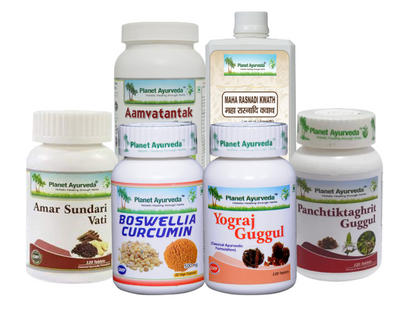

Product Description
1. Yograj Guggul
Yograj Guggul is a classical Ayurvedic proprietary medicine. It is a helpful formulation for musculoskeletal and neurological system disorders. It contains the herbs Amalaki (Emblica officinalis), guggul (Commiphora mukul), haritaki (Terminalia chebula), ela (Elettaria cardamomum), viding (Embelia ribes), gokshur (Tribulus Terrestris), shunthi (Zingiber officinale), bibhitaki (Terminalia bellirica), etc. The herbs of the formulation possess properties that enhance muscle and bone health. Of its anti-inflammatory property, Yograj Guggul is best to manage Adult Still’s disease.
Dosage —TWO TABLETS TWICE A DAY
2. Boswellia Curcumin
Boswellia Curcumin is a product of Planet Ayurveda which is enriched with the goodness of shallaki (Boswellia aristata) and Haridra (Curcuma longa). The herbs have healing properties and also possess analgesic effects which make them an effective formulation for Adult Still’s disease. It regresses the inflammation, heals the damaged joint and also alleviates the pain, and reduces fever.
Dosage –ONE CAPSULE TWICE A DAY
3. Panchtiktaghrit Guggul
Panchtiktaghrit Guggul is a classical herbal formulation that is enriched with the goodness of herbs including neem (Azadirachta indica), giloy (Tinospora cordifolia), vasa (Adhatoda vasica), guggul (Commiphora mukul), patola patra (Trichosanthes dioica), kantkari (solanum xanthocarpum) and many others. The product possesses antipruritic, depurative, neuroprotective, anti-inflammatory, analgesic, anti-rheumatic, and many other properties. With these numerous properties, it is best in managing the condition of Adult Still’s disease.
Dosage —TWO TABLETS TWICE A DAY
4. Amar Sundra Vati
Amar Sundari Vati is a classical ayurvedic formulation which is a marvelous herbomineral blend that helps in improving digestion and acts as an analgesic.
The components of the product are vidang (Embelia ribes), shudra parade (purified mercury), shuddha gandhak (purified sulfur), shuddha vatsanabha (purified Aconitum ferox), pippali (Piper longum), amla (Embelia officinale), haritaki (Terminlaia chebula), bibhitaki (Terminalia Billerica), ela (Elettaria cardamomum) and various others. With its analgesic, healing, and blood cleansing properties, Amar Sundari Vati is an exemplary medicine in managing Adult Still’s disease as it alleviates pain, manages rash, and heals damaged bone tissue.
Dosage –TWO TABLETS TWICE A DAY
5. Aamvatantak Churna
Aamvatantak Churna is known to pacify kapha and vata doshas, which are the culprit of Adult Still’s disease. The product contains ashwagandha (Withania somnifera), suranjaan (Colchicum autumnale), Haridra (Curcuma longa), methi (Trigonella foenumgraecum), gorakhmundi (Sphaeranthus indicus) and sonth (Zingiber officinale). Aamvatantak Churna clears aam and relieves the patient from stiffness and eases the movement of the limb. As the name of the formulation suggests it is a formulation that ends the condition of amavata. It removes the ama which eventually clears the blockage and helps in proper digestion. And pacifying the vata dosha helps in managing Adult Still’s disease.
Dosage – HALF TSP TWICE A DAY WITH WARM WATER
6. Maha Rasnadi Kwath
Maha Rasnadi Kwath is a classical Ayurvedic product that is effective in musculoskeletal disorders particularly helps in bone and joint issues. The formulation contains the herbs bala (Sida cordifolia), eranda (Ricinus communis), devdaru (Cedrus deodara), kachoor (Curcuma zedoaria), vacha (Acorus calamus), badi harad (Terminalia chebula), vasa (Adhatoda vasica), sonth (Zingiber officinale), pippali (Piper longum), shatavari (Asparagus racemosus), atees (Aconitum heterophyllum), ashwagandha (Withania somnifera), amaltas (Cassia fistula), punarnava (Boerhaavia diffusa) and many others. All the herbs pacify the vata dosha and possess anti-inflammatory properties which help in managing the painful condition of Adult Still’s disease.
Dosage ––TWO TSP TWICE A DAY
CONTACT PLANET AYURVEDA TO PROVIDE YOU WITH THE COSTING / ORDERING AND DELIVERY INFORMATION AT – COSTING.PLANETAYURVEDA@GMAIL.COM OR CALL AT +91-172-5214040
Conclusion
Adult Still’s Disease is a type of Still’s disease that is a rare autoinflammatory systemic condition. The condition causes joint pain, high fever, macular rash, splenomegaly, hepatomegaly, inflamed lymph nodes, and other features. In the modern system of medicine, corticosteroids, anti-rheumatic, immunosuppressants, and nonsteroidal anti-inflammatory drugs are used which exhibit a number of side effects. Whereas in Ayurveda, the condition is related to the disease ‘Yamagata’ as mentioned in the Ayurvedic texts. As Yamagata occurs due to weak digestive fire, ama production and vitiation of vata and kapha dosha thus managing these issues eventually results in better condition of the patient as the abnormal things are rectified from the root with herbal remedies. The products mentioned above are really useful in managing the condition of Adult Still’s disease with promising and productive outcomes.