Category: Skin Health

Ayurvedic Treatment for Phytophotodermatitis with Herbal Remedies

ABSTRACT

Dermatitis is an inflammation or irritation of the skin caused by various external and internal factors. It is caused by an active immune system, infections, allergies, irritating substances, and more. In general, dermatitis can cause symptoms like rashes, blisters, itching, scaling, swelling, pain, burning sensation, etc. It is quite disturbing and discomforting. Dermatitis is a non-contagious skin condition. There are many types of dermatitis like atopic dermatitis, seborrheic dermatitis, contact dermatitis, diaper dermatitis, etc. Phytophotodermatitis is one of them. It is a type of contact dermatitis. We shall be discussing here the detailed description of phytophotodermatitis, its causes, and its management in contemporary as well as traditional systems of medicine.

Phytophotodermatitis

Introduction

It is very much clear from the name itself phyto stands for plant, photo stands for ultraviolet rays or sunlight and dermatitis stands for inflammation of the  skin. Phytophotodermatitis is a non immunogenic inflammation of the skin that occurs due to contact with certain plants which contain photosensitising substances called furocoumarins (psoralens) which get activated following the exposure of sunlight (especially ultraviolet rays ). Several hours after exposure, burning erythema occurs, followed by edema and formation of vesicles (bullae). Wet skin, heat, sweating enhance the phototoxic effect. This results in hyperpigmentation which may persist for several weeks to months. According to the ayurveda dosha involved here is bhrajaka pitta (type of pitta that lives in the skin) which causes rakta dhatu dushti.

Causes and Aggravating Factors

  • Exposure to phytotoxic plants and their associated products
  • Heat
  • Sunny weather
  • Using certain perfumes or oils that contain certain chemicals.

NOTE:- Most phototoxic plants belong to the family mbelliferae, Rutaceae, compositae, and moraceae families. Fennel, fig, wild carrot, lime, etc are some of the phytotoxic plants.

Signs and Symptoms

Usually the symptoms of phytophotodermatitis start within 24 hours and peak around 48-72 hours. Some of the symptoms are as follows:

  • Itching
  • Redness or discolouration
  • Swelling
  • Blister over large area
  • Burning sensation
  • Pain
  • Tenderness
  • Crusted patches of skin when blisters busted
  • Hyperpigmentation

Diagnosis

Diagnosis of phytophotodermatitis is based on the history of the person by  asking about exposure to plants or sunlight or any chemical substance  and carrying out physical examination. If still not clear further tests may be required like patch test or skin biopsy.

Differential Diagnosis

Phytophotodermatitis is often misdiagnosed for certain conditions given below:

  • Cellulitis
  • Burns
  • Fungal skin infection
  • Photosensitivity due to certain drug
  • Urticaria (hives)

Preventive Measures

  • Avoid the contact with plant that may causing skin reaction after identifying
  • Washing the skin especially hands after the contact
  • Using sunscreen lotion with high SPF
  • Covering up the skin while going out

Management

  • Cold compression or ice pack over the affected area can provide some relief
  • Corticosteroids (oral)
  • Anti inflammatory
  • Calamine lotion (topically)
  • Topical steroids
  • Antiseptic lotions
  • Wear loose clothes

Ayurvedic Aspect and Management of Phytophotodermatitis

Ayurveda is an alternative system of medicine with historical roots in the Indian subcontinent. Ayurveda treatises describe three elemental dosha & nbsvata pitta and kapha and state that balance of doshas restores health while imbalance results in disease. As in phytophotodermatitis the dosha involved here is pitta as it easily gets vitiated by hot conditions like sunlight. And the pitta involved is particularly  bhrajaka pitta which is seated on our skin. Aggravation of pitta dosha vitiated rakta dhatu giving all the symptoms like itching, redness etc. Phytophotodermatitis is called kushta vyadhi in Ayurveda

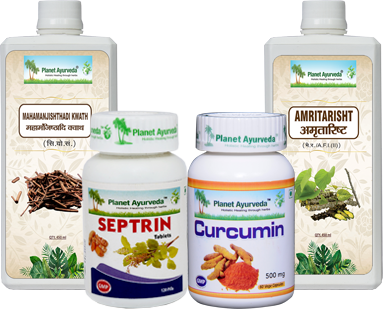
Some herbs like kumari(Aloe barbadensis), khadir (Areca catechu), haridra (Curcuma longa), neem (Azadirachta indica), sariva (Hemidesmus indicus) and various others are helpful in managing symptoms. Some classical Ayurvedic  formulations that are very potent are gandhak rasayan, mahamanjisthadi kwath, khadirarishta, chandan asav, and many others.

Home Remedies

  • Aloe Vera gel should be directly applied over the affected part. Aloe vera gives an excellent cooling effect and even repairs the damaged cells
  • Apply sandalwood paste with rose water or cucumber juice

Herbal Remedies for Phytophotodermatitis by Planet Ayurveda

Planet Ayurveda is globally making Ayurveda acceptable. Planet Ayurveda is an eminent GMP-certified, ISO 9001:2015 certified and US-FDA registered Ayurvedic Company which adheres to the objective of preparing quality ayurveda products as mentioned in our classical Ayurveda context. Formulations are strictly prepared under the supervision of our MD experts. Products contain no added preservatives, chemicals, or artificial flavors. Formulations are 100% pure and natural, devoid of any kind of adulteration, and have no side effects. Here are some products offered by Planet Ayurveda for phytophotodermatitis.

Following Are the List of Products Useful in Managing Phytophotodermatitis

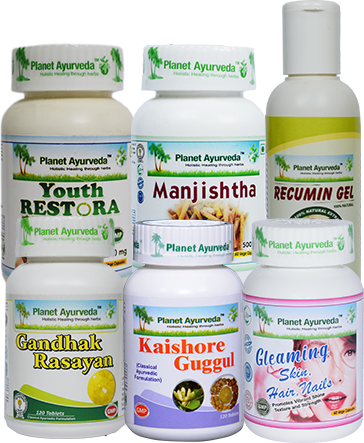
  1. Gleaming Skin, Hair, Nails Formula
  2. Gandhak Rasayan
  3. Kustha Rakshas Tel
  4. Royal Honey Shower Gel
  5. Dermo Plan Syrup
    Herbal Remedies For PhytophotodermatitisBuy Herbal Remedies For Phytophotodermatitis

Product Description

1. Gleaming Skin, Hair, Nails Formula

Gleaming skin, hair, nail formula is the product of Planet Ayurveda formulated by the combination of herbs like manjishtha  (Rubia cordifolia), pit papda (Fumaria officinalis), sariva (Hemidesmus indicus) and kumari (Aloe barbadensis). It pacifies the pitta dosha and rakta dhatu dushti. It purifies blood and gives a cooling effect and hence manages the discomforting symptoms of phytophotodermatitis.

Dosage: 1-2 Capsules twice daily, with plain water, after meals.

2. Gandhak Rasayan

Gandhak rasayan prepared by Planet Ayurveda is a classical formulation in vati form (tablet) that contains shuddha gandhak (purified sulfur). Its noble ayurvedic formula does wonders for people with skin disorder. Gandhak also acts as potent antiviral, antibacterial, anti-inflammatory and antipyretic. It provides relief with the symptoms  like itching, redness, rashes, blisters, burning sensation.

Dosage: 1-2 tablets twice or thrice daily with lukewarm water.

3. Kustha Rakshas Tel

Kustha Rakshas tel is  exclusively formulated by Planet Ayurveda with a mix of  herbs for skin related conditions. It is really wonderful in blood related disorders. It pacifies pitta dosha and rakta dhatu dushti. The ayurvedic oil is made up of rasona (Allium sativum), bakuchi (Psoralea corylifolia), aragwadha (Cassia fistula), shuddha parada (purified mercury), shuddha gandhak (purified sulfur), rasa sindoors (combination of mercury and sulphur), tamra bhasma (calcined copper), manahshila (arsenic sulphide) and mustard oil. Bakuchi, tamra bhasm, ras sindoor, gandhak are very potent in managing kustha (skin disorder).

Dosage: It has to be applied externally twice or thrice a day. Before application kindly wash the affected area.

4. Royal Honey Shower Gel

Royal honey shower gel is the formulation by Planet Ayurveda which is very soothing and calming. It has  honey, aloe vera (Aloe barbadensis), tea tree extract (Melaleuca) (alternifolia) and other things. The ingredients present in the gel gives a cooling effect making skin relieved from itching, redness, and rashes. Hence giving releve from the symptoms of phytophotodermatitis.

Method of Application: Squeeze a small amount onto a wet body sponge or pouffe. Work into a rich creamy lather and then rinse clean.

5. Dermo Plan Syrup

Dermoplan is a polyherbal formulation by Planet Ayurveda which provides healthy skin. The syrup contains the extract of the herbs including manjistha (Rubia cordifolia), giloy (Tinospora cordifolia), chopchini (Smilax china), sariva (Hemidesmus indicus), neem (Azadirachta indica), khadir (Areca catechu), haridra (Curcuma longa), shobhanjan (Moringa oleifera), gorakhmundi (Sphaeranthus indicus) and others. All the skin disorders are due to pitta and rakta dushti hence dermo plan syrup  acts as a very good blood purifier. With the amalgam of such good herbs Dermo plan syrup is able to manage the symptoms of phytophotodermatitis.

Dosage: 1-2 teaspoons twice.

Conclusion

According to the above mentioned description, phytophotodermatitis is a skin inflammatory condition caused by contact with certain plant chemicals (furocoumarins)  followed by sunlight giving rise to symptoms like blisters, burning sensation, inflammation etc. In modern medicine symptoms can be relieved by anti inflammatory, anti histamines. Ayurveda manages the disease by balancing pitta and rakta and providing healthy looking skin. Products prepared by Planet Ayurveda are of best quality and have no side effects. Products mentioned here are miraculous in managing the symptoms of phytophotodermatitis.

What Is Gum Recession? How Ayurveda Can Help?

GUM-RECESSION

ABSTRACT

Gum recession is a condition when your gum tissue pulls far from your teeth, exposing the roots beneath. It’s due to more than a few factors, which includes aggressive brushing, smoking or even genetics. This makes your teeth more liable to cavities. Your enamel can grow to be more touchy when brushing or when eating. Gum recession can be mild, slight or severe. It is able to affect one tooth or multiple enamel. Conventional medicines include antibiotics, antimicrobial mouth rinses and surgical procedures. Gum recession cannot be reversed, hence it should be taken seriously and go for the treatment as soon as possible. In this article you will get to know all about gum recession, home remedies for it and Ayurvedic treatment to manage this condition naturally.

GUM-RECESSION

INTRODUCTION TO GUM RECESSION

Gum recession is the method in which the margin of the gum tissue that surrounds the enamel wears away, or pulls back, exposing greater of the enamel, or the enamel’s root. When gum recession takes place, “wallet,” or gaps, shape among the tooth and gum line, making it easy for disease-inflicting microorganisms to build up. If left untreated, the assisting tissue and bone systems of the teeth may be severely damaged, and can in the end bring about tooth loss.

Gum recession is a not unusual dental hassle. Most humans do not know they have gum recession because it takes place regularly. The first signal of gum recession is commonly enamel sensitivity, or you may word a tooth looks longer than everyday. Typically, a notch may be felt close to the gum line. Gum recession isn’t something you want to disregard.

SIGNS AND SYMPTOMS OF GUM RECESSION

The maximum apparent signal of gum recession is enamel root uncovering. Other gum recession caution signs consist of:

  • Pain or soreness near your gum line.
  • Sensitivity to warmth, bloodlessness and candies.
  • Sensitivity when brushing and flossing your tooth.
  • Sensitivity throughout dental cleanings.

CAUSES OF GUM RECESSION:

Gum recession reasons encompass:

  • Brushing too tough or too aggressively.
  • Dental plaque or tartar buildup.
  • Periodontal ailment.
  • Trauma or damage on your gum tissue.
  • Abnormal enamel positioning.
  • Smoking or chewing tobacco.
  • Lip and tongue piercings.

NATURAL AND HOME REMEDIES FOR RECEDING GUMS:

1. Green Tea

Green tea might also include compounds that manage the population of bacteria internal your mouth. This can help beautify your tooth and gum fitness. You can strive drinking two cups of green tea every day. Ensure you don’t upload something to the tea, including sugars or flavorings which could negate the blessings and deliver microorganisms something to feed on.

2. Practice oil pulling

It is an Ayurvedic practice that helps in controlling bacteria, reducing plaque buildup and also relieves the symptoms of gum disease. Take one tablespoon of coconut oil and swish it in your mouth and also use your tongue in pulling the oil between your teeth. Do this for around 10-15 minutes and then rinse your mouth using saltwater. You can brush your teeth after this.

3. Turmeric paste

It can also help in controlling the recession of gums as there is curcumin which possesses anti inflammatory and antioxidant properties. Turmeric paste can help in relieving pain, easing inflammation and reducing swelling. This herb also prevents the spread of bacteria in the oral cavity which causes many oral ailments.

4. Indian gooseberry

Eat Indian gooseberry or amla as it can help in arresting your recession of gums and also enhances the oral health. There are many nutrients in it like vitamin C which can help in supporting the health of connective tissues and strengthening the gums health.

5. Aloe vera gel

Massage your gums with aloe vera gel as it helps in fighting the inflammation in the gums and also helps in repairing the damaged gums as well. Aloe vera is also full of antibacterial properties which helps in treating plaque buildup and oral infections.

HERBAL REMEDIES OF PLANET AYURVEDA FOR GUM RECESSION:

Planet Ayurveda is a herbal pharmaceutical company which is known worldwide for its herbal remedies and products. These herbal remedies and products are produced from the best and authentic quality of herbs that possess numerous medicinal properties. Preparation of the medicines occurs following the authentic Ayurvedic principles which make them best in market. For Gum recession, Planet Ayurveda offers a combination of herbal remedies.

Products List:

Gum Care Pack and Irimedadi oil:

  1. Gum care powder
  2. Coral calcium complex
  3. Arjun Saar
  4. Irimedadi oil

Herbal Remedies of Gum RecessionHerbal Remedies For Gum Recession

Products Description:

1. Gum care powder

This herbal powder is prepared using Mustak (Cyperus rotundus), Khadir (Acacia catechu), shunthi (Zingiber officinale), Haritaki (Terminalia chebula), Karpur (Cinnamomum camphora), Poog (Areca catechu) etc. All these herbs synergistically work to treat gum disease and boost their health.

Direction-Massage your gums and teeth with 3-6 grams of powder for 2-3 minutes gently. Rinse mouth with lukewarm water.

2. Coral calcium complex

Coral calcium complex capsules are formulated using Akik pishti (Agate), Praval pishti (coral), Mukta pishti (pearl), Giloy (Tinospora cordifolia), Jawar mohra pishti (An Ayurvedic calcium compound), and Kamdudha ras. These Ayurvedic capsules help to boost the immune system, and maintain healthy levels of calcium in the body that can help in preventing damage to teeth and gums.

Dosage– Take 1 capsule twice daily after meals with plain water.

3. Arjun saar

Arjun saar consists of a combination of juices of Arjun (Terminalia arjuna) and Amla (Emblica officinalis). These juices are great for treating gum diseases and fights bacterial growth and infections in the oral cavity. This Ayurvedic formulation is amazing to treat the infections and diseases of gums that causes recession of gums.

Dosage– Take 30 ml of Arjun saar and mix it with equal amounts of water and rinse your mouth with it twice daily.

4. Irimedadi oil

This Ayurvedic oil helps in treating dental and oral problems like gum recession. Irimedadi oil is prepared using herbs like Irimedadi (Acacia farnesiana), Jaiphal (Myristrica fragrans), Ela (Elettaria cardamomum), Laung (Syzygium aromaticum), Dalchini (Cinnamomum verum), Manjishtha (Rubia cordifolia), Yashtimadhu (Glycyrrhiza glabra), Lodhra (Symplocos racemosa) etc. This oil also relieves inflammation and pain in the gums.

Direction- Take few drops of oil and apply on the affected area

CONCLUSION

Gum recession should not be ignored as if it reaches a severe condition you can even lose your tooth. The herbal remedies mentioned above will help in maintaining your oral hygiene and health and help in controlling the gum disease which causes gum recession. If you want to get Ayurvedic treatment for your receding gums email us at herbalremedies123@yahoo.com and you can get to know more about us at www.PlanetAyurveda.com