September 1, 2026
Herbal Remedies of Sport Injuries And Ayurvedic Treatments – Causes, Symptoms, Diagnosis & Treatment
Abstract
Sports injuries are physical injuries that occur during exercise, training, competition, or recreational activities. They may involve muscles, tendons, ligaments, bones, joints, or nerves and can range from minor strains to fractures and ligament ruptures. Common examples include sprains, muscle strains, contusions, tendinopathies, dislocations, and overuse injuries. Their management depends on the type and severity of tissue damage, with early assessment being important when significant pain, deformity, instability, or inability to bear weight is present. Modern sports medicine combines acute injury care, pain management, rehabilitation, progressive loading, and sport-specific conditioning. Ayurveda approaches musculoskeletal injury through concepts such as Vata aggravation, Abhighata (trauma), Shotha (swelling), Vedana (pain), and Dhatu involvement. Ayurvedic interventions such as appropriate Snehana (Oleation therapy), Swedana (Sudation therapy), external applications, therapeutic exercise, and selected herbal formulations may be incorporated according to the stage and nature of the injury. An integrated approach can emphasise safe recovery, restoration of movement, and prevention of recurrence.
Introduction
Sports participation improves cardiovascular fitness, muscle strength, bone health, coordination, and psychological well-being. However, repetitive loading, sudden movements, physical contact, inadequate preparation, or inappropriate training progression can result in injury. Sports injuries may occur suddenly, such as when an athlete twists an ankle, falls, collides with another player, or lands awkwardly. Others develop gradually because repetitive stress exceeds the body’s capacity to recover. The severity of an injury is not determined only by pain. A seemingly minor injury may involve significant ligament or tendon damage, while a painful contusion may resolve without complications. Therefore, understanding the mechanism of injury and assessing functional limitations are important. Modern management increasingly emphasises controlled recovery rather than prolonged complete immobilisation. For many soft-tissue injuries, early protection followed by appropriately graded movement can help restore function and reduce stiffness. Ayurveda offers a traditional framework that focuses on the affected tissues, the nature of trauma, pain, swelling, and the individual’s overall strength.
Types of Sports Injuries
Sports injuries are broadly classified based on their onset, structural involvement, and tissue mechanical characteristics. These are as follows:
Acute Injuries
These result from a sudden, macro-traumatic event during physical activity, such as a direct blow, sudden twisting, or high-impact collision. Common acute injuries include muscle strains, ligament sprains, joint dislocations, bone fractures, and acute contusions.
Overuse and Chronic Injuries
These develop progressively due to repetitive micro-trauma, submaximal load stress, inadequate recovery intervals, or biomechanical flaws. Examples include tendonitis, plantar fasciitis, stress fractures, medial tibial stress syndrome, and bursitis.
Soft Tissue Injuries
Involving muscles, tendons, ligaments, and fascia, these injuries account for the majority of sports-related presentations. They range from Grade I micro-tears to Grade III complete ruptures.
Hard Tissue Injuries
Involving bones and cartilage, these require careful structural assessment to rule out displacement, joint instability, or long-term articular damage.
Causes and Risk Factors
The development of sports injuries involves an interplay between intrinsic (internal) and extrinsic (external) factors.
Biomechanical and Structural Vulnerabilities
Anatomical variations, such as limb length discrepancies, hypermobility, flat feet, or poor posture, alter force distribution during physical exertion, placing excessive stress on specific joints and tissues.
Inadequate Warm-up and Conditioning
Muscle tissue that is cold, inflexible, or poorly conditioned lacks the elasticity needed to absorb sudden tensile forces, significantly increasing the likelihood of tears and strains.
Overtraining and Insufficient Recovery
Excessive training volume or intensity without adequate rest periods leads to cumulative fatigue. Fatigue impairs neuromuscular coordination and suppresses cellular tissue repair mechanisms.
Poor Technique and Equipment
Flawed movement mechanics during running, jumping, or lifting transfer stress to vulnerable soft tissues. Unsuitable footwear or inadequate protective gear further exacerbates injury risks.
Environmental Factors
Uneven playing surfaces, extreme weather conditions, or slippery turf increase the likelihood of trips, falls, and unexpected joint torque.
Pathophysiology of Sports Injuries
The biological response depends on the tissue involved. When muscles, ligaments, tendons, or other structures are damaged, the body initiates an inflammatory and repair response. Blood vessels and immune cells participate in removing damaged tissue and initiating healing. Acute inflammation can produce pain, swelling, warmth, tenderness, and restricted movement. Although excessive swelling may interfere with mobility, inflammation itself is part of the normal repair process. Muscle injuries can involve disruption of muscle fibers, while ligament injuries range from microscopic stretching to partial or complete tears. Tendons may develop microscopic structural changes when repetitive loading repeatedly exceeds their capacity to adapt. Healing generally involves overlapping phases of inflammation, tissue repair, and remodelling. Rehabilitation must therefore change as the injury progresses. Early protection may be followed by controlled movement, strengthening, balance training, and sport-specific activity.
Signs and Symptoms
The signs and symptoms of sports injuries vary depending on the severity and anatomical site involved:
Pain
Can range from sharp, acute pain at the moment of impact to a dull, throbbing ache that persists during rest or movement.
Swelling and Inflammation
Localised oedema due to fluid accumulation and vascular permeability in injured tissues.
Erythema and Warmth
Increased local blood flow around the site of acute trauma.
Functional Limitation
Marked reduction in range of motion, weakness during muscle activation, or inability to bear weight on the affected limb.
Instability and Deformity
Present in severe joint dislocation, complete ligamentous disruption, or bone displacement.
Diagnosis
Accurate diagnosis involves combining clinical history, physical examination, and advanced imaging modalities:
History Taking
Details regarding the mechanism of injury, onset, training history, previous injuries, and specific pain patterns.
Physical Examination
Palpation to identify tender points, passive and active range of motion testing, joint stability tests, and functional strength assessments.
Imaging Modalities
Radiographs (X-rays) to rule out fractures or dislocations; Magnetic Resonance Imaging (MRI) to evaluate soft tissue structures like ligaments, tendons, menisci, and articular cartilage; and Diagnostic Ultrasound for real-time dynamic evaluation of tendon and muscle tears.
Modern Management
The immediate phase of sports injury management typically follows the traditional principles of protection, rest, ice, compression, and elevation (PRICE), progressing in recent sports medicine literature to the POLICE protocol (Protection, Optimal Loading, Ice, Compression, Elevation) or the PEACE & LOVE framework (Protection, Elevation, Avoid Anti-inflammatories, Compression, Education & Load, Optimism, Vascularisation, Exercise). Acute medical care aims to mitigate excessive oedema and manage pain through short-term analgesics, followed by structured physical therapy focused on restoring mobility, strength, proprioception, and sport-specific biomechanics.
Rehabilitation and Return to Sport
Recovery should be based on function rather than simply the disappearance of pain. Rehabilitation usually progresses through several stages. The initial stage focuses on protecting injured tissues and controlling symptoms. The next stage emphasises restoring range of motion and basic muscle activation. Strengthening is then progressively increased to restore capacity. Balance and proprioception are particularly important after lower-limb injuries because they help the athlete regain control of the joint during dynamic movements. Before returning to competitive sport, the athlete should demonstrate appropriate strength, mobility, coordination, and sport-specific tolerance. Returning too quickly can increase the risk of reinjury. Adequate sleep, hydration, protein intake, and overall nutrition also support the physiological demands of recovery.
Prevention of Sports Injuries
Prevention begins before the injury occurs. A structured warm-up prepares the body for activity, while appropriate technique reduces unnecessary mechanical stress. Training should increase progressively rather than suddenly. Rest and recovery periods are essential, particularly when the same muscle groups or joints are repeatedly loaded. Strengthening exercises can improve muscular capacity and joint control. Balance and neuromuscular training are particularly useful in sports involving jumping, cutting, and rapid changes in direction. Appropriate footwear and sport-specific protective equipment should be used. Athletes should also address previous injuries and complete rehabilitation before returning to unrestricted activity.
Ayurveda Insight
Ayurveda describes traumatic injury under the broader concept of Abhighata, with manifestations such as Vedana (pain), Shotha (swelling), restricted movement, and tissue disturbance. Ayurveda explains the pathophysiology of trauma through the lens of the three Doshas (Vata, Pitta, and Kapha) and the Dhatus (body tissues), specifically Mamsa (muscle), Sira (blood vessels and nerves), Snayu (tendons and ligaments), Asthi (bone), Majja (marrow and nervous tissue), and Sandhi (joints).
Vata Dominance in Injury
External impact instantly causes an acute surge and disruption of Vata Dosha, particularly Vyana Vayu, which governs movement and circulation. Vitiated Vata accounts for sharp, radiating pain, stiffness, loss of movement, and tissue degeneration (Kshaya).
Pitta and Inflammation
The immediate inflammatory response—characterised by heat, redness, burning sensation, and oedema—is driven by Pitta Dosha and Rakta Dhatu (blood).
Kapha and Swelling/Stability
Accumulation of fluid, swelling, and subsequent stiffness involve Kapha Dosha. Healthy Kapha provides joint lubrication (Sleshaka Kapha) and structural stability; however, unbalanced Kapha leads to sluggish fluid movement and chronic stiffness.
According to Ayurvedic traumatology, soft tissue structures like tendons and ligaments are considered Upadhatus (secondary tissues) of Meda (fat tissue) and Rasa (plasma). Restoring these tissues requires targeted therapies that balance local Doshas, clear blood stagnation, promote tissue nutrition, and strengthen the structural matrix.
Ayurvedic Management Strategies
Ayurvedic treatment for sports injuries adopts a phased approach based on the acute or chronic stage of the injury:
Acute Phase Management (Amavastha)
In the immediate aftermath of an acute injury accompanied by severe swelling, heat, and Pitta-Rakta involvement, heavy oily applications or deep tissue therapies are contraindicated.
Lepa (Topical Herbal Pastes)
Application of cooling, anti-inflammatory, and astringent herbal pastes such as Shatadhauta Ghrita, or pastes made from chandana (sandalwood), etc., to calm local heat, soothe damaged capillaries, and reduce swelling.
Pichu
Placing a cotton pad soaked in medicated oils or decoctions over the affected area to relieve acute discomfort without causing deep tissue friction.
Cold Fomentation (Sheeta Seka)
Pouring cool herbal decoctions made from Pitta-soothing herbs over the injured joint.
Sub-acute and Chronic Phase Management (Nirama State)
Once the initial heat and sharp inflammation subside, treatment shifts toward relieving stiffness, dispelling Vata, restoring circulation, and promoting cellular regeneration.
Abhyanga and Snehana (Therapeutic Oleation)
Application of specific medicated oils tailored to the injury type. Mahanarayana Taila, Ksheerabala Taila, Dhanwantharam Taila, and Murivenna are extensively used. Murivenna—a traditional Ayurvedic oil containing coconut oil, aloe vera, betel leaf, and onion—is renowned for accelerating the healing of soft tissue injuries, muscle tears, and sprains.
Swedana (Fomentation)
Thermal therapies to soften rigid muscles and improve joint mobility. Patra Pinda Sweda (fomentation using cloth boluses filled with medicated leaves fried in oils) and Shashtika Shali Pinda Sweda (bolus fomentation using processed rice cooked in milk and herbal decoctions) nourish wasted or torn muscle tissue, reduce pain, and improve neuromuscular function.
Janu Basti / Kati Basti / Griva Basti
Localised oil pooling therapies where a dam made of dough is built over an injured joint (such as the knee, lower back, or shoulder) and filled with warm medicated oil. This provides deep, continuous nourishment to worn cartilage, ligaments, and tendons.
Bandhana (Therapeutic Bandaging)
Ancient Ayurvedic texts detail specialised bandaging techniques using cotton cloths soaked in medicated oils or pastes to immobilise joints, stabilise fractures, and support soft tissue alignment during the healing process.
Herbal Remedies for Sports Injuries by Planet Ayurveda
Planet Ayurveda is an Ayurvedic wellness brand offering a wide range of herbal and traditional formulations inspired by classical Ayurvedic principles. Its products use carefully selected herbs and natural ingredients to support areas such as digestion, immunity, joint and bone health, skin care, women’s wellness, and overall vitality. The brand combines traditional Ayurvedic knowledge with modern quality standards to provide convenient wellness solutions. Planet Ayurveda focuses on promoting holistic health and making Ayurvedic wellness practical for modern lifestyles. Here, in this article, we are going to discuss some herbal formulations by Planet Ayurveda for the management of Sports injuries. Let’s Start!
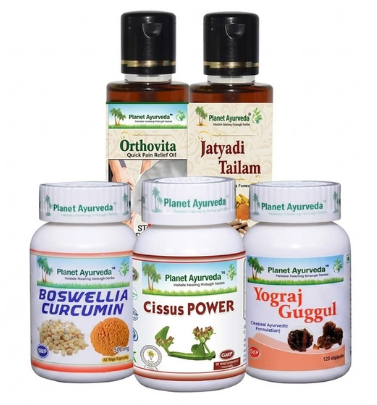
- Boswellia-Curcumin
- Yograj Guggul
- Cissus Power
- Jatyadi Tailam
- Orthovita Oil
Herbal Remedies for Sport Injuries

Product Description
1. Boswellia-Curcumin
Boswellia-Curcumin Capsules provide supportive care during recovery from sports injuries through the combined properties of Boswellia serrata and Curcuma longa (turmeric). Their active compounds help regulate inflammatory pathways associated with muscle, joint, and soft-tissue irritation after physical activity. This support is useful for managing exercise-related soreness, stiffness, and musculoskeletal discomfort. The formulation also promotes comfortable movement during the rehabilitation phase and supports the body’s natural recovery processes. Its anti-inflammatory action complements progressive strengthening and mobility exercises during rehabilitation. Along with proper rest, nutrition, and physiotherapy, it supports a balanced approach to sports-injury recovery.
Dosage: 2 Capsules twice daily after meals with water.
2. Yograj Guggul
Yograj Guggul, containing Commiphora mukul, Cyperus rotundus, Plumbago zeylanica, Emblica officinalis, Terminalia bellirica, Terminalia chebula, and several other classical ingredients, is traditionally used in Ayurveda to support musculoskeletal health and recovery from physical strain. In sports injuries, it helps maintain healthy circulation to affected tissues and supports the body’s natural repair mechanisms. The formulation is valued for its role in reducing stiffness, promoting flexibility, and improving joint mobility after injury. Its ingredients also support the removal of metabolic waste products generated during intense physical activity. From an Ayurvedic perspective, it helps balance aggravated Vata Dosha, which is commonly associated with pain, restricted movement, and tissue discomfort following trauma. Regular use supports smoother rehabilitation and helps restore functional movement in muscles and joints. It serves as a supportive component in the overall management of sports-related musculoskeletal injuries.
Dosage: 2 tablets twice daily after meals with water.
3. Cissus Power
Cissus Power, containing Hadjod (Cissus quadrangularis), provides Ayurvedic support for recovery from sports-related musculoskeletal injuries. Hadjod is traditionally recognised for supporting bone strength, tissue repair, and musculoskeletal resilience, making it particularly relevant after strains, sprains, and physical trauma. Its phytoconstituents support the body’s natural healing processes and help maintain healthy connective-tissue function. The formulation also supports recovery when physical activity places repeated stress on bones and joints. From an Ayurvedic perspective, Hadjod is valued for strengthening injured tissues and supporting Vata balance after trauma. It helps maintain mobility and functional recovery during rehabilitation. Overall, Cissus Power serves as a supportive herbal formulation alongside appropriate rest, physiotherapy, and progressive exercise.
Dosage: 1 Capsule twice daily after meals with water.
4. Jatyadi Tail
Jatyadi Tail, containing herbs such as Chameli (Jasminum officinale), Neem (Azadirachta indica), Patola Patra (Stereospermum chelonoides), Madhuuchchhishta (Beeswax), Mulethi (Glycyrrhiza glabra), Koot/Kushtha (Saussurea lappa), and many other ingredients, is traditionally used to support the healing of skin and superficial soft-tissue injuries. In sports injuries involving abrasions, minor cuts, or damaged skin, these ingredients support tissue repair and maintain a healthy local healing environment. Neem and other herbs contribute traditional antimicrobial and soothing properties, while beeswax helps provide a protective, moisturising layer over the skin. The oil helps relieve local dryness and discomfort during the healing process. Its traditional use is particularly relevant for superficial injuries rather than deep muscle, ligament, or bone damage. Thus, Jatyadi Tail serves as supportive topical care during the recovery of minor sports-related skin injuries.
5. Orthovita Oil
Orthovita Oil, containing Shul Gajendra Oil, Gandhapura Oil, Turpentine Oil, Saindhavadi Taila, Prasarini Oil, and Camphor, provides topical support for sports-related muscle and joint discomfort. Gandhapura oil and camphor produce a soothing counter-irritant effect that helps ease localised pain and stiffness. Saindhavadi Taila and Prasarini Oil are traditionally used in Ayurveda to support Vata-related musculoskeletal discomfort and restricted movement. The formulation promotes a warming, soothing sensation that can improve comfort during recovery. Gentle massage also supports local circulation and mobility of muscles and joints. It is particularly useful as supportive external care during the rehabilitation phase after physical strain or minor injuries.
Dosage of Jatyadi Tailam and Orthovita Oil: Mix both oils and warm the mixture using the water-bath method. Do not heat the oils directly over a flame or heating element. Once comfortably warm, apply the mixture to the affected area and massage gently.
Conclusion
Sports injuries range from minor strains and sprains to complex injuries involving bones, ligaments, tendons, muscles, and joints. Successful recovery depends on accurate assessment, appropriate early care, progressive rehabilitation, adequate nutrition, and a carefully planned return to activity. Modern sports medicine emphasises protection during the acute phase followed by gradual restoration of movement, strength, coordination, and sport-specific function. By bridging functional biomechanical principles with the profound insights of Ayurvedic traumatology, athletes and active individuals can achieve thorough rehabilitation. Ayurvedic modalities—ranging from targeted topical oil therapies and specialised bandaging to internal rejuvenative remedies work synergistically to calm vitiated Vata, reduce chronic inflammation, and rebuild damaged tissues. Incorporating these integrative techniques into sports rehabilitation protocols fosters faster recovery, minimises re-injury risk, and enhances overall physical vitality.

Dr. Vikram Chauhan
https://www.planetayurveda.comDr. Vikram Chauhan (MD - Ayurveda) is a Globally Renowned Ayurveda Physician with Expertise of more than 25 Years. He is the CEO & Founder of http://www.PlanetAyurveda.com, a leading Ayurveda Brand, Manufacturing, and Export Company with a Chain of Clinics and Branches in the US, Europe, Africa, Southeast Asia, India, and other parts of the World. He is also an Ayurveda Author who has written Books on Ayurveda, translated into Many European Languages. One of his Books is "Ayurveda – God’s Manual for Healing". He is on a Mission to Spread Ayurveda All Over the Planet through all the Possible Mediums. With his Vast Experience in Herbs and their Applied Uses, he is successfully treating Numerous Patients suffering from Various Ailments with the help of the Purest Herbal Supplements, Diet, and Lifestyle, according to the Principles of Ayurveda. For More Details, visit - www.planetayurveda.com, www.alwaysayurveda.com
View more posts from this author