April 11, 2026
Latest Piles Surgeries – Types, Benefits, Recovery & Ayurvedic Support to Prevent Recurrence
ABSTRACT
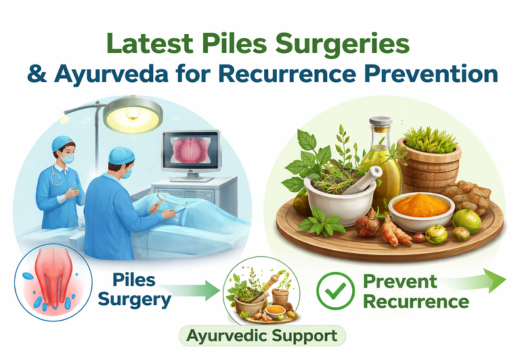
Piles, also known as hemorrhoids, are a common anorectal condition characterized by swollen veins in the rectal and anal region, leading to symptoms such as bleeding, pain, itching, and discomfort. Advances in medical technology have introduced several modern and minimally invasive surgical options that provide effective relief with less pain, minimal bleeding, and faster recovery compared to traditional methods. However, recurrence of piles remains possible if contributing factors such as constipation, poor digestion, and unhealthy lifestyle habits are not addressed. Ayurveda offers a supportive role in preventing recurrence by improving digestion, regulating bowel habits, strengthening tissues, and promoting overall gut health. Integrating modern surgical management with Ayurvedic dietary and lifestyle practices can provide long-term benefits and reduce the chances of recurrence.
INTRODUCTION
Piles are swollen and inflamed veins located in the lower rectum or around the anus. They may develop due to increased pressure in the rectal veins, commonly caused by chronic constipation, prolonged sitting, pregnancy, or straining during bowel movements. Piles can be internal or external and are classified into different grades depending on their severity. With medical advancements, treatment options for piles have significantly improved. Modern surgeries focus on reducing pain, shortening hospital stay, and enabling faster recovery. Despite successful treatment, piles can reappear if the root causes are not managed properly. This is where Ayurveda can play an important supportive role in preventing recurrence and maintaining digestive health.
LATEST PILES SURGERIES
- Laser Surgery for Piles: Laser piles surgery is one of the most advanced and widely used procedures today. In this method, laser energy is used to shrink or remove swollen hemorrhoidal tissue with precision. The laser seals blood vessels during treatment, which reduces bleeding and lowers the risk of infection. This procedure is usually associated with less pain and faster healing compared to conventional surgery. Most patients are able to resume daily activities within a few days, making it a popular choice for moderate to severe piles.
- Stapled Hemorrhoidopexy: Stapled hemorrhoidopexy is a modern surgical method used mainly for prolapsed internal hemorrhoids. In this procedure, a special stapling device is used to reposition the swollen hemorrhoids to their normal position inside the rectum. By reducing blood flow to the hemorrhoids, this method causes them to shrink over time. The procedure is generally less painful than traditional hemorrhoidectomy because it involves areas with fewer nerve endings. Recovery time is usually shorter, allowing patients to return to routine activities more quickly.
- Doppler-Guided Hemorrhoidal Artery Ligation: This technique uses a Doppler device to locate the arteries supplying blood to hemorrhoids. Once identified, these arteries are tied off to reduce blood flow to the swollen veins. As the blood supply decreases, the hemorrhoids gradually shrink. This method is considered minimally invasive and is associated with reduced post-operative discomfort. It is commonly recommended for patients with internal hemorrhoids.
- Radiofrequency Ablation: Radiofrequency ablation uses controlled heat energy to shrink hemorrhoidal tissue. This method causes minimal damage to surrounding tissues and supports faster healing. It is often performed as a daycare procedure, allowing patients to return home on the same day. Radiofrequency techniques are particularly useful in early to moderate grades of piles.
- Traditional Hemorrhoidectomy: Traditional hemorrhoidectomy remains an effective option for severe or complicated piles, especially in cases where other treatments may not be suitable. In this method, hemorrhoidal tissue is surgically removed. Although recovery may take longer than minimally invasive methods, it provides long-term relief and remains one of the most reliable treatments for advanced piles.
- Rubber Band Ligation and Infrared Therapy: These are minimally invasive procedures commonly used in early-stage piles. In rubber band ligation, a small band is placed around the base of the hemorrhoid to cut off its blood supply, causing it to shrink and fall off naturally. Infrared therapy uses heat energy to reduce blood flow and shrink hemorrhoidal tissue. Both methods are simple, effective, and usually performed without hospitalization.
CAUSES OF RECURRENCE AFTER PILES SURGERY
- Chronic Constipation: Long-standing constipation is one of the most important causes of recurrence. Hard stools increase pressure inside the rectal veins, leading to swelling and irritation.
- Straining During Bowel Movement: Excessive straining puts direct pressure on the rectal veins.
- Low Intake of Dietary Fiber: A diet low in fruits, vegetables, and whole grains results in hard stool formation.
- Inadequate Water Intake: Insufficient hydration leads to dry and hard stools.
- Prolonged Sitting: Sitting for long periods increases pressure on the rectal veins.
- Lack of Physical Activity: A sedentary lifestyle slows digestion and bowel movement.
- Irregular Bowel Habits: Ignoring the urge to pass stool disturbs natural rhythm.
- Weak Digestive Function: Poor digestion leads to toxin accumulation.
- Unhealthy Eating Patterns: Frequent intake of spicy, fried, processed foods affects digestion.
- Pregnancy and Weight Gain: Increased pressure on rectal veins.
AYURVEDIC VIEW ON PILES (ARSHAS)
- Imbalance of Vata Dosha as the Primary Cause
- Involvement of Pitta and Kapha Dosha
- Weak Digestive Fire (Agni)
- Accumulation of Ama (Toxins)
- Chronic Constipation and Increased Pressure
- Obstruction in Body Channels (Srotas)
HOW AYURVEDA HELPS PREVENT RECURRENCE
- Improving Digestive Strength
- Maintaining Regular Bowel Movement
- Supporting Tissue Healing
- Reducing Inflammation and Irritation
DIETARY SUPPORT TO PREVENT RECURRENCE
- Consume Fiber-Rich Foods Regularly
- Maintain Adequate Water Intake
- Avoid Excessively Spicy and Fried Foods
- Follow Regular Meal Timing
- Practice Mindful Eating
LIFESTYLE PRACTICES TO REDUCE RECURRENCE
- Maintain Regular Physical Activity
- Avoid Prolonged Sitting
- Develop a Fixed Bowel Routine
- Avoid Suppression of Natural Urges
- Manage Stress Effectively
ROLE OF LOCAL CARE AND HYGIENE
- Take Warm Sitz Baths Regularly
- Maintain Proper Anal Hygiene
- Dry the Area Gently After Washing
- Follow Regular Hygiene Practices
AYURVEDIC HERBS TO PREVENT RECURRENCE
- Triphala (Amalaki, Haritaki, Bibhitaki)
- Isabgol (Plantago ovata)
- Nagkesar (Mesua ferrea)
- Suran (Amorphophallus campanulatus)
- Nirgundi Oil (Vitex negundo)
CONCLUSION
Modern surgical techniques for piles have significantly improved patient comfort, reduced complications, and enabled faster recovery compared to traditional approaches. However, surgery alone may not completely prevent recurrence if underlying causes such as constipation, poor digestion, and unhealthy lifestyle habits remain unaddressed. Long-term success depends on maintaining healthy bowel habits, proper diet, and consistent lifestyle practices. Ayurveda offers valuable supportive care by strengthening digestion, regulating bowel movement, promoting tissue healing, and maintaining overall gut health. The use of appropriate dietary measures, lifestyle modifications, local care, and selected Ayurvedic herbs can help reduce strain on rectal veins and support healing. Integrating modern surgical management with Ayurvedic principles provides a holistic approach that supports recovery and helps minimize the risk of recurrence over time.

Dr. Vikram Chauhan
https://www.planetayurveda.comDr. Vikram Chauhan (MD - Ayurveda) is a Globally Renowned Ayurveda Physician with Expertise of more than 25 Years. He is the CEO & Founder of http://www.PlanetAyurveda.com, a leading Ayurveda Brand, Manufacturing, and Export Company with a Chain of Clinics and Branches in the US, Europe, Africa, Southeast Asia, India, and other parts of the World. He is also an Ayurveda Author who has written Books on Ayurveda, translated into Many European Languages. One of his Books is "Ayurveda – God’s Manual for Healing". He is on a Mission to Spread Ayurveda All Over the Planet through all the Possible Mediums. With his Vast Experience in Herbs and their Applied Uses, he is successfully treating Numerous Patients suffering from Various Ailments with the help of the Purest Herbal Supplements, Diet, and Lifestyle, according to the Principles of Ayurveda. For More Details, visit - www.planetayurveda.com, www.alwaysayurveda.com
View more posts from this author