Abstract
As we listen about piles, people usually hesitate to discuss this topic because most people don’t want to or don’t feel comfortable as well. But piles have become the most highlighted problem nowadays and are increasing day by day. People in today’s scenario take too many risks with their health, whether that is physical or mental. It is not like piles only affect older people, they can and are affecting people of all age groups.We are all born with piles, or we can say haemorrhoids, but at the base levels, they don’t bother us at all. It’s all only when they become swollen and irritate us. Now here the question arises: why and what are the factors that are responsible for piles? Piles have different stages, or we can say degrees which get worse stage by stage. Many people take this problem very lightly, as the stage of piles at that point is the beginning of piles. People even do not consult with any doctor because of hesitation. So in this article, we will discuss all about piles in both modern and ayurvedic aspects to help people so that they can cope up with this worldwide problem. This article includes all the causes, symptoms, stages, risk factors, management do’s and don’ts of piles.

Introduction
Piles are also known as Haemorrhoids. The word hemorrhoid is derived from the Greek word “haemorrhoids, meaning veins liable to discharge blood. Haemorrhoids are swollen veins in the lower part of the anus and rectum. When the walls of these vessels stretch, they can become irritated. This causes painful defecation, itching, and rectal bleeding. The rectum is the last part of the bowel, which leads to the anus, where the faecal matter leaves the body. There are hemorrhoidal tissues in this area, made up of blood vessels, connective tissues, and some muscles. These tissues act like cushions that protect the walls of the rectum and anus. Haemorrhoids are associated with various conditions but oftenly it is thought that it is related to straining for bowel movements.
Haemorrhoids are also caused by lifting heavy objects and being overweight. Increased straining during pregnancy also leads to piles. Haemorrhoids are painful if they are recurrent. The early stages of piles are less harmful, but if they are avoided for a long time, they can be problematic and serious. At the initial stages, the piles are manageable by themselves, but in the later stages, one should consult the doctor. Late management may also lead to further diseases like fistula in anus fibroids, etc. So one should not avoid or take this problem lightly.
Types of Haemorrhoids
- Internal Hemorrhoids.
- External Haemorrhoids.
Internal Haemorrhoids
These haemorrhoids develop inside the rectum. These are usually not visible to the naked eye. They have a feature of protrusion (bulging out) through the anal opening while defecating. If they are prolapsed, they cannot be refigured to their normal positions in any mode, either by any instrument or manually. This also causes bleeding during defecation. The blood is bright red in colour, and the pattern of blood is drop by drop. It is caused by excessive straining during defecation, constipation, or passing hard stools.
External Haemorrhoids
These haemorrhoids develop under the skin around the anus externally. These are the most uncomfortable haemorrhoids. These haemorrhoids cause itching, discomfort, swelling around the anus, and bleeding. Also they are painful and sometimes feel lumpy. Sometimes blood gets clots within the external hemorrhoid, this condition is known as thrombosed hemorrhoid which can also lead to pain also.Usually this clot gets dissolved on its own but if not, the doctor removes that clot.
Causes of Hemorrhoids
There are many causes of haemorrhoids but some main causes are as follows:
- The main cause of piles/haemorrhoids is straining during defecation or bowel movements. Attaining pressure during defecation leads to friction in the muscles of the anus, which is the starting point of haemorrhoids.
- The second main cause of piles, which people don’t even consider to be a factor in developing haemorrhoids, is sitting for a long period of time on the toilet seat. People even do not think that this can lead them to the starting stage of haemorrhoids. But this is the most common factor that is responsible for piles.
- Having chronic diarrhoea and constipation. Constipation results in the tearing of muscles around the skin of the anus, which leads to the hard stools finally resulting in piles and excessive pain during defecation.
- Obesity: Haemorrhoids are more common in obese people because of their heavy weight, prolonged sitting, low or inadequate intake of fibre in their diet and decreased physical activity. These all factors lead to piles.
- Pregnancy: Pregnant women are more affected by haemorrhoids as the growing baby puts pressure on the large veins present behind the uterus.
- Having anal intercourse:- It also leads to discomfort and makes you more likely to have haemorrhoids.
- Eating a low fibre diet: Low fibre rich diet leads to constipation which finally results in hard stool and due to straining during bowel movements it causes piles.
- Regularly lifting heavy weights: Lifting heavy weights like dumbbells in gym leads to pressure in the abdominal region which causes straining during defecations finally leads to haemorrhoids.
Symptoms of Hemorrhoids/Piles
Generally symptoms of haemorrhoids depend upon the type of hemorrhoid (internal, external or thrombosed hemorrhoid). There are different symptoms of different haemorrhoids. Some common symptoms of haemorrhoids are:
- Constipation
- Bleeding during defecation.
- Pain sometimes becomes severe.
- Discomfort.
- Itching.
- Swelling around anus.
- Inflammation.
- Hard and discoloured lump near anus.
Diagnosis of Piles/ Hemorrhoids
Digital Examination of external haemorrhoids: These are diagnosed by checking the area around the anus whether there is inflammation, redness or not.
Physical examinations
Also eating habits, toilet habits ,enema, laxatives use will be asked by the doctor. These all are included in the history taking. These factors are important to know before the starting of any management
Visual Examination
For the diagnosis of internal haemorrhoids there is visual rectal examination. Haemorrhoids in the internal part are seen on the 3 positions that are 3 o’clock, 7 o’clock and 11 o’clock positions of the rectum.
Management of Piles/Hemorrhoids
Mild pain, swelling, inflammation and itching of haemorrhoids can be relieved with some home remedies.
- Eat high fibre food: Eat more food which is rich in fibre. This will help in softening the stool and increasing its bulk. This will help in avoiding straining as we discussed above that straining is the main lead cause of piles.
- Take a sitz bath twice daily: By soaking the anal region in the plain water for 10 to 15 minutes thrice daily . Sitz baths are beneficial in reducing swelling and pain around the anus.
- Use of laxatives: Laxatives like isabgol are beneficial in constipation as constipation leads to piles.
- Use of topical oils and creams: Apply hemorrhoidal creams externally to avoid swelling and pain around the anus.
- Use of pain relievers: Painkillers are used to avoid pain.
If the bleeding doesn’t stops then further procedures are performed which are as follows:
- Rubber band ligation.
- Sclerotherapy.
- Coagulation.
Some Surgical Procedures
- Hemorrhoidectomy/hemorrhoid removal.
- Hemorrhoidal stapling.
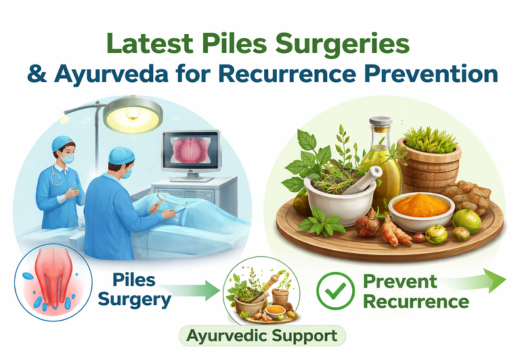
Surgeries are not the solution to get rid of haemorrhoids. In ayurveda, there are many ways which are explained to manage piles. These are the best managements given by different acharyas in different ways. Ayurveda has the best management of piles whether it is at initial stages or at their severity.
Ayurvedic View on Piles/Hemorrhoids
In ayurveda, acharyas use the term arsha to explain piles or haemorrhoids. As explained in ayurveda, the body is made of three doshas that are vaat, pitta, kapha and 7 dhatus that are rasa (plasma), rakta (blood), mansa (muscles), meda (fat), asthi (bones), majja (bone marrow), and shukra (sperm). The imbalance in one of these doshas and dhatu leads to various diseases in the body. However, arsha is a tridoshaj vikara (disease) in which all the doshas are predominant. Moreover vaat is mostly affected by dosha in arsha.
Types of Arsha
- Sehaj (which are inherited by birth).
- And some which are caused after birth.
According to the Doshas
Vaataja
These are dried, very hard, rough and dark in colour and also are very painful. Pain gets aggravated around the testicles, bladder, and ovaries. There is also difficulty in passing urine, and stools. Headache, rhinitis, inflammation, and dizziness are also symptoms of vataj arsha.
Pittaja
These are soft, loose, untouchable, red, yellowish, black in colour. They are sweaty and have a foul smell. There is yellow and red discharge from anus.
Kaphaj
These types of arsha are largely spreaded, fatty, white in colour, inflamed.
Rakataj
These are the bleeding types of arsha.
Nidan of Arsha (Causative Factors)
गुरु मधुर शीताभिष्यन्दि विदाहि विरुद्धाजीर्ण प्रमिताशना सात्म्य भोजनाद्गव्
मात्स्य वाराह माहिषा जाविक पिशित भक्षणात् कृश शुष्क पूतिमांस ( Charaka chikitsa 14/9)
This means that heavy, sweet, cold, vidahi aahar (which results in burning sensations), abhishyandi aahar (which is heavy but also slimy in nature. It causes obstruction in the channels which leads to distractions in the secretions by the system of the body). These all are some of the factors which are responsible for piles/arsha . Regular eating of meat of cattle, fish also leads to arsha.
Samprapti
Arsha/piles are caused by mandagni (low digestive fire). Due to mandagni there is mala avrodh(obstruction in passing faecal matter) and gets accumulated. Due to these factors, accumulated mala enters the hemorrhoidal veins with the help of vata. This accumulated mala pressurise the veins which finally leads to arsha
Samprapti Ghataka
Dosha:- Vaat pradhan tridoshas.
Dushya:- Mansa (muscles), meda (fat), rakta (blood), twaka (skin).
Adhisthana:-guda (anus).
Symptoms of Arsha According to Ayurveda
- Mal Badhta (constipation)
- Daha and Shoola in guda (burning sensation and pain around the anal region).
- Atisaar (Diarrhoea) specifically in piitaj arsha.
- Rakt pravah (bleeding from anal region).
- Atoopa and Adhmana (Flatulence).
Management of Arsha in Ayurveda
Arsha/piles are managed in different ways and with different medical herbs. In Ayurvedic Samhitas that are (Charaka and Shushruta) there is well explained management of piles/ arsha.
Management by Acharya Charaka
Acharya charaka has mentioned two types of chikitsa that are shaman and shodhan.
Shaman chikitsa
It means formulations which control the doshas of the body and bring them to their own places. For this acharya charaka has mentioned many such medications like arsha kuthara rasa (tablets), chandraprabha vati (tablets), some powdered churna like vijay churna and some decoctions like takrarishta etc.
Shodhan Chikitsa
Basti karma (medicated enema by various decoctions) Picha basti is the most effective management of arsha. This basti is prepared by some dravyas like yavasa, kusha, kasha, shalmali,nayogra, udumber etc. these all dravyas have the best effect on arsha. Likewise there are some other basti which can be given like anuvasana basti. Basti is considered as the best management of vata dosha. As arsha is a vata dominant disease, basti works excellently on it.
Kshar sutra
Some acharya considered it better to ligate the pile mass by a medicated thread called kshar sutra and cut it off. This thread is changed after 7 days with the new medicated thread.
Agnikarma
This is done to shred the pile mass with the help of shalaka.
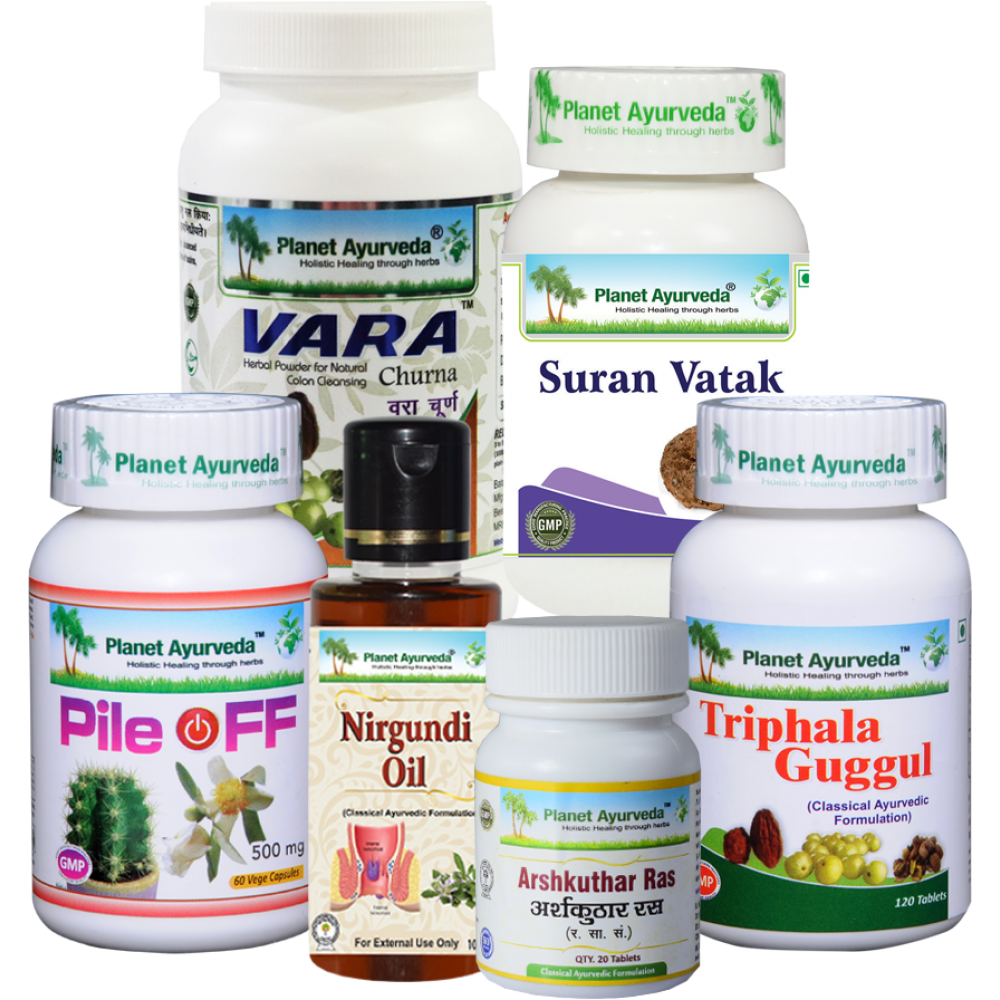
Herbal Remedies for Piles/Arsha by Planet Ayurveda
Planet ayurveda is an herbal pharmaceutical company which manufactures pure herbal medicines. Planet ayurveda is growing day by day and getting worldwide. The products and formulations manufactured here are totally pure without any additives and adulterants added to the product also they don’t have any side effects. The company has all certified products. Following are the list of the products which are manufactured for managing piles by Planet Ayurveda.
Products List
- Vara churna
- Pile off capsules
- Triphala Guggul
- Arshkuthar Ras
- Suran Vatak
- Nirgundi Oil

Product Description
1. Vara Churna
Vara Churna is a combination of Haritaki, Bibhitaki, Amalaki (Triphala). Bibhitaki (Terminalia billerica), Haritaki (Terminalia chebula)and Amalaki (Emblica officinalis). This churna benefits in the cleaning of the colon. It helps in constipation. Haritaki supports the vata dosha. It encourages bowel movements and also supports good health. Bibhitaki acts like a natural laxative which helps in relieving constipation. Whereas amalaki is rich in vitamin C and fibre which helps in easing constipation. It is also used in kapha, pitta roga, in detoxifications and is also beneficial in eye ailments.
Dosage:-1 teaspoon twice daily with warm water after a meal.
2. Pile Off Capsules
Pile off Capsules is a manufacturer of Planet Ayurveda. It is a natural supplement.This formulation is a pack in the form of combination of Haridra, Shunthi, Naagkesar, Choti Harad and Sajjikhsaar. Pile OFF capsules help in reducing the pile mass or to shrink it.
It is helpful in both bleeding and non bleeding piles.
It also acts on both internal and external piles.
Dosage:- 2 capsules twice daily with warm water after a meal.
3. Triphala Guggul
Tripahla Guggul is manufactured by Planet Ayurveda. Tripahla Guggul includes the ingredients like Triphala and Shuddha Guggulu (Commiphora mukul). It is a tridoshic rasayan. This formulation does not have any type of side effects and gives very effective results after ingestion. Triphala guggul proves to be one of the finest herbs for piles. It is helpful in healing inflammation of the fistula, helps in relieving constipation by facilitating bowel movements as it contains triphala. These formulations also have anti-inflammatory benefits.
Dosage:- 2 tablets twice daily with warm water after a meal.
4. Arshkuthar Ras
Arshkuthar Ras is a preparation by planet Ayurveda that is used in the management of piles. This is a herbo mineral product that means it includes both herbal extract of plants and minerals like shunthi (Zingiber officinale), pippali (Piper longum), tankana (Borax), kajjali (purified mercury and purified sulphur) etc. This is used in relieving constipation and softens the bowel to avoid hard stools. It also gives more power to jatharagni (digestive fire).
Dosage:- 1 tablet twice daily with warm water after a meal.
5. Suran Vatak
Suran Vatak is a formulation which helps to manage piles. This formulation includes the ingredients like Surana (Amorphophallus campanulatus), Chitraka (Plumbago zeylanica), Dhatri (Emblica officinalis) and many others.It is helpful in reducing the swelling present in the haemorrhoidal veins around anus. It balances vata and kapha doshas.
Dosage:- 2 tablets twice daily with warm water after meal.
6. Nirgundi Oil
Nirgundi oil is also one of the classic and effective preparation by planet ayurveda which is known for its vatnashak properties.It also has antioxidant properties, antibacterial properties. Roots, leaves, flowers, seeds, and fruits of nirgundi are used in different ways to treat different diseases. It is katu (pungent) and tikta (bitter) in taste. It is used in arsha/piles for swelling around the anus as it balances the vata and the kapha doshas. It is applied locally to the wound, inflammation etc.
Dosage:- For local application in the affected area.
Contact Planet Ayurveda Support Team to provide you the costing / ordering and delivery information at – costing.planetayurveda@gmail.com or Call at 0172-521-4040 (India), +91-172-521-4040 (Outside India) or Whatsapp at (+91) 9915-593-604
Conclusion
As in the whole article we can see that piles/haemorrhoids are now becoming very and very common. Also in the article all the causative factors by both aspects are discussed. After knowing all the risk factors about piles one should not compromise his/her health at any cost. So to provide best management of piles Planet Ayurveda provides different products to prevent and manage piles.