August 22, 2026
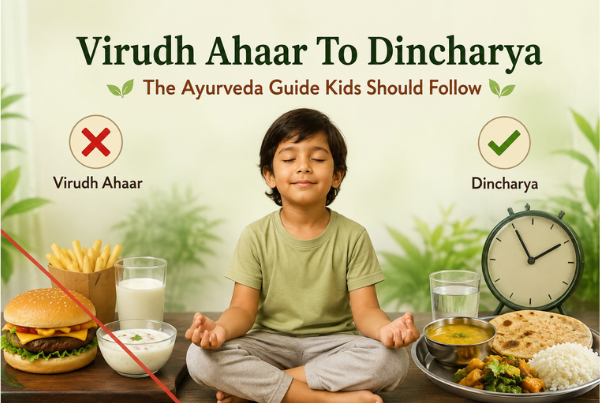
Virudh Ahaar To Dincharya – The Ayurveda Guide Kids Should Follow
Abstract
Ayurveda, the ancient system of natural healing, provides comprehensive guidelines for healthy living. Among these, the concepts of Virudh Ahaar (incompatible foods) and Dinacharya (daily routine) hold significant importance, especially for children. Following these principles ensures balanced growth, enhances immunity, improves digestion, and supports overall well-being. This article explores the role of Virudh Ahaar and Dinacharya in promoting healthy habits for children, providing practical recommendations that are easy to incorporate into daily life.
Introduction
In today’s fast-paced world, children’s health is often compromised due to irregular eating habits, lack of physical activity, and exposure to toxins. Ayurveda offers a timeless approach to health by focusing on natural living, diet, and daily routines. The core principles of Ayurveda emphasize the importance of Virudh Ahaar (incompatible foods) and Dinacharya (daily routines), which are integral to maintaining balance in the body and mind. These Ayurvedic concepts are not only beneficial for adults but also play a vital role in nurturing children’s overall health.
Virudh Ahaar (Incompatible Foods)
In Ayurveda, food is considered the foundation of health. The concept of Virudh Ahaar refers to incompatible food combinations that disrupt the body’s digestive processes and create imbalances. The digestive system (Agni) is crucial in Ayurveda, and consuming incompatible foods can weaken it, leading to the accumulation of toxins (Ama) and causing various health issues. For children who have developing digestive systems, it is essential to avoid food combinations that could cause discomfort, indigestion, or long-term health problems.
मधुसर्पिर्वसातैलपानीयानि द्विशस्त्रिशः। एकत्र वा समांशानि विरुध्यन्ते परस्परम्॥
(अष्टांग हृदय सूत्रस्थान 7/39)
According to the above shloka, equal amounts of honey and ghee, animal fat, and oils, when mixed in the combination of two or three together, are incompatible for eating.
Some examples of Virudh Ahaar (Incompatible Foods)
Milk and Fruits
According to Ayurveda, combining milk with acidic fruits like citrus fruits, oranges, or pineapples is considered Virudh Ahaar. Milk is a cooling, nourishing food, while fruits like citrus have a tangy, sour nature, which can disturb the digestive process. This combination can lead to mucus formation, indigestion, and even skin problems.
Hot and Cold Foods
Consuming hot and cold foods together is also a major Virudh Ahaar. For instance, eating hot foods like spicy or fried dishes with cold foods like ice cream or chilled drinks can confuse the digestive system, leading to impaired digestion, gas, and bloating.
Fried Foods with Sweets
Ayurveda advises against mixing fried foods (which are heavy and oily) with sweets. This combination leads to an increase in Kapha dosha, causing the digestive system to slow down.
How to Avoid Virudh Ahaar for Kids
- Serve fruits separately from milk or dairy products.
- Avoid chilled or cold drinks immediately after hot or spicy food.
- Encourage wholesome, balanced meals with compatible food combinations like vegetables with grains or legumes.
- Keep fried and sweet foods separate, focusing on moderation.
Dinacharya (Daily Routine)
Dinacharya, the Ayurvedic concept of daily routine, is integral to maintaining physical and mental health. A structured daily routine promotes proper digestion, boosts immunity, and enhances cognitive function. For children, adhering to a consistent schedule ensures they get adequate sleep, exercise, and nourishment, which are vital for their growth and development.
Waking Up Early (Brahma Muhurta)
ब्रह्मो मुहूर्त उतिष्ठेत स्वस्थो रक्षार्थमायुषः ।
(अष्टांग हृदय सूत्रस्थान 2)
According to Ayurveda, the time around Brahma Muhurta (approximately 4:00 AM to 6:00 AM) is considered the most spiritually and physically beneficial time of day. Encouraging children to wake up early ensures they start the day fresh, with a calm mind and a sharp focus.
Oral Hygiene
शरीरचित्तां निर्वर्त्य कृतशौचविधिस्ततः॥१॥
अर्कन्यग्रोधखदिरकरञ्जककुभादिजम्।
प्रातर्भुक्त्वा च मृद्वग्रं कषायकटुतिक्तकम्॥२॥
(अष्टांग हृदय सूत्रस्थान 2/1-3)
After purifying both body and mind, and performing cleansing rituals, brushing of teeth with the stems of Arka, Banyan tree, Arjuna tree etc should be done. The herbs used for brushing should have a bitter, pungent and astringent taste. Ayurveda also recommends oil pulling with sesame or coconut oil for oral health, which strengthens gums and prevents infections.
Hydration
Drinking water immediately after waking up is vital to flush out toxins that accumulate overnight.
Balanced Diet
A wholesome, well-balanced diet plays a significant role in Dinacharya. Kids should consume a variety of fresh, seasonal, and nutrient-rich foods. Ayurveda recommends having a moderate breakfast, followed by a light lunch and a smaller evening meal to ensure proper digestion and energy levels throughout the day.
Physical Activity
Ayurveda emphasizes the importance of daily exercise or outdoor play for children. Engaging in activities such as yoga, running, or games enhances physical strength, coordination, and mental clarity. Regular physical activity boosts the immune system and supports overall health.
Proper Sleep
Ayurveda stresses the importance of a consistent sleep schedule. Kids should sleep early, around 9:00 PM, to allow the body to rest and repair itself. Sufficient sleep is essential for mental clarity, physical growth, and immune function.
Mindfulness Practices
Introducing mindfulness practices such as deep breathing, meditation, or gratitude exercises can help children develop emotional resilience. Ayurveda recognizes the importance of mental and emotional health, which can be supported by creating a calm environment and fostering a positive mindset in children.
How to Implement Dinacharya for Kids
- Encourage children to wake up early, ideally by 6:00 AM.
- Establish a morning routine that includes brushing teeth, drinking warm water, and light stretching or yoga.
- Serve balanced meals that include fresh fruits, vegetables, and whole grains.
- Promote outdoor play and activities that align with the seasons and weather.
- Ensure that kids go to bed early, fostering good sleep hygiene.
Conclusion
Integrating Virudh Ahaar and Dinacharya into children’s lives promotes physical, mental, and emotional well-being, offering them a strong foundation for healthy growth. By following these Ayurvedic principles, kids can enjoy better digestion, enhanced immunity, improved concentration, and emotional stability

Dr. Vikram Chauhan
https://www.planetayurveda.comDr. Vikram Chauhan (MD - Ayurveda) is a Globally Renowned Ayurveda Physician with Expertise of more than 25 Years. He is the CEO & Founder of http://www.PlanetAyurveda.com, a leading Ayurveda Brand, Manufacturing, and Export Company with a Chain of Clinics and Branches in the US, Europe, Africa, Southeast Asia, India, and other parts of the World. He is also an Ayurveda Author who has written Books on Ayurveda, translated into Many European Languages. One of his Books is "Ayurveda – God’s Manual for Healing". He is on a Mission to Spread Ayurveda All Over the Planet through all the Possible Mediums. With his Vast Experience in Herbs and their Applied Uses, he is successfully treating Numerous Patients suffering from Various Ailments with the help of the Purest Herbal Supplements, Diet, and Lifestyle, according to the Principles of Ayurveda. For More Details, visit - www.planetayurveda.com, www.alwaysayurveda.com
View more posts from this author