Tag: herbs for ulcerative colitis

Ulcerative Colitis: Ayurvedic Healing for Pittaja Grahani Roga

Abstract

Ulcerative Colitis (UC) is more than a disease of the gut—it is a disorder of inner imbalance of the immune system and body. In modern science,  It is an autoimmune inflammatory bowel disease which affects the part of GI tract and has lots of symptoms while Ayurveda interprets it as the manifestation of Pitta-Vata Dushti leading to Raktatisara or Pittaja Grahani. Let’s learn about it in brief.
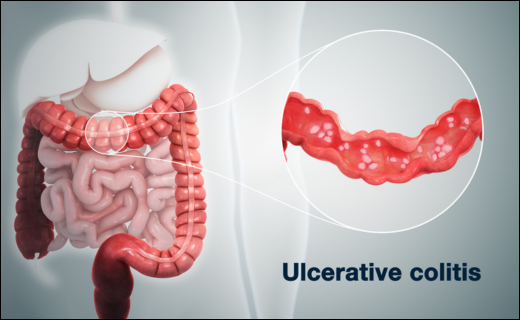
Introduction

IBD is defined as a group of chronic disorders that cause inflammation in the digestive tract and is of two types:

1. Crohn’s Disease: Crohn’s disease is a chronic inflammatory bowel disease (IBD) characterized by transmural granulomatous inflammation that can involve any part of the gastrointestinal tract from mouth to anus, most commonly the terminal ileum, with skip lesions, strictures, fistulas, and perianal disease.

2. Ulcerative colitis: Is a chronic inflammatory bowel disease (IBD) primarily affecting the colon and rectum, characterized by ulceration and continuous mucosal inflammation.

Causes

There is not any specific cause of ulcerative colitis. But Some how there are some suitable causes of UC are following :

  • Immune system dysfunction
  • Genetics factors
  • Environmental factors
  • Gut bacteria Imbalance
  • Stress and diet

Sign & Symptoms

The symptoms of Ulcerative Colitis (UC) vary depending on the severity and extent of colon inflammation. The common symptoms include:

  • Diarrhea with blood or mucus.
  • Urgency of Bowel Movements (Tenesmus)
  • Fatigue and Weakness
  • Weight Loss
  • Loss of Appetite and Nausea
  • Fever and Malaise
  • Dehydration
  • Abdominal and Rectal pain

Diagnosis

  • Complete Blood Count
  • Stool Examination
  • Fecal Calprotectin Test
  • Colonoscopy
  • Flexible Sigmoidoscopy

Modern Treatment

  • Aminosalicylates: Mesalamine , Sulfasalazine, Balsalazide etc
  • Corticosteroids: Budesonide, Hydrocortisone, Methylprednisolone, Prednisone etc
  • Immunomodulators: Azathioprine, 6-MP, Cyclosporine etc
  • Multivitamin and iron supplements can also be given.

Ayurvedic Overview

In Ayurvedic point of view UC is denoted with Raktatisara or Pittaja Grahani. By Intake of katu ras (Pungent taste), Having Long term Indigestion Issue, By Excessive use of Amla ras (Sour taste) and kshar (Alkali), By intake of excessive hot food the Pitta will raise and destroy the digestive fire (agni) by covering it.Vata will also get aggravated along with this and shows Symptoms such as Blood or mucus in stool , Undigested Bluish or yellowish loose stools, foul-smelling sour belching, heartburn, anorexia (Aruchi), Polydipsia.

In ayurveda the treatment is based on the Shodhan (Purification therapy) and Shaman Chikitsa (Pacification therapy). Pitta-vata shaman (balances pitta and vata) ,Varan Ropana (wound healing), Agni deepan (Appetizer), Srotoshodhana (purification of body channels ), Rasayan therapy (rejuvenating therapy). The Shaman Chikitsa (Pacification therapy) includes herbal formulations that decrease the vitiated symptoms.

Some Ayurvedic drugs and their uses are

Kutaj

(Holarrhena antidysenterica): This classical drug is used for Atisara (Diarrhea). It has sheeta (cooling) properties that help in soothing inflammation, burning sensation. It is strong grahi (absorbent) helps in absorbing excessive fluid and stambhan (astringent) makes stool firmer which helps in decreasing frequency of stool.

Bilav

(Aegle marmelos): It helps in repairing intestinal lining and heals ulcers, reduces swelling , reduces bleeding, burning sensation and soothes mucus membrane in colon and rectum. It also pacifies pitta dosha.

Yashtimadhu

(Glycyrrhiza glabra): It helps in Pittashaman (To Balance Pitta dosha), Varanropan (to heal the Ulcers), Rakatprasadan (Purify and Soothes Vitiated blood), Grahani Balya (Strengthen the colon ) Stambhana (Indirect Hemostasis).

Nagarmotha

(Cyperus rotundus): It helps in Balancing the kapha and pitta doshas, Healing ulcers, in reducing inflammation and bleeding and has astringent properties which helps in stool consolidation. It also helps in reducing dehydration in the body.

Durva 

(Cynodon dactylon): This helps best in Raktstambhan (hemostatic) and also in digestion and cooling effect in the body.

Arjuna

(Terminalia Arjuna): It helps as anti-Hemorrhagic (to stop bleeding) and in healing of intestinal lining.

The Shodhan Chikitsa ( Purification therapy) is also very effective and useful

  • Mridu Virechana (Mild purgation)
    Eliminates accumulated Pitta and Ama from the intestines, Reducing Inflammation.
  • Takra Basti (Medicated Buttermilk Enema)
    Highly effective in Pittaj and Raktaj disorders. The Cooling, Astringent, and Healing properties of Buttermilk help restore normal mucosa and prevent relapse.
  • Pichha Basti (Mucilaginous Enema)
    Provides lubrication, heals ulcers, and reduces bleeding.

 Rasayana Chikitsa (Rejuvenation Therapy)

  • Yashtimadhu Rasayan
  • Guduchi Rasayan
  • Kamdhuda and Panchamrit Parpati Rasayan.
  • Amalki Rasayan
  • Yoga and meditation:  Yoga balance Agni (Fire) and calms Pitta use asan (Pose) like :Vajrasana (Diamond or Thunderbolt pose), Pawanmuktasana (Wind releasing pose), Balasana (Childpose), Mandukasana (Frog pose).
  • Pranayama:  Sheetkari (Hissing breath), Bhramari (Humming bee breath), and Anulom Vilom (Alternate nostril breathing).
  • Meditation:  Daily 15 minutes of mindfulness.

Diet & Lifestyle Guidance

1. Recommended Diet (Pathya)
Boiled rice, Moong dal soup, Bottle gourd, and Pumpkin,Pomegranate, coconut water and ghee for gut healing.Warm water with a pinch of cumin powder.

2. To Avoid (Apathya)
Spicy, fried, and sour foods.Tea, coffee, alcohol and smoking.Anger, stress, and late-night work.

Herbal Remedies for Ulcerative Colitis by Planet Ayurveda

Planet Ayurveda, under the expert guidance of Dr. Vikram Chauhan (MD – Ayurveda), offers 100% pure, authentic, and GMP-certified herbal remedies. The Ulcerative Colitis Care Pack is a specially designed combination that heals the colon, balances doshas, and strengthens the digestive system. Ulcerative Colitis Care Pack Includes:
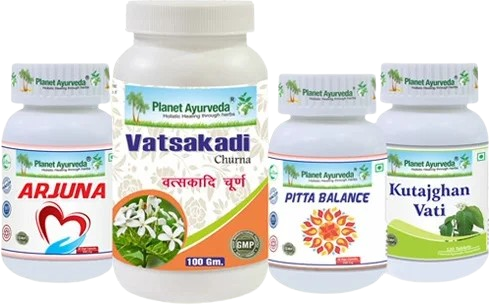

Ulcerative Colitis Care Pack

1. Kutajghan Vati

It is a classical tablet formulation that is made up of Kutaja (Holarrhena antidysenterica) that naturally pacifies pitta and kapha dosha , Improves agni (digestive fire) and reduces ama (toxins), enhance absorption power in colon and act as a anti diarrheal.

Dose : 2 tablets twice daily with plain water after a meal.

2. Pitta Balance

It is the capsule formulation made up with natural calcium compounds like Praval Pishti (Coral Calcium), Kamdudha Ras, and Mukta Pishti, that helps in pacifying pitta dosha by reducing internal heat, burning sensation, acidity, bleeding tendencies.

Dose : 1 capsule twice daily with plain water after a meal.

3. Vatsakadi Churna

It is the churna formulation which is a blend of herbs like Bilva (Aegle marmelos), Dhania (Coriandrum sativum),Saunf (Foeniculum Vulgare) and Kutaj (Holarrhena antidysenterica). It helps in regulating bowel movements , Reducing inflammation, Balancing pitta and kapha dosha, helps in Mucosal healing and controls diarrhoea.

Dose: 1 teaspoonful twice daily with plain water after meal

4. Arjuna Capsules

This is the capsule formulation made up of Arjuna (Terminalia arjuna) extract, these capsules help in wound healing (Varan Ropana), Reducing inflammation, pacifying pitta, controlling bleeding and helps in mucosal healing. It also has antioxidant properties, gut microbiota balance and acts as an immunomodulator.

Dose : 2 capsules twice daily with plain water after a meal.

Conclusion

Ulcerative Colitis is more than a disorder of the colon — it mirrors the inner heat, imbalance, and restlessness within. Ayurveda teaches that true healing begins when harmony is restored among body, mind, and soul. Ayurveda serves as a conduit between timeless Ayurvedic wisdom and contemporary healthcare, offering nature’ “When Pitta finds calm, the colon regains balance; when the mind attains peace, digestion flourishes.”
What Is Parpati Chikitsa?-How Parpati Chikitsa Is Effective In Ulcerative Colitis?

Abstract

Parpati is a steady and prestigious preparation in the Ras Shastra especially used in the management of Grahani Roga. The parpati is the murchita variety which means a swooning variety that attains vyadhi harana properties (property of destroying the disease). Grahani as per Ayurveda is termed as the seat of digestive fire that is helpful in regulating the metabolism and digestion of the food. If there is vitiation of agni directly there is disturbance in digestion and metabolism which further leads to various grahani roga. In this article we will study about parpati kalpana (method of preparing parpati), why it is effective in grahani roga and how parpati chikitsa is effective in ulcerative colitis.

INTRODUCTION

In rasayan kalp parpati is considered as one of the important remedies. Parpati is the remedy prepared in flakes form by mixing parada and gandhak alone or with some other herbs or minerals, then all these are treated with agni sanskar (heating process). It is mainly effective for the diseases associated with GI Tract. Its major benefit is in grahani vikara due to the fact it gets absorbed only in the intestines. Further we will discuss its method of preparation, pathya sevan while administrating parpati, apathya while consuming parpati and various other facts about parpati.

ulcerative colitis

PARPATI KALPANA

DEFINITION

When the kajli is melted on a mild temperature and converted into thick flakes by pressing it on a plain leaf platform, the shape in which it is converted is regarded as parpati.

CLASSIFICATION OF PARPATI KALPANA

Parpati kalpa is divided into sagandha and nirgandha parpati which further has subdivisions. Sagandha means prepared with gandhak and nirgandha is prepared without gandhak so is given to those in which gandhak is not suitable. In sagandha there are subdivisions such as only kajjali (samguna, dviguna, triguna and shadguna), kajjali + Dhatu (such as loha parpati, panchamrit parpati), kajjli + herbal drugs (like kutaj parpati). As we know nirgandha parpati is prepared without gandhaka and its example is Shweta parpati.

METHOD OF PREPARATION OF PARPATI

  1. Take a utensil of iron smeared with ghrita, put kajjali into it and heat it on a mild flame till it gets liquified.
  2. When the liquified kajjali turns shiny black and little fumes are observed then it is to be poured over the platform prepared by fresh cow dung. Cover it with two plantain leaves on and on simultaneously.
  3. Now press it with the help of potalli prepared by the fresh gomaya (cow dung) which is covered with the kadli patra (Banana leaf).
  4. With this kajjali spreads out uniformly and is converted into thin flakes and known as parpati.

PARPATI PAKA PREEKSHA

On the basis of heat provided to kajjali while preparing parpati from it, parpati paka is of three types that we are mentioning below:

  1. Mridhu paka: In mridhu paka the colour of parpati will be mayura chandrika (tortoise colour), it bends easily and remains soft. The chemical bonding of parada and gandhaka is not really formed properly.
  2. Madhyam paka: In this paka the colour of parpati will be taila varna (oil colour), it is shiny black, crispy and easily breaks while it produces the crackling sound. Its broken edges are silvery white in colour. The chemical bonding of parada and gandhaka is proper, that’s why  it possesses miraculous medicinal properties.
  3. Khara paka: The colour of kajjali in khar paka is reddish colour which is coarse and dry in nature. This type of kajjali should be discarded as it is poisonous  and  burns out excessively and converted into carbon.

PROPERTIES OF PARPATI

Generally parpati is dark in colour, appearance is flake like and glittery and easily breakable. To preserve the potency of parpati it should be kept in airtight glass bottles. It increases appetite, strength and lustre. It is beneficial in strengthening the intestines and regulating the movement of intestines. Due to these benefits parpati is mainly used in grahani vikara (diseases of intestines basically).

IMPORTANCE OF COW-DUNG IN PREPARATION OF PARPATI

Parpati plays an important role in alleviating various diseases that are caused due to pitta janya rog and mandagni such as IBS, Ulcerative Colitis, etc. As we read in the method of preparation of parpati that parada and gandhaka both are processed with vanaspati  dravayas. Beside this one interesting fact is the use of fresh cow-dung while preparing parpati which contains large amounts of cow’s bile with some other bilious products. While preparing parpati these products get absorbed by the heat into the kajjali, the biliary products that are absorbed helps in regulating the bile related and pitta dosha related disorders in human beings. This is the fact why parpati has tremendous use in vikara (diseases) associated with pitta dosha and mandagni.

THERAPEUTIC ASPECT OF PARPATI

  • It is beneficial in alleviating all the disorders in any age from childhood to old age.
  • As per chakrapani datta all the rasa parpati are beneficial for alleviating diseases such as kshaya, grahani, ajirna and arsha.
  • According to Rastrangani the parpati is effective in various disorders such as arsha, grahani, kamala, kshaya, pandu, bhasmaka, atisara, kushta, amavata, amlapitta and also it is vrishya in nature.

DOSAGE AND USAGE OF PARPATI

The usage of parpati is in two types: Samanya prayoga and Kalpa prayoga. Let us know in brief about both the types. First one is Smanya prayoga– in smanya prayoga parpati is given in amounts of 1-2 ratti by mixing it with hingu and jeerak in the divided doses. In this type of administration dietary recommendations are not important. The second way of administrating parpati is vardhamana or kalpa prayoga: In this type the dosage is given in small amounts and then further on increases.

We have to start with the dosage of 2 ratti (250 mg) and then slowly increase it to 10 ratti (1250 mg). As per Chakrapani the dosage is 2 ratti in starting and it will be increased upto 12 ratti (1500 mg). Generally the kalpa paryoga of parpati is given as starting with 250 mg and will be increased by 1-1 ratti upto 1250 mg. This dosage is continued till the disease is not managed and then reduced by 125-125 mg per day till it reduces to 250 mg per day and then stops the administration.

USE OF VARIOUS PARPATI IN VARIOUS DISEASES WITH DIFFERENT ANUPANA

  • Unmada: Go ghrita (Cow’s ghee) and Rasna mool churna
  • Apasmar: Trikatu churna and Brahmi swaras
  • Kasa: Trikatu Churna
  • Sangrahani: Hingu churna and Shweta jeerak
  • Pandu with shotha: Guggul churna
  • Vataj Jwara: Dashmool kwath
  • Udara shoola: Errand beej tel (Castor seed oil)
  • Kushtha: Bakuchi, nimba panhang and Bhringraj churna 

All the above information is basically for Parpati Kalpana, now we will discuss how parpati chikitsa is beneficial for Ulcerative Colitis patients. So let’s have a look!!!!

HOW PARPATI CHIKITSA IS EFFECTIVE IN ULCERATIVE COLITIS?

Before studying the effectiveness of Parpati chikitsa in case of Ulcerative Colitis let us take a brief view on Ulcerative Colitis. Ulcerative Colitis is one of the autoimmune conditions in which there is inflammation and later on ulceration in the innermost lining of the large intestine and rectum. The exact cause of UC is unknown although the main cause of UC is compromised immune system in which the body’s own immune system attacks the lining of its own colon and rectum.

This results in symptoms such as diarrhoea with blood and pus, rectal pain, abdominal pain and cramps, urgency to defecation, weight loss, fever, etc. According to ayurveda it is correlated to rakta atisara. This condition is caused when a patient of pittaj atisara used to follow a diet and regimen that can cause aggravation of pitta dosha and vitiates the rakta dhatu. The symptoms associated with rakta atisara are rakta yukta mal (blood in stools), trishna (excessive thirst), shool (pain in abdomen and rectum), daha (burning sensation) and the symptoms of gudha paak (ulcerations in the anal region). To reduce these symptoms there is a great role of parpati chikitsa in it, so have a look!!!!!

Various Parpati useful in the management of Ulcerative Colitis

As we read earlier, Parpati plays an important role in regulating the intestinal movements and maintaining digestive health. So in the case of UC there are also associated symptoms with intestines so what other than Parpati is better for it. Let us see various Parpatis that are used in Ulcerative Colitis are:

1. Kutaj Parpati

Kutaj parpati is a classical ayurvedic formulation which consists of kutaj as the main ingredient. It consists of various properties such as anti-bacterial, anti-inflammatory, anti-mutagenic, immunomodulatory, anthelmintic, diuretic and aphrodisiac. Kutaj has been used for gastrointestinal motility disorders since ancient times and the parpati prepared from it made it more effective due to the benefits of parpati included in it. It is a wonderful remedy for atisaar (diarrhoea) and udar shoola (abdominal pain). It mainly pacifies pitta dosha and helps in promoting digestion and absorption of food. As we know that in Ulcerative Colitis there is a vitiation of pitta and raka dosha, so by aalveiting these dosha kutaj parpati miraculously decrease these symptoms.

2.Panchamrit Parpati

Panchamrit Parpati as the name suggests it includes five ingredients such as shuddha gandhaka (purified sulphur), shuddha parada (purified mercury), loha bhasma (calyx of iron), abhrak bhasma (calyx of mica) and tamra bhasma (calyx of copper). It pacifies tridosha and is useful in the treatment of various conditions such as malabsorption syndrome, vomiting, haemorrhoids, bleeding disorders, etc.

The main feature of Parpati is that it gets absorbed in the intestines only so as in ulcerative colitis there is a need to reduce ulceration and inflammation in the intestines. On the other side the ingredients used in panchamrit parpati it possess properties that helps in deepana (induces digestive fire) which by alleviating mandagni improves digestion and reduces various symptoms of Ulcerative Colitis such as indigestion, loss of appetite, loose motions, etc.

3. Bol parpati

This is a classical ayurvedic formulation used in various bleeding disorders due to its astringent properties. It consists of ingredients such as Shuddha Gandhaka (Purified sulphur), Shuddha Parada (Purified Mercury) and bola (Commiphora myrrha). In this kajjali mix with bola possesses properties such as tikta (bitter), katu (pungent) and kshaya (astringent) and mainly pacifies pitta and kapha dosha. The benefits of bola which helps in managing Ulcerative colitis are pachana (digestive) and deepana (improves digestive strength) also it is mainly indicated in raktaj vikara. So with these properties when the properties of parpati associates then this remedy shows miraculous results in reducing the bleeding in case of Ulcerative Colitis.

CONCLUSION

Parpati chikitsa involves the management of disease with the help of parpati. Parpati is prepared by melting kajjali on a mild temperature and converted into thick flakes by pressing it on a plain leaf platform, the shape in which it is converted is regarded as parpati. It is beneficial in strengthening the intestines and regulating the movement of intestines. Due to these benefits parpati is mainly used in grahani vikara which involves various GI tract disorders associated with mandagni (low digestive disorder). Due to these mentioned facts parpati chikitsa plays an important role in Ulcerative Colitis (UC) patients that we have discussed in this article. Mainly kutaj parpati, bol parpati and panchamrit parpati are used in the management of UC. So you can also use parpati chikitsa if you have any of the disorders associated with pitta dosha and mandagni under the advice of M.D. Ayurveda Doctors.