Tag: Bone density

The Electric Skeleton: Why Movement is Medicine and the Ancient Wisdom of Asthi Dhatu (Bone Tissue)

We are often taught that our skeleton is a dead structure- just a static frame made of calcium that serves as a support for our muscles. This is one of the major misconceptions in contemporary anatomy.

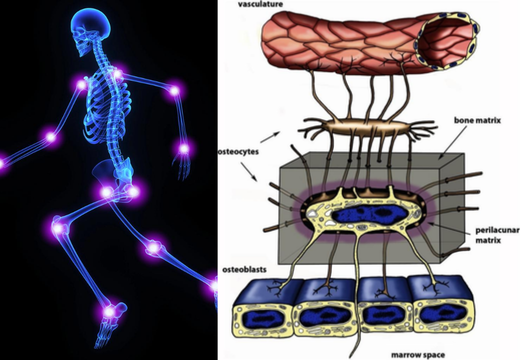
In truth, our bones are very much alive. They are filled with a complex network of nerve endings and act as the body’s main chemical factory, producing about two million red blood cells every second.They also function as the body’s primary mineral storage, holding 99% of our calcium, 85% of our phosphorus, and 60% of our magnesium. However, bones do more than just store minerals.They are also powerful electrical generators.
SThe Electric Skeleton

The Physics of Bone: The Piezoelectric Effect

In 1957, Japanese orthopedic surgeon Dr. Iwao Yasuda demonstrated that compressed or bent human bone generates a detectable electrical voltage. This is called the piezoelectric effect, the same principle that powers quartz watches, microphones, and sonar technology.The collagen and mineral structures in our bones convert mechanical stress into electrical currents.

Every time we walk, run, or lift something, each step sends an electrical charge through our skeleton. This current acts as a signaling system.The tiny voltages tell the osteoblasts—cells that build bone tissue—where to place new minerals to strengthen the structure.This biological electricity explains why astronauts lose 1% to 2% of their bone density each month in space.

Without physical pressure, the piezoelectric signal stops, and the body ceases to build new bone.

In the 1960s, Dr. Robert O. Becker showed that these microcurrents control the entire healing process.His discovery led to the development of FDA-approved electromagnetic devices used in hospitals today.

If our bones need movement to generate the electricity that maintains their density, then a sedentary lifestyle causes the skeletal system to lose its charge.

Osteoporosis isn’t just about not getting enough calcium. It’s about a lack of mechanical force to deliver that calcium to the right places. Our bones are like batteries, and they only recharge when we move.

Asthi Dhatu (Bone Tissue): The Ancient Ayurvedic Perspective

Long before modern science mapped the electrical currents of bone tissue, Ayurveda saw the skeleton not as lifeless stone, but as a dynamic and living tissue system called Asthi Dhatu (bone tissue).

In Ayurveda, the body is sustained by seven layers of tissues (Dhatus).
Asthi Dhatu (bone tissue) is responsible for sustaining, supporting, and shaping life.”Asthi” doesn’t just mean raw calcium.It represents the Earth element (Prithvi), stabilized by Air (Vayu), which gives structure to our consciousness.According to Ayurvedic texts, Asthi Dhatu (bone tissue) is the direct result of the metabolism of fat tissue (Meda Dhatu).When your metabolic fire (Agni) is strong and balanced, it converts nutrients into dense, strong bone tissue.

In Ayurvedic anatomy, tissue development follows a precise chain.

Asthi Dhatu (bone tissue) functions as the metabolic mother and physical protector of Majja Dhatu (bone marrow and nerve tissue).Strong bone metabolism ensures that its refined essence feeds and nurtures the central nervous system, brain, and blood-making marrow.Therefore, maintaining high-quality bone tissue is important not just for structure, but also for preventing neurological stress, protecting the nervous system from anxiety, and ensuring long-term cognitive and neuromuscular health.

However, if a lack of movement or poor diet disrupts this process, Vata dosha (the air and space element) increases in the hollow parts of the bones.

An excess of Vata dries out the bone matrix, leading to weakness, brittleness, and decay—what modern medicine calls osteopenia and osteoporosis. Ayurveda advocates that maintaining Asthi Dhatu (bone tissue) strength and alignment requires awakening bodily intelligence through appropriate movement, lifestyle practices, and targeted plant-based remedies.

Ayurvedic Synergy: Restoring and recharging your cellular matrix with Planet Ayurveda.

To support this self-charging crystal matrix, we need to combine the mechanical stimulus of movement with natural, biologically active materials that the body can effectively use.

Standard synthetic calcium supplements often fail because they lack the organic intelligence needed to guide minerals into the deep layers of bone.

To bridge this gap, Planet Ayurveda offers targeted formulations that directly feed Asthi Dhatu (bone tissue), ensuring that when movement generates an electrical charge, the body has the exact materials needed to rebuild

1. Bone Support Capsules by Planet Ayurveda

True bone health requires a wide range of trace minerals and organic catalysts to ensure that when your movement generates an electrical charge, the osteoblasts have the raw materials they need.

Planet Ayurveda’s Bone Support Capsules combine classic Ayurvedic herbs and natural calcium sources like Shudh Laksha, Suhanjana Beej, and Hadjod, along with traditional mineral preparations like Praval Pishti, Mukta Pishti, and Arjun.

  • Natural Mineral Bioavailability: Unlike synthetic calcium carbonates, which can lead to arterial calcification or kidney stones, the marine and mineral formulations (Pishtis) used by Planet Ayurveda provide calcium in an ionized, organic form.
  • Kindling Tissue Metabolism: Ingredients like Arjun and Suhanjana stimulate Dhatu Agni (tissue metabolism), ensuring that the absorbed minerals move past the digestive system and are deposited directly into the deeper layers of Asthi Dhatu (bone tissue).

2. Cissus Power Capsules by Planet Ayurveda

To speed up the rebuilding process and support the cellular signaling that Dr.
Becker and Dr.Yasuda discovered.

Ayurveda turns to a powerful therapeutic vine: Cissus quadrangularis, known in Sanskrit as Asthishrinkhla, which translates to “chain of bones.” It is also called Hadjod, meaning “bone joiner.”
Planet Ayurveda’s Cissus Power Capsules contain a highly potent, standardized extract of this specialized herb.

Cissus directly affects the body’s bio-electrical framework by:

  • Stimulating Osteoblast Genesis: It signals the bone-building cells to multiply, mimicking the natural effects of the piezoelectric current created during weight-bearing exercise.
  • Enhancing Collagen Synthesis: It increases the production of the flexible collagen matrix that gives bones their tensile strength, ensuring they remain strong and resilient.
  • Speeding Recovery: Just as micro-current therapy shortens healing times, Cissus has been shown to significantly reduce the recovery time of fractures and joint injuries by structurally reinforcing the bone matrix early in the repair cycle.

Nourish the Current, Build the Structure

We are not passive machines that run exclusively on food calories.

We are complex bioelectric systems that thrive on frequency, movement, and elemental nutrition.

To maintain strong, vibrant bones throughout your life, you cannot simply sit still and rely on a pill.

You must move to activate your body’s natural piezoelectric currents—and you must provide your Asthi Dhatu (bone tissue) with the deep botanical nourishment it needs to convert that electricity into lasting structural strength.By combining regular, weight-bearing movement with the pure, standardized formulations of Bone Support and Cissus Power Capsules by Planet Ayurveda, you harmonize ancient elemental wisdom with modern physics to keep your skeletal battery fully charged.

Ayurvedic Treatment for Low Bone Density – Symptoms, Causes , Risk Factors & Herbal Remedies

Abstract

Low bone density, often referred to as osteoporosis in advanced cases. It is a condition where bones become weaker and more susceptible to fractures due to a reduction in bone mineral content. This condition typically develops without noticeable symptoms in its early stages, making it difficult to detect without medical testing. Several factors contribute to low bone density, such as aging, hormonal imbalances (especially after menopause), inadequate nutrition (low calcium or vitamin D intake), lack of physical activity, and certain medical conditions or medications. In this article we will discuss this in more and we will discuss its Ayurvedic overview and its management.

Low Bone Density

Introduction

Low bone density is a condition in which bones become less dense, weakening their structure and increasing the likelihood of fractures. It is typically identified through bone density tests. The condition is commonly categorized into two types: osteopenia and osteoporosis. Osteopenia is a less severe form of bone loss, while osteoporosis represents a more advanced stage, leading to significantly higher fracture risk. Osteoporosis is a widespread global health concern, particularly among the elderly, marked by a notable decrease in bone mass that results in fragile bones. In contrast, osteopenia refers to a condition where bone density is reduced but not to a level that severely compromises bone strength. Both conditions are more common with age, and women, especially those post-menopause, face a higher risk due to hormonal changes that impact bone health.

Causes

Low bone density can arise from various factors, which can be grouped into genetic, lifestyle, hormonal, and medical causes –

  • Age – As individuals age, the process of bone renewal slows down, leading to a gradual decrease in bone density. This becomes especially noticeable after the age of 30, as bones lose mass over time.
  • Hormonal Changes in Women – Women are more likely to develop low bone density due to lower peak bone density and accelerated loss after menopause.
  • Natural Lower Bone Density – Some individuals naturally have lower bone density without experiencing bone loss.
  • Peak Bone Density – Bone mass starts to decrease after the age of 30. Thicker bones at age 30 may delay low bone density or osteoporosis.
  • Eating Disorders / Metabolic Issues – These issues can hinder nutrient absorption, leading to low bone density.
  • Chemotherapy or Some Other Medications – Medications like steroids can weaken bones.
  • Radiation Exposure – Damages bone health.


Other Risk Factors

  • Family history
  • Thin body type
  • Low physical activity
  • Smoking
  • Alcohol

Symptoms

There are no as such symptoms of Low bone density, some of the Commonly seen sign and symptoms are –

Common Symptoms of Low Bone Density

  1. Frequent fractures
  2. Fractures from light impact
  3. Chronic back discomfort
  4. Height reduction
  5. Hunched posture
  6. Reduced movement
  7. Joint discomfort
  8. Weak grip strength
  9. Fatigue
  10. Difficulty in standing upright
  11. Decreased balance

Diagnosis

1. DEXA Scan (Bone Density Test)

A Dual-Energy X-ray Absorptiometry (DEXA) scan is the most common test used to assess bone density. This painless test measures the mineral content of bones, usually in the spine, hip, or wrist, and helps determine if the bones are weak or at risk for fractures.

2. X-Rays

X-rays may be employed to identify any existing fractures or changes in bone structure, particularly in the spine. However, X-rays are not effective for detecting early bone density loss.

3. Blood Tests

Blood work can help measure levels of calcium, vitamin D, and other factors that influence bone health. Abnormal results, such as low vitamin D or calcium deficiencies, can point to possible issues affecting bone density.

4. Physical Exam

A physical examination may be performed to evaluate posture, balance, and any physical signs of bone weakness or fractures. Doctors may also measure height to detect any reduction in stature due to spinal compression.

5. CT Scan (Quantitative CT Imaging)

In certain cases, a quantitative CT scan may be used to get detailed imaging of the bones. While not a routine procedure, it can offer more specific insights into bone density when necessary.

Treatment

Approaches to Treating Low Bone Density

  1. Medications
    • Bisphosphonates
    • Selective Estrogen Receptor Modulators (SERMs)
    • Hormone Replacement Therapy (HRT)
  2. Supplements
    • Calcium
    • Vitamin D
  3. Lifestyle Modifications
    • Physical Activity
    • Nutritional Adjustments
    • Smoking Cessation
    • Limit Alcohol

Ayurvedic Overview

Low bone density is a condition that leads to increased bone porosity. This condition in ayurveda can be correlated with Asthisoushirya (Weakening of bones). It is not classified as a distinct disease on its own in ayurvedic texts. It is described as a symptom of Majja kshaya. It can be understood as a condition where vitiated vata becomes localized in the Asthi dhatu (Bone tissue), leading to Asthigata Vata, which eventually results in Asthi kshaya (Bone loss). However, it’s important to note that not every instance of Asthigata vata progresses to osteoporosis. Chronic conditions that exhibit clear stages of Asthisaraheenata (Bone depletion) can eventually lead to Asthusushirata (Bone fragility or porosity).

Causes (Nidana)

In general, Vatavyadhi Nidana (causes of Vata disorders) can be considered relevant here, although specific Nidana for Asthigata Vata (Vata in bones) is not explicitly mentioned. When Vata becomes deranged, it settles in the Asthi (bones), leading to Asthi Kshaya (bone loss). Since the Asthi dhatu (bone tissue) is nourished by nutrients circulating through its own channels, and both the Asthi and Asthi Vaha srotas (bone and bone-carrying channels) share similar qualities, factors that disturb the Srotas also disturb the dhatu. Additionally, Asthi and Majja (bone marrow) are interconnected, as Charaka mentions a cooperative relationship between Dhatus, known as “Paraspara Upasamsthabdha Dhatu Sneha Parampara” (mutual nourishment of tissues through a continuous flow of fat). Hence, factors that affect the Asthi Vaha and Majja Vaha srotas contribute to Asthi Kshaya (bone loss).The causes (Nidanas) for Vatavyadhi (Vata disorders) and vata prakopa (Vata aggravation) can be classified as follow –

  1. Dietary factors (Aharaja)
  2. Lifestyle factors (Viharaj)
  3. Mental stress (Mansika)
  4. Trauma (Abhigataja)
  5. Other contributing factors (Anyat nidana)

Aharaj (dietary Factors)

Consuming food that is low in nutritional value, or not taking in enough food (Alpabhojana), can contribute to imbalances. Foods that specifically aggravate Vata (Vatala Ahara) also play a significant role. Overconsumption of foods and drinks that are predominantly Tikta, Katu, and Kashaya in taste, and have the qualities of Rooksha (dry), Laghu (light), and Sita (cold), can intensify Vata dosha. Additionally, prolonged consumption of Virudha Ahara (incompatible food combinations) and Mamsala Ahara (heavy, meat-based foods) disturb the Majja Vaha Srotas (bone marrow channels) and Manovaha Srotas (fat channels), which ultimately have a negative impact on the Asthi dhatu (bone tissue).

Viharaj (Lifestyle factors)

Viharaja (lifestyle factors) that contribute to imbalances include-

  • Excessive exercise (Vyayama) – Overexertion during physical activities can strain the body.
  • Overindulgence in sexual activity (Vyavaya) – Engaging in sexual intercourse excessively can weaken the body.
  • Staying awake at night (Prajagara) – Sleep deprivation or staying awake during nighttime hours disrupts bodily functions.
  • Improper regimen during treatment (Apathya regimen) – Failing to follow appropriate guidelines while undergoing treatment.
  • Excessive blood loss – Losing too much blood, either through injury or medical conditions, can harm the body’s vitality.
  • Suppression of natural urges (Vegadharana) – Holding back natural bodily functions such as urination, defecation, or sneezing can cause harm.
  • Continuous physical stress –Repetitive activities like long journeys, uncomfortable postures while traveling, walking long distances, wrestling with someone stronger, or carrying heavy loads can irritate the body tissues.
  • Lack of exercise, obesity, and daytime sleeping – Insufficient physical activity, excess body weight, and sleeping during the day are factors that disrupt the Medovaha Srotas (fat channels), leading to various health issues.

Symptoms (Roopa)

Manifestations of Asthigatavata (Vata in bones) include the following symptoms

Ayurvedic Symptoms Related to Low Bone Density

  1. Asthiparvanam Bheda – Sharp, breaking pain around bony joints, such as the interphalangeal joints, wrists, cervical spine, lumbar spine, and sacral joints.
  2. Sandhisoola – Pain in the joints, often occurring in various parts of the body.
  3. Mamsakshaya – Muscle wasting or loss of muscle mass.
  4. Balakshaya – Weakness or loss of physical strength.
  5. Asthi Bhagna – Increased susceptibility to bone fractures.

According to Bhela Samhita, when Vata becomes aggravated in the Asthi (bones) and Majja (bone marrow), it leads to a variety of disorders, including –

Complications Related to Bone Weakness and Vata Disorders

  • Fractures of bones due to weakened bone structure.
  • Shivering and wasting of the body.
  • Epilepsy or convulsions.
  • Lockjaw, where the jaw becomes stiff and immobile.
  • Lameness in one or both hands or legs.
  • Joint dislocation due to weakened joints.
  • Other Vata disorders affect various parts of the body.

Treatment

Line of treatment for Low bone density in Ayurveda is –

Panchkarma therapies

  • Sneha Basti (Enema with Ghee)
  • Ksheer Basti (Enema with milk)
  • Abhyanga (Massage with herbal oils)
  • Virechana (Therapeutic Purgation)

Single Drugs used

  • Ashwagandha
  • Vacha
  • Dadima
  • Madhuyashti
  • Vidarikanda
  • Parushak
  • Padam Bijak
  • Guggul

Medicines Used

  • Lakshadi Guggulu
  • Trayodashang Guggulu
  • Yograj Guggulu
  • Praval Pishti
  • Mukta Shuktibhasma
  • Kukkutandatvak Bhasma
  • Kapardika Bhasma
  • Trikatu Churna
  • Panchkol Churna
  • Pippalyadi Churna
  • Ardraka Ghrita

Buy Medicines from our online medicine store Click Here

Herbal Remedies for Low bone density by Planet Ayurveda

Planet Ayurveda is a GMP certified ayurvedic company. They provide a wide range of natural, herbal formulations to support health and manage chronic disease. Planet Ayurveda’s Formulations are 100% pure, natural, chemical free and safe to use. All their formulations are prepared under the supervision of MD (Ayurveda) scholars. Their products focus on holistic care, addressing the root cause of ailments through personalised treatment, and lifestyle modification.

Ayurvedic Supplements for Bone Health

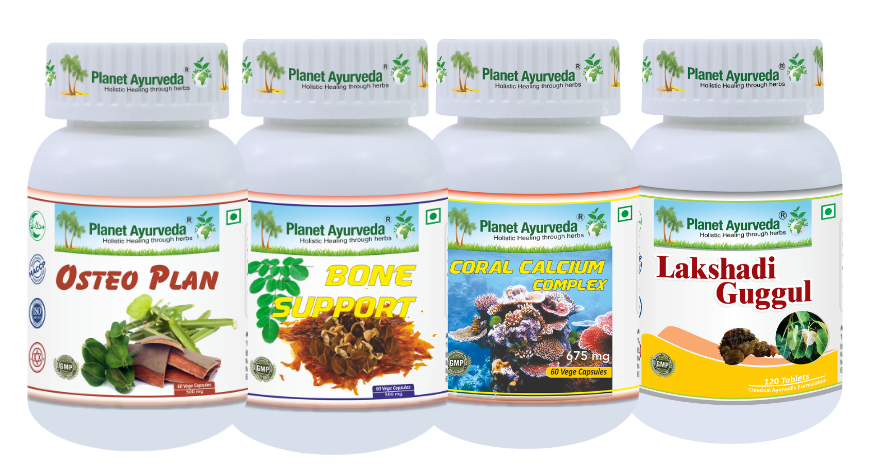
1.Coral Calcium Complex

This capsule is a pure extract of Praval Pishti (Coral), Akik Pishti (Agate), Mukta Pishti (Pearl), Guduchi (Giloy Satva) etc. Coral Calcium Complex can help provide additional calcium, which is crucial for maintaining bone strength.

Dosage: 1 capsule two times a day, with warm water after a meal

2. Lakshadi Guggul

This tablet is a standardized pure extract of Laksha (Laccifer Lacca), Asthisamharaka (Cissus Quadrangularis), Arjuna (Terminalia Arjuna), Ashwagandha (Withania Somnifera), Nagbala (Grewia Populifolia) etc. These herbs help to strengthen bones and enhance calcium absorption, supporting overall joint health.

Dosage: 2 tablets two times a day with lukewarm water after a meal

3. Osteoplan Capsule

This capsule is a standardized pure extract of Ashwagandha (Withania Somnifera), Shatavari (Asparagus Racemosus), Hadjod (Cissus Quadrangularis), Arjuna (Terminalia Arjuna). These capsules help revitalize osteocytes, offer joint lubrication, and meet calcium requirements. They help alleviate joint pain, back pain, neck pain, ankle discomfort, and swelling.

Dosage: 1 capsule two times a day with warm water after a meal

4. Bone Support Capsule

This capsule contains standardized pure extracts of Shudh Laksha (Laccifer Lacca), Shuanjana Beej (Moringa Oleifera), Hadjod (Cissus Quadrangularis), Arjun (Terminalia Arjuna), Praval Pishti (Corallium Rubrum) etc. These herbs enhance calcium absorption, promote joint flexibility, and support overall bone health. They help maintain bone density, reduce fracture risk, and improve mobility.

Dosage: 1 capsule two times a day with warm water after a meal

Conclusion

Low bone density is a condition that affects bone health, and it’s important to approach its treatment in a well-rounded way. Early diagnosis, prevention, and timely treatment are key to managing it. Ayurveda offers a natural method for preventing low bone density by looking at the whole person, including factors like body type, strength, digestion, and lifestyle. Ayurvedic remedies can be used individually or together, based on the person’s specific needs, to help prevent the disease.