July 30, 2026
Udsaleev (Paeonia officinalis): Benefits, Uses & Therapeutic Value
ABSTRACT
Udsaleev (Paeonia officinalis), commonly known as European Peony and referred to in traditional Ayurvedic and Unani literature as Ud-Saleev, is a perennial medicinal herb valued for its therapeutic properties. Traditionally used in European and Asian systems of medicine, the plant is especially known for its roots, which are rich in bioactive constituents such as paeoniflorin, albiflorin, paeonol, flavonoids, tannins, and volatile compounds. These phytochemicals contribute to its anti-inflammatory, antispasmodic, analgesic, sedative, and neuroprotective activities. Paeonia officinalis has been traditionally employed in the management of menstrual disorders, nervous system conditions, muscle spasms, epilepsy, and inflammatory ailments. Contemporary pharmacological and phytochemical studies provide scientific support for many of these traditional uses, indicating its potential role as a valuable medicinal herb. This article presents a concise overview of the botanical, traditional, and therapeutic significance of Paeonia officinalis.
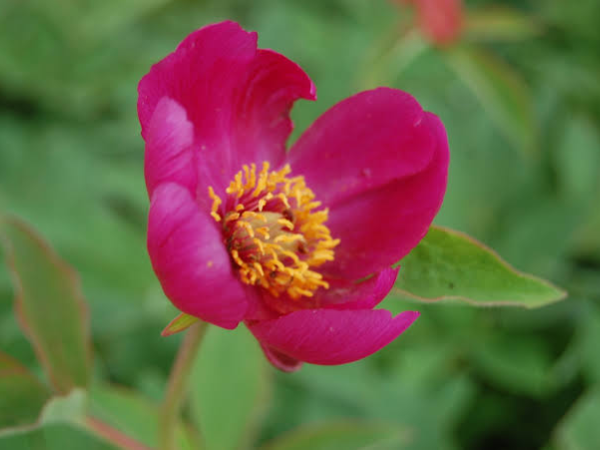
CLASSICAL REFERENCE OF UDSALEEV (PAEONIA OFFICINALIS)
Bhavprakash Nighantu Parishisht Varga – Page No. 895
SCIENTIFIC CLASSIFICATION OF UDSALEEV (PAEONIA OFFICINALIS)
- Kingdom: Plantae
- Order: Saxifragales
- Family: Paeoniaceae
- Genus: Paeonia
- Species: Paeonia officinalis
VERNACULAR NAMES OF UDSALEEV (PAEONIA OFFICINALIS)
- English: European Peony, Common Peony, White Peony Root
- Hindi: Udsaleev, Ud-Saleeb
- Urdu / Unani: Udsaleeb, Ood-Saleeb
- Arabic: Ud al-Salib
- Persian: Udsalib
- German: Echte Pfingstrose
- French: Pivoine officinale
- Spanish: Peonia comun
HABITAT OF UDSALEEV (PAEONIA OFFICINALIS)
Paeonia officinalis is indigenous to southern and central Europe, with a natural distribution across the Mediterranean and Balkan regions. The plant typically grows in open woodlands, forest margins, grasslands, and rocky or limestone-rich slopes. It prefers well-drained soils and is commonly found in hilly to mountainous areas, ranging from low elevations to higher altitudes. Thriving in temperate climatic conditions, Paeonia officinalis flourishes in locations receiving full sunlight to partial shade and is also widely cultivated as both a medicinal and ornamental plant in various temperate regions worldwide.
MORPHOLOGY OF UDSALEEV (PAEONIA OFFICINALIS)
Paeonia officinalis is a perennial plant that grows from a thick, woody root and usually reaches 60–70 cm in height. Its stems grow straight up each spring and die back after the season ends. The leaves are large and divided into several long, narrow segments, with the lower leaves more divided than the upper ones. The flowers are big, bowl-shaped, and usually red to deep pink, with 5–10 wide petals surrounding many yellow stamens. The plant usually has 2–3 carpels (female parts), which can be either hairy or smooth. After flowering, it produces fruit called follicles, each containing several seeds. The combination of tuberous roots, divided leaves, and large colorful flowers is what makes the peony recognizable.
AYURVEDIC PROPERTIES OF UDSALEEV (PAEONIA OFFICINALIS)
- Rasa (Taste): Tikta (Bitter), Kashaya (Astringent)
- Guna (Qualities): Laghu (Light), Snigdha (Slightly unctuous)
- Virya (Potency): Sheeta (Cooling)
- Vipaka (Post‑digestive effect): Katu (Pungent)
ACTION ON TRIDOSHA OF UDSALEEV (PAEONIA OFFICINALIS)
It balances vata and pitta dosha.
THERAPEUTIC INDICATIONS OF UDSALEEV (PAEONIA OFFICINALIS)
- Garbhashya Vikaar (Uterine Disorders)
- Apasmara (Epilepsy / Seizures)
- Aptantraka (Hemiplegia / Paralysis)
- Udarshoola (Abdominal Pain / Colic)
- Pittavrodha (Pitta-related Disorders)
- Jalodara (Ascites / Fluid Retention in Abdomen)
- Atisara (Diarrhea)
SYSTEMIC ACTIONS OF UDSALEEV (PAEONIA OFFICINALIS)
- Nervous System: Acts as a nervine tonic, calming nerves and reducing stress, anxiety, and insomnia. Helps in Apasmara (epilepsy/seizures) and Aptantraka (paralysis/hemiplegia).
- Reproductive System: Supports uterine health, helps in Garbhashya Vikaar (uterine disorders), regulates menstrual cycles, and alleviates dysmenorrhea.
- Digestive System: Relieves Udarshoola (abdominal pain/colic), Atisara (diarrhea), and Jalodara (ascites). Acts as a mild digestive stimulant and improves appetite.
- Hepatic & Metabolic System: Balances Pitta, reduces Pittavrodha (Pitta-related inflammation), and supports liver function.
- Musculoskeletal System: Reduces inflammation, joint pain, and stiffness. Useful in rheumatic and Vata-related musculoskeletal disorders.
CHEMICAL COMPOSITION OF UDSALEEV (PAEONIA OFFICINALIS)
- Root: Paeoniflorin, Paeonin, Triterpenoids (Lupeol, Sitosterol), Flavonoids, Tannins
- Flower: Paeonidin-3,5-diglucoside, Kaempferol glycosides
- Leaves: Gallic acid, Flavonoids
- Seeds: Paeoniflorin, Alpha-linolenic acid
ACTIONS AND PROPERTIES OF VARIOUS CHEMICAL CONSTITUENTS OF UDSALEEV (PAEONIA OFFICINALIS) Root Constituents
- Paeoniflorin: Nervine tonic, anti-inflammatory, analgesic, hepatoprotective, antispasmodic, sedative.
- Paeonin: Anti-inflammatory, antioxidant, supports liver and nerve health.
- Triterpenoids (Lupeol, Sitosterol): Anti-inflammatory, immunomodulatory, antioxidant, supports joint and musculoskeletal health.
- Flavonoids: Antioxidant, anti-inflammatory, hepatoprotective, free radical scavenger.
- Tannins: Astringent, anti-diarrheal, anti-inflammatory, antimicrobial.
- Flower Constituents
- Paeonidin-3,5-diglucoside (Anthocyanin): Antioxidant, anti-inflammatory, hepatoprotective, supports cardiovascular health.
- Kaempferol glycosides (Flavonoids): Antioxidant, anti-inflammatory, neuroprotective, hepatoprotective.
Leaves Constituents
- Gallic acid: Strong antioxidant, anti-inflammatory, antimicrobial.
- Flavonoids: Antioxidant, anti-inflammatory, hepatoprotective.
Seeds Constituents
- Paeoniflorin: Nervine tonic, anti-inflammatory, antispasmodic.
- Alpha-linolenic acid: Anti-inflammatory, supports cardiovascular health, reduces lipid levels.
PRACTICAL USES / HEALTH BENEFITS OF UDSALEEV (PAEONIA OFFICINALIS)
- The nervous system benefits (calming nerves, reducing stress, anxiety, insomnia, supporting epilepsy and paralysis) are supported by clinical and experimental studies on paeoniflorin and Udsaleev root extracts, including some small pilot clinical studies in epilepsy.
- Menstrual & uterine support (regulating cycles, relieving cramps) is traditionally reported in Ayurveda, and some studies on peony species, including Paeonia lactiflora and P. officinalis, show uterine muscle relaxing and anti-spasmodic effects, so this is partly research-supported.
- Joint pain, stiffness, and anti-inflammatory effects are supported by studies on paeoniflorin and total peony glucosides, which show anti-inflammatory and analgesic properties.
- Digestive benefits (relieving abdominal pain, diarrhea, ascites) are mostly traditional Ayurvedic uses, but some studies show anti-spasmodic and mild anti-inflammatory effects, which support these uses.
- Liver & Pitta support is well-supported, as studies show Paeonia officinalis root extracts have hepatoprotective effects, reduce liver enzymes, and protect against oxidative damage.
- Skin health (managing Pitta-related skin disorders) is mainly traditional, but antioxidant and anti-inflammatory properties of peony compounds provide a scientific rationale.
- Cardiovascular support (reducing inflammation, supporting heart health) is based on the presence of alpha-linolenic acid, flavonoids, and paeoniflorin, which have anti-inflammatory, antioxidant, and lipid-lowering effects, shown in studies.
PART(S) USED OF UDSALEEV (PAEONIA OFFICINALIS)
- Seeds
- Leaves
- Stems
- Flowers
- Roots
- Rhizomes
DOSAGE OF UDSALEEV (PAEONIA OFFICINALIS)
- Powder (Churna): 1–3 g
- Decoction (Kwath): 20–40 ml
- Paste / Oil (Lepa / Taila): Topical application
CONCLUSION
Udsaleev (Paeonia officinalis), also called European Peony, is a perennial medicinal herb valued in Ayurveda and Unani medicine. Its roots, rhizomes, seeds, leaves, stems, and flowers are used for their healing properties. The plant contains bioactive compounds like paeoniflorin, flavonoids, tannins, and alpha-linolenic acid, which provide nervine, anti-inflammatory, hepatoprotective, antispasmodic, and antioxidant effects. It helps in calming nerves, reducing stress, epilepsy, menstrual disorders, joint pain, digestive issues, liver support, skin health, and cardiovascular protection. Dosage forms include powder (1–3 g), decoction (20–40 ml), and topical paste or oil. Udsaleev is a cooling, Vata-Pitta pacifying herb widely used for holistic health.

Dr. Vikram Chauhan
https://www.planetayurveda.comDr. Vikram Chauhan (MD - Ayurveda) is a Globally Renowned Ayurveda Physician with Expertise of more than 25 Years. He is the CEO & Founder of http://www.PlanetAyurveda.com, a leading Ayurveda Brand, Manufacturing, and Export Company with a Chain of Clinics and Branches in the US, Europe, Africa, Southeast Asia, India, and other parts of the World. He is also an Ayurveda Author who has written Books on Ayurveda, translated into Many European Languages. One of his Books is "Ayurveda – God’s Manual for Healing". He is on a Mission to Spread Ayurveda All Over the Planet through all the Possible Mediums. With his Vast Experience in Herbs and their Applied Uses, he is successfully treating Numerous Patients suffering from Various Ailments with the help of the Purest Herbal Supplements, Diet, and Lifestyle, according to the Principles of Ayurveda. For More Details, visit - www.planetayurveda.com, www.alwaysayurveda.com
View more posts from this author