Category: Liver Health

Fatty Liver (MASLD): Causes, Symptoms & Ayurvedic Treatment

Abstract

Fatty Liver Disease, now known as Metabolic Dysfunction-Associated Steatotic Liver Disease (MASLD), can be correlated in Ayurveda with Santarpanajanya Vyadhi (diseases caused by overnutrition) involving Medo Dhatu Dushti (vitiation of the adipose tissue). It is considered a metabolic disorder associated with metabolic syndrome. Today, MASLD is one of the most common chronic liver diseases, affecting approximately 25–30% of the global population. It is characterized by the excessive accumulation of fat in the liver and is strongly associated with obesity, insulin resistance, type 2 diabetes, dyslipidemia, and other metabolic health disorders. If left unmanaged, MASLD can progress to metabolic dysfunction-associated steatohepatitis (MASH), liver fibrosis, cirrhosis, liver failure, and may also increase the risk of cardiovascular disease, which remains the leading cause of death in these patients.
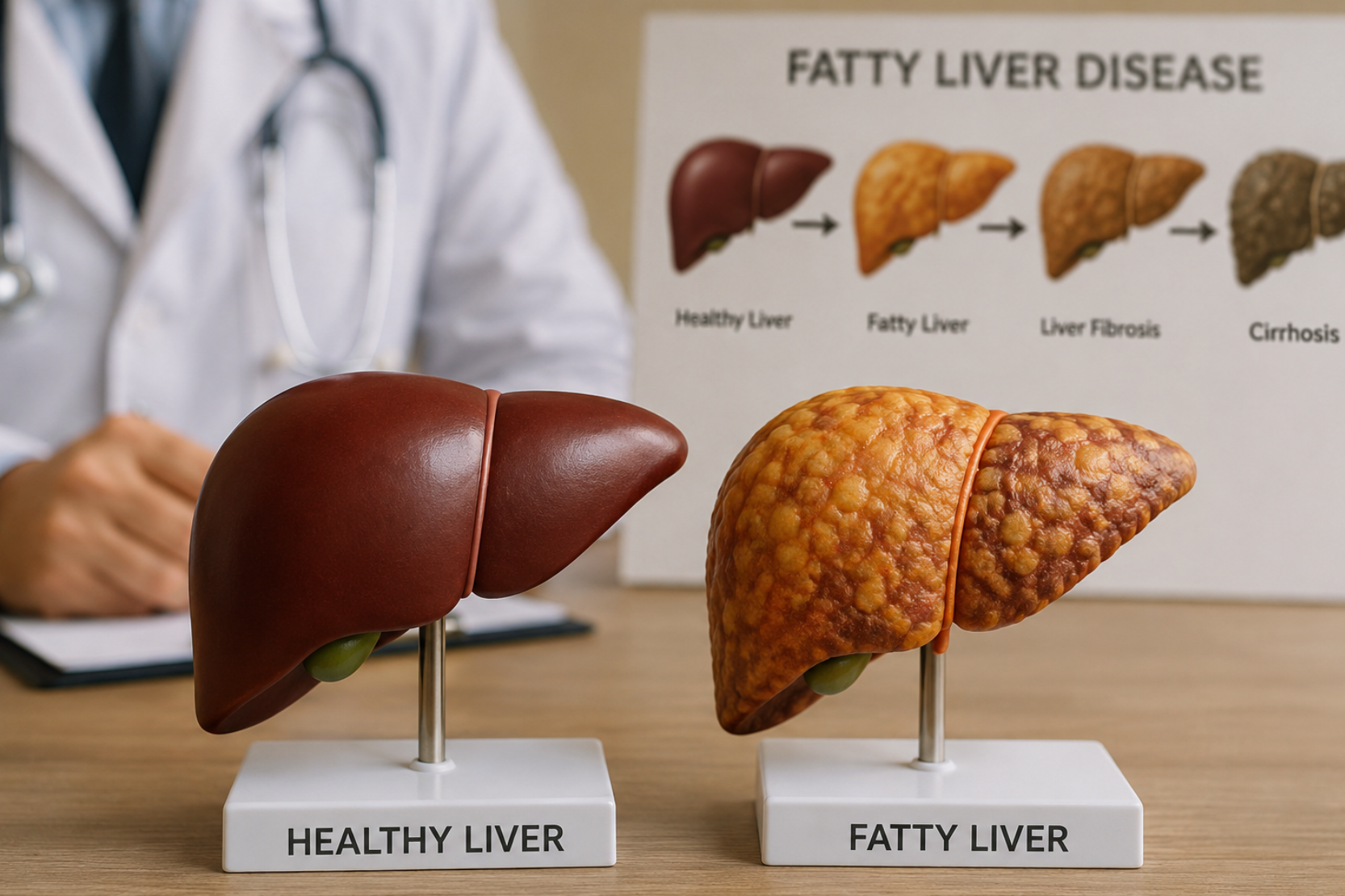
FATTY LIVER

Introduction

वामपार्श्वाश्रितः प्लीहा च्युतः कोष्ठात् प्रवर्धते।

तद्वद्यकृत् प्रकाशं स्यात् सव्यपार्श्वे तथैव च॥

In Ayurveda, Fatty Liver Disease (Metabolic Dysfunction-Associated Steatotic Liver Disease, MASLD) can be correlated with Santarpanajanya Vyadhi (disorders caused by overnutrition), primarily involving Medovaha Srotas Dushti along with the vitiation of Kapha and Pitta Dosha. Impaired Agni leads to the formation of Ama (improperly digested metabolic by-products), which, along with disturbed fat metabolism, contributes to the abnormal accumulation of fat in the liver. From a modern medical perspective, fatty liver disease is broadly classified into Alcohol-Related Liver Disease (ALD) and Metabolic Dysfunction-Associated Steatotic Liver Disease (MASLD) (previously known as Non-Alcoholic Fatty Liver Disease, NAFLD).

Types of Fatty Liver Disease

1. Metabolic Dysfunction-Associated Steatotic Liver Disease (MASLD)

(formerly Non-Alcoholic Fatty Liver Disease [NAFLD]– MASLD is associated with metabolic dysfunction, including obesity, insulin resistance, type 2 diabetes, hypertension, dyslipidemia (high cholesterol or triglycerides), and other features of metabolic syndrome. It is characterized by the accumulation of excess fat in the liver in the absence of significant alcohol consumption.

2. Metabolic Dysfunction-Associated Steatohepatitis (MASH)

(formerly Non-Alcoholic Steatohepatitis [NASH])– MASH is the progressive and inflammatory form of MASLD, in which fat accumulation is accompanied by liver inflammation and hepatocellular injury. If left untreated, it can progress to fibrosis, cirrhosis, liver failure, and an increased risk of hepatocellular carcinoma (liver cancer).

3. Alcohol-Related Liver Disease (ALD)

(includes Alcohol-Related Fatty Liver Disease)– ALD results from excessive alcohol consumption, which impairs the liver’s ability to metabolize fats, leading to fat accumulation within liver cells. Continued alcohol intake may cause alcoholic hepatitis, fibrosis, cirrhosis, and eventually liver failure.

Causes

  • Obesity
  • Insulin Resistance And Type 2 Diabetes
  • Alcohol Consumption
  • Fatty Food
  • Smoking
  • Packets Foods
  • Eating Heavy Meals
  • Eating Stale Food
  • Deep Fried Food
  • Overeating
  • Late Night Eating
  • If On certain Medications
  • Sugar

Symptoms

  • Digestion Issue
  • Hyper Acidity
  • Limit Of Food Intake
  • Obesity
  • Obesity
  • Fatigue
  • Discomfort in Abdomen
  • Itchy Skin
  • Urine Color Changes
  • Weight Loos

Liver disease is often called a “silent disease” because its early signs and symptoms are frequently ignored or considered normal. In many cases, significant liver damage becomes evident only after it is reflected in diagnostic tests. Therefore, rather than overlooking these warning signs, individuals should pay close attention to their diet, lifestyle, and overall liver health. Early lifestyle modifications and timely medical evaluation can play a crucial role in preventing the progression of liver disease.

Diagnosis

1. Blood Test

  • Liver Function Test (Lft)- Elevated levels of ALT(Alanine Aminotransferase) and AST (Aspartate Aminotransferase)
  • Lipid Profile Test – High triglycerides (>150 mg/dL), low HDL (“good” cholesterol, <40 mg/dL), and high LDL (“Bad” cholesterol, >100 mg/dL)
  • Viral Hepatitis Test –Elevated liver enzymes (ALT/AST)

2. Imaging Test

  • Ultrasound Typically grade it from Grade 1 (Mild) to Grade 3 (Severe),
  • MRI Or CT Scan -Typically refers to hepatic steatosis (fatty liver) or fat deposits in other organs or tissues
  • Fibro Scan -< 238 dB/m (Grade S0): Normal (Healthy liver, minimal to no fat)238 – 259 dB/m (Grade S1): Mild fat accumulation (11 – 33%)260 – 290 dB/m (Grade S2): Moderate fatty liver (34 – 66%)> 290 dB/m (Grade S3): Severe fatty liver (>67%)
  • Liver Biopsy -Steatosis Grade (0-3): Measures the percentage of liver cells containing fat.
  • Grade 0: Normal (less than 5%)
  • Grade 1: Mild (5% – 33%)
  • Grade 2: Moderate (33% – 66%)
  • Grade 3: Severe (more than 66%)

Modern Treatment

For Metabolic Dysfunction-Associated Steatotic Liver Disease (MASLD) (formerly NAFLD), the primary treatment focuses on lifestyle modification, including gradual weight loss, a balanced and calorie-controlled diet, and regular physical activity (at least 150 minutes of moderate exercise per week). Managing associated conditions such as obesity, type 2 diabetes, hypertension, and dyslipidemia is equally important. In selected patients with Metabolic Dysfunction-Associated Steatohepatitis (MASH) and liver fibrosis, medications such as Resmetirom (Rezdiffra®) may be prescribed, while drugs like Semaglutide may be used to promote weight loss and improve metabolic health. Vitamin E may also be considered in carefully selected non-diabetic patients with MASH. For Alcohol-Related Liver Disease (ALD), the cornerstone of treatment is complete abstinence from alcohol, along with nutritional support, correction of vitamin deficiencies, management of liver-related complications, and treatment of alcohol dependence. In advanced cases of liver failure or cirrhosis, liver transplantation may be considered.

Ayurvedic Overview

Metabolic Disorder Driven By Impaired Digestion And Aggravated Kapha And Pitta Dosha Which leads in Agnimandya ,Meda Dhatu Dushti ,Srotorodha According to Ayurveda, fatty liver is associated with weak digestion (Mandagni), blockage in the body’s channels (Srotas), and an imbalance of the Meda Dhatu (fat tissue). By adopting Ayurvedic principles and improving our lifestyle, we can support the body’s natural healing process and give it a fresh start. This includes incorporating Ayurvedic medicines, herbal remedies, a balanced diet, and regular exercise into our daily routine. Avoiding fatty and fried foods, reducing sugar intake, following a Satvik (wholesome and natural) diet, and maintaining an active lifestyle can help improve liver health and overall well-being. Ayurveda emphasizes treating the root cause of imbalance and encourages healthy habits that promote long-term wellness and a better quality of life.

According to Ayurveda, simple lifestyle changes and natural home remedies can play an important role in supporting liver health. Avoid consuming tea with biscuits, fatty and fried foods, packaged and processed foods, sugary items such as pastries and desserts, baked junk foods, stale or leftover food, and late-night meals, as these can weaken digestion and increase toxin accumulation. Instead, choose fresh, home-cooked, wholesome meals and eat at regular times. Drinking green tea in moderation, staying hydrated, and following a balanced, Satvik diet along with regular physical activity can help improve digestion, support liver function, and promote overall health naturally.

According to Ayurveda, fatty liver can be managed through both Shamana Chikitsa (pacification therapy) and Shodhana Chikitsa (purification therapy), depending on the individual’s condition and Prakriti (body constitution). One of the most commonly recommended purification procedures is Virechana (therapeutic purgation), which helps eliminate excess Pitta and accumulated toxins from the body while supporting liver health. In addition, Ayurvedic formulations such as Avipattikar Churna may be prescribed by an Ayurvedic physician to improve digestion, support healthy bowel movements, and help balance Pitta. These therapies should always be undertaken under the guidance of a qualified Ayurvedic practitioner after a proper clinical assessment.

Items to be avoided

  • All non veg food
  • Dairy products
  • Cinnamon
  • Coconut oil
  • Refined & corn flour
  • Frozen foods etc.

Herbal remedies for Fatty liver disease By Planet Ayurveda

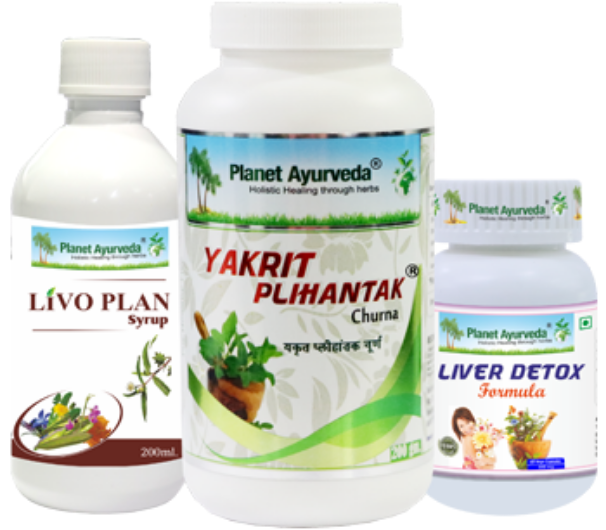
Planet Ayurveda is committed to delivering authentic Ayurvedic herbal formulations prepared according to classical Ayurvedic principles and modern quality standards. The company offers over 300 premium-quality herbal products manufactured in GMP-certified facilities. For individuals with fatty liver, Planet Ayurveda provides the Fatty Liver Care Pack, a carefully selected combination of Ayurvedic herbal formulations designed to support liver health, healthy metabolism, and overall liver function as part of a holistic wellness approach under professional guidance.

  1. Yakrit Plihanatak Churna
  2. Livo Plan Syrup
  3. Liver Detox Formula

Fatty Liver Care Pack
Buy Now Fatty Liver:Ayurvedic Treatment

Ayurvedic Medicine for Women

Product description

1. Yakrit Plihantak Churna

Yakrit plihantak churna is a powdered preparation prepared using ingredients such as Bhumiamla (Phyllanthus Niruri), Katuki (Picrorhiza Kurrao), Makoy (Solanum Indicum), (Boerrhavia Diffusa) etc. This Ayurvedic herbal powder that supports healthy liver function and promotes balanced fat metabolism. It helps maintain normal liver enzymes, supports natural detoxification, and assists in reducing excess fat accumulation in the liver while improving digestion.

Dosage – 1 Teaspoonful Twice A Day Before Meals With Warm Water Or Decoction Method.

2. Livo Plan Syrup

This is a herbal syrup made from extract of herbs like–Bhringraj (Eclipta Alba) , Sharpunkha (Tephrosia Purpurea) , Kalmegh (Andrographis Paniculata) , Kasni (Cichorium Intybus) etc This syrup formulated to support liver health and digestion. It helps protect liver cells from oxidative stress, promotes healthy bile secretion, enhances appetite, and supports the liver’s natural cleansing processes.

Dosage – 2 Tsp Twice A Day After Meals.

3. Liver Detox Formula

Liver detox formula is a polyherbal Cap prepared using Kutki (Picrorhiza Kurroa) , Punarnava (Borehavia Diffusa) , Makoy (Solanum Indicum) -Its Flush Out Liver Toxins and Help To Reduce Lipid Accumulation and Lower Liver Enzymes. Its Antioxidant, Anti -Inflammatory, properties help In Metabolic Actions and Yakrituttejan (Liver Stimulant thus Improve Bile Flow, Stimulate Liver Metabolism.

Dosage – 1 Capsule Twice A Day After Meals With Warm Water.

Conclusion

At last we can say that Fatty liver disease is an important warning sign of underlying metabolic dysfunction, but it is not a permanent condition. In most cases, it is treatable and can be completely reversible with timely intervention, including a healthy diet, regular physical activity, weight management, and control of associated risk factors. Early diagnosis and lifestyle modification are essential to prevent progression to irreversible liver damage, such as liver fibrosis and cirrhosis.

Planet Ayurveda Agnitundi Vati – Ayurvedic Medicine for Strong Digestion & Metabolism

ABSTRACT

In the present era, digestive disorders such as Agnimandya (a weakened digestive fire) are prevalent across all age groups, resulting from impaired digestive fire (Agni) that leads to toxin accumulation (Ama) and complications like fever associated with indigestion (Amajvara). Ayurveda attributes these to Vata and Kapha dosha aggravation with channel obstruction and metabolic disturbances. Agnitundi Vati, a classical herbo-mineral formulation, features Ushna (hot potency), Tikshna (penetrating action), Lekhana (scraping), and Deepana (appetizer) properties to effectively balance both doshas, kindle digestive fire, and eliminate Ama (endotoxins). It comprises equal proportions of purified minerals, alkaline ashes, salts, and select herbs triturated with citrus fruit juice for enhanced efficacy. A detailed overview of this formulation follows.

INTRODUCTION

Agnitundi Vati is a potent herbo-mineral formulation renowned for igniting digestive fire and alleviating agnimandya (weak digestion) along with its complications. The name “Agnitundi” signifies its thunderbolt-like (tundi) action on Agni (fire), combining purified mercury, sulfur, aconite, alkaline ashes, salts, borax, and select herbs triturated in lemon juice for profound ama endotoxins clearance and vitality restoration. Primarily indicated for weak digestion, bloating, indigestion-related fevers, and toxin-mediated symptoms, it promotes robust gut health and metabolic harmony.

This preparation acts on annavaha srotas (digestive channels), addressing ama (endotoxins) buildup, jatharagni (digestive fire) impairment, and dosha vitiation. It effectively dispels anorexia, abdominal discomfort, fever due to indigestion (amajvara), and vata-kapha imbalances. By scraping channel obstructions, balancing Vata and Kapha doshas, and rejuvenating without aggravating Pitta, Agnitundi Vati serves as a key remedy for digestive debility and associated systemic issues.

Acidity and Bloating

CLASSICAL INDICATION

Agnimandya (weak digestion)

INGREDIENTS

शुद्धसूतं विषं गन्धमजमोदाम् फलत्रयम् ।
स्वज्जिक्षारं यवक्षारं वह्निं सैन्धवजीरकम् ॥१३॥
सौवर्चलं विडङ्गानि सामुद्रं टङ्कणं समम् ।
विषमुष्टिं सर्वतुल्यं जम्बीराम्लेन मर्दयेत। 
मरीचाभाम् वटीम्   खादेदग्निमांद्यप्रशांतये  ॥१४॥
(भैषज्यरत्नावली, अग्निमान्द्याधिकार; १३ –१४)
  • Shuddha Parad (Purified Mercury) – 1 part
  • Vatsanabha (Aconitum ferox) – 1 part
  • Gandhaka (Sulphur) – 1 part
  • Ajamoda (Apium graveolens) – 1 part
  • Haritaki (Terminalia chebula) – 1 part
  • Amalaki (Emblica officinalis)– 1 part
  • Sarji Kshara (Sodium carbonate) – 1 part
  • Yava Kshara (Barley)– 1 part
  • Vahni (Plumbago zeylanica)– 1 part
  • Saindhava Lavana (Rock salt) – 1 part
  • Jiraka (Cuminum cyminum) – fruit – 1 part
  • Sauvarcala Lavana (Black salt) – 1 part
  • Vidanga (Embelia ribes) – 1 part
  • Samudra Lavana (Sea salt) – 1 part
  • Tankana (Borax) – 1 part
  • Vishamushti (Strychnos nux-vomica) – 16 parts
  • Jambiramla (Citrus lemon) – Q.S. (for trituration)

INGREDIENT DESCRIPTION

  • Shuddha Parada (Purified Mercury) possesses madhura rasa (sweet taste), snigdha guna (unctuous property), and ushna virya (heating potency), balancing Vata and Kapha doshas. It acts as a supreme rasayana (rejuvenator) and yogavahi (catalyst), effectively improves weak digestive fire (agnimandya) through its synergistic blend of ushna-tikshna (hot-piercing property) ingredients that kindle digestive fire, dissolve ama, and clear srotas (microchannels) obstructions.
  • Shuddha Vatsanabha (Purified Aconitum ferox) possesses tikta-katu rasa (bitter-pungent taste), laghu-ruksha guna (light-dry properties), and ushna virya (heating potency), primarily pacifying Vata and Kapha doshas. It acts as a potent deepana (appetizer), shothahara (anti-inflammatory), and vishaghna (anti-toxic), stimulating jatharagni (digestive fire) to dispel ama (endotoxins), relieve abdominal colic, and enhance nerve conduction for better peristalsis.
  • Shuddha Gandhaka (Purified Sulphur) features katu rasa (pungent taste), snigdha guna (unctuous quality), and ushna virya (hot potency), balancing Vata-Kapha while mildly aggravating Pitta. As a yogavahi (bio-enhancer) and lekhana (scraping agent), it purifies dhatus (body tissues), boosts metabolism, eliminates endotoxins, supports skin health, and augments antimicrobial action against ama-related infections
  • Ajamoda (Apium graveolens) has tikta-katu rasa (bitter-pungent taste), laghu-snigdha guna (light-unctuous properties), and ushna virya (hot potency), targeting Vata-Kapha doshas with deepana-pachana (appetizer-digester), anulomana (carminative), and shulahara (pain reliever) effects. It alleviates adhamana (bloating), pavana (flatulence), and ama (toxin) accumulation by promoting srotas shodhana (channel clearance) and agni vriddhi (gastric motility).
  • Haritaki (Terminalia chebula) exhibits five tastes, ruksha-laghu guna (dry-light property), and ushna virya (hot potency), tridoshahara (balances all doshas) as a rasayana. It kindles digestive fire, acts as a laxative & detoxifier, removes srotorodha (channel blocks), and prevents endotoxins (ama) by enhancing nutrient absorption and tissue rejuvenation.
  • Bibhitaka (Terminalia bellirica) offers kashaya-madhura rasa (astringent-sweet taste), ruksha guna (dry property), and ushna virya (hot potency), pacifying Kapha-Vata with grahi (astringent), deepana (digestive), and keshya (hair promoting) properties. It strengthens annavaha srotas (digestive channels), controls atisara (diarrhea) from ama (toxins), clears respiratory mucus (Kapha), and supports ayu (longevity) by shodhana (detoxification) and dhatu poshana (tissue nourishment).
  • Amalaki (Emblica officinalis) is amal rasa (sour taste) dominant, snigdha guna (unctuous property), and sheeta virya (cooling potency), tridoshahara (balances three doshas) with supreme rasayana (rejuvenative) status. Rich in vitamin C, it rejuvenates jatharagni (digestive fire) without Pitta aggravation, neutralizes free radicals, combats oxidative ama (toxin) damage, enhances immunity (vyadhi kshamatva), and promotes hematopoiesis for vitality.
  • Sajji Kshara (Sodium carbonate) provides katu-ushna (pungent-hot) qualities, acting as tikshna (sharp) deepana-pachana (appetizer-digester) to shatter ama (endotoxins) complexes, relieve udara shula (abdominal pain), and alkalize acidic gastric environment (amla pitta) for optimal digestion (pachana).
  • Yava Kshara (Barley ash alkali) has katu rasa (pungent taste), laghu guna (light property), ushna virya (hot potency), targeting Kapha-Vata as anulomana (carminative)-shulahara (pain reliever). It scrapes meda/ama (fat/toxins), eases vibandha (constipation), adhamana (bloating), and arsha (hemorrhoids) by clearing mutravaha srotas (urinary channels) and enhancing peristalsis (anatomical movement).
  • Vahni also known as Chitraka (Plumbago zeylanica) features katu rasa (pungent taste), snigdha guna (unctuous property), ushna virya (hot potency), potently pacifying Kapha-Vata as digestive fire enhancer and krimighna (anti-helminthic). It dahati (burns) ama, dissolves gulma (abdominal tumors), stimulates glandular secretions (upasneha), and boosts anupana (bioavailability) of co-herbs.
  • Saindhava Lavana (Rock salt) offers lavana rasa (salty taste), snigdha guna (unctuous property), ushna virya (hot potency), balancing all doshas mildly (tridoshahara). As yogavahi (catalyst), it enhances herb absorption (grahana), lubricates srotas (channels), stimulates salivation, and counters Kapha-induced shushkata (dryness) without jala vriddhi (fluid retention).
  • Shveta Jiraka (Cuminum cyminum) has katu-kashaya rasa (pungent-astringent taste), laghu-ruksha guna (light-dry properties), ushna virya (hot potency), pacifying Vata-Kapha with deepana (appetizer)-anulomana (carminative)-shulaghna (analgesic) actions. It relieves gas, colic, atisara, diarrhea, enhances liver function, and dispels belching from weak digestive fire.
  • Sauvarchala Lavana (Black salt) provides lavana-amla rasa (salty-sour taste), guru guna (heavy property), ushna virya (hot potency), targeting Kapha as carminative & digester. It decongestes srotas (channels), improves rasa buddhi (taste perception)  and anorexia, alkalizes ama (endotoxin) acidity, and supports electrolyte balance for digestion.
  • Vidanga (Embelia ribes) exhibits katu rasa (pungent taste), snigdha-laghu guna (unctuous-light properties), ushna virya (hot potency), Kapha-Vata shamaka (pacifier) with krimighna (anti-parasitic) & rechaniya (purgative) effects. It eradikates krimi (worms), ama (endotoxins), purifies gut flora, and kindles digestive fire, and prevents malabsorption.
  • Samudra Lavana (Sea salt) has lavana rasa (salty taste), snigdha guna (unctuous property), ushna virya (hot potency), mild tridoshahara as anulomana (carminative). It softens channel blocks (srotorodha), stimulates digestive fire, aids mineral assimilation, and counters Kapha mandata (sluggishness) without Pitta increase.
  • Shuddha Tankana (Purified Borax) offers madhura-katu rasa (sweet-pungent taste), snigdha guna (unctuous property), ushna virya (hot potency), balancing Vata-Kapha-Pitta as deepana (appetizer)-shulahara (pain reliever)-keshya (hair tonic). It ledayati (dissolves) kapha/ama (phlegm/toxins), relieves kasaghna (cough)-kantha roga (throat issues) linked to mandagni (weak digestion), and enhances skin & hair vitality.
  • Shuddha Vishamushti (Purified Strychnos nux-vomica) possesses tikta-kashaya rasa (bitter-astringent taste), laghu guna (light property), ushna virya (hot potency; in large proportion: 16 parts), Vata-Kapha pacifier with uttejaka (stimulant), shulahara (analgesic), and visha-hara (anti-toxic) properties. It powerfully stimulates neuromuscular function, dispels pakshaghata-like (paralysis) ama stagnation, boosts peristalsis, and counters udara manda (visceral lethargy).
  • Jambira (Citrus lemon) juice (Q.S. for trituration) provides amla rasa (sour taste), laghu guna (light property), ushna virya (hot potency), tridoshahara especially Kapha-Pitta. As a potent digester, it dissolves endotoxins, enhances mineral and herbal absorption, vitamin C boosts immunity, and provides hridayada (refreshing) anupana (adjuvant) for optimal bioavailability.

METHOD OF PREPARATION

Agnitundi Vati is prepared using the classical Kharaliya Rasayana (trituration method) in a Khalva Yantra (mortar-pestle). First, equal parts (1 part each) of Shuddha Parada (Purified mercury), Shuddha Vatsanabha (Purified Aconitum ferox), Shuddha Gandhaka (Purified sulphur), Ajamoda (Apium graveolens fruit), Haritaki (Terminalia chebula pericarp), Bibhitaka (Terminalia bellirica pericarp), Amalaki (Emblica officinalis pericarp), Sajji Kshara (Sodium carbonate), Yava Kshara (Barley ash), Vahni/Chitraka (Plumbago zeylanica root), Saindhava Lavana (Rock salt), Shveta Jiraka (Cuminum cyminum fruit), Sauvarchala Lavana (Black salt), Vidanga (Embelia ribes fruit), Samudra Lavana (Sea salt), and Shuddha Tankana (Purified borax) are blended with 16 parts Shuddha Vishamushti (Purified Strychnos nux-vomica seeds). The mixture undergoes repeated bhavana (trituration) with Jambira (Citrus lemon) rasa (juice) – Quantity Sufficient (Q.S.) until the attainment of scraping test (laja bhavat), forming a smooth, blackish pill dough. Finally, 125-250 mg vati (tablets) are rolled, dried in shade, and stored airtight to preserve potent herbo-mineral synergy without involving agni samskara (incineration).

MEDICINAL PROPERTIES

  • Agnitundi Vati pairs best with lime juice (Nimbu swarasa) and warm water (Ushnodaka) as anupana (adjuvant) for optimal Vata-Kapha shamaka (pacifying) effects, igniting jatharagni (gastric fire), relieving Aruchi (anorexia), and restoring vitality through deepana (appetizer) and pachana (digestive) actions.
  • For Agnimandya (Impaired Digestion) Management, administer Agnitundi Vati (125-250 mg twice daily) with Hingvashtak Churna (1 g), reducing Adhmana (bloating) and Gaurava (heaviness) via enhanced ama pachana (toxin digestion) and vata anulomana (downward movement) synergy.
  • In cases of Amajvara (Ama-associated Fever), Agnitundi Vati is used alongside Guduchyadi Kashaya (40 ml), a potent jwaraghna (anti-pyretic) for Jvara and Daurbalya (weakness), boosting agni deepana (fire kindling) and ama shodhana (toxin clearance) properties.
  • In conditions associated with Ajirna (Indigestion) & Vibandha (Constipation), Agnitundi Vati works best with Abhayarishta (15-30 ml with warm water), aiding srotas shodhana (channel cleansing) and mala pravritti (bowel movement) by balancing Vata-Kapha and promoting dhatu poshana (tissue nourishment) for sustained digestive harmony.

IMPACT OF DOSHA

Agnitundi Vati primarily pacifies Vata (cold, dry qualities causing colic, bloating, impaired motility) and Kapha (heavy, sticky traits leading to sluggish digestion, ama accumulation, anorexia) through its ushna (heating), tikshna (sharp), and lekhana (scraping) actions that kindle jatharagni (digestive fire) and clear obstructed srotas (channels). It mildly balances Pitta via alkaline and rasayana components, preventing hyperacidity or inflammation aggravation while supporting metabolic harmony in toxin-mediated fevers. Ideal for Vata-Kapha dominant Agnimandya (weak digestive fire) and its complications.

INDICATIONS

  • Sluggish digestion (Agnimandya)
  • Indigestion-associated fever (Amajvara)
  • Anorexia (Aruchi)
  • Abdominal bloating (Adhmana)
  • Flatulence and belching (Pavana-Udgara)
  • Abdominal colic (Udara Shula)
  • Constipation/Diarrhea (Vibandha/Atisara)
  • Intestinal worms (Krimi)
  • Vata-Kapha disorders
  • Digestive debility
  • Toxin-mediated weakness (Ama Daurbalya)
  • Poor appetite with fatigue

DOSAGE

  • 125-250 mg – once or twice daily, after meals for agnimandya (impaired digestion) and amajvara (toxin fever).
  • Anupana (Adjuvant): Lemon juice (Nimbu swarasa) or warm water.

WHY CHOSE PLANET AYURVEDA’s AGNITUNDI VATI

Planet Ayurveda’s Agnitundi Vati excels due to its adherence to classical Bhaishajya Ratnavali proportions, GMP-certified production ensuring rigorous purification of potent rasa dravyas like mercury and aconite for complete safety and zero heavy metal toxicity, 100% natural vegetarian formulation free from fillers, binders, or preservatives to deliver pure herbo-mineral synergy, clinically validated standardization enhancing bioavailability and stability, and widespread trust among practitioners with proven rapid results in kindling digestive fire and toxin clearance, all at an affordable price with user-friendly packaging.

CONTRAINDICATION

  • Pregnancy and lactation
  • Children under 12 years
  • Pitta-dominant hyperacidity or peptic ulcers
  • High blood pressure

CONCLUSION

Agnitundi Vati stands as a time-tested herbo-mineral powerhouse in Ayurveda, masterfully blending potent mineral ingredients with digestive herbs to reignite gastric fire, dissolve toxins, and restore channel patency for profound metabolic revival. This sharp, appetizer formulation excels in conquering impaired digestion and toxin-associated fever, offering safe, synergistic relief when dosed judiciously under expert guidance, transforming digestive debility into vibrant vitality.