Category: Herbal Remedies

Acinic Cell Carcinoma – Causes, Symptoms, Diagnosis & Management

Acinic cell carcinoma

Abstract

Acinic cell carcinoma (AciCC) is a rare malignant neoplasm predominantly arising in the salivary gland, most commonly the parotid gland. Traditionally considered a low-grade carcinoma, AciCC exhibits diverse histological patterns and may recur locally or metastasize distantly despite indolent behavior. It accounts for approximately 6–10% of all salivary gland malignancies, with a slight female preponderance and incidence across a broad age range, including children. This article synthesizes current evidence on its etiopathogenesis, clinical presentation, diagnostic workup, management strategies, and insights from Ayurvedic perspectives on supportive and integrative care.

Introduction

Acinic cell carcinoma (AciCC) is a distinct subtype of salivary gland carcinoma characterized by cells demonstrating differentiation toward serous acinar cells of salivary tissue. These tumors mostly originate within the parotid gland and represent one of the less common malignant salivary neoplasms, constituting 6–10% of such cancers. Although initially described in the late 19th century, the malignant potential of these tumors has historically been underestimated due to their low-grade histology and deceptively benign appearance. Nonetheless, AciCC displays significant biological variability ranging from indolent lesions to aggressive forms with recurrence or metastasis.

Acinic cell carcinoma

Causes

The exact cause of acinic cell carcinoma remains poorly understood, as with many cancers. However, several factors have been associated with increased risk:

  1. Radiation exposure: Prior therapeutic irradiation of the head and neck region has been linked to a higher incidence of salivary gland malignancies, including AciCC.
  2. Genetic predisposition: Although rare, familial clustering suggests potential hereditary influences in some cases.
  3. Acinar cell transformation: AciCC arises from serous acinar cells or stem cell progenitors within salivary gland ductal epithelium, reflecting cellular transformation mechanisms.

Despite these associations, most cases occur sporadically, and definitive causative mechanisms are yet to be fully known.

Signs and Symptoms

AciCC typically presents with the following clinical features:

  1. Painless swelling or mass in the region of the affected salivary gland, most often the parotid. The mass is usually slow-growing, firm, and mobile in early stages.
  2. Facial nerve involvement may occur in more advanced disease, leading to weakness or paralysis on the affected side.
  3. Local discomfort, tenderness, or pain may occasionally accompany the lesion, especially if secondary inflammation or rapid growth is present.
  4. Lymphadenopathy or distant metastatic symptoms (e.g., respiratory complaints from lung involvement) are less frequent but significant in advanced disease.

Investigations

Accurate diagnosis of AciCC requires a multimodal approach:

  1. Clinical Evaluation: Detailed history and physical examination focusing on lesion characteristics and involvement of adjacent structures.
  2. Imaging
    1. Ultrasonography: Initial assessment for lesion size, morphology, and vascularity.
    2. Magnetic Resonance Imaging (MRI) / CT Scan: Detailed assessment of tumor extent, perineural invasion, and regional anatomy.
  3. Fine Needle Aspiration Cytology (FNAC): Often the first cytological diagnostic tool; it can detect acinar differentiation but may occasionally be inconclusive due to overlapping features with benign lesions.
  4. Histopathology: Gold standard for definitive diagnosis demonstrating characteristic acinar cell patterns with immunohistochemical profiling to distinguish from other salivary neoplasms.
  5. Staging Investigations: Chest imaging, bone scans, or PET-CT may be indicated if metastasis is suspected.

Management

Surgical Treatment

Surgery remains the cornerstone of AciCC management:

  1. Primary Surgical Excision
  2. Neck Dissection

Adjuvant Therapy

  1. Radiotherapy: Often recommended in cases with positive margins, high-grade histology, perineural invasion, or recurrent disease..
  2. Chemotherapy: Its role remains limited and is generally reserved for advanced metastatic or refractory disease.

Ayurvedic Aspect and Management

In classical Ayurveda, disease processes that involve abnormal tissue growth and non-healing masses share similarities with concepts such as Arbuda (tumor), and Dushta Vrana (chronic non-healing wound). While direct correlations to a specific histological entity like acinic cell carcinoma are not described in classical texts, the Ayurvedic approach emphasizes systemic balance and holistic care.

गात्रप्रदेशे क्वचिदेव दोषाः सम्मूर्च्छिता मांसमभिप्रदूष्य |
वृत्तं स्थिरं मन्दरुजं महान्तमनल्पमूलं चिरवृद्ध्यपाकम्
कुर्वन्ति मांसोपचयं तु शोफं तमर्बुदं शास्त्रविदो वदन्ति (Sushruta Nidana 11/13-14)

When the doshas become severely vitiated throughout the body, they localize in the Mamsa Dhatu (muscle tissue) and give rise to a deep-seated, firm, oval swelling that is fixed in nature, painless or associated with mild pain, slowly progressive, and non-suppurative. Such swelling is described in Ayurveda as Arbuda (tumor-like growth).
In Arbuda usually all the doshas are vitiated however Vata and Kapha doshas, leads to abnormal cell proliferation and stagnation. Chronic imbalances can lead to impaired Rasa (plasma) and Mamsa (muscle/tissue) dhatu, resulting in mass formation and loss of normal function. Management includes Detoxification procedures, including Virechana (therapeutic purgation) and Basti (medicated enema), tailored to individual constitution and tumor-associated symptoms. It is followed by Shaman Therapy (Pacifying therapy).  Herbs and formulations aimed at enhancing immune response, reducing oxidative stress, and supporting tissue homeostasis and reducing uncontrolled cellular growth are used such as Ashwagandha (Withania somnifera), Guduchi (Tinospora cordifolia), Turmeric (Curcuma longa), Neem (Azadirachta indica) and others. Moreover, emphasis on light, easily digestible meals, antioxidants, and avoidance of processed or heavy foods is indicated. Additionally, for any associated ulceration or local symptoms, medicated pastes, washes Kwath), and oils (Taila) like Yashtimadhu ghrita or Panchavalkal kwath may be used.

Herbal Remedies by Planet Ayurveda for Acinic Cell Carcinoma

Planet Ayurveda is a renowned Ayurvedic healthcare brand dedicated to promoting holistic wellness through authentic herbal formulations. Rooted in classical Ayurvedic principles, the company offers a wide range of plant-based products designed to support overall health, balance, and vitality. Emphasizing purity, safety, and efficacy, Planet Ayurveda combines traditional Ayurvedic wisdom with modern quality standards. Its carefully crafted supplements and care packs provide natural solutions for various health concerns, making it a trusted choice for long-term well-being and preventive healthcare. Planet Ayurveda is more than happy to present its list of products for the management of Acinic cell carcinoma.

Product description

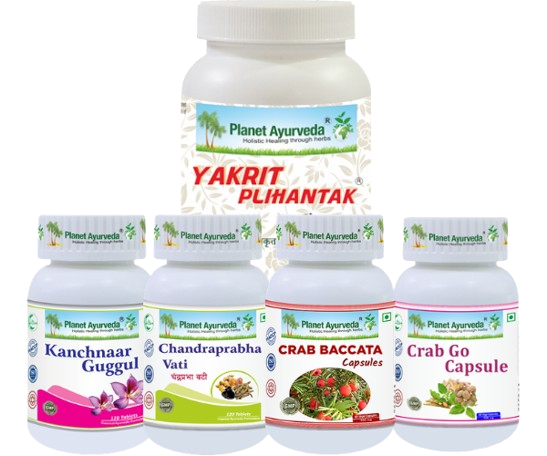
  1. Kanchnaar Guggul
  2. Crab Baccata Capsules
  3. Crab Go Capsules
  4. Crab Curcumin 95%
  5. Chandraprabha Vati

Product description

1. Kanchnaar Guggul

Kanchnaar Guggul is a classical ayurvedic formulation and has properties of detoxification, anti-inflammatory action, and tissue normalization. It is primarily indicated for abnormal glandular swellings (Granthi/Arbuda) and works by pacifying Vata and Kapha doshas, enhancing metabolic fire (Agni), and promoting systemic immunity. Its ingredients, including Kanchnaar (Bauhinia variegata) and Guggul resin (Commiphora mukul), provide antioxidant effects, reduce oxidative stress, and support lymphatic detoxification, which aid in improving tissue health and reducing inflammation and growth. Kanchnaar Guggul supports overall resilience, assists in managing local tissue irregularities, and enhances quality of life and manages Acinic cell carcinoma.

Dosage : Two tablets twice a day.

2. Crab Baccata Capsules

Planet Ayurveda’s Crab Baccata Capsules are formulated using a standardized extract of Taxus baccata (Thuner), a medicinal herb valued for its anti‑inflammatory (Shothaghna) properties and ability to assist in managing chronic malignant inflammation and abnormal growths in the body. The key bioactive component associated with Taxus baccata is taxol (paclitaxel), a well‑studied diterpene alkaloid known for its cytotoxic action on dividing cells, ability to induce apoptosis (programmed cell death), and interference with microtubule function, mechanisms that are central to conventional chemotherapeutic strategies against cancerous cells. Paclitaxel’s action on microtubules helps prevent uncontrolled cell division, which is a hallmark of malignancies. Furthermore, helping to support detoxification, balance of doshas (especially Kapha involved in growth/stagnation), and enhancing the strength and functioning of healthy cells. Hence, Crab Baccata Capsules help mitigate inflammation, support immune resilience, and aid in regulating aberrant cellular activity in Acinic cell carcinoma.

Dosage : One capsule twice a day.

3. Crab Go Capsule

Crab Go Capsules from Planet Ayurveda has anti‑inflammatory, antioxidant, cytoprotective, and immune‑modulating properties, which help the body cope with abnormal cell growth and systemic stress associated with malignancy. Crab Go Capsules are formulated with standardized extracts of herbs such as Ashwagandha (Withania somnifera), Shatavari (Asparagus racemosus), Turmeric (Curcuma longa) and others that contain bioactive compounds like withanolides, withaferin‑A, saponins, and shatavarin. These constituents exhibit cytotoxic effects on abnormal cells, help reduce free‑radical generation, and lower systemic inflammation, mechanisms that are relevant in the context of tumor biology where oxidative stress and chronic inflammation contribute to cancer progression. By supporting the immune system and reducing oxidative damage, Crab Go helps improve overall tissue health and resilience, assists in managing symptoms associated with abnormal growth and helps in the management of Acinic cell carcinoma.

Dosage : Two capsules twice a day.

4. Crab Curcumin 95%

Planet Ayurveda’s Crab Curcumin 95% Capsules contain a standardized extract of curcumin (from Curcuma longa), a potent polyphenolic compound with well‑studied anti‑inflammatory, antioxidant, and anti‑tumor properties. Curcumin has been shown in research to modulate multiple cellular pathways involved in cancer by inhibiting cell proliferation, promoting apoptosis (programmed cell death), and interfering with signaling molecules that support tumor growth and invasion such as NF‑κB, STAT3, COX‑2, and growth factors. It also helps suppress chronic inflammation and oxidative stress, which are key contributors to cancer progression. Additionally, curcumin’s antioxidant activity helps protect normal tissues from treatment‑related oxidative damage and improve overall cellular health and immunity. Crab Curcumin 95% capsules enhance systemic balance and support detoxification. This way, the capsules help in the management of Acinic cell carcinoma.

Dosage : One capsule twice a day.

5. Chandraprabha Vati

Chandraprabha Vati is a classical ayurvedic medicine that helps in a number of conditions. It is used to pacify all three doshas (Vata, Pitta, Kapha), support digestion (Agni), and promote efficient elimination of Ama (toxins). The formulation helps reduce chronic inflammation, oxidative stress, and metabolic stagnation, thereby improving tissue health, immune function, and overall vitality. Some key ingredients of Chandraprabha Vati include Shilajit (Asphaltum), Guggul (Commiphora mukul), Loha Bhasma (incinerated iron), Abhraka Bhasma (processed mica), Vacha (Acorus calamus), and Haritaki (Terminalia chebula), each contributing detoxification, rejuvenation (rasayana), and metabolic support. Chandraprabha Vati helps improve quality of life and systemic strength in patients with Acinic Cell Carcinoma.

Dosage : Two tablets twice a day.

Conclusion

Acinic cell carcinoma is a rare but clinically significant salivary gland malignancy that requires timely diagnosis, appropriate surgical management, and long-term follow-up due to its potential for recurrence and metastasis despite an often indolent course. While conventional treatment modalities such as surgery, radiotherapy, and selective chemotherapy remain the cornerstone of management, an integrative approach can play a valuable supportive role. Ayurveda offers a holistic framework for addressing systemic imbalances associated with Arbuda, focusing on detoxification, dosha pacification, immune modulation, and restoration of tissue health. Planet Ayurveda’s herbal formulations help reduce inflammation and oxidative stress, support metabolic and immune function, and enhance overall strength and quality of life. When used judiciously under expert supervision alongside standard oncological care, Ayurvedic therapies provide meaningful complementary support in the comprehensive management of Acinic Cell Carcinoma.

Paratesticular Pleomorphic Leiomyosarcoma: Causes, Symptoms, Diagnosis & Treatment Options

Abstract

Sarcoma is a rare type of cancer that develops in the connective tissues of the body, such as muscles, fat, nerves and blood vessels.  It accounts for less than 1% of all adult cancers.  Although sarcomas are uncommon, they can be serious and may grow quickly or spread to other parts of the body if not treated early. One of such sarcomas is Paratesticular pleomorphic leiomyosarcoma is a very rare type of cancer that arises from the smooth muscle cells surrounding the testis, including the spermatic cord, epididymis, or tunica. So let’s discuss this sarcoma in detail.

Introduction

Paratesticular pleomorphic leiomyosarcoma is a rare malignant soft tissue tumor arising from undifferentiated smooth muscle cells, most commonly originating in the spermatic cord or epididymis. It typically presents as a slow growing, firm scrotal mass. Due to its rarity, it is frequently misdiagnosed as benign or confused with other paratesticular tumors unless histopathology is performed.  It is most frequently seen in men between 50–70 years.

Causes

There are no specific causes that are mentioned however some risk factors are others which are believed to predispose to this condition. These are:

  • Previous Radiation Therapy
  • Use of anabolic steroids
  • Genetic mutations
  • Long standing chronic inflammation

Symptoms

  • Painless scrotal mass that is progressively increasing in size
  • Scrotal swelling or enlargement
  • Discomfort or heaviness
  • Lower abdominal pain, weakness, weight loss in case it metastasizes

Diagnosis

  • Clinical examination
  • Ultrasonography
  • MRI of pelvis or scrotum
  • Biopsy
  • Immunoistochemistry (positive for desmin, smooth muscle actin)

Treatment

Its management mainly involves the surgical excision.

  • Radical Inguinal Orchiectomy with high spermatic cord ligation
  • Adjuvant radiation therapy
  • Chemotherapy
  • Symptomatic management

Ayurvedic Overview

As per Ayurveda, it can be concluded under arbuda (tumour) Roga. It refers to a group of disorders characterized by uncontrolled and abnormal cell proliferation which have the potential to infiltrate or spread to other parts of the body. Paratesticular pleomorphic leiomyosarcoma can be correlated with the mamsarbuda (tumor involving muscle tissue) which is a subtype of arbuda (tumor). When all three doshas become aggravated, they disturb the dhatus (body tissues), particularly Rakta (blood) and Mamsa (muscle), leading to the impairment of Agni (digestive fire) and the formation of Ama (metabolic toxins). This Ama (metabolic toxins) causes obstruction in the srotas (body channels), resulting in swelling that is often circular, deep rooted, elevated and rapidly increasing in size. Also constant trauma and damage to a particular area may trigger abnormal growth.

Chronic accumulation of ama (metabolic toxins), poor agni (digestive fire) and obstruction of srotas (body channels) promote malignant changes. Acharya Sushruta has mentioned its symptoms in nidana sthaana and that are:

It leads to symptoms like avedanam (painless), snigdha (unctuous), apaka (without suppuration), ashamopam (hard like a stone) and aprachlyam (without movement; stable).  This condition is commonly found in those with vitiated mamsa dhatu (muscle tissue). The Ayurvedic management of tumours primarily focuses on Strengthening digestive power and eliminating Ama, regulating Vata (as uncontrolled Vata is considered the key driver of abnormal cell proliferation) and boosting oja (immunity) and involves Shamana (pacifying measures), Shodhana (cleansing and detoxification therapies), surgical procedures, Rasayana (rejuvenation therapy). The Shamana (pacifying measures) include use of formulations like kachnaar guggulu, abhyarishta, panchtikta guggulu ghrita, khadirarishta, etc.

Other than these, procedures like basti (Enema  therapy), virechana (Purgation therapy) are done to detoxify and maintain balance in body and surgical interventions such as Kshara (alkaline applications), Shastra procedures (surgical excision like Chedana) and Agni Karma (therapeutic cauterization) are employed to remove or manage abnormal tissues and tumours.

Lifestyle modifications to follow

  • Intake of light food and engage in regular exercise
  • Eating wholesome and appropriate foods
  • Maintaining a proper sleep routine
  • Practising meditation and calming the mind
  • Avoiding viruddha ahara (incompatible food combinations)
  • Reducing stress and anxiety
  • Ensuring healthy digestion to prevent Ama accumulation
  • Avoiding excessive intake of white sugar, white salt, refined flour and white rice


Herbal  Remedies for Paratesticular Pleomorphic Leiomyosarcoma Planet Ayurveda’s Remedies

Planet Ayurveda is a globally trusted Ayurvedic brand which offers 100% herbal, chemical free formulations based on classical Ayurvedic texts. With a GMP certified manufacturing unit, strict quality control and expert doctors, it provides effective remedies for chronic diseases. The brand delivers high quality herbal supplements worldwide, promoting holistic healing through authentic Ayurveda. Planet Ayurveda focuses on supporting cancer management naturally by using Ayurvedic herbs and formulations that help improve immunity, detoxify the body, reduce side effects of conventional treatments and enhance overall strength. Some of the products are:

Product List

  1. Kanchnaar Guggul
  2. Tribulus power
  3. Tribulus power
  4. Crab Curcumin 95%
  5. Pitta Shamak 2
  6. Chandraprabha Vati
  7. Vriddhivadhika Vati


Product Discription

1. Kanchnaar Guggul

It is a classical formulation in tablet form which includes kanchanar (Bauhinia variegata), guggul (Commiphora mukul) and blends like triphala, trikatu, etc. It exhibits properties such as deepana (digestive stimulant), pachana (digestive), Vata Kapha Shamak (balancing Vata and Kapha), Shothahara (anti inflammatory), Lekhana (scraping/reducing) and Bhedi (penetrating/clearing), which helps to control abnormal tissue proliferation. Phenolics, guggulsterones and tannins reduce oxidative stress and remove cellular toxins.

Dosage: 2 twice daily with plain water after meals.

2. Tribulus power

It is a capsule formulation of Planet Ayurveda which contains standardised extract of Gokshur (Tribulus terrestris). It has Vata Kapha pacifying and its Rakta and Meda shodhana (blood and fat tissue detoxification) actions thus helps to reduce tissue stagnation and supports the body’s natural regenerative and cleansing processes. Its Shita Virya (cooling potency) helps control inflammation and swelling around the affected site.

Dosage: 1 twice daily with plain water after meals.

3. Crab Baccata

It is a capsule formulation of Planet Ayurveda which contains the standardised extract of  Sthauneyaka (Taxus baccata). Its principal component (Paclitaxel) inhibits tumor cell mitosis and proliferation by promoting microtubule stabilization.

Dosage: 1 twice daily with plain water after meals.

4. Crab Curcumin 95%

It is a capsule formulation of Planet Ayurveda which contains haridra (Curcuma longa) and maricha (piper nigrum). It contains curcumin which exhibits anti proliferative properties and induces the selective apoptosis. It also inhibits VEGF (Vascular Endothelial Growth Factor), thus preventing the tumor from creating new blood vessels and the tumor size will not be increased.

Dosage: 1 twice in a day with plain water after meals.

5. Pitta Shamak 2

It is a capsule formulation of Planet Ayurveda which contains pitta papda (Fumaria indica) and patol (Trichosanthes dioica). As there is inflammation and metabolic toxins that are present in the body due to the uncontrolled growth, its alkaloids like fumariline, protopine help in detoxification and removing the free radicals and by balancing pitta dosha. It is used for its blood purifying, anti-inflammatory, hepatoprotective and digestion properties.

Dosage: 1 twice daily with plain water after meals.

6. Chandraprabha Vati

It is a classical formulation in tablet form which include shilajit (Asphaltum), guggul (Commiphora mukul), vacha (Acorus calamus), yavakshaar (potassium carbonate), sarjikshar (sodium carbonate), etc. It helps to eliminate various toxins formed in the body and is beneficial in loss of appetite, indigestion, nausea, heaviness and low Agni (digestive fire). It also is a rasayana so helps in nutritive crisis and immuno compromised state.

Dosage: 2 twice daily with plain water after meals.

7. Vriddhivadhika Vati

It is a classical formulation in tablet form which include shudha parad (Purified mercury), shudha gandhak (Purified sulphur), loha bhasma (Iron calx), Vang bhasma (Tin calx), Shankh bhasma (Pearl calx) etc.  It is used for managing abnormal tissue growths associated with Kapha and Vata imbalance and regulating tissue proliferation, reducing hardness of localized swellings and improving the breakdown of accumulated pathological masses.

Dosage: 2 twice daily with plain water after meals.

Conclusion

Paratesticular pleomorphic leiomyosarcoma is a rare and aggressive soft tissue malignancy arising from smooth muscle structures surrounding the spermatic cord, epididymis or testicular tunics. Although uncommon, its clinical significance lies in its potential for rapid growth and local invasion and this explains the necessity for rapid diagnosis and treatment. Modern treatment remains centered on wide surgical excision with clear margins, often supplemented by radiotherapy or chemotherapy in advanced or high grade cases. Whereas Ayurveda focuses at balancing aggravated doshas, particularly Vata and Pitta, cleansing accumulated toxins (Ama), enhancing digestive fire (Agni) and promoting systemic rejuvenation. This helps in strengthening Dhatu (tissue) integrity, supporting immune function and improving the body’s inherent resistance to abnormal cellular proliferation.