Arvindasava (Aravindasavam) – Benefits, Uses, Indications and Dosage
INTRODUCTION
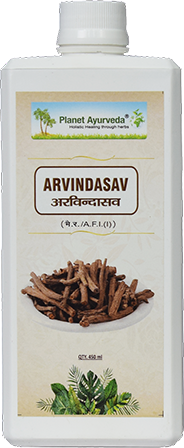
Arvindasava is a classical Ayurvedic liquid formulation prepared by fermentation. This formulation is categorized under the Asava-Arista category. Asavas and arishtas are medicinal formulations made by soaking the herbal drugs, in a solution of sugar or jaggery, for a specified period, during which it undergoes a process of fermentation generating alcohol. The main ingredient of Arvindasava is Arvind, commonly known as kamal or lotus, all parts of which have some therapeutic values. Arvindasava is used as a digestive tonic for children, increases physical and mental strength, Graha doshas (psychological problems of children), and in problems of adolescence.
INGREDIENTS
- Aravinda (Nelumbo nucifera) – 48 gm
- Usheera (Vetiveria zizanioides) – 48 gm
- Kashmari (Gmelina arborea) – 48 gm
- Utpala (Nymphaea stellata) – 48 gm
- Manjishtha (Rubia cordifolia) – 48 gm
- Bala (Sida cordifolia) – 48 gm
- Jatamansi (Nardostachys jatamansi) – 48gm
- Ela (Elettaria cardamomum) – 48 gm
- Musta (Cyperus rotundus) – 48 gm
- Sariva (Hemidesmus indicus) – 48 gm
- Haritaki (Terminalia chebula) – 48 gm
- Vibhitaki (Terminalia bellirica) – 48 gm
- Vacha (Acorus calamus) – 48 gm
- Amalaki (Emblica officinalis) – 48 gm
- Shathi (Hedychium spicatum) – 48 gm
- Shyama (Ipomoea turpethum) – 48 gm
- Neelini (Indigofera tinctoria) – 48 gm
- Patola (Trichosanthes dioica) – 48 gm
- Parpata (Fumaria parviflora) – 48 gm
- Arjuna (Terminalia arjuna) – 48 gm
- Madhuka (Madhuca indica) – 48 gm
- Yashtimadhu (Glycyrrhiza glabra) – 48 gm
- Mura (Selinum tenuifolium) – 48 gm
- Draksha (Vitis vinifera) – 960 gm
- Dhataki (Woodfordia fruticosa) – 768 gm
- Water – 24.576 liters
- Sugar – 4.8 kg
- Honey – 2.4 kg
DESCRIPTION OF INGREDIENTS
- Aravinda (Nelumbo nucifera) – belongs to the Nelumbonaceae family, commonly known as kamal or lotus, and is the most sacred plant in Hinduism. Properties of flower – Rasa – Kashaya (Astringent), Madhura (Sweet), Tikta (Bitter), Guna – Shita (cold), laghu (light), Virya – Shita (Cooling), Vipaka – Madhura (Sweet), Karma – Kaphahara pacify (Kapha dosha), Mutra Virajaniya, Pittahara (pacify Pitta dosha), Santapahara, Varnya. All parts of the lotus plant have therapeutic use. It has antimicrobial, antihypertensive, antidepressant, cardiovascular, aphrodisiac, anti-inflammatory, antioxidant, lipolytic, anti-obesity properties and is used in the management of many diseases.
- Usheera (Vetiveria zizanioides) – belongs to the Gramineae family, also known as khus khus grass. Properties – Rasa – Tikta (bitter), Madhura (sweet), Guna – Laghu (light), Ruksha (dry), Virya – Sheet (cold), Vipaka – Katu (pungent), and balances Vata and pitta doshas. It has cardioprotective, antimicrobial, anthelmintic, anti-asthmatic, antioxidant, expectorant, diuretic, antispasmodic, anti-arthritic properties.
- Kashmari (Gmelina arborea) – belongs to the Verbenaceae family, commonly known as Gambhari. Properties – Rasa – Tikta (bitter), kashaya (astringent), Madhur (sweet), Guna – Guru (heavy), Virya – Ushna (hot), Vipaka – Katu (pungent), balances Vata and Pitta doshas. It has antimicrobial, anti-aging, anthelmintic, analgesic, anti-diabetic, anti-epileptic, hepatoprotective properties.
- Utpala (Nymphaea stellata) – belongs to the Nymphaeaceae, also known as Neel kamal. Properties – Rasa – Madhur (sweet), Kashaya (astringent), Guna – Snigdha (unctuous), Picchila (slimy), Virya – Sheeta (cold), Vipaka – Madhura (sweet), balances pitta and Kapha doshas. It has anti-inflammatory, hepato-protective, antidepressant properties.
- Manjishtha (Rubia cordifolia) – Properties – Rasa – Tikta (bitter), kashaya (astringent), Madhur (sweet), Guna – Guru (heavy), Ruksha (dry), Virya – Ushna(hot), Vipaka – Katu (pungent), pacifies pitta and Kapha doshas. It is a good blood purifier and mainly used in skin disorders.
- Bala (Sida cordifolia) – comes under the Malvaceae family. Properties – Rasa – Madhura (sweet), Guna – Laghu (light), Snigdha (unctuous), Pichila (sticky), Virya – Sheeta (cold), Vipaka – Madhura (sweet), and balances tridoshas. It has anti-inflammatory, analgesic, hypoglycemic, hypotensive, blood purifier, and CNS depressant.
- Jatamansi (Nardostachys jatamansi) – belongs to the Valerianaceae family. Properties – Rasa – Tikta (bitter), kashaya (astringent), Madhur (sweet), Guna – Laghu (light), Snigdha (unctuous), Virya – Sheeta (cold), Vipaka – Katu (pungent), and balances Tridoshas (Vata, Pitta, Kapha). It has sedative, aromatic, hypotensive, hepato-protective, antifungal, and antispasmodic properties.
- Ela (Elettaria cardamomum) – belongs to the Zingiberaceae family, commonly known as Choti Elaichi. Properties – Rasa – Katu (pungent), Madhur (sweet), Guna – Laghu (light), Ruksha (dry), Virya – Sheet (cold), Viapaka – Katu (pungent), balances Kapha and Vata doshas. It has anti-inflammatory, analgesic, anti-bacterial, anti-viral, anti-fungal, diuretic, and appetizing properties.
- Musta (Cyperus rotundus) – belongs to the Cyperaceae family. Properties – Rasa – kashaya (astringent), tikta (bitter), katu (pungent), Guna – Laghu (light), ruksha (dry), Virya – sheeta (cold), Vipaka – Katu (pungent), balances Kapha and Pitta doshas. It has antibacterial, antispasmodic, laxative, contraceptive, analgesic, anti-inflammatory, antidiabetic, and antioxidant properties.
- Sariva (Hemidesmus indicus) – belongs to the Apocynaceae family. Properties – Rasa – Madhur (sweet), Tikta (bitter), Guna – Guru (heavy), Snigdha (unctuous), Virya – Sheet (cold), Vipaka – Madhur (sweet), balances all the three doshas. It has antipyretic, anti-inflammatory, analgesic, blood-purifying, antidepressant properties.
- Haritaki (Terminalia chebula) – belongs to the Combretaceae family. Properties- Rasa- Katu (pungent), Tikta (Bitter), Kashaya (astringent), Madhur (sweet), Amal (sour), Guna – Laghu (light), Ruksha (dry), Virya – Ushna (hot), Vipaka- Madhur (sweet), balances all three doshas. It has antipyretic, antihelminthic, aphrodisiac properties and acts as a cardiac tonic, purgative, carminative, and also helps in digestive problems.
- Vibhitaki (Terminalia bellirica) – belongs to the Combretaceae family. Properties – Rasa – Kashaya (astringent), Guna – Laghu (light), Ruksha (dry), Virya – Ushna (hot), Vipaka – Madhur (sweet), balances Pitta and Kapha doshas. It has antipyretic, antibacterial, anti-inflammatory, laxative, and aphrodisiac properties.
- Vacha (Acorus calamus) – belongs to the Acoraceae family. Properties – Rasa – Katu (pungent), Tikta (bitter), Guna – Laghu (light), Tikshna (sharp), Virya – Ushna (hot), Vipaka – katu (pungent), balances Vata and Kapha doshas. It has antitoxic, nerve tonic, properties and is used in nervous disorders, digestion problems, piles, dysmenorrhea.
- Amalaki (Emblica officinalis) – belongs to the Phyllanthaceae family. Properties- Rasa – Katu(pungent), Guna – Laghu (light), Ruksha(rough), Tikshana(sharp), Guna- Guru (heavy), Sheeta(cool), Virya – Sheet (cool), Vipaka- Madhur(sweet), balances Tridoshas. Amla has anti-aging, antioxidants, aphrodisiac, diuretic, and laxative properties.
- Shathi (Hedychium spicatum) – belongs to the Zingiberaceae family. Properties – Rasa – Katu (pungent), Tikta (bitter), kashaya (astringent), Guna – laghu (light), Teekshna (pungent), Virya – Ushna (hot), Vipaka – Katu (pungent), pacifies Kapha and Vata doshas. It has antibacterial, antipyretic, anti-inflammatory, and aromatic properties.
- Shyama (Ipomoea turpethum) – belongs to the Convolvulaceae family, also known as Trivrit. Properties – Rasa – Tikta (bitter), katu (pungent), Guna – laghu (light), ruksha (dry), theekshana (piercing), Virya – Ushna (hot), Vipaka – katu (pungent), balances Pitta and Kapha doshas and increases the Vata dosha. It has anti-inflammatory, antipyretic, purgative, anti-helminthic, and anti-diabetic properties.
- Neelini (Indigofera tinctoria) – belongs to the Fabaceae family. Properties – Tikta (bitter), Guna – Laghu (light), Ruksha (dry), Virya – Ushna (hot), Vipaka – Katu (pungent), balances Kapha and Vata doshas. It has purgative, anti-toxic, anti-inflammatory, antimicrobial properties.
- Patola (Trichosanthes dioica) – belongs to the Cucurbitaceae family. Properties – Rasa – Tikta (bitter), Guna – laghu (light), Ruksha (dry), Virya – Ushna (hot), Vipaka – Katu (pungent), balances Kapha and Pitta doshas. It has antihelminthic, aphrodisiac, anti-inflammatory, laxative, anti-hyperlipidemic, and sedative properties.
- Parpata (Fumaria parviflora) – belongs to the Fumariaceae family. Properties – Rasa- tikta (bitter), Guna – laghu (light), Virya – Sheeta (cold), Vipaka – katu (pungent), balances Kapha and Pitta doshas. It has antipyretic, anti-inflammatory, detoxification, and antimicrobial properties.
- Arjuna (Terminalia arjuna) – belongs to the Combretaceae family. Properties – Rasa – kashaya (astringent), Guna – laghu (light), ruksha (dry), Virya – sheet – Sheeta (cold), Vipaka – Katu (pungent), balances Pitta and Kapha doshas. It has antioxidants, cardiac tonic, anti-inflammatory, antihyperlipidemic properties.
- Madhuka (Madhuca indica) – belongs to the Sapotaceae family. Properties – Rasa – Madhur (sweet), kashaya (astringent), Guna – guru (heavy), Snigdha (unctuous), Virya – Sheeta (cold), Vipaka – Madhur (sweet), pacifies Vata and pitta doshas and increases Kapha dosha. It has anti-hyperglycemic, antioxidants, anti-inflammatory, and blood purifier properties.
- Yashtimadhu (Glycyrrhiza glabra) – belongs to the Fabaceae family. Properties – Rasa – Madhura (sweet), Guna – guru (heavy), pichilla (sticky), Virya – sheeta (cold), Vipaka – Madhura(sweet), balances Vata and Pitta doshas. It has anti-inflammatory, anti-ulcer, antioxidant, analgesic, anti-cancer, anti-bacterial, aphrodisiac, and immuno-modulator properties.
- Mura (Selinum tenuifolium) – belongs to the Umbelliferae family. Properties – Rasa – Madhur (sweet), katu (pungent), Tikta (bitter), kashaya (astringent), Guna – laghu (light), Virya – Sheeta (cold), Vipaka – Madhura (sweet), pacifies Pitta and Vata doshas. It has sedative properties and is used in various respiratory and digestion problems.
- Draksha (Vitis vinifera) – belongs to the Vitaceae family. Properties – Rasa – Madhur (sweet), Guna – guru (heavy), Snigdha (unctuous), Virya – sheeta (cold), Vipaka – Madhur (sweet), balances Vata and Pitta doshas. It has aphrodisiac, purgative, antioxidants, immuno-modulator properties.
- Dhataki (Woodfordia fruticosa) – belongs to the Lythraceae family. Properties – Rasa – kashaya (astringent), Guna – Laghu (light), ruksha (dry), Virya – katu (pungent), balances Kapha and pitta doshas. It has immunomodulatory, antibacterial, anti-inflammatory, antidiarrheal properties.
- WATER – Water is used as a solvent. According to Ayurveda, Properties of water are- Jeevana (enlivening), Tarpana (satiating), hrudya (good for the heart), hlaadi (pleasing the mind or refreshing), buddiprabhodana (stimulate the mind), mrushta (pure), and balances all the three doshas.
- Honey – also known as Madhu. Properties – Rasa – Madhur (sweet), Guna – laghu (light), vishada (clarity), ruksha (dry), Veerya – ushna (hot), Vipaka – Madhura (sweet), balances Pitta and Kapha doshas. Honey has bactericidal, mild laxative, antiseptic and sedative properties.

METHOD OF PREPARATION
- Dhataki and draksha are washed and dried. All other herbal ingredients are filtered through sieve no. 44 and powdered.
- Now water is added to the coarse powder of all ingredients, then sugar is mixed, dissolved, and filtered through a muslin cloth.
- Now, this mixture is filtered into another container. Powdered forms of herbs like dhataki and draksha are added along with honey and mixed well.
- This preparation is kept sealed in a mud pot for one month for fermentation.
- After fermentation, it is filtered and packed in an air-tight container.
MEDICINAL PROPERTIES OF ARVINDASAVA
Arvindasava is an ancient ayurvedic formulation widely used in children for various disorders. The ingredients used in this formulation are highly nutritious and have properties like anti-viral, antioxidants, anti-obesity, anti-inflammatory, aphrodisiac, antipyretic, immunomodulatory, hepatoprotective, hypoglycemic, anti-diarrhoeal, sedative, and antispasmodic.

CLASSICAL INDICATION
Bal-roga ( health problems of children)
REFERENCE – Bhaishajya Ratnavali, balrog adhikar, 161-165
INDICATIONS
- Graha roga (psychological disorders of children) – arvindasava works on the nervous system and also has sedative properties.
- Digestion problem – it helps in digestion and absorption in children as it has astringent properties. Arvindasava has anti-bacterial and antiparasitic properties due to which it helps in the management of infections of the digestive tract.
- Immunity enhancer- Arvindasava has immunomodulatory properties and is a good immunity booster.
Other indications are
- Cough
- Rickets
- Weakness
- Diarrhea
- Laziness
- Delayed milestone
- Fever
- Anorexia
DOSAGE
- In infants – 10 – 20 drops, twice or thrice a day
- Above one year of age – 3 to 12 ml, orally, with an equal amount of water, twice a day.
SIDE EFFECTS
No known side effects, however in high doses it can cause abdominal irritation. It is advised to take this after food and after consultation with an ayurvedic doctor.
CONCLUSION
Arvindasava has been used in various problems of adolescence for thousands of years. We hope the above-mentioned details and benefits of Arvindasava will be beneficial for you.