Author: Dr. Vikram Chauhan

Herbal Treatment for Genitourinary Syndrome of Menopause

Ayurveda for Genitourinary syndrome of Menopause, Ayurveda for Vaginal Atrophy, Ayurvedic Treatment for Genitourinary syndrome of Menopause, Causes of Genitourinary syndrome of Menopause, Genitourinary syndrome of Menopause Herbal Cure, Genitourinary syndrome of Menopause Treatment, Herbal Remedies for Vaginal Atrophy, Herbal Remedies forGenitourinary syndrome of Menopause, Medicnines for Genitourinary syndrome of Menopause, Medicnines for Vaginal Atrophy, Vaginal Atrophy Ayurvedic Treatment, Vaginal Atrophy Causes, Vaginal Atrophy Herbal Cure, Vaginal Atrophy Symptoms, Vaginal Atrophy Treatment

Abstract

Genitourinary syndrome of menopause (GSM) is a new term formerly called vulvovaginal atrophy, atrophic vaginitis or genitourinary atrophy. GSM is a chronic, developmental, vulvovaginal, sexual and lower urinary tract infection. Many of these symptoms can be attributed to a lack of oestrogen, which causes menopause. It is a chronic progressive condition that occurs mainly in postmenopausal women and it is seen in many premenopausal females as well. Low oestrogen can cause hormonal and anatomical changes in the genitourinary system; genital dryness, dyspareunia and decreased lubrication are the most common and bothersome symptoms. These can have a significant impact on the quality of life (QOL) of affected women, especially those who are sexually active. In this, we will discuss causes, symptoms, risk factors, diagnosis, and about Ayurvedic herbs.

Genitourinary Syndrome of Menopause

Introduction

Vaginal atrophy is a condition that occurs with painful, dry, and thinning of the genital area epithelium in women due to the decrease in oestrogen in the body. The GSM (vaginal atrophy or atrophic vaginitis) usually affects people during the transition period into adulthood. These can have a significant impact on the quality of life (QOL) of affected women.

Causes of Decreased Oestrogen Level

  • Postmenopausal
  • Perimenopause
  • Breastfeeding
  • Decreased Ovarian Function
  • Ovariectomy
  • Using contra
  • Post Medical Treatment or Chemotherapy
  • Radiation Therapy
  • Hormone Therapy Side Effects

Symptoms

  • Burning sensation in the vagina
  • Dryness of vagina
  • Itching in the genital area
  • Discharge from vagina
  • Burning micturition
  • Burning leucorrhoea
  • Urine urgency
  • Urinary incontinence
  • Recurrent infection of the urinary tract
  • Frequent urination
  • Bleeding after sexual intercourse
  • Pain during sexual intercourse
  • Vaginal lubrication decreased during sexual intercourse
  • Tightening and shortening of the vaginal canal

Risk Factors

Pregnant women and AFABs (women who have been allowed to give birth) often develop genital atrophy as their bodies generally produce less oestrogen. However, other factors can reduce oestrogen levels and cause genital atrophy. These include

  • Birth control pills
  • Immune disorders
  • Smoking cigarettes
  • Breastfeeding
  • Decreased ovarian functioning due to chemotherapy
  • Medications that contain antiestrogen properties
  • Removal of ovaries (Oophorectomy)

Diagnosis

  • Pelvic exam- A shortened or narrowed vagina, dryness, redness and swelling, loss of stretchiness, whitish discolouration of the vagina, Vulvar skin conditions, vulvar lesions and vulvar patch redness
  • Vaginal pH (acid test)
  • Pap test
  • Urine sample
  • Vaginal infection test

Ayurvedic Overview

In Ayurveda, we can associate genital atrophy with an imbalance in the tridoshas (vata, pitta and Kapha) because symptoms can occur in all three doshas. Age is divided into three stages: Balyavastha (childhood), Madhyamavastha (adulthood) and Vridhavastha (old age). Kapha are dominant in childhood so their bore is more unctuous, soft and delicate and they are rarely angry hence they are blessed. Pitta is dominant in adult age and vata is dominant in old age because menopause occurs before this stage begins. For women, age 50 is entering menopause, which means that women’s menstrual activity and symptoms decrease as they age.

Herbs used in Vaginal Atrophy

  • Guduchi- it reduces vaginal dryness. Applying guduchi oil to the herbal tampon and placing it on the genital area is effective in reducing dryness.
  • Aloe Vera- it is used to wash the vagina to reduce dryness
  • Turmeric- has an antibiotic and anti-inflammatory action
  • Triphala- it is used to clean the vaginal area to prevent infection
  • Honey- has antifungal properties
  • Fenugreek- helps to increase oestrogen levels and also prevents dryness
  • Virgin coconut oil- is used to moist the vaginal area to prevent dryness

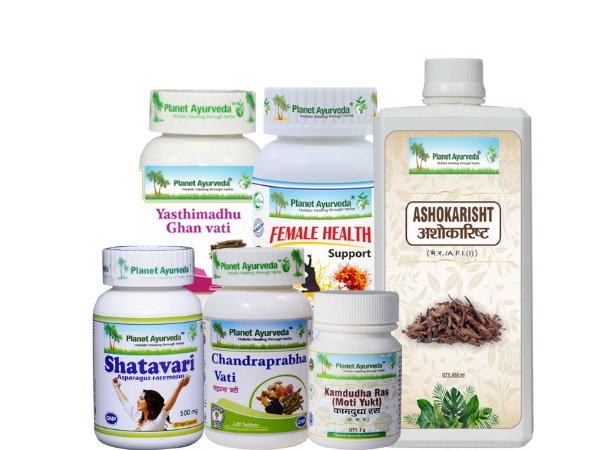
Some Herbal Remedies by Planet Ayurveda

Planet Ayurveda is the manufacturer of various Ayurvedic medicines made from pure herbs beneficial for human ailments. Planet Ayurveda strictly follows all Ayurvedic principles described in ancient Ayurvedic books. All these drugs are GMP-certified and are 100% vegetarian. It is safe for humans to use and has no side effects. Contains no preservatives, additives, chemicals, or yeast. Planet Ayurveda offers herbal remedies for genital atrophy

Products List

  1. Kamdudha Ras (Moti Yukt)
  2. Shatavari Capsule
  3. Yashtimadhu Ghan Vati
  4. Female Health Support
  5. Chandraprabha Vati
  6. Ashokarisht

Herbal Remedies for Genitourinary Syndrome of Menopause

Buy Now: Herbal Remedies for Vaginal Atrophy

Product Description

1. Kamdudha Ras (Moti Yukt)

It consists of Mukta Bhasma (pearl calcium), Shankh Bhasma (conch shell), Praval Bhasma (coral calx), Giloy Satva (Tinospora cordifolia), etc. Mukta bhasam is sweet, has cold potency and is easily digested. It is a virya vardhak, Pitta and Kapha nashak, and pushtikar. Shankh bhasma pacifies all three doshas. Praval bhasma, commonly known as Moonga and is used in the prevention of calcium and oestrogen-deficient bone loss and is also beneficial in bleeding disorders. Giloy Stava removes toxins from the body.

Dosage: 2 pills twice daily.

2. Shatavari Capsule

It is a single herbal capsule that contains Shatavari (Asparagus racemosus). It maintains the hormonal balance, and nourishes and cleanses the female reproductive system. It is used in infertility, inflammation of the urinary bladder and uterine swellings. It enhances sexual sensation and increases vaginal lubrication.

Dosage: 1 capsule twice daily.

3. Yashtimadhu Ghan Vati

It is a single herb medicine that contains Yashtimadhu (Glycyrrhiza glabra). It helps in the pacification of Vata and Pitta doshas. It contains glucose, calcium, and Vitamin B complex. It gives immediate pain relief and a burning sensation in the epigastrium. It is also helpful in urethritis and burning micturition.

Dosage: 2 tablets twice daily.

4. Female Health Support

It is a polyherbal capsule that includes Ashoka (Saraca indica), Lodhra (Symplocos racemosa), and Shatavari (Asparagus racemosus). It is mostly used for gynaecological problems. It is effective in uterine bleeding and menstruation, it has no side effects. Its effect on the soft tissue of the ovary can produce oestrogen-like substances, improve endometrial healing and stop bleeding. It provides excellent relief for menses, premenstrual syndrome and non-specific white discharge. Ashoka is beneficial for strengthening the uterine muscles. Lodhra is used in the management of excessive vaginal discharge. Shatavari increases the blood flow to the female genital area.

Dosage: 1 twice daily

5. Chandraprabha Vati

It is a polyherbal medicine. It contains Shilajit (Asphaltum), Guggul (Commiphora mukul), Haridra (Curcuma longa), Guduchi (Tinospora cordifolia), etc. It pacifies all three principal doshas. It is an analgesic, antibacterial medicine. Shilajit improves fertility in females. Guggul is used to cure vaginal dryness and also has antibacterial action. Haridra is used for the prevention and treatment of various diseases and has anti-inflammatory action. Guduchi is used to control vaginal dryness.

Dosage: 2 twice daily

6. Ashokarisht

It is an Ayurvedic formulation that contains Ashoka (Saraca asoca), Amalaki (Emblica officinalis), Haritaki (Terminalia chebula), Dhataki (Woodfordia fruticosa) etc. It is beneficial for painful menses, premenstrual syndrome. The taste is bitter, the effect is soft and dry. It contains tannins, catechols, essential oils, organic calcium and iron compounds. It stimulates the uterus, making effective contractions more frequent and permanent. It has a stimulating effect on the endometrium and ovarian tissue and is used in various gynaecological problems such as uterine bleeding due to fibroids and leukorrhea.

Dosage: 2 tsp twice daily”

Contact Planet Ayurveda Support Team to provide you the costing / ordering and delivery information at – costing.planetayurveda@gmail.com or Call at 0172-521-4040 (India), +91-172-521-4040 (Outside India) or Whatsapp at (+91) 9915-593-604

Conclusion

GSM is a result of low oestrogen levels during pregnancy and affects most postmenopausal women. Due to different hormonal and anatomical changes, GSM presents with various symptoms such as genital dryness, dyspareunia and dysuria, which can seriously affect the quality of life of affected women. Recently, different treatments have emerged to treat this difficult and life-changing problem. Herbal medicines like female health support, kamdudha Ras (moti yukt), ChandraPrabha vati, Ashokarista etc are wonderful in such diseases and provide strength to the body and fight against causative agents.

Pelvic Inflammatory Disease Causes, Symptoms, and Treatment in Ayurveda

Abstract

The female reproductive system includes inner and external organs that produce hormones and are similarly responsible for ovulation, menstruation, and sexual interest. The external genitalia protect the internal organs, allowing sperm to enter the vagina. Menarche is a woman’s first menstrual cycle, and the normal menstrual cycle is divided into follicular and luteal phases and is more variable in its time course. When an infection occurs in a female reproductive organ, it is called Pelvic inflammatory disease. Now we discuss the causes, symptoms, and treatment of pelvic inflammatory disease.

Pelvic inflammatory Disease

Introduction

An infection of the reproductive organs of the female is known as Pelvic inflammatory disease, which is normally due to sexually transmitted microorganisms that unfold from the vagina to the uterus, fallopian tubes, and ovaries. Untreated Sexually Transmitted Diseases (STDs) lead to Pelvic Inflammatory Disease, which is a serious condition caused by Chlamydia and Gonorrhoea. Sometimes it leads to serious complications, as the bacteria first enter the vagina and cause infection, with time moving on to the pelvic organs.

Causes of Pelvic Inflammatory Disease

  • Chlamydia trachomatis and Neisseria gonorrhoeae are the main causes of PID (Pelvic inflammatory disease) due to unprotected sex.
  • It can occur due to Untreated infections, such as Bacterial vaginosis.
  • Another Sexually transmitted infection known as Mycoplasma genitalium increases the risk of PID (Pelvic inflammatory disease).
  • Other causes include Abortion, Childbirth, and various pelvic procedures.

Risk Factors of Pelvic Inflammatory Disease

  • Having sex without protection
  • Having sex with multiple partners
  • History of sexually transmitted disease
  • Regular vaginal douching

Symptoms of Pelvic Inflammatory Disease

  • Pain in the lower abdomen
  • Tenderness in the lower back
  • High Fever
  • Unusual discharge from the vagina with different colours and textures
  • Painful bleeding
  • Chills
  • Period cramps
  • Nausea
  • Vomiting
  • Pain during intercourse
  • Heavy menstruation
  • Painful urination
  • Tiredness
  • Blood with urine

Diagnosis of Pelvic Inflammatory Disease

  • Medical history
  • Signs and symptoms
  • Pelvic examination
  • Blood and urine tests
  • Ultrasound
  • Laparoscopy
  • Endometrial biopsy
  • Vaginal culture test
  • CT scan
  • ELISA (Enzyme-linked immunosorbent assays)
  • CRP (C-reactive protein)
  • MRI

Treatment

In allopathy, various types of antibiotics are used for the treatment of pelvic inflammatory disease.

Complications

  • Ectopic pregnancy
  • Infertility
  • Tubo-ovarian abscess
  • Chronic pelvic pain
  • Peritonitis
  • Intestinal obstruction

Prevention

  • Use a condom while having sex.
  • Avoid vaginal douching.
  • Avoid sex with multiple partners.

Ayurvedic Aspect of Pelvic Inflammatory Disease

As per Ayurveda, it is due to an imbalance of tridoshas, which is responsible for all health and health-related complications. According to Ayurveda, Pelvic inflammatory disease is due to the vitiation of Pitta and Vata doshas. Vata doshas cause pain and difficulty during intercourse. Pitta vitiations are related to inflammation and a burning sensation. Due to the vitiation of Kapha doshas, there is a buildup of Ama (toxins), which gets mixed with the blood and further reaches the reproductive system. Mainly, Apana Vata is responsible for the management and the proper and undisturbed functions of the pelvic organs. According to the symptoms, it can be said that it falls roughly under the conditions below.

Vata dushti

Vitiated vata and damage caused difficulty in intercourse, painful intercourse.

Pitta dushti

Vitiated pitta and damage cause a burning sensation, inflammation, abnormal discharge with a foul smell, and fever.

Vata-pitta dushti

Combined vitiated vata and pitta and damage causing pain, burning sensation, fever, etc.

Apana vata dushti

vitiation of the lower vayu, which controls the lower body functions.

Some Herbal Remedies for Pelvic Inflammatory Disease by Planet Ayurveda

Planet Ayurveda is a GMP-certified Ayurvedic clinic that formulates various herbal remedies for the prevention of various health issues and relieves the disease of the diseased person. All the formulations that are made by Planet Ayurveda are free from any kind of additive, color, or resin. These remedies are 100% pure and were formulated under the strict guidance of M.D. Ayurvedic practitioners, as the formulations did not cause any side effects. For the management of Pelvic Inflammatory disease, Planet Ayurveda provides many herbal remedies, which we will discuss further in this article in detail.

Product List

  1. Kaishore Guggul
  2. Female Health Support
  3. Boswellia Curcumin
  4. Chandraprabha Vati
  5. Aloe Vitals

Herbal Remedies for Pelvic inflammatory diseaseBuy: Now: Herbal Remedies for Pelvic inflammatory Disease

Product Description

1. Kaishore Guggul

Kaishore guggul is a multi herbal capsule that is composed by Planet Ayurveda with the help of Kaishore guggul is a polyherbal tablet that is formulated by Planet Ayurveda by using Guduchi (Tinospora cordifolia), Amalaki (Emblica officinalis), Commiphora mukul (Shuddha guggul), Bibhitaki (Terminalia bellirica), Haritaki (Terminalia chebula), Shunthi (Zingiber officinale), Black pepper (Piper nigrum), and some other herbs. It helps remove toxins from the blood, removes excess Pitta doshas, Balances the hormones, and removes toxins from the pores of the skin and lungs.

Dosage- 2 tablets twice daily with plain water after meals.

2. Female Health Support

Female health support is a Polyherbal capsule that is composed by Planet Ayurveda with the help of Ashoka (Saraca indica), Shatavari (Asparagus racemosus), and Lodhra (Symplocos racemosa). It helps support a healthy female reproductive organ and balances the hormones. Improves lactation and relieves premenstrual tension and irregular menses.

Dosage- 2 caps twice daily with plain water after meals.

3. Boswellia Curcumin

Boswellia Curcumin is a multi herbal formulation that is composed by Planet Ayurveda with the help of Boswellia serrata (Shallaki) and Curcuma longa (Curcumin). The combination of Shallaki (Boswellia serrata) and Curcumin (Curcuma longa) helps reduce pain and has synergistic effects. In this, shallaki acts as an anti-inflammatory herb, and curcumin acts as an antioxidant.

Dosage- 2 caps twice daily with plain water after meals.

4. Chandraprabha Vati

Chandraprabha vati is a multi herbal tablet that is composed by Planet Ayurveda with the help of Guggul (Commiphora mukul), Shilajit (Asphaltum), Karpoor (Cinnamomum camphora), Haridra (Curcuma longa), Amalaki (Emblica officinalis), Shunthi (Zingiber officinalis), and some other ingredients. It is helpful for urinary tract infections and controls the burning sensation while urinating. Chandraprabha Vati controls excessive bleeding and balances the aggravated pitta doshas.

Dosage- 2 tablets twice daily with plain water after meals.

5. Aloe Vitals

Aloe Vitals is a single herbal formulation that is composed by Planet Ayurveda with the help of a standardised extract of Aloe Vera (Aloe barbadensis). It helps maintain healthy skin and metabolism and conains anti-inflammatory properties that reduce and improve inflammation and blood vessels. Repair dull and damaged skin and remove toxins from the body.

Dosage- 2 caps twice daily with plain water after meals.

Contact Planet Ayurveda Support Team to provide you the costing / ordering and delivery information at – costing.planetayurveda@gmail.com or Call at 0172-521-4040 (India), +91-172-521-4040 (Outside India) or Whatsapp at (+91) 9915-593-604

Conclusion

The female reproductive system includes inner and external organs that produce hormones and are similarly responsible for ovulation, menstruation, and sexual interest. An infection of the reproductive organs of the female is known as Pelvic inflammatory disease, which is normally due to sexually transmitted microorganisms that unfold from the vagina to the uterus, fallopian tubes, and ovaries. As per Ayurveda, it is due to an imbalance of tridoshas, which is responsible for all health and health-related complications. According to Ayurveda, Pelvic inflammatory disease is due to the vitiation of Pitta and Vata doshas. On Planet Ayurveda, there are some herbal remedies that are formulated by Ayurvedic experts. These remedies give effective results for pelvic inflammatory disease without causing any side effects.