Prostate Cancer: Types, Symptoms & Ayurvedic Treatment
Abstract
Prostate issues are prevalent health conditions that mainly affect men, particularly as they age. The prostate is a small gland located beneath the bladder, responsible for producing seminal fluid. Common prostate concerns include benign prostatic hyperplasia (BPH), prostatitis, and prostate cancer. BPH, a non-cancerous enlargement of the prostate, often causes urinary problems such as frequent urination, weak urine flow, and incomplete bladder emptying. Prostatitis involves inflammation of the prostate, typically accompanied by pain, fever, and urinary discomfort. Prostate cancer, a malignant disease, is one of the most common cancers in men, with age, family history, and lifestyle being significant risk factors. In this article we will discuss this in detail and we will discuss its ayurvedic aspect and its management.
Introduction
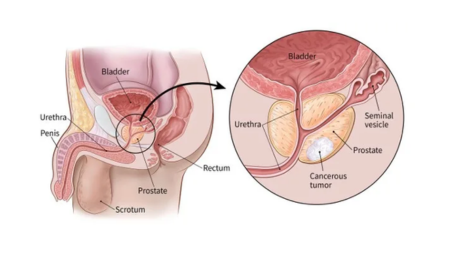
The prostate gland is a part of the male reproductive system and is roughly the size of a walnut. It is located at the base of the bladder, and the urethra, a tube that carries urine and semen through the penis, passes through it. The prostate produces an alkaline fluid that helps nourish sperm, which is eventually expelled from the body as semen during ejaculation. The prostate undergoes two primary phases of growth. The first occurs during puberty when sex hormones from the testes stimulate the gland to reach an average weight of about 20 grams. The second phase of growth starts in a man’s thirties.
Approximately 25% of the men aged 55 and older experience some form of prostate issue, with this number rising to 50% by the age of 70%. In the early stage of prostate condition, there may be no noticeable symptoms.
Types
There are various types of prostate disorder, including :
- Benign Prostatic Hyperplasia (BPH) : A noncancerous prostate enlargement that can cause symptoms like frequent urination, a weak urine stream, and difficulty in fully emptying the bladder.
- Prostatitis : Inflammation or infection of the prostate, It can lead to pain, fever, trouble urinating, and pelvic discomfort.
- Prostate Cancer : The growth of malignant cells in the prostate, it is the most common type of cancer in men, with symptoms that may include urinary problems and, in advanced cases, more severe signs of illness.
- Prostate Abscess : A pus-filled infection in the prostate, often due to bacteria, causing pain, fever, and issues with urination.
- Prostate Stones : Hard mineral deposits that form in the prostate, potentially causing pain, swelling, and urinary difficulties.
Causes
The cause of prostate disease can vary depending on the specific condition, but some common factors include :
Factors Affecting Prostate Health
- Age – As men get older, the likelihood of developing prostate conditions, such as benign prostatic hyperplasia (BPH) or prostate cancer, increases.
- Hormonal Changes – Hormones like testosterone can play a role in prostate growth and may contribute to conditions like BPH or prostate cancer.
- Genetics – A family history of prostate problems, particularly prostate cancer, can increase the risk of developing similar issues.
- Infections – Bacterial infections may lead to prostatitis, causing inflammation and pain in the prostate.
- Inflammation – Chronic inflammation of the prostate can lead to prostatitis and may be related to autoimmune conditions or infections.
- Diet and Lifestyle – A diet high in fat and low in vegetables, as well as lack of exercise, may increase the risk of prostate conditions like cancer. Obesity and smoking can also contribute.
- Genetic Mutations – Specific mutations in genes like the BRCA1 and BRCA2 genes can increase the risk of developing prostate cancer.
- Chemical Exposure – Prolonged exposure to certain chemicals, such as those in pesticides or industrial products, may increase the risk of prostate disease.
- Sexual Activity – Frequent or unprotected sexual activity may increase the risk of infections leading to prostatitis.
- Chronic Health Conditions – Other health problems, such as diabetes, may contribute to an increased risk of prostate issues.
Symptoms
The symptoms of prostate disease can vary depending on the type of condition, but common signs include:
Common Symptoms of Prostate Problems
- Frequent Urination – A need to urinate more often, especially at night (nocturia).
- Weak or Interrupted Urine Flow – Difficulty starting or maintaining a steady stream of urine.
- Painful Urination – Discomfort or burning sensation while urinating.
- Difficulty Emptying the Bladder – A feeling of incomplete bladder emptying after urination.
- Blood in Urine or Semen – Presence of blood in the urine or semen, which may indicate infection or more serious conditions like cancer.
- Pain in the Pelvic Area – Discomfort or aching in the lower abdomen, back, or pelvic region.
- Painful Ejaculation – Discomfort or pain during or after sexual activity.
- Erectile Dysfunction – Difficulty achieving or maintaining an erection, which may be related to prostate problems.
- Fever and Chills – Common with prostatitis (inflammation or infection of the prostate).
- Urgency to Urinate – A sudden, strong need to urinate, which may be difficult to control.
Diagnosis
The diagnosis of prostate disease involves several methods, combining medical history, physical exams, lab tests, and imaging procedures. Common diagnostic approaches include:
Common Diagnostic Tests for Prostate Conditions
- Digital Rectal Exam (DRE) – A healthcare provider performs a physical exam by inserting a gloved finger into the rectum to check for any irregularities in the size, shape, or texture of the prostate.
- Prostate-Specific Antigen (PSA) Test – A blood test that measures the level of PSA, a substance produced by the prostate. Higher levels may suggest BPH, prostatitis, or prostate cancer, though further testing is required for confirmation.
- Urine Test (Urinalysis) – Analyzes a urine sample to detect signs of infection, blood, or other abnormalities that may indicate prostatitis or other prostate-related issues.
- Transrectal Ultrasound (TRUS) – An ultrasound probe is gently inserted into the rectum to obtain images of the prostate, helping assess its size and detect irregularities or tumors.
- Biopsy – If prostate cancer is suspected, small tissue samples may be taken from the prostate for microscopic examination.
- Magnetic Resonance Imaging (MRI) – Produces highly detailed images of the prostate and surrounding tissues, especially useful when cancer is suspected.
- Cystoscopy – A thin tube with a camera is inserted through the urethra to examine the prostate and bladder for abnormalities.
- Urodynamic Testing – Evaluates how well the bladder and urethra function to help identify conditions affecting urinary flow.
- X-ray – May be used to check for bone involvement if there is concern that prostate cancer has spread.
Treatment
The treatment for prostate disease depends on the specific condition, its severity and the overall health of the patient. Its common treatment includes:
Treatment Options for Prostate Conditions
1. Medications
- Alpha blockers
- 5-alpha reductase inhibitors
- Antibiotics
- Pain relievers
- Hormone therapy
2. Surgery
- Transurethral Resection of the Prostate (TURP)
- Prostatectomy
- Laser surgery
- Prostate biopsy
3. Radiation Therapy
- External beam radiation
- Brachytherapy
4. Cryotherapy
5. Chemotherapy
6. Lifestyle Changes
- Dietary adjustments
- Exercise
- Fluid management
Ayurvedic Overview
In Ayurveda, Prostate problems are generally considered to be linked to imbalances in the body’s three doshas Vata, Pitta, Kapha. These imbalances can manifest as inflammation, enlargement and dysfunction of the prostate gland.
Vata Imbalance
Vata dosha governs movement, circulation and nerve function. When vata is imbalanced, it can lead to symptoms such as dryness, increased frequency of urination, difficulty in urination and weak urine flow which is common in BPH.
Pitta Imbalance
Pitta dosha controls metabolism, digestion and inflammation. An Imbalance in Pitta can lead to inflammation, heat and infection in the prostate, which contributes to conditions like prostatitis and swelling.
Kapha Imbalance
Kapha is responsible for structure, stability, and lubrication in the body. An imbalance in kapha can lead to excessive mucus, fluid retention and swelling, which may contribute to prostate enlargement (BPH). Excess Kapha can lead to sluggish urinary flow, difficulty in passing urine, and a feeling of incomplete emptying.
Herbal Remedies for prostate problem by Planet Ayurveda
Planet Ayurveda is a GMP certified ayurvedic company that offers a wide range of herbal formulation that helps to manage chronic conditions. All their formulations are prepared under the supervision of MD (Ayurveda) scholars. Planet Ayurveda’s formulations are 100% pure, herbal, and chemical free. They provide effective solutions for various health concerns. One of them is the Prostate CAre Pack for prostate problems.


Product description
1. Shilajit Capsule
This capsule is a standardized pure extract of Shilajit (Black Bitumen). Shilajit contains essential minerals, vitamins, and antioxidants. It also has properties like anti-inflammatory, antioxidant, and adaptogenic. It is traditionally used to support hormonal balance, including testosterone levels. Since testosterone levels are linked to the prostate, it helps to maintain a healthy prostate.
Dosage: 1 capsule two times a day with warm water
2. Tribulus Power
This capsule is a standardized pure extract of Gokshura (Tribulus Terrestris). It promotes overall urinary health and helps to strengthen the urinary tract. It has antioxidant effects that help reduce oxidative stress and cellular damage, making it helpful in prostate-related problems.
Dosage: 2 capsules two times a day with warm water
3. Varunadi Vati
This tablet is a pure extract of Punarnava (Boerhavia Diffusa), Varun (Crataeva Nurvala), Gokshura (Tribulus Terrestris), and Shuddha Guggulu (Commiphora Mukul). All these herbs help support urinary health and reduce inflammation. Varunadi Vati has antioxidant properties that may help combat oxidative stress and protect cells from damage.
Dosage: 2 tablets two times a day with warm water
4. Kanchnaar Guggul
This tablet is a pure extract of Kanchnar Bark (Bauhinia Variegata), Amalaki (Emblica Officinalis), Haritaki (Terminalia Chebula), Bibhitaki (Terminalia Bellerica), and Varuna Bark (Crataeva Religiosa). It has the ability to support the lymphatic system, promote detoxification, and reduce inflammation. Kanchnaar Guggul helps detoxify the body and remove excess toxins, which may support overall prostate health.
Dosage: 2 tablets two times a day with warm water
5. Prostate Support
This tablet is a standardized pure extract of Gokshura (Tribulus Terrestris), Varun (Crataeva Nurvala), Kanchnaar (Bauhinia Variegata), Punarnava (Boerhavia Diffusa), and Saralghan (Pinus Roxburghii). This formulation helps enhance urine flow and support optimal prostate function. Herbs like Kanchnaar help control excess prostate growth and reduce inflammation, thereby helping to maintain the prostate gland.
Dosage: 2 tablets two times a day with warm water
Conclusion
In Conclusion , Ayurvedic treatment for prostate problems offers a comprehensive, holistic approach that targets the root cause of the condition by balancing the body’s Vata, Pitta and kapha dosha . Planet Ayurveda’s Prostate care pack helps to manage prostate problems by balancing the vata, pitta, and kapha. They help to reduce inflammation, swelling and prostate enlargement.


