Can Vitamin Deficiency Affect Your Teeth and Gums? Symptoms, Signs & Causes
Abstract
Vitamin deficiencies affect oral health because the mouth is often one of the first parts of the body where nutritional deficiencies become evident. These deficiencies can manifest with various symptoms, such as bleeding gums, bad breath, inflammation, mouth ulcers, or even infections in the oral cavity. The enamel layer may weaken, and the gums often become inflamed due to impaired immune function and reduced tissue repair. The health of the mouth is closely linked to overall health. Understanding how vitamin deficiencies affect oral health is essential for planning appropriate treatment, seeking timely medical care, and receiving proper nutritional counselling.
Statistics for Vitamin Deficiency and Oral Health
- Children with vitamin deficiencies may have a higher risk of developing dental caries.
- Vitamin B12 deficiency has been associated with an increased prevalence of gum disease and recurrent mouth ulcers.
- Deficiency of B-complex vitamins may increase the risk of angular cheilitis (cracking at the corners of the mouth) and glossitis (inflammation of the tongue).
- People with folate and vitamin B12 deficiencies are at a higher risk of developing recurrent aphthous ulcers.
Introduction
Vitamins are essential organic nutrients required by the body in small amounts to support growth, development, wound healing, healthy bones and teeth, immunity, and numerous other biological functions. There are 13 essential vitamins required for normal body functions. Most vitamins cannot be synthesised in sufficient amounts by the body and therefore must be obtained through the diet. However, vitamin D can be synthesised in the skin following exposure to sunlight, while small amounts of vitamin K and biotin are produced by intestinal bacteria. Different vitamins perform different biochemical roles in the body.
Vitamins are classified into two groups based on their solubility:
- Water-soluble vitamins: These are not stored in significant amounts in the body, and excess amounts are excreted through the urine. These include the B-complex vitamins and vitamin C.
- Fat-soluble vitamins: These are stored in the body’s fat tissues and liver. These include vitamins A, D, E, and K. These vitamins are naturally present in a variety of plant- and animal-based foods and play an important role in human growth, development, and overall health. The body absorbs these vitamins from food, while unabsorbed nutrients are eliminated through the faeces.
Vitamins and Their Food Sources
- Vitamin A: Sweet potatoes, spinach, eggs, pumpkin, carrots, liver, and beef
- Vitamin E: Green leafy vegetables, nuts, seeds, vegetable oils, and fortified cereals
- Vitamin D: Sunlight exposure, fortified milk and dairy products, fatty fish, egg yolks, and fortified cereals
- Vitamin K: Dark green leafy vegetables, beet greens, turnip greens, broccoli, and cabbage
- Vitamin C: Oranges, lemons, amla, grapefruit, strawberries, guava, and bell peppers
- Vitamin B1 (Thiamine): Whole grains, pork, legumes, seeds, and fortified cereals
- Vitamin B2 (Riboflavin): Dairy products, eggs, lean meat, whole grains, and green leafy vegetables
- Vitamin B3 (Niacin): Fish, poultry, whole grains, mushrooms, peanuts, and legumes
- Vitamin B5 (Pantothenic Acid): Broccoli, chicken, legumes, mushrooms, avocados, and whole grains
- Vitamin B6 (Pyridoxine): Poultry, fish, potatoes, bananas, soy products, chickpeas, and fortified cereals
- Vitamin B7 (Biotin): Egg yolks, nuts, seeds, meat, liver, legumes, and some fruits
- Vitamin B9 (Folate/Folic Acid): Green leafy vegetables, legumes, citrus fruits, and fortified cereals
- Vitamin B12: Meat, fish, eggs, dairy products, poultry, and fortified cereals
Vitamins and their Functions and Dosage
Consuming a balanced diet rich in vegetables, fruits, dairy products, whole grains, and other nutritious foods provides the essential vitamins required for normal body functions. In most healthy individuals, a balanced diet is sufficient to meet daily vitamin requirements. Vitamin supplements should only be taken when recommended by a healthcare professional or when a deficiency has been diagnosed. Excessive intake of certain vitamins may lead to toxicity.
The functions of different vitamins are:
Vitamin A
- Dosage:Women = 700 mcg/day, Men = 900 mcg/day
- Supports the immune system in fighting infections.
- Maintains normal vision and eye health.
- Promotes healthy skin and mucous membranes
- Supports normal growth and reproduction.
Vitamin B-complex
Dosage:
- Vitamin B1 (Thiamine) = 1.1 mg/day (women), 1.2 mg/day (men)
- Vitamin B2 (Riboflavin) = 1.1 mg/day (women), 1.3 mg/day (men)
- Vitamin B3 (Niacin) = 14 mg/day (women), 16 mg/day (men)
- Vitamin B5 (Pantothenic Acid) = 5 mg/day
- Vitamin B6 (Pyridoxine) = 1.3 mg/day (up to 50 years), 1.5 mg/day (women over 50 years), 1.7 mg/day (men over 50 years)
- Vitamin B7 (Biotin) = 30 mcg/day
- Vitamin B9 (Folate) = 400 mcg/day
- Vitamin B12 = 2.4 mcg/day
Functions:
- Help in the metabolism of carbohydrates, fats, and proteins.
- Support cellular growth, DNA synthesis, and tissue repair.
- Help maintain normal nervous system function.
- Vitamin B12 and folate are stored in the liver, whereas the remaining B vitamins are generally not stored in significant amounts and excess quantities are excreted through the urine.
Vitamin C
- Dosage: Women = 75 mg/day, Men = 90 mg/day
- Acts as a powerful antioxidant by neutralising free radicals and protecting cells from oxidative damage.
- Promotes collagen formation, strengthening the skin, bones, gums, blood vessels, and connective tissues.
- Enhances the absorption of non-haem iron from plant-based foods.
- Supports immune function and wound healing.
Vitamin D
- Dosage = 15 mcg/day (600 IU/day)
- Ultraviolet B (UVB) rays from sunlight stimulate the synthesis of vitamin D in the skin.
- Enhances the absorption of calcium and phosphorus.
- Supports healthy bones and muscle strength.
- Helps maintain bone density and reduces the risk of osteoporosis, fractures, and rickets.
Vitamin E
- Dosage = 15 mg/day
- Acts as a powerful antioxidant that protects cells from oxidative damage caused by free radicals.
- Supports normal immune function.
- Helps maintain healthy skin and vision.
- Contributes to normal reproductive health.
Vitamin K
- Dosage: Women = 90 mcg/day, Men = 120 mcg/day
- Plays a vital role in normal blood clotting and wound healing.
- Supports healthy bones.
- Helps prevent bleeding disorders, including haemorrhagic disease of the newborn (HDN).
How Vitamin Deficiency Affects the Teeth and the Gums? Signs You Should Know
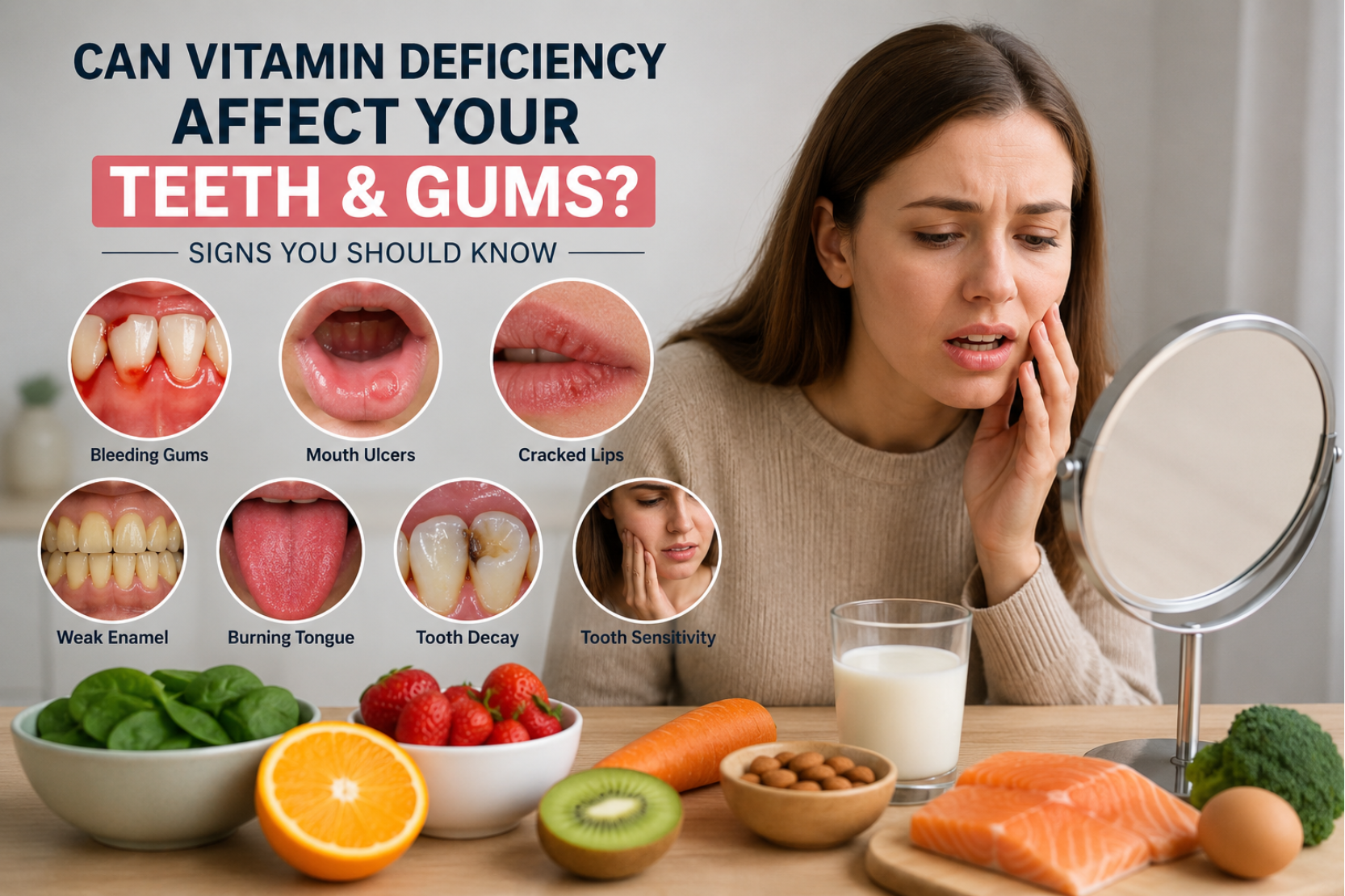
Eating a balanced and healthy diet helps provide the essential vitamins required for the proper functioning of the body. In most healthy individuals, a well-balanced diet is sufficient to meet daily vitamin requirements. However, vitamin supplements may be recommended by a healthcare professional when a deficiency is diagnosed or when dietary intake is inadequate. Various oral manifestations can occur due to vitamin deficiencies, as different vitamins support different functions in the oral cavity. The signs and symptoms vary depending on the specific vitamin deficiency. The common oral signs and symptoms associated with different vitamin deficiencies are as follows:
- Red, swollen and bleeding gums: This is one of the most common and earliest signs of certain vitamin deficiencies. Vitamin C deficiency can lead to gum bleeding and, in severe cases, a condition known as scurvy. Vitamin C is essential for collagen synthesis and tissue repair; therefore, its deficiency weakens the gums and impairs the body’s immune response. Vitamin K deficiency may also contribute to prolonged gum bleeding due to its important role in blood clotting. As a result, the gums may become swollen, inflamed, tender, and bleed even during gentle brushing.
- Mouth sores and ulcers: Canker sores and other ulcerative lesions in the mouth may indicate deficiencies of B-complex vitamins, particularly vitamin B12 and folate (vitamin B9). These vitamins play an important role in cellular repair, DNA synthesis, and regeneration of the oral tissues.
- Tooth decay and sensitivity: Vitamin D plays a crucial role in the absorption of calcium and phosphorus, which are essential for healthy teeth. Deficiency of vitamin D may weaken enamel mineralisation, making the teeth more sensitive and increasing the risk of tooth decay.
- Burning mouth and tongue: A burning or tingling sensation in the mouth, along with soreness, redness, or inflammation of the tongue (glossitis), may be associated with deficiencies of vitamin B12, vitamin B6, and folate.
- Angular cheilitis: Angular cheilitis is characterised by inflammation at the corners of the mouth. The lips may become cracked, red, sore, and painful. Deficiency of vitamin B2 (riboflavin) is one of the common nutritional causes of this condition.
- Tooth discolouration: Teeth may gradually lose their natural appearance due to weakened enamel. Vitamin A deficiency may interfere with normal enamel development and maintenance, while vitamin D deficiency can weaken enamel mineralisation, making the teeth more susceptible to discolouration and dental decay over time.
- Xerostomia: Dry mouth may be associated with vitamin A deficiency, as vitamin A helps maintain healthy oral mucosal tissues. However, xerostomia can also occur due to medications, dehydration, diabetes, autoimmune disorders, or radiation therapy. Reduced salivary flow may increase the risk of tooth decay, oral infections, and difficulty in speaking or swallowing.
Nutritional counselling should be provided to patients to help them understand the relationship between vitamins and oral health. They should be guided regarding appropriate dietary intake and healthy eating habits to prevent nutritional deficiencies. Dentists may collaborate with dietitians or nutritionists to provide a multidisciplinary approach to patient care. Self-supplementation should be avoided, and vitamin supplements should only be taken under the guidance of a qualified healthcare professional. Healthcare providers should also emphasise the importance of a balanced diet and adequate nutrient intake for maintaining good oral and overall health.
Conclusion
Proper intake of a balanced diet and adequate nutrition is essential for maintaining healthy bodily functions. Vitamins are micronutrients required by the body in small amounts that support growth, development, and various physiological functions. They are obtained from a variety of plant- and animal-based food sources. Although some vitamins can be synthesised in limited amounts by the body, most must be obtained through the diet. Vitamin deficiencies can affect both general and oral health and may lead to various oral manifestations. Therefore, maintaining a balanced diet with adequate vitamin intake is essential for preserving overall health and promoting healthy teeth and gums.