Integrative Approach to Cancer : Dendritic Cell Therapy and Ayurvedic Management
ABSTRACT
Cancer remains one of the most complex health challenges globally, defined by uncontrolled cellular proliferation and the ability of malignant cells to evade the host immune system. Modern oncology has increasingly turned toward immunotherapy—specifically Dendritic Cell Therapy (DCT)—to re-educate the immune system to recognize and eliminate cancer cells. Simultaneously, traditional systems of medicine such as Ayurveda offer a holistic, systemic framework aimed at optimizing cellular metabolism (Dhatvagni), reducing systemic inflammation, suppressing abnormal tissue growths (Gulma/Arbuda), and rejuvenating overall host vitality (Ojas). When combined thoughtfully under qualified medical oversight, Dendritic Cell Therapy and targeted Ayurvedic botanical formulations present an integrative protocol designed to target tumor pathology while preserving patient resilience. In this article, we shall explore the mechanisms of Dendritic Cell Therapy, its integration with Ayurvedic principles, diagnostic pathways, and a comprehensive management model featuring targeted botanical remedies.
INTRODUCTION
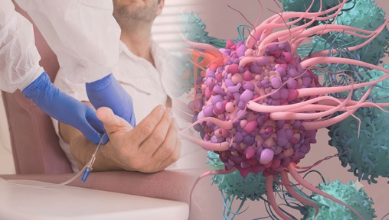
The immune system is inherently designed to identify and destroy abnormal cells; however, malignant tumors employ sophisticated mechanisms to bypass immune surveillance, often becoming “invisible” to T-cells. Dendritic Cell Therapy (DCT) is an advanced form of autologous cell-based immunotherapy designed to break this immune tolerance. Dendritic cells act as the chief “antigen-presenting cells” (APCs) of the immune system—they capture tumor markers, process them, and present them directly to T-lymphocytes to trigger a targeted anti-tumor attack.
While DCT provides a precision-guided immunological signal, the systemic environment in which these immune cells operate dictates their overall success. Metabolic dysfunction, systemic oxidative stress, and chronic inflammation can impair the survival and efficacy of infused dendritic cells. This is where Ayurveda offers significant complementary value. By addressing the internal landscape—balancing metabolic fire (Agni), clearing micro-circulatory channels (Srotas), and modulating cell-signaling pathways using standardized botanical extracts like Curcumin, Guggul, Graviola, Ashwagandha, and Artemisinin—Ayurveda creates a supportive biological environment that enhances host immunity and quality of life during therapy.
CAUSES AND PATHOPHYSIOLOGY
Biological Basis of Tumor Immune Evasion
Cancer arises from a combination of genetic mutations, environmental toxins, chronic metabolic stress, and immune dysfunction. Key driver mechanisms include:
- Immune Checkpoint Hijacking: Tumors exploit pathways (such as PD-1/PD-L1) to deactivate cytotoxic T-cells.
- Loss of Antigen Presentation: Tumor cells downregulate Human Leukocyte Antigen (HLA) class I molecules, rendering them invisible to standard immune clearance.
- Immunosuppressive Microenvironment: Secretion of factors like TGF-beta, IL-10, and VEGF by tumor-associated macrophages suppresses immune activity.
- Mitochondrial & Metabolic Dysfunction: The Warburg effect, where cancer cells shift to anaerobic glycolysis, leading to an acidic microenvironment that inhibits immune cell survival.
CONTRIBUTING & RISK FACTORS
- Prolonged exposure to environmental carcinogens and heavy metals
- Chronic low-grade systemic inflammation
- Chronic psycho-emotional stress leading to sustained elevated cortisol
- Oncogenic viral infections (e.g., HPV, HBV, HCV, EBV)
- Genetic predisposition and DNA repair deficiencies
SIGNS AND SYMPTOMS
Clinical presentation varies widely depending on the anatomical site and stage of the malignancy. Common systemic and localized features include:
- Unexplained Weight Loss & Cachexia: Progressive loss of muscle mass and fat tissue due to systemic metabolic dysfunction.
- Persistent Fatigue & Weakness: Profound exhaustion that does not improve with rest, linked to systemic inflammation and anemia.
- Localized Swelling or Masses: Palpable nodules or deep tissue enlargement (Arbuda).
- Pain & Discomfort: Persistent, aching, or sharp pain caused by tissue infiltration or pressure on nerve pathways.
- Low-Grade Fever & Night Sweats: Systemic immune responses triggered by tumor necrosis or cytokine release.
- Functional Impairment: Changes in bowel/bladder habits, non-healing ulcers, or persistent cough, depending on the affected organ.
INVESTIGATIONS AND DIAGNOSTIC PATHWAYS
An accurate, multi-modal diagnostic assessment is critical for staging, identifying target tumor antigens, and designing autologous dendritic cell vaccines:
Clinical & Diagnostic Assessment
- Histopathology & Biopsy: Tissue biopsy to confirm histological type, grade, and molecular markers.
- Advanced Radiometric Imaging: PET-CT scans, Contrast-Enhanced CT (CECT), or MRI to map primary tumor burden and identify distant metastases.
- Liquid Biopsy & Circulating Tumor DNA (ctDNA): Assessment of circulating tumor cells and genetic fragments to monitor dynamic disease progression.
Biomarkers & Immunological Profiling
- Tumor Markers: Serial monitoring of markers such as CEA, CA-125, PSA, CA 19-9, or AFP.
- Immunophenotyping: Flow cytometry to evaluate immune cell subsets (CD4+, CD8+, NK cells, and Treg counts) prior to
MANAGEMENT: DENDRITIC CELL THERAPY & INTEGRATIVE APPROACHES
How Dendritic Cell Therapy Works
- Leukapheresis: Monocytes are extracted from the patient’s peripheral blood.
- Ex Vivo Maturation: In a specialized GMP-certified laboratory, these monocytes are cultured and differentiated into mature dendritic cells.
- Antigen Loading: The dendritic cells are exposed (“pulsed”) with the patient’s specific tumor antigens or synthetic neo-antigens, teaching them what to target.
- Re-Infusion: The primed dendritic cells are re-infused into the patient, where they migrate to lymph nodes and activate cytotoxic T-cells (CD8+) and helper T-cells (CD4+) to launch a targeted attack on cancer cells.
AYURVEDIC VIEW AND INTEGRATIVE MANAGEMENT
In classical Ayurvedic literature, cancerous conditions are categorized under terms such as Arbuda (tumorous growths) and Gulma (palpable mass disorders). These conditions occur when all three Doshas (predominantly Kapha and Vata) become deeply vitiated, leading to impaired cellular metabolic fire (Dhatvagni) and the accumulation of toxic metabolic byproducts (Ama). Over time, this chronic metabolic blockage compromises Ojas—the primary essence responsible for cellular immunity and physical vitality.
SYNERGISTIC RATIONALE: DCT + AYURVEDA
- While Dendritic Cell Therapy delivers a precise immunological instruction set, Ayurvedic management optimizes the biological microenvironment. Classical herbal extracts act as Rasayanas (rejuvenators) and Arbudahara (tumor-suppressive agents)
- Clear subtle circulatory channels (Srotas), enabling effective tissue penetration of immune cells.
- Reduce systemic oxidative stress and tone down excessive inflammatory cytokines (e.g., TNF-alpha, IL-6).
- Support organ function and protect healthy tissues from secondary metabolic stress.
HERBAL REMEDIES FOR CANCER CARE BY PLANET AYURVEDA
Planet Ayurveda is a prestigious global herbal healthcare provider committed to preserving health using authentic, classical Ayurvedic wisdom. Every formulation is crafted using premium standardized plant extracts and pure minerals gathered from natural habitats. Operating out of state-of-the-art, GMP-certified manufacturing units, Planet Ayurveda ensures that all remedies are entirely free from synthetic chemicals, artificial preservatives, binders, and heavy metal contaminants. By marrying ancient texts with rigorous quality control, the company delivers pure, potent solutions to support holistic wellness safely. Planet Ayurveda proudly presents a selection of highly effective remedies suited for supporting cellular health, immune function, and systemic vitality.
PRODUCT LIST
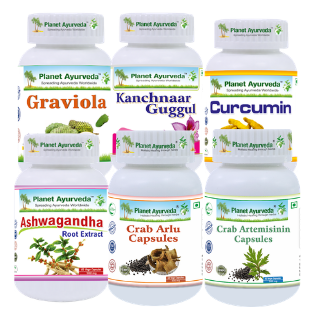
- Curcumin Capsules
- Kanchnaar Guggul
- Cap. Graviola
- Cap. Ashwagandha
- Crab Arlu Capsules
- Crab Artemisinin Capsules

PRODUCT DETAILS
1. Curcumin Capsules
Curcumin Capsules contain concentrated, standardized extracts of Curcuma longa (Turmeric), yielding high concentrations of active curcuminoids. Curcumin is celebrated in both modern research and traditional systems for its profound anti-inflammatory, antioxidant, and immunomodulatory properties. At the cellular level, it helps downregulate inflammatory transcription factors (such as NF-kB), supports normal apoptotic signaling in damaged cells, and neutralizes circulating free radicals, thereby helping to protect healthy tissue architecture.
Dosage: 2 capsules twice daily with plain water after meals.
2. Kanchnaar Guggul
Kanchnaar Guggul is an iconic classical polyherbal formulation traditionally used to manage tissue enlargements, glandular swellings (Granthi), and deep-seated masses (Arbuda). Combining the bark of Kanchnaar (Bauhinia variegata) with purified Guggulu resin (Commiphora mukul) and the classical Triphala group, this formula works by clearing channel blockages (Srotoshodhana), scraping away metabolic waste (Lekhana), and balancing stagnant Kapha and Vata energies.
Dosage: 2 tablets twice daily with warm water after meals.
3. Cap. Graviola
Graviola Capsules are formulated using standardized extracts of Annona muricata, a botanical long valued for its rich profile of naturally occurring phytochemicals known as Annonaceous Acetogenins. These compounds are studied for their ability to support cellular balance, assist in modulating ATP production in rapidly proliferating tissues, and exert strong antioxidant effects that help defend cells against oxidative stress.
Dosage: 1 capsule twice daily with plain water after meals.
4. Cap. Ashwagandha
Ashwagandha (Withania somnifera) is widely recognized as one of Ayurveda’s premier adaptogenic Rasayana herbs. Formulated from standardized roots of Withania somnifera, these capsules are rich in active withanolides. Ashwagandha helps lower stress-induced cortisol, enhances overall physical strength and stamina, reduces cancer-related fatigue, and supports immune cell responsiveness (including Natural Killer cell activity) during times of systemic stress.
Dosage: 1 capsule twice daily with plain water or milk after meals.
5. Crab Arlu Capsules
Crab Arlu Capsules feature a specialized extract of Arlu (Ailanthus excelsa), a classical herb known for its bitter (Tikta) and astringent (Kashaya) taste profiles. Rich in bioactive alkaloids like Ailanthionine, it aids in deep cellular detoxification (Ama-Pachana), supports blood purification, reduces free radical damage, and helps suppress abnormal tissue growth while maintaining healthy microcirculation.
Dosage: 1 capsule twice daily with plain water after meals.
6. Crab Artemisinin Capsules
Crab Artemisinin Capsules contain standardized extracts derived from Artemisia annua (Sweet Wormwood). The primary bioactive compound, Artemisinin, contains a unique endoperoxide bridge that interacts with intracellular iron—which proliferating cells tend to accumulate in higher quantities—to generate localized reactive oxygen species (ROS) that target abnormal cells while sparing iron-balanced normal tissues.
Dosage: 1 capsule twice daily with plain water after meals.
HOME REMEDY: GOLDEN TURMERIC & BLACK PEPPER INFUSION
A soothing, highly bioavailable functional beverage designed to enhance the absorption of lipophilic botanical actives, soothe systemic inflammation, and support healthy digestion (Agni).
Ingredients
- Organic Turmeric Powder – 1/2 teaspoon
- Freshly ground Black Pepper (Piper nigrum) – 1 pinch
- Pure Cow’s Ghee or Extra Virgin Coconut Oil – 1/2 teaspoon
- Warm Water – 1 cup (approx. 200 ml)
Method of Preparation
- Gently heat 1 cup of pure water in a pan until warm (avoid boiling).
- Add 1/2 teaspoon of organic turmeric powder and a pinch of freshly ground black pepper.
- Stir in 1/2 teaspoon of pure Cow’s Ghee or Coconut Oil until completely melted and incorporated.
- Allow the mixture to cool to a comfortable drinking temperature.
Why is This Infusion Used?
In Ayurvedic principles, Turmeric provides Katu (pungent) and Tikta (bitter) tastes that help clear Ama and balance Kapha-Pitta Doshas. Ghee acts as a Yogavahi (catalytic carrier), taking active herbal principles deep into tissue layers without aggravating Pitta.
Scientifically, curcumin (the primary bioactive in turmeric) is lipid-soluble and has low systemic bioavailability on its own. The fat molecules in ghee provide a lipid carrier medium, while the piperine in black pepper significantly enhances curcumin absorption across the intestinal barrier, maximizing its systemic antioxidant and anti-inflammatory benefits.
How to Use
Drink 1 warm cup daily in the morning after breakfast or as recommended by your healthcare practitioner.
CONCLUSION
The integration of modern biological immunotherapy—such as Dendritic Cell Therapy—with classical Ayurvedic medicine represents a comprehensive paradigm in integrative oncology. While Dendritic Cell Therapy provides a precise, targeted immune instruction set to mobilize T-cells against tumor antigens, Ayurvedic therapies work systemically to optimize metabolic health, clear micro-circulatory pathways, reduce systemic oxidative stress, and rebuild vital resilience (Ojas). Formulations like Curcumin, Kanchnaar Guggul, Graviola, Ashwagandha, Crab Arlu, and Crab Artemisinin offer valuable multi-target botanical support to help maintain quality of life and physical strength.
