Author: Dr. Vikram Chauhan

What are the symptoms, causes, diagnosis and best alternative treatment for Pancolitis?

It is a form of Ulcerative Colitis, which is an inflammatory bowel disease (IBD). In Pancolitis, there is inflammation in the whole of the large intestine. It is a chronic condition that causes ulceration of the entire lining of the large intestine. This ulceration is caused by chronic inflammation.

image-of-the-colon-pancolitis

What are the Symptoms of Pancolitis?

As per the severity of the inflammation of the intestine, symptoms may vary.

  • Diarrhea containing blood and mucus.
  • Fever, which is unexpected.
  • Unexpected weight loss (without any efforts; like exercising or diet control.)
  • Fatigue feeling all over the day.
  • Frequent urging to pass stool, which is ineffectual.
  • Pain in the anal area and rectum.
  • Cramps and pain in the abdomen.
  • children with pancolitis, fail to grow properly.

What Causes Pancolitis?

The exact cause of pancolitis is still not known. The possible risk factors are the following.

  • If you have a family history of Pancolitis, you are likely to get affected by it, as the inherited genes may cause pancolitis.
  • If you are taking some medications like antibiotics or NSAIDs, you are at risk to get pancolitis.
  • Untreated cases of ulcerative colitis, that are mild or moderate can become a case of pancolitis.
  • Anxiety and stress can aggravate ulcers causing pain and discomfort.

How Pancolitis Can be Diagnosed?

Colonoscopy: It is an important test to diagnose pancolitis, as it helps to look for ulcers and any other abnormal tissue in your large intestine.

Biopsy: A tissue sample from the colon is taken and is tested to look for any other infections or diseases.

What is the Treatment for Pancolitis?

The treatment for pancolitis includes anti-inflammatory drugs, corticosteroids, and certain immune system suppressors. In the severe cases of pancolitis, a surgery known as colectomy is done.Surgery is usually the last resort, but certain lifestyle changes also help in the management such as – have few dairy products, avoid carbonated drinks, avoid coffee and alcohol, increase the intake of water.

Alternative treatment for Pancolitis

Natural treatment is the best alternative treatment for any disease. It may include Homeopathic and Ayurvedic treatment.

Homeopathic medicines like Hydrastis, Millefolium, Merc Sol, Ars. Album.

Ayurvedic treatment is the best alternative treatment for pancolitis. It includes natural herbal remedies.

Herbal Remedies by Planet Ayurveda have been very successful in treating the cases of pancolitis. Planet Ayurveda collects only the best herbs for the preparation of herbal medicines. The medicines offered by Planet Ayurveda are made with the purest herb extract which is natural and 100% vegetarian.

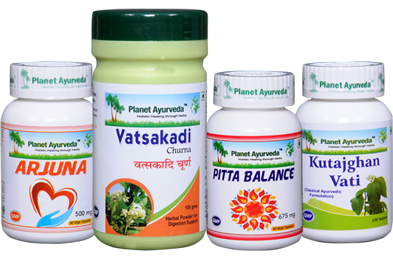
The treatment offered by Planet Ayurveda includes Ulcerative Colitis Care Pack

This pack includes the following:

  1. Arjuna Capsules
  2. Vatsakadi Churna
  3. Pitta Balance
  4. Kutazghan Vati

colitis-care-pack
button

1. Arjuna Capsules:

The capsules made by Planet Ayurveda are purely herbal without any chemical added into it. The bark of Arjuna (Terminalia arjuna) is used to make these capsules. The bark of Arjuna is used for its wound healing properties in Ayurveda .

It protects the layers of arteries from injuries caused by stress and other harmful substances. In the same way, it works on the inner lining of intestines, by healing the ulcers. It then stops the bleeding and prevents inflammation. Hereby it also controls diarrhea and slows the absorption of the nutrients which has stopped due to the ulceration starts again.

Dosage: Take two capsules two times a day, after having the meals.

2. Vatsakadi churna :

It is one of the most effective formulations for treating pancolitis and other inflammatory bowel diseases.

This churna is a combination of various ulcer healing herbs like Dhania (Coriander sativum ), Anar(Punica granatum), Choti Elaichi (Elettaria cardamomum), Jaiphal (Myristica fragrans), Saunf (Foeniculum vulgare), Bilva (Aegle marmelos), Kutaz(Holarrhena antidysenterica). These herbs work together and maintain various metabolic reactions. This churna helps to heal the ulcers and managing the bleeding with stool. It thus helps to restore the healthy state of intestines and relieving the symptoms.

Dosage: You can take this either directly with plain water, i.e. 1tbs twice daily.or put 1tbs in 400 ml of water, boil it, until it remains 50ml.Strain the residue and drink the water. Do it twice daily and every time make it fresh.

3. Pitta Balance:

Pitta balance is a formulation of various classical calcium compounds, which play an important role in controlling the bleeding. They provide a cooling effect to the body. Ingredients used in Pitta balance are Coral Calcium, pearl calcium, Agate calcium, and three more ayurvedic calcium compounds.

This formulation prepared by Planet Ayurveda is made with pure plant cellulose, without using any chemicals. Pitta balance also acts as a blood purifier and helps to keep the skin healthy.

It is so helpful that bleeding stops within the first few dosages of this medicine without giving any side effects. The inflammation process reverses back towards the cure.

Dosage: 1 Capsule is to be taken two times daily, with plain water after having the meals.

4. Kutazghan Vati :

It is also called as antidysentrica. It is so wonderful that it has the natural power to stop all kinds of diarrhea. It helps to burn the endotoxins also called ‘ama’. It thus stops the inflammation and helps in healing the ulcers.

Dosage: 2 tablets are to be taken two times a day with plain water, after having the meals.

Passiflora – Health Benefits, Medicinal Properties and Uses

Introduction

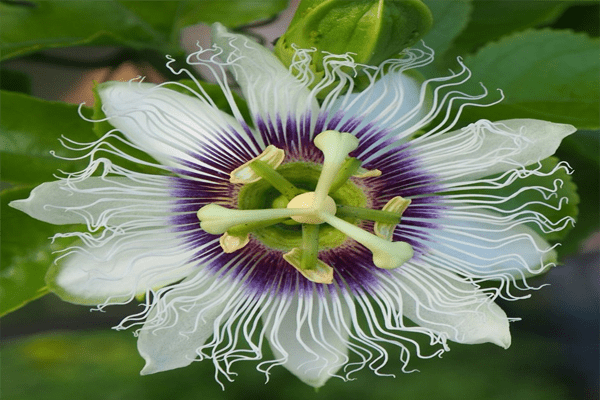
Passiflora: In the 15th century, Spanish missionaries in Peru coined the term Passiflora. He saw this unusual flower as a symbol of crucifixionThe Passion of Christ. Its five petals and 5 sepal arrangement give the appearance of 10 apostles of Jesus Christ (excluding Judas and Peter), five anthers represent the five sacred wounds of Jesus Christ, 3 stigma represent the 3 nails which held the Jesus on cross, tendril of flowers resemble the whips used in flagellation and the filament resembles the crown of the thorns.

Passiflora

Description

It is a perennial vine. The Stems are long, trailing, smooth or pubescent; possessing many tendrils. Its leaves may be 3-lobed or 5-lobed. Petals are bluish-white in color with white and purple corona. Flowers are self-sterile and are often pollinated by Bumblebees and Carpenter bees, fleshy fruit is an oval-yellowish berry, of the size of a hen egg having many seeds. The fruit has scanty pulp in it with a sweetly tart taste. Its color is green at first but it changes to yellow when it matures.  It is mainly found in thickets, near riverbanks, near unmowed pastures, roadsides, disturbed areas, and railroads, with lots of available sunlight. It is not found in shady areas.

Cultivation

It is easily cultivated and is native to the southeastern United States extending into the central portion of the US reaching Illino is Indiana and Ohio. The plants grow in well-drained sandy soil and in sunny areas. It can be planted all year in zone 7-11 (hardiness zone). The plant seeds in the spring season.

Traditional Use

It is used to heal cuts and bruises. It is used as a powerful nervine tonic to treat stress and anxiety.It has also been used traditionally to provide relief to women who are experiencing menopause symptoms such as hot flashes and insomnia.

Latin Name – Passiflora Foetida

Family – Passifloraceae

English Name – Passion Flower, Maypop, Wild-Passion-Fruit, Love-In-A-Mist

Classification

Kingdom – Plantae

Family – Passifloraceae

Genus – Passiflora L.

Common Name – Mukkopeera

Habitat – South America

It is widely used in Ayurveda and alternative medicinal practices as a natural herb and it potentially resolves various health issues.

Useful Part

  • Leaves and stems are very useful
  • The whole plant is very useful
  • At the end of summer, a gathering of aerial parts of the plant is done.

The Action of Passiflora on Our Body

  •  Each part of the plant possesses the specific property and has specific pharmacological action on our body.
  • It has antidepressant, anti-inflammatory, hypnotic, antispasmodic, anti-anxiety, mildly sedative, powerful anti-oxidant

Chemical Composition

Passiflora contains traces of indole alkaloids which include Harman as the main constituent along with Harmine and Harmaline constituents, tiny percentage of maltol and it also contains various flavonoids up to 2.5 percent.

Indications

 It is used in cases of neuralgic pains associated with debility, nervous headache, hysteria, generalized seizures, convulsive movements, oppressed breathing, spasmodic asthma, irritation of brain and nervous system, exhaustion from cerebral fullness, Sleeplessness due to overwork, tetanus, infantile nervous irritation, nervous tachycardia, cardiac palpitation or insomnia.

Therapeutic Classification Index

It has following therapeutic benefits on the Central nervous system, Digestive system, and musculoskeletal system –

  1. Central Nervous System – It reduces stress. Its fruit contains Hydrogen Cyanide (HCN)which is useful in treating headaches and insomnia. It is the herb of choice for treating insomnia.
  2. Digestive System –Fruit is emetic in nature.
  3. Musculoskeletal System – In moderate doses, it acts as an anti-spasmodic with somewhat narcotic nature.

Passiflora as a Sedative

It is a good rest producing agent. It is useful in restlessness and to overcome wakefulness.  It is used in cases of insomnia occurring in infants and old people. It is useful in headache or sleeplessness that occurred due to overwork. It relieves the nervous system and provides peaceful and restful sleep to the patient and on the next day the patient awakens refreshed and quite.

Passiflora as an Antispasmodic Herb

It is very useful in the neuralgic type of pain. It has shown good results in relieving rectal pain, cardiac pain, spasmodic and neuralgic dysmenorrhea, facial neuralgia. It is also associated with or not associated with spasmodic action. It is also proved useful in many reflexes painful conditions incidents with menopause and pregnancy. It is also beneficial in nervous headache, cerebral fullness and also the headache of debility.

Use of Passiflora in Convulsions

 It is proved to be very useful in convulsive disorders. It has shown very good results in treating tetanus, occurring in both man and horse.  In case if any warming sign of convulsion occurs to you, then, in this case, it is given in full doses as in this condition this remedy proves to be of considerable value, but once the attack has started then it is of no use. But it has shown good results in treating all stages of convulsions. It has shown good control in spasms occurring in childhood, irrespective of the reason, whether due to worms, due to dentition or due to any undigested ailment.  In1896, Dr. Holmes reported a case of post-partum puerperal eclampsia in which a patient had two convulsions before but by the hypodermatic use of two drachms of Passiflora (Passiflora Incarnata), the patient got relief. It has proved to be successful in hysteria with spasmodic movements along with whooping cough in association with convulsions.

Preparation and Dosage

 It is available in Powder, Capsule and Liquid form

1. To Treat – Insomnia

Infusion – Take 1 Cup boiling water, then add 1 teaspoon of dried Plant. Leave it for 5-10 minutes to infuse then strain. Take One Cup at bedtime.

2. To Treat – Palpitations, Nervous Agitations, and Vegetative Dystonia

Infusion – Take One Cup – Three times a day.

Tincture – (1:8 In 25% Alcohol) – Take 25 drops in a glass of Water – Three times daily.

Cautions

No side effects have been reported till now if used in therapeutic doses.

“The great thing about Ayurveda is that its treatments always yield side benefits, not side effects.”

Shubhra Krishan