Tonsillitis- Treatment With Herbal Remedies

ABSTRACT
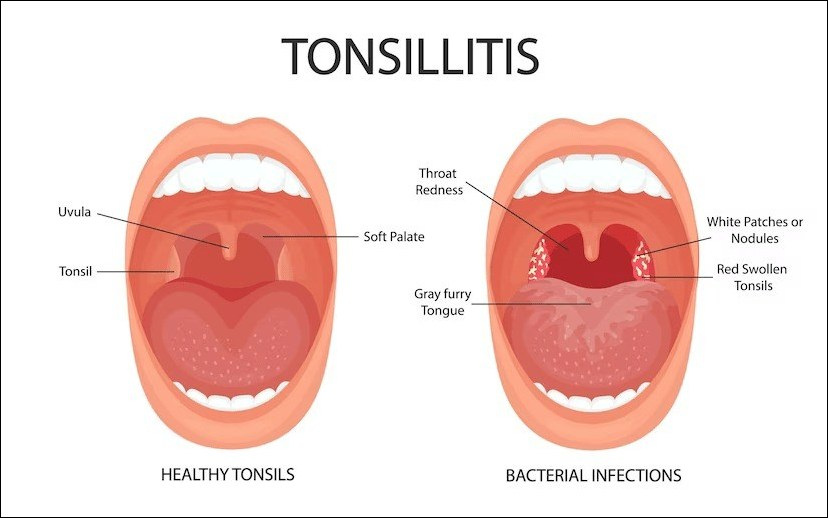
The word tonsillitis is made of two words “tonsil” and “itis”, which means “inflammation of tonsils”. Tonsils are an oval shaped pad of tissue at the back of the throat, there is a pair of tonsils present in our throat (one tonsil on each side). Due to various infections, tonsils get infected, they begin to swell and make your throat sore, which leads to difficulty in swallowing. Early and accurate diagnosis of this condition makes it easily manageable. Sometimes it can be treatable at home by simply gargling with warm salty water. It usually spreads through droplet infection like sneezing, coughing, etc. Mostly, children are affected from tonsillitis as of preschool ages and mid teen ages. It is rare in infants and persons who are above 50 years of age. Firstly tonsillitis arises with high-grade fever and throat pain, with time the condition gets worse if not treated. Usually there are cases of viral tonsillitis that can be cured by fluids, plenty of rest, and antibiotics if there is a bacterial cause, it does not cause any serious health condition. In this article we will know about each concept regarding tonsillitis and its significance, and management according to Ayurveda classical texts.
INTRODUCTION
Primarily, when there is inflammation of surface epithelium and lymphoid tissues of palatine tonsils leads to the condition known as tonsillitis. There are mainly three types of tonsillitis- acute, recurrent and chronic. Acute tonsillitis complicates chronic tonsillitis. Tonsils act as filters for trapping germs which enter into airways and cause infections, they make antibodies to fight against infections. Tonsillitis is very common and when infected once can occur again and again. The function of tonsils is to provide local immunity and act as a defense mechanism. They act as guard against viruses, bacteria and other antigens coming into contact through inhalation and ingestion. When the tonsils get swollen sometimes adenoids also get inflamed which increases tonsillitis condition. Usually tonsillitis is not contagious but it can be if viral or bacterial involvement and can be prevented by repeatedly washing hands. The treatment depends on the underlying cause and care of the patient.
ANATOMY OF TONSILS
Tonsils are two round fleshy masses located at back of the throat (pharynx).There are basically four type of tonsils
- Pharyngeal tonsil
- Tubal ( two) tonsils
- Palatine( two) tonsils
- Lingual tonsil
When we come to the tonsillitis condition, there is involvement of palatine tonsils which are two in number. Each tonsil is an ovoid mass of lymphoid tissue situated in the lateral wall of oropharynx between the anterior and posterior pillars. Tonsils extend upwards into the soft palate, downwards into the base of tongue and anteriorly into palatoglossal arch. Tonsils have two surfaces (medial and lateral) and two poles (upper and lower). The blood supply to tonsils are as follows
- Facial artery branches
- Pharyngeal artery
- Lingual artery branches
CAUSES
There are different causes of tonsillitis but some of them are as follows
- Tonsillitis is most often caused by viruses, but bacteria can be the reason behind it.
- The most common bacteria behind this infection is streptococcus pyogenes like Hemolytic streptococcus.
- Viruses of cold and flu cause maximum cases of tonsillitis.
- Other causes of infection may be staphylococci, pneumococci or influenzae.
SYMPTOMS
The clinical sign and symptoms for tonsillitis are as given below
- Sore throat
- Difficulty in swallowing
- Red and swollen tonsils
- White or yellow patches on tonsil
- Painful swallowing
- Enlarged and tender lymph nodes ( near neck region)
- Fever
- Bad breath and bad taste
- Loss of appetite
- Irritation in throat with cough
- Choking spells at night
- Earache
- Constitutional symptoms- headache, body ache, malaise, constipation, abdominal pain.
- Chronic cases- pus or cheesy material on pillars of tonsils.
COMPLICATIONS
The various complications regarding tonsillitis are as follows
- Chronic tonsillitis
- Peri tonsillar abscess
- Parapharyngeal abscess
- Intratonsillar abscess
- Tonsillar cyst
- Focus of infection in rheumatic fever, acute glomerulonephritis, eye and skin disorders, etc.
DIAGNOSIS
The diagnosis for tonsillitis are given below
- According to Ayurveda darshan, sparshan and prashan is done. ( Medical examination and history taking)
- Throat swab
- Complete Blood Count(CBC)
- Palpation ( palpating neck to check swollen lymph nodes)
- Ear and nose examination
- Bacteria culture test
MANAGEMENT
The management of tonsillitis depends on underlying cause of infection so it can be managed as follows
General health maintained
- Antibiotics
- More rest
- Plenty of water/ fluids ( hydration)
- Analgesics
- Antimicrobial therapy
- Throat lozenges
- Surgically- Tonsillectomy is done (removal of tonsils).
AYURVEDIC POINT OF VIEW REGARDING TONSILLITIS
According to classical Ayurveda texts mukh roga (buccal cavity disorders) has explained in detail and counted 65 disorders in number. Acharya’s mentioned tonsillitis as “Tundikeri”, one of the uvular diseases. It is a tridosha disorder where there is predominance of kapha and rakt (blood).
The signs and symptoms includes
- Pricking pain in throat
- Burning sensation in throat
- Swelling with some discharge
- Fever with chills
- Loss of voice
Causative factors are below
- Taking cold water and food
- Cold climate
- Spicy food
Treatment according to classics
- Application of medicinal paste (Piper nigrum, Aconitum heterophyllum, Cissampelous pareira, etc.)
- Gargling with decoction of Acorus calamus, Aconitum heterophyllum, Cissampelous pareira, etc.)
- Fumigating affected areas (with Ferula asafoetida, Cedrus deodara, etc.)
But some Acharya’s compare it with “Gallayu”, a throat infection in which there is poor processing in the body metabolism and accumulation of “aama” (toxins). It can be treated by changing dietary habits and lifestyle changes.
HERBAL REMEDIES FOR TONSILLITIS BY PLANET AYURVEDA
Planet Ayurveda is well-known manufacturing company which is known for its natural herbal medications. All the medicines prepared here are as described in classical texts. They contribute to healthier society from their traditional way of management. Various formulations are prepared for a variety of diseases which are natural, chemical free, free from any preservatives or color, etc. The best herbal combination of herbs for tonsillitis by Planet Ayurveda are as follows are as follows are as follows
Product List
- Septrin Tablets
- Khadiradi Vati
- Curcumin Capsules
- Amalaki Rasayan
- Irimedadi Oil


PRODUCT DESCRIPTION
1. Septrin tablets
It is standardized tablet formulation prepared from extract of guggul (Commiphora mukul), haridra (Curcuma longa), and tulsi (Ocimum sanctum). These tablets work on the full respiratory system and act as an immune booster. It balances all tridoshas (vata, pita and kapha).
Dosage- Two tablets twice a day with lukewarm water after meals.
2. Khadiradi vati
It is standardized tablet (vati) formulation in our classical Ayurveda texts. This tablet is prepared from extract of khadir (Acacia catechu), bhimseni Kapoor (Cinnamomum camphora), and kankol (Piper cubeba). It is very useful in respiratory conditions and healing skin diseases. It acts on pitta and kapha dosha, and has antioxidant properties.
Dosage- One tablet thrice a day after meals, don’t chew take as lozenges.
3. Curcumin capsules
It is standardized capsule preparation from extract of haridra/ haldi (Curcuma longa), it has anti-inflammatory and balances all vitiated doshas (vata, pitta and kapha).Curcumin capsules help in wound healing, improve skin condition and protects our immune system.
Dosage- One capsule twice daily taken with plain water after meals.
4. Amalaki rasayan
It is a single herb capsule preparation which is prepared from extract of amala (Emblica officialis). It balances all doshas and regulates whole body metabolism. These capsules are good for respiratory health and act as rasayana (rejuvenating property).
Dosage- One capsule of amalaki rasayan twice daily with plain water after meals.
5. Irimedadi oil
It is oil formulation from Ayurvedic classical texts, prepared from extract of irimeda (Acacia farnesiana), lavang (Syzygium aromaticum), manjistha (Rubia cordifolia), etc. It is very helpful in treating sore throats and keeps the buccal cavity clean, healthy. Local application of this oil heals mouth ulcers, dental caries and any tooth disorders. This oil shows great results in acute tonsillitis.
Dosage- Local application on the affected area(tonsils).
CONCLUSION
Tonsillitis is a very common disease which can be easily corrected with Ayurveda medications. You can follow above guidelines for tonsillitis but for any kind of severity in condition you must concern our doctors. The team of Planet Ayurveda is always available for your queries as there are well experienced doctors for your best management.