Author: Dr. Vikram Chauhan

Natural Cure For Hemolytic Uremic Syndrome

ABSTRACT

In this article our main topic of discussion is hemolytic uremic syndrome. As this disease is characterized by involvement of multiple systems of our body with the presence of various complaints. Early identification and beginning of the best supportive treatment protocol as early as possible might result in favorable outcomes in most of the patients. So let’s start putting some rays of limelight on this topic.

hemolytic uremic syndrome

INTRODUCTION

Hemolytic uremic syndrome is a combination of blood disorders in which there is presence of low red blood cell and platelets count associated with acute renal failure. In this condition the small blood vessels of kidneys become inflamed and damaged. Due to the formation of inflammation in blood vessels it will block the filtration of blood inside kidneys that leads to a life threatening situation such as kidney failure.

As per ayurveda hemolytic uremic syndrome comes under “rakta pitta in mutra vaha srotas” (channels involving urinary system with presence of hemolytic disorders.)

COMMON CAUSES

These are the main causes (nidan as per ayurveda) that results in formation of an ailment.

  • Most common cause of HUS is the presence of infection in the alimentary tract and in most of the cases it is due to E.coli infection.
  • Persistent diarrhea
  • Infection of upper respiratory tract.
  • Underlying autoimmune disorders
  • Due to certain genetic mutations
  • Use of carcinogenic medications in excess amounts.
  • Presence of infectious disease:
  • HIV (human immunodeficiency virus)
  • Influenza
  • Pneumonia
  • Intake of immunosuppressant medications.

As per ayurveda main causes of hemolytic uremic syndrome, that lead to formation of a pathology in mutravaha srotas are explained in the below mentioned verse.

ancient references

(Charaka. Viman 5/20)

  • When a person do consumption of water, food and coitus during natural urge of micturition (urination)
  • Suppress his/her urge of micturition deliberately for a longer period of time.
  • When a person is lean & thin.
  • Due to external injury to the body.

CLINICAL FEATURES:

It includes the signs and symptoms. A symptom means the general complaints along with which patients present in front of the physician. Signs: It means what a physician notices himself by observing the patient’s condition.

The signs and symptoms of hemolytic uremic syndrome may vary from mild to severe ones.

  • Hematuria (presence of blood in urine)
  • Presence of abdominal pain
  • Bloating
  • Vomiting
  • Lethargy
  • Fever
  • Persistent diarrhea that might contain blood
  • Oliguria (decreased urination)
  • Pallor
  • Edema over dependent parts of the body such as ankle, extremities etc.
  • Muscle cramps and body ache.
  • Weakness.
  • Weight loss
  • Pain in lower back.
  • Urine looks abnormal in color and has a frothy/foamy appearance.
  • Sleep cycle disturbance.
  • Swelling under the eye area.

According to Ayurveda

ancient references

This verse explains that- Mutravaha srotas (urine forming channels) have their main seat in ‘basti’ (urinary bladder) and ‘vankshan’. Common complaints patient feel are as follow:

  • Ati sarishtam ati vibadham (over excretion or complete obstruction of urine)
  • Prakupitam alpam alpam bhikshnam (formed urine will be vitiated and diminished in amount)
  • Bahlam sashulam (thick urine with ache)

Risk factors:

It includes the factors responsible for increasing the chance of developing an ailment in the body.

  • This disease is seen more prominently in children below 5 years of age and in adults over 65 years of age.
  • Hypertension
  • Epilepsy
  • Cardiovascular ailments
  • Coma
  • Chronic renal diseases
  • Cardiac arrest

DIAGNOSIS

It means how we can identify the disease. There are various methods:

  • General physical examination of patients by using inspection techniques.
  • Proper history taking.
  • Laboratory findings. It Includes:
      • Complete blood count test.
      • Glomerular filtration rate (GFR) test.
      • Renal function test
    Reference Units
    Blood urea nitrogen(BUN) 5-25 mg/dl
    Creatinine 0.3-1.4 mg/dl
    Uric acid 2.5-7.0 mg/dl

MANAGEMENT

Treatment in modern system of medicine:

Supportive care:

  • Antihypertensive Medications.
  • Maintaining proper level of fluid and electrolyte therapy
  • Blood Transfusions
  • In advance cases- kidney dialysis is recommended.

As these above mentioned treatment modalities will just give a symptomatic relief to the patient. So we need to use ayurveda as it is an ancient most healing system which was originated in India over thousands of years ago that focuses on maintaining a balance between the body and mind by considering the “tridoshas theory” (3 most important energies in the body- vata, pitta & kapha) or “panchamahabhuta theory” (5 essential component for life) — akash (sky), vayu (air), agni (fire), jal (water), prithvi (earth)

Ayurvedic treatment

Ayurveda offers various herbal & natural formulations that will help you in preventing complications of hemolytic uremic syndrome as it believes in going on to the root level of disease. It focuses on doing prakriti analysis of each and every patient, and then uses those medications that will suit the individual prakriti.

  • Our acharya explains certain best dravyas known as “Agray dravya”
  • To treat retention of urine (mutra krich) and vitiated vata  dosha
  • Gokshur (Tribulus terrestris) is the best herbal drug mentioned in our text.

Herbal remedies for Hemolytic Uremic Syndrome by planet ayurveda

Planet Ayurveda is a leading herbal manufacturing unit serving mankind with their 100% organic products free from preservatives and chemical agents, made under the supervision of ayurveda experts. They offer various herbal formulations to be used in hemolytic uremic syndrome. Some of them are as follows:

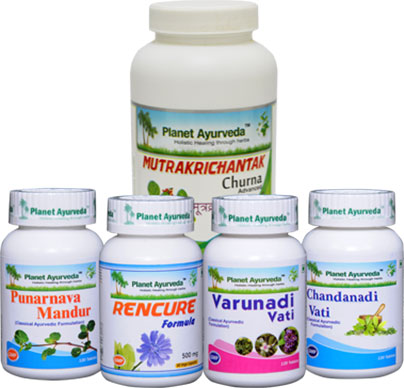
Revive kidney Pack

This pack contains 4 herbal formulations they are as follow:

  1. Mutrakrichantak Churna
  2. Punarnava  Mandur
  3. Varunadi Vati
  4. Rencure Formula
  5. Chandanadi vatirevive-kidney-pack

Treatment of Liver Hemangioma

PRODUCTS DESCRIPTION

1. Mutrakrichantak Churna

This powdered form herbal formulation contains herbs like gokshur (Tribulus terrestris), bhumi Amla (Phyllanthus niruri), varun (Crataeva nurvala) etc. Herbs present in this churan works on balancing tridosha (elevated energies), thus they are very good in maintaining healthy renal functioning and assist very profoundly in prevention of deterioration of hemolytic uremic syndrome.

Dosage: 1 Teaspoonful twice daily with plain water.

2. Punarnava Mandur

This herbal formulations contain various indian herbs such as punarnava (Boerhaavia diffusa), pippali (Piper longum), maricha (Piper nigrum), amalaki (Emblica officinalis), mandoor bhasma (Ferric oxide calx) etc. This formulation is very effective in managing digestion related issues which a patient of  hemolytic uremic syndrome generally complaints about.

Dosage: 1 tablet two times a day with lukewarm water.

3. Varunadi Vati

This herbal formulation contains various herbs such as guggul (Commiphora mukul), gokshura (Tribulus terrestris), varun (Crataeva nurvala), punarnava             (Boerhavia diffusa) etc. It helps in relieving pain, keeps kidney functioning healthy and regular. So it is a great choice in patients suffering from hemolytic uremic syndrome (HUS)

Dosage: 2 Tablets, thrice daily with plain water after meals.

4. Rencure Formula

This herbal formulation contains potent herbs like punarnava (Boerhavia diffusa), varun (Crataeva nurvala), palaash (Butea monosperma), kasni (Cichorium intybus), etc. These herbs are tridoshahar (help to relieve tridosha imbalance) as they have madhur (sweet), tikta (bitter) and kashaya (astringent) taste that reduce pitta dosha. Also these herbs are ushan (hot potency) in property so helps in decreasing kapha-vata doshas. So this herbal formula has very efficacious results in patients suffering from hemolytic uremic syndrome.

Dosage: 2 Capsules twice daily with plain water after meals.

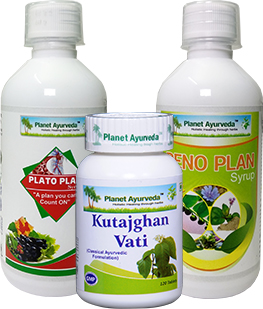
Beside revive kidney care pack; some other useful herbal formulations in hemolytic uremic syndrome are as follow:

  1. Plato Plan Syrup
  2. Kutajghan Vati
  3. Reno Plan Syrup

kidney-Care-PacksTreatment of Liver Hemangioma

1. Plato Plan Syrup

This herbal formulation contains herbs such as eranda karkati (Carica papaya), giloy (tinospora cordifolia), ashwagandha (Withania somnifera), amalaki (Embilica officinalis), draksha (Vitis vinifera) etc. All the herbs present in this are enriched with immuno modulatory action, thus assisting in elevation of the immunity power of the body. It also helps in raising the platelet count due to its integral properties.

Dosage: 2 teaspoons twice daily.

2. Kutajghan Vati

This herbal formulation contains pure and standardized extract of kutaj (Holarrhena antidysenterica). This herb is a natural anti-diarrheal drug mentioned in our classical texts. As the patient of hemolytic uremic syndrome suffers from the problem of persistent diarrhea this herbal formulation works very generously in combating this symptom of hemolytic uremic syndrome.

Dosage: 2 tablets twice daily with plain water after meals.

3. Reno Plan Syrup

This herbal syrup contains punarnava (Boerhavia diffusa), bhumi amla (Phyllanthus niruri), gokshura (Tribulus terrestris), varuna (Crataeva nurvala), root extract of kash (Saccharum spontaneum), root extract of ikshu (Saccharum officinarum) etc. Herbs present in this work as a very good diuretic and clears out all the impurities present in the renal system of our body helps in dealing with symptoms of oliguria or hematuria which a patient of hemolytic uremic syndrome usually suffers.

Dosage: 1 teaspoon two times daily after meal.

CONCLUSION

Now we can conclude that with Ayurvedic herbs we can surely prevent the complication of hemolytic uremic syndrome very efficiently, if we consume herbal formulation in adequate amounts as guided by a physician along with proper dietary regime. So you can choose planet ayurveda for the ayurvedic treatment. It is a leading manufacturing unit serving mankind by using principles of ayurveda. In case of any query kindly visit www.PlanetAyurveda.com

NATURAL TREATMENT OF BERNARD SOULIER SYNDROME

ABSTRACT

In this article our main topic of discussion is a very rare disorder known as “Bernard-Soulier syndrome”. It is a disorder associated with blood functioning. In today’s era such types of disorders have become very prevalent. In the modern system of medicine complete cure of such illness is not possible as they use blood transfusion procedure to treat this type of rare ailment and it will just provide symptomatic relief to the patient. Ayurveda offers numerous magical herbs that work quite efficiently in a healthy way by increasing the strength and stamina of the body. It teaches us about an ideal way of living so that we can prevent ourselves from such kinds of bleeding disorders. So let’s start discussing it in detail.

INTRODUCTION

Bernard soulier syndrome is a very rare inherited disorder associated with blood coagulation in which platelets acquire abnormally large shape, due to that there will be decrease in platelets count that leads to increase in bleeding time (difficulty in clotting), as platelets play a major role in the initiation of blood clotting mechanism.

DEFINITION OF BERNARD SOULIER SYNDROME

It is a very rare bleeding disorder of autosomal recessive origin that occurs due to deficiency of glycoprotein responsible to control bleeding from the injured blood vessels. The prevalence rate of this ailment is very less as there is a presence of 1 case over million persons.

AYURVEDIC CORRELATION OF BERNARD SOULIER SYNDROME

As per ayurveda we can correlate this ailment with “rakta pitta”. As rakta (blood) got vitiated due to elevated pitta dosha, as pitta has its main seat in rakta dhatu, so if pitta got aggravated due to any etiological cause it will ultimately affect the normal functioning of blood (rakta dhatu).

Photo Album

RAKTA PITTA IS OF THREE TYPES

  1. Urdhva rakta pitta– bleeding from upper openings of the bodies, such as in nose bleed. In this there is an involvement of kapha dosha.
  2.  Adhog raktapitta– oozing of blood from the lower body tract, as in hematuria. In this there is an involvement of vata dosha.
  3. Triyak raktapitta– in this type there is a haemorrhage from different parts of the body such as in the limbs. In this there is an elevation of vata-kapha doshas.

ETIOLOGICAL FACTORS

These are the main causes (nidan as per ayurveda) that results in formation of an ailment.

  • Hereditary- As it is an autosomal recessive disorder so genetics plays a major role in giving rise to this ailment.
  • Deficiency of a glycoprotein called Ib-IX-V complex (GPIb). It plays a major role in binding two molecules of fibrinogen that helps in blood coagulation.

AS PER AYURVEDA THE MAIN CAUSE OF RAKTA PITTA ARE AS FOLLOW

  • Consumption of katu (spicy), amala (sour), lavana (salty) rasa in abundant quantity.
  • Excessive intake of Ushana(hot) and teekshna (penetrating) food substances
  • Krodha (Excess anger)
  • Atyasahana (Overeating)
  • Viruddha ahara sewana (Intake of unhygienic diet)
  • Vega dharna (Controlling of natural urges of urine and stool)
  • Over use of alkalis (kshara)

CLINICAL FEATURES

It includes the signs and symptoms. It means the general complaints along patients present in front of the physician.

  • Abnormal bleeding from very small injury.
  • Easy bruising on different parts of the body.
  • Excessive bleeding from gums.
  • Heavy menstrual bleeding.
  • Fatigue
  • Body ache
  • Generalized weakness
  • Gum bleeding
  • Gastrointestinal bleeding
  • Burning sensation in the body
  • Anorexia- loss of hunger
  • Polydipsia- Increased thirst.

DIAGNOSIS

It means how we can identify the disease. There are various methods

  • General physical examination of patients by using inspection, palpation, auscultation and percussion technique.
  • Proper history taking.
  • Laboratory findings, It includes:- Complete blood count test: Thrombocytopenia, Enlarge size of platelets

ACCORDING TO AYURVEDA

The two most preferred diagnostic procedures used by a physician are as follow

Asthavidh Pariksha (Set Of 8 Examination Procedure)

  • Nadi pariksha– By palpating the pulse rate of the patient.
  • Mutra pariksha– By examining the urine of the patient.
  • Mal pariksha– By stool examination.
  • Jivha pariksha– By examining the tongue whether coated or not.
  • Shabad pariksha– By listening to the natural sounds within the body like intestinal sound (peristalsis) sounds of moving body fluids.
  • Sparsh pariksha– By observing the patient skin texture whether it is cool, wet or dry.
  • Drik pariksha– When a physician inspects patient symptoms through his/her eyes.
  • Akriti pariksha– When a physician evaluates the general appearance of a patient whether he/she looks dull, lethargic or fatigued etc

Trividh Pariksha (Group Of 3 Diagnostic Procedures)

  • Darsha- Diagnosis is made by visual examination of the symptoms.
  • Sparshan- Physician uses tactile examination to evaluate whether skin is cold/hot
  • Prashan– Physicians ask direct questions from the patient, to evaluate the root cause of the disease i.e. history taking.

MANAGEMENT

Supportive Therapy

  • Blood transfusion is given to combat excessive bleeding.
  • Iron and folate medications, as such patients suffer from complaints of anemia as well.
  • Antifibrinolytic agents- they help in blood clotting by preventing breakdown of fibrin (a protein) that plays a major role in formation of blood clot.

So as these above mentioned treatment modality just provide symptomatic relief to the patient, ayurveda works very generously by going into the basic level of etiological factors.

AS PER AYURVEDA

This disease occurs due to elevation of pitta dosha so our main focus will be on diminishing the pitta dosha level. For this we need to use below mentioned treatment modalities

A. Sanshodhan Chikitsa (Detoxification And Purification Therapy)

In sanshodhan chikitsa we will purify the inner channels of our body (srotas) by using different procedures. Acharya charaka included five procedures in it, they are as follows- vaman (emesis), virechana (purgation), anuvasana basti (enema with medicated oil), niruha basti (enema with medicated decoction)  and nasya karma (adding drops of medicated oil/ churna in the nostrils).

Before using sanshodhan chikitsa we need to use purva karma (foremost procedures) – they are the set of procedures that need to be done before main panchakarma procedures. They are very important as they help in preparing the body for the main purification procedures. It includes: deepan karma, pachana karma, snehana karma and swedana karma.

  • Deepan karma: In this we use deepaniya dravya to increase the digestive fire of the body.
  • Pachana karma: in this we use pachana dravya to digest the food substances.
  • Snehana karma (oleation therapy) Smoothing the body dosha’s by using herbal ghrit/oil.
  • Svedan karma (sudation therapy) – Semi-hot medicated kwath or other herbal solution is sprayed on the patient’s body by a specially made swedan yantra (instrument).
  • Vaman (emesis) – In this procedure we do elimination of toxins by using emetic herbs to take out vitiated kapha dosha from the body.
  • Virechana (purgation) – In this we use purgative herbs to take out vitiated pitta dosha from the anal route by purgation technique.
  • Basti karma (enema) – It is of two types:
  • Anuvasana basti (enema with oil) – In this medicated oil is inserted into the body by anal route with the help of rectal route by using basti yantra (enema intrument)
  • Niruh basti (enema with medicated decoction) – In this medicated solutions are inserted into the rectal route by using basti yantra (enema instrument)

Both these types of basti (enema) are used to balance the vitiated vata dosha within the body.

B. Sanshaman Chikitsa (Alleviating Treatment)

In this treatment modality we use the herbal medicines by oral route to balance vitiated doshas within the body itself

HERBAL REMEDIES OF PLANET AYURVEDA

Planet ayurveda is a leading herbal manufacturing unit serving people worldwide with their holistic approach of healing by using principle of ayurveda. They offers various herbal formulations that will work very efficaciously in Bernard soulier syndrome, it includes

herbal-remedies-for-bernard-soulier-syndrome

Treatment of Liver Hemangioma

1. Giloy Capsules

This capsule contains pure and standardized extract of giloy (Tinospora cordifolia) and it is known as “amrita” in ayurveda (because of its numerous health benefits). It helps in balancing tridosha (vata, pitta and kapha) as it possesses great anti-inflammatory and antipyretics properties that will help in reducing bruising as it is seen commonly in patients of Bernard-Soulier syndrome.

Dosage: 1-2 capsules two times in a day with plain water.

2. Spirulina Capsules

This capsule contains a pure form of spirulina (Spirulina platensis). It is a rich source of various healthy micro and macro nutrients. It also contains a rich amount of antioxidants so helps in excreting harmful free radicals from the body. It also has anti cancerous properties so helps in maintaining overall strength and stamina of patients of Benard- Soulier syndrome.

Dosage: 1-2 capsules two times in a day with plain water.

3. Pitta Balance

This potent formulation is an efficacious blend of praval pishti, akik pishti, jawar mohra pishti, giloy satva etc. Minerals and herbs present in it have sheet virya (cold potency) thus works very well in reducing elevated pitta dosha within the body and elevated pitta dosha is considered as the main culprit of Bernard-Soulier syndrome.

Dosage: 1-2 capsules two times a day with plain water after meals.

4. Praval Panchamrit

This herbomineral formulation contains mukta bhasma (pearl bhasma), shankh bhasma (conch shell bhasma), shukti bhasma (pearl oyster bhasma), pravala bhasma (coral bhasma) and arka (Calotropis procera). This potent combo of ark and other minerals is very effective in an inflammatory condition as it is great kaphavatashamak’ in action. It also gives strength to cardiac muscles and improves the cardiac function and rhythm.

Dosage: 1-2 pills twice or thrice daily with plain water or honey.

5. Kamdudha Ras

This herbomineral formulation is a very efficacious blend of amrita satva (extract of giloy), abhrak bhasma (silica bhasma), praval pishti, shankh bhasma etc. This combination is made to balance the vitiated pitta dosha, as it is the main culprit behind Bernard soulier syndrome so this formulation works really well in this ailment.

Dosage: 1-2 tablets twice daily with plain water after meal.

6. Plato Plan Capsules

This herbal formulation is a very generous combination of herbs such as errand karkati (Carica papaya), giloy (Tinospora cordifolia), ashwagandha (Withania somnifera), amalaki (Emblica officinalis), jevanti (Leptadenia reticulata) etc. All these herbs are natural blood purifiers and assist in increasing the haemoglobin content as the patient of Bernard soulier syndrome generally suffers from anemia as well.

Dosage: 1-2 capsules twice daily with plain water after meal.

Contact my assistant to provide you the costing / ordering and delivery information at – costing.planetayurveda@gmail.com or call at +91-172-5214030 Or Check Website – www.PlanetAyurveda.com

CONCLUSION

Now we can conclude that with ayurveda we can surely attain good results in rare genetic disorders such as in Bernard-Soulier syndrome (BSS). If you are opting to go for ayurvedic treatment, consider planet ayurveda as your prime choice. They are serving mankind with their ayurveda experts. You can directly visit them at their clinic in Mohali, Punjab or can also send your queries on their official email id: herbalremedies123@yahoo.com