September 2, 2026
Herbal Remedies of Depleted Mother Syndrome – Causes, Symptoms, Diagnosis & Treatment
Abstract
Pregnancy, childbirth, breastfeeding, interrupted sleep, household responsibilities, emotional demands, and the continuous care of an infant place substantial physical and psychological demands on a woman’s body. The postpartum period is therefore not simply a time of adjustment to motherhood; it is also a period of recovery, tissue restoration, nutritional replenishment, and hormonal transition. When recovery is inadequate and the demands of reproduction and caregiving continue for a prolonged period, a woman can experience persistent fatigue, weakness, nutritional deficiencies, sleep disturbance, low mood, reduced stamina, and a sense of being physically and emotionally exhausted. The term Depleted Mother Syndrome is used to describe this broader state of maternal exhaustion and depletion rather than a single formally recognized psychiatric or medical diagnosis. The concept overlaps with maternal nutritional depletion, postpartum fatigue, and parental burnout. Lactation increases maternal energy and micronutrient requirements, while closely spaced pregnancies and repeated reproductive cycles can further increase nutritional demands. In this article, we shall discuss Depleted Mother Syndrome, its causes, manifestations, assessment and contemporary management, along with its Ayurvedic interpretation and herbal management.

Introduction
Motherhood requires continuous physical and emotional investment. During pregnancy, the mother supplies nutrients and energy for fetal growth. Childbirth is followed by tissue repair, hormonal changes, adaptation to breastfeeding when chosen, interrupted sleep, and the practical demands of caring for a newborn. When these demands occur alongside inadequate nutrition, insufficient rest, closely spaced pregnancies, anemia, chronic illness, or limited social support, recovery can become prolonged. The concept of maternal depletion has been discussed in nutritional literature for decades. Earlier work examined whether repeated pregnancies and lactation could progressively reduce maternal nutritional reserves, particularly when dietary intake and recovery between pregnancies were inadequate. Although the magnitude of depletion varies considerably among women, the physiological demands of lactation and reproduction are well established. A related but distinct concept is parental burnout, characterized by profound exhaustion associated with the demands of parenting. A large 2024 systematic review identified factors associated with parental burnout at individual, relationship, family, community, and cultural levels, including anxiety or depressive symptoms, perfectionism, low self-esteem, marital satisfaction, child-related challenges, and lack of social support. Depleted Mother Syndrome should therefore be viewed as a multidimensional state of maternal depletion, in which physical recovery, nutritional status, mental well-being, sleep, and social circumstances interact.
What Is Depleted Mother Syndrome?
Depleted Mother Syndrome describes a pattern in which a mother experiences persistent physical and emotional exhaustion after pregnancy and childbirth, often in the setting of prolonged caregiving demands and insufficient recovery. It can involve several overlapping domains:
- Physical fatigue
- General weakness
- Nutritional depletion
- Sleep disturbance
- Reduced appetite or irregular eating
- Difficulty concentrating
- Low motivation
- Irritability
- Emotional exhaustion
- Reduced exercise tolerance
- Hair and skin changes associated with nutritional or hormonal changes
- Reduced sense of well-being
The condition is not simply “being tired after having a baby.” Normal postpartum tiredness generally improves with recovery, nutrition, sleep, and adjustment. Depletion becomes more concerning when symptoms persist, intensify, or interfere substantially with daily functioning
Why Can Mothers Become Depleted?
Pregnancy-Related Nutritional Demand
Pregnancy increases requirements for nutrients involved in blood formation, tissue growth, fetal development, and maternal adaptation. Iron and folate are particularly important because pregnancy substantially increases the need for red blood-cell production. Postpartum anemia can persist when pregnancy-related losses are not adequately corrected. WHO guidance emphasizes postpartum attention to anemia and continued iron-folic acid supplementation in relevant settings.
Breastfeeding and Energy Requirements
Lactation places additional demands on maternal energy and nutrient stores. Women who do not consume adequate nutrition can experience depletion of body reserves.The effect is particularly important when breastfeeding occurs alongside:
- Low dietary intake
- Multiple previous pregnancies
- Short intervals between pregnancies
- Low maternal body weight
- Limited access to nutritious food
Closely Spaced Pregnancies
Short interpregnancy intervals can reduce the time available for restoration of maternal nutrient reserves. Historical nutritional literature has specifically investigated the relationship between repeated reproductive cycling and maternal depletion.
Inadequate Sleep
Newborn care commonly produces repeated nighttime awakenings. Persistent sleep interruption can affect:
- Energy
- Concentration
- Mood
- Appetite regulation
- Stress tolerance
- Physical recovery
Emotional Load
Mothers frequently carry both visible and invisible responsibilities, including:
- Infant care
- Household responsibilities
- Feeding schedules
- Medical appointments
- Family expectations
- Financial concerns
- Career responsibilities
A persistent mismatch between demands and available resources can contribute to parental burnout.
Inadequate Recovery After Childbirth
Some mothers return rapidly to demanding household or professional responsibilities without sufficient physical recovery. This can prolong fatigue and contribute to a sense of persistent depletion.
Causes and Contributing Factors
Depleted Mother Syndrome generally develops from several interacting factors rather than a single cause.
Physical Factors
- Postpartum anemia
- Nutritional deficiencies
- Prolonged lactation
- Multiple pregnancies
- Closely spaced pregnancies
- Excessive physical workload
- Chronic illness
- Postpartum complications
Lifestyle Factors
- Irregular meals
- Inadequate protein and calorie intake
- Insufficient hydration
- Lack of exercise
- Poor sleep
- Excessive screen exposure at night
Psychological Factors
- Anxiety
- Persistent stress
- Perfectionism
- Fear of inadequacy
- Lack of confidence
- Depression
- Emotional isolation
Social Factors
- Limited family support
- Relationship conflict
- Financial pressure
- Lack of childcare assistance
- Excessive caregiving responsibilities
Parental burnout literature demonstrates that both personal and environmental factors influence exhaustion, emphasizing that maternal depletion cannot be explained only by nutrition or only by psychology.
Signs and Symptoms
Physical Symptoms
The mother may experience:
- Persistent tiredness
- General weakness
- Reduced stamina
- Muscle fatigue
- Headaches
- Dizziness
- Reduced exercise tolerance
- Feeling physically “drained”
- Hair shedding
- Dry skin
- Poor appetite
- Increased hunger in some individuals
Cognitive Symptoms
- Poor concentration
- Forgetfulness
- Mental fog
- Difficulty making decisions
- Reduced productivity
- Feeling mentally overwhelmed
Emotional Symptoms
- Irritability
- Low motivation
- Emotional exhaustion
- Frequent crying
- Feeling overwhelmed
- Reduced enjoyment
- Anxiety
- Feeling unable to cope
Sleep-Related Symptoms
- Difficulty falling asleep
- Repeated nighttime waking
- Non-restorative sleep
- Excessive daytime sleepiness
Functional Symptoms
A mother may begin finding routine responsibilities unusually difficult and feel that even ordinary household or childcare tasks require excessive effort.
Depleted Mother Syndrome and Postpartum Depression
These conditions should not be considered interchangeable. A depleted mother may be exhausted primarily because of sleep deprivation, nutritional deficits, physical workload, and inadequate recovery. Postpartum depression, on the other hand, is a mental health disorder characterized by persistent depressive symptoms that require professional assessment. Warning features include:
- Persistent sadness
- Loss of interest or pleasure
- Feelings of worthlessness
- Severe anxiety
- Difficulty bonding with the infant
- Thoughts of self-harm
- Thoughts of harming the baby
Such symptoms require prompt medical and mental-health assessment.
Investigations
Because “Depleted Mother Syndrome” is not a single standardized diagnosis, evaluation should identify the factors responsible for the mother’s symptoms.
Blood Investigations
Depending on the presentation, healthcare professionals may evaluate:
- Complete Blood Count
- Hemoglobin
- Ferritin
- Vitamin B12
- Folate
- Vitamin D when indicated
- Thyroid-stimulating hormone
- Blood glucose
- Liver function
- Kidney function
Nutritional Assessment
Evaluation should consider:
- Body weight
- Recent weight changes
- Dietary intake
- Protein intake
- Breastfeeding status
- Frequency of meals
- Hydration
- Previous pregnancies
Psychological Assessment
Assessment for:
- Postpartum depression
- Anxiety disorders
- Parental burnout
- Sleep disturbance
- Excessive stress
is important when emotional symptoms are prominent.
Management
Management should address the reason for depletion rather than simply telling the mother to rest.
Correct Nutritional Deficiencies
Anemia and specific vitamin or mineral deficiencies should be identified and treated appropriately. WHO postnatal guidance emphasizes maternal nutrition and continuation of appropriate iron and folic acid strategies after childbirth, especially in populations at risk of anemia.
Improve Dietary Intake
Meals should provide adequate:
- Protein
- Iron
- Folate
- Calcium
- Vitamin B12
- Essential fatty acids
- Fruits and vegetables
- Whole grains
- Healthy fats
Breastfeeding mothers should receive adequate nutrition through a varied, balanced diet.
Restore Sleep
Complete uninterrupted sleep is often unrealistic in early motherhood, so practical strategies can include:
- Sharing nighttime responsibilities
- Accepting family support
- Sleeping when childcare permits
- Limiting unnecessary nighttime work
- Maintaining a consistent sleep environment
Exercise
Once medically cleared after childbirth, gradual physical activity can improve:
- Strength
- Cardiovascular fitness
- Mood
- Energy
- Functional capacity
The intensity should be increased progressively according to recovery.
Mental Health Support
Psychological care becomes particularly important when fatigue is accompanied by anxiety, low mood, emotional detachment, or persistent feelings of inadequacy. Therapy, social support, and appropriate psychiatric treatment can be highly effective when indicated.
Social Support
Maternal recovery improves when the workload is shared. Support can involve:
- Partner participation
- Family assistance
- Childcare
- Meal preparation
- Household help
- Peer support groups
Parental burnout literature consistently highlights the importance of interpersonal and environmental factors.
Diet for a Depleted Mother
A nutrient-dense diet forms the foundation of recovery.
Protein-Rich Foods
- Milk and curd
- Paneer
- Eggs
- Fish
- Chicken
- Dal
- Beans
- Soy
- Nuts and seeds
Iron-Rich Foods
- Green leafy vegetables
- Lentils
- Beans
- Sesame seeds
- Meat
- Eggs
Energy-Dense Healthy Foods
- Nuts
- Seeds
- Ghee in appropriate quantities
- Nut butters
- Whole grains
- Dates and other dried fruits
Hydration
Adequate fluid intake is particularly important during breastfeeding.
A mother should not follow restrictive diets immediately after childbirth without a clear medical or nutritional indication.
Ayurvedic View and Management of Depleted Mother Syndrome
Depleted Mother Syndrome is not described under this modern terminology in Ayurvedic texts. The most appropriate Ayurvedic view is Dhatukshaya (tissue depletion) with Vata Prakopa during the Sutika period. Pregnancy and childbirth place substantial demands on Rasa, Rakta (blood), Mamsa (muscle), Meda (fat), and Shukra/Artava-related reproductive tissues, while the postpartum period requires restoration of strength and normalization of physiological functions. When adequate nourishment, rest, and postpartum care are not available, Dhatu Poshana (tissue replenishment) becomes insufficient and Dhatukshaya (depletion of tissues) develops. At the same time, the physiological characteristics of the postpartum period favor Vata Prakopa (vitiation). The depleted tissues and aggravated Vata together produce:
- Daurbalya (low energy levels)
- Fatigue
- Reduced stamina
- Poor sleep
- Dryness
- Mental restlessness
- Reduced appetite
- Muscular weakness
- Reduced emotional resilience
The Ayurvedic approach can therefore be expressed as:
Sutika Kala + inadequate Dhatu Poshana → Dhatukshaya → Vata Prakopa → Bala Kshaya and Manasika Asantulana → maternal exhaustion and depletion.
This approach places the emphasis on rebuilding strength and nourishment while calming Vata, rather than attempting to stimulate the mother with short-term measures alone.
Ayurvedic management centers on Brimhana (strengthening), Rasayana (rejuvenation), Vata Shamana (vata pacification), and proper Sutika Paricharya (postpartum care). The mother should receive warm, freshly prepared, easily digestible and nourishing meals containing adequate protein, healthy fats, grains, pulses, milk products where suitable, and nutrient-rich foods. Regular meal timing, adequate hydration, restorative sleep, gentle Abhyanga, appropriate warmth, gradual exercise, and emotional support help restore strength and stabilize Vata. Herbal Rasayana preparations containing Shatavari (Asparagus racemosus), Ashwagandha (Wihania somnifera), Safed Musli (Chlorophytum borivilianum), Gokshura (Tribulus terrestris), and other nourishing herbs are incorporated according to individual constitution, digestive capacity, postpartum stage, breastfeeding status, and medical needs. The objective is progressive restoration of Dhatus (tissues), Agni (digestion), Bala (strength), and mental stability.
Herbal Remedies for Depleted Mother Syndrome by Planet Ayurveda
Planet Ayurveda is an Ayurvedic herbal manufacturing company offering formulations prepared from selected herbs and Ayurvedic combinations for women’s wellness, nourishment, strength, digestion, and mental balance. Its postpartum and women’s-health range includes formulations designed around various herbs. Planet Ayurveda is pleased to present its products for the management of Depleted Mother Syndrome, with a combination focused on nourishment, women’s health, Vata balance, strength, and emotional well-being.
Product List
- Nourish Max Powder
- Dashmularisht
- Female Health Support Capsules
- Calm Easy Capsules
Herbal Remedies for Depleted Mother Syndrome
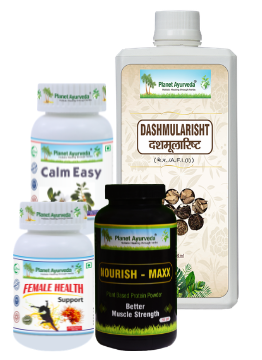

Product description :
1. Nourish Max Powder
Planet Ayurveda’s Nourish-Max Powder is designed around nourishing and strength-promoting herbs. The formulation includes Shatavari (Asparagus racemosus), Safed Musli (Chlorophytum borivilianum), Ashwagandha (Withania somnifera), and Gokshura (Tribulus terrestris). The formulation supports whole-body nourishment, strength, body mass, and maternal well-being, including lactation-related nutritional support. Shatavari (Asparagus racemosus) supplies steroidal saponins known as shatavarins and is a prominent Ayurvedic women’s-health herb associated with nourishment and lactational support. Safed Musli (Chlorophytum borivilianum) is rich in steroidal saponins and is valued for strength and vitality. Ashwagandha (Withania somnifera) contains withanolides and supports physical resilience and healthy stress adaptation. Gokshura (Tribulus terrestris) contains steroidal saponins including protodioscin and is used in wellness formulas for tissue nourishment and urinary health. Together, these ingredients create a nourishing combination suited to the replenishment-focused approach required during maternal recovery.
Dosage: 1 teaspoon twice daily.
2. Dashmularisht
Dashmularisht is a classical Ayurvedic fermented preparation based on Dashmoola, the group of ten roots consisting of Bilva (Aegle marmelos), Sonapatha (Oroxylum indicum), Gambhari (Gmelina arborea), Patala (Stereospermum suaveolens), Agnimanth (Premna integrifolia), Shalparni (Desmodium gangeticum), Prishniparni (Uraria picta), Brihati (Solanum indicum), Kantakari (Solanum surattense), and Gokshura (Tribulus terrestris). The Planet Ayurveda formulation also contains herbs such as Guduchi (Tinospora cordifolia), Chitrak (Plumbago zeylanica), Punarnava (Boerhavia diffusa), Pippali (Piper longum), Haridra (Curcuma longa), Manjistha (Rubia cordifolia), Devdaru (Cedrus deodara), Mulethi (Glycyrrhiza glabra), and Jatamansi (Nardostachys jaytamansi), along with Draksha (Vitis vinifera), Dhataki (Woodfordia fruticosa), honey, and jaggery. Dashmoola forms the principal Vata-balancing foundation of the formulation, while herbs have nourishing and strength-promoting properties. Guduchi (Tinospora cordifolia) supports systemic balance, Punarnava (Boerhavia diffusa) supports fluid metabolism, and Chitrak (Plumbago zeylanica), Pippali (Piper longum), and other digestive herbs help maintain healthy Agni (digestive fire). The formulation is therefore particularly relevant in Ayurvedic approaches aimed at restoring strength, supporting digestion, balancing Vata, and promoting recovery after periods of physical depletion.
Dosage: 10 ml twice daily, according to the specified regimen. For alcohol-containing fermented preparations, postpartum and breastfeeding use should be individualized by a qualified clinician.
3. Female Health Support Capsules
Planet Ayurveda’s Female Health Support Capsules contain three principal herbs Ashoka (Saraca indica), Lodhra (Symplocos racemosa) and Shatavari (Asparagus racemosus). Ashoka (Saraca indica) contains bioactive compounds including flavonoids and tannins and is widely used in women’s-health formulations. Lodhra (Symplocos racemosa) is valued for its astringent and tissue-supporting properties, while Shatavari (Asparagus racemosus) contributes nourishment and female reproductive support. The combination is especially relevant when postpartum recovery is accompanied by menstrual irregularity, weakness, or the need for broader female-health support.
Dosage: 2 capsules twice daily after meals.
4. Calm Easy Capsules
Planet Ayurveda’s Calm Easy Capsules contain Brahmi (Bacopa monnieri), Ashwagandha (Withania somnifera) and Tagar (Valeriana wallichii). The formulation is positioned for stress management and relaxation of the nervous system. Brahmi (Bacopa monnieri) contains bacosides associated with cognitive and neurological support. Ashwagandha (Withania somnifera), containing withanolides, supports stress adaptation and emotional resilience. Tagar (Valeriana wallichii) contributes a calming component and is valued for relaxation and healthy sleep. For mothers experiencing mental overload, sleep difficulty, irritability, and emotional exhaustion, this combination complements a broader recovery plan focused on restoring calmness and nervous-system balance.
Dosage: 1 capsule twice daily.
Conclusion
Depleted Mother Syndrome describes a state in which the physical and emotional demands of pregnancy, childbirth, breastfeeding, sleep disruption, household responsibilities, and continuous caregiving exceed a mother’s ability to recover and replenish her resources. Maternal nutritional depletion has long been discussed in relation to repeated reproductive cycles and lactation, while modern evidence on parental burnout demonstrates the importance of psychological, interpersonal, and social factors in maternal exhaustion. A successful management approach therefore needs to look beyond fatigue alone. Nutritional correction, adequate protein and micronutrient intake, restoration of sleep, gradual exercise, emotional support, treatment of anemia or other medical conditions, and appropriate mental-health care form the foundation of recovery. WHO postnatal guidance also emphasizes maternal nutrition and attention to postpartum anemia. From the Ayurvedic perspective, the condition can be approached through Dhatukshaya (depleted tissues) with Vata Prakopa (vata aggravation) during Sutika Kala (postpartum period), with the central aim of rebuilding Dhatus (tissues), strengthening Agni (digestion) and Bala (strength), and restoring Vata balance. Planet Ayurveda’s above mentioned formulations help in nourishing women’s overall health. Motherhood does not require a woman to remain depleted in order to care well for her family. Recovery, nourishment, rest, emotional support, and appropriate Ayurvedic care can help rebuild strength and restore a mother’s sense of vitality, resilience, and well-being.

Dr. Vikram Chauhan
https://www.planetayurveda.comDr. Vikram Chauhan (MD - Ayurveda) is a Globally Renowned Ayurveda Physician with Expertise of more than 25 Years. He is the CEO & Founder of http://www.PlanetAyurveda.com, a leading Ayurveda Brand, Manufacturing, and Export Company with a Chain of Clinics and Branches in the US, Europe, Africa, Southeast Asia, India, and other parts of the World. He is also an Ayurveda Author who has written Books on Ayurveda, translated into Many European Languages. One of his Books is "Ayurveda – God’s Manual for Healing". He is on a Mission to Spread Ayurveda All Over the Planet through all the Possible Mediums. With his Vast Experience in Herbs and their Applied Uses, he is successfully treating Numerous Patients suffering from Various Ailments with the help of the Purest Herbal Supplements, Diet, and Lifestyle, according to the Principles of Ayurveda. For More Details, visit - www.planetayurveda.com, www.alwaysayurveda.com
View more posts from this author