August 28, 2026
Herbal Remedies for Focal Cortical Dysplasia – Causes, Symptoms, Diagnosis & Treatment
Abstract
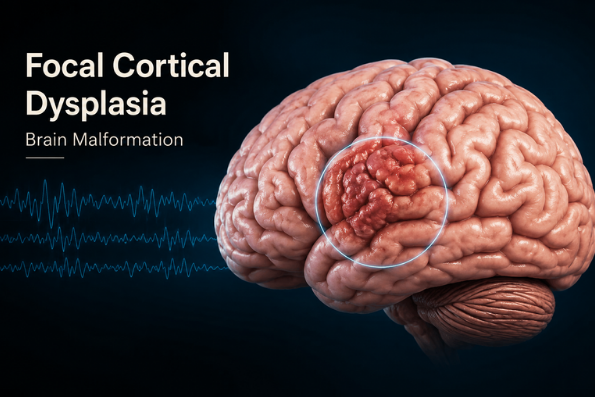
Focal Cortical Dysplasia (FCD) is a developmental abnormality of the brain in which a small area of the cerebral cortex develops differently from normal. It is an important cause of epilepsy, particularly seizures that begin in childhood or young adulthood. The condition may result from changes in the formation and organization of brain cells during early brain development. Symptoms vary depending on the affected brain region and may include recurrent seizures, learning difficulties, or problems with movement and behavior. Treatment depends on the severity and location of the lesion and may include anti-seizure medicines, dietary approaches, or surgery in selected cases. Early diagnosis and appropriate management can help improve seizure control and quality of life.
Statistics for Focal Cortical Dysplasia
- Focal cortical dysplasia is identified in approximately 5%–25% of patients undergoing surgery for focal epilepsy
- FCD appears to have a male predominance, with males representing about 63%–72% of reported surgical cases.
- Seizures often begin during early childhood, with a median age of onset of approximately 2.7 years.
- Epilepsy develops in nearly 87% of individuals with FCD.
- Approximately 60%–66% of patients achieving long-term seizure freedom.
Facts about Focal Cortical Dysplasia
Tiny but powerful
A very small patch of abnormal cortex can trigger seizures involving much larger networks of the brain.
Sometimes almost invisible
Some forms of FCD may look nearly normal on routine MRI scans and require specialized epilepsy imaging.
The brain can develop differently before birth
FCD usually originates during early brain development rather than being something that develops after birth.
Electrical activity can spread
A seizure may begin in the dysplastic area but quickly involve other parts of the brain.
One condition, many patterns
FCD is not a single uniform disorder; different types have distinct microscopic and molecular features.
Normal-looking brain, abnormal function
Brain tissue surrounding an FCD can appear structurally normal while participating in abnormal electrical activity.
It can remain hidden for years
Some people are not diagnosed until seizures become frequent enough to prompt detailed epilepsy evaluation.
Introduction
Focal Cortical Dysplasia (FCD) and focal vascular malformations are structural abnormalities that can affect the normal organization and function of the brain. FCD refers to an area of the cerebral cortex that has developed with an altered arrangement or appearance of its nerve cells. It is commonly associated with focal epilepsy because the affected tissue may generate abnormal electrical activity. The clinical presentation can differ considerably from one person to another, depending on the size and location of the abnormal area and the networks involved. A focal vascular malformation represents an abnormal formation or arrangement of blood vessels within a localized region of the brain. Such lesions may be detected incidentally or may be associated with neurological symptoms, including seizures, depending on their characteristics. The left temporal cortical-subcortical region is an anatomically important area because the temporal lobe is involved in several functions, including memory, language, auditory processing, and emotional responses. A lesion in this region therefore requires careful assessment of both its structural features and possible clinical effects.
Types of Focal Cortical Dysplasia
Focal Cortical Dysplasia (FCD) is classified into different types according to microscopic changes in the cortical tissue and the presence of other associated brain abnormalities. These are:
FCD Type I
FCD Type I is characterized mainly by an abnormal arrangement of neurons within the cerebral cortex. The changes may involve the normal horizontal or vertical organization of cortical cells. This type is frequently associated with drug-resistant focal seizures.
FCD Type II
FCD Type II involves both abnormal cortical organization and distinctive changes in individual neurons. These may include dysmorphic neurons and balloon cells. Seizures commonly begin during childhood, and the abnormal cortical region is often detectable on MRI.
FCD Type III
FCD Type III is characterized by cortical dysplasia occurring alongside another brain abnormality. Associated findings may include hippocampal abnormalities, tumors, previous stroke, or changes related to earlier brain injury.
The Genetic Basis of Focal Cortical Dysplasia
Focal cortical dysplasia (FCD) is believed to result from abnormal brain development during fetal life. The condition develops when a localized region of the cerebral cortex does not form and organize in the usual manner. Genetic factors are considered important in this process because changes in certain genes can interfere with the growth, maturation, and organization of brain cells. However, the exact genetic cause is not identified in every person with FCD, and research is continuing to clarify the mechanisms involved. One of the most studied molecular pathways in FCD is the mechanistic target of rapamycin (mTOR) pathway. This pathway plays an important role in regulating cell growth, metabolism, differentiation, and development. Alterations affecting genes that control this pathway may disturb normal cortical development and lead to abnormal growth or organization of neurons and other brain cells.The relationship between genetic changes and FCD is particularly recognized in FCD Type II, where abnormalities such as dysmorphic neurons and balloon cells may occur. In some cases, genetic alterations may be present only within the affected area of the brain rather than throughout the body. Such localized changes are known as somatic mutations and may arise during brain development after the earliest stages of embryonic growth. Therefore, FCD is best understood as a disorder involving abnormal cortical development, with genetic and molecular factors contributing to its formation.
Signs and Symptoms of Focal Cortical Dysplasia
The clinical features of focal cortical dysplasia (FCD) vary according to the location and extent of the abnormal cortical tissue. Seizures are the most common manifestation, although some individuals may have additional neurological or developmental difficulties. These include:
Focal seizures
Seizures may begin in a specific area of one cerebral hemisphere. Symptoms can include repeated jerking, twitching, unusual sensations, staring, altered awareness, or brief changes in behavior. The exact features depend on the brain region involved.
Focal to bilateral tonic – clonic seizures
Electrical activity may begin in one localized region and subsequently involve both sides of the brain. The person may lose consciousness and develop generalized stiffening followed by rhythmic jerking of the limbs.
Epileptic spasms in infants
Young children, particularly infants, may develop brief episodes of sudden flexion or extension involving the head, trunk, arms, or legs. These episodes can occur repeatedly, sometimes in clusters.
Seizures at different ages
FCD-related seizures may appear during infancy or childhood, but some individuals may not experience their first seizure until adolescence or adulthood.
Difficulty with attention
Some individuals may experience problems maintaining concentration, particularly when seizures are frequent or involve areas responsible for cognitive functions.
Learning difficulties
Changes in learning, memory, or processing new information may occur in some patients, particularly when the dysplasia affects functional brain networks.
One – sided muscle weakness
An abnormality involving regions responsible for movement may lead to weakness or reduced coordination on one side of the body, known as hemiparesis.
Changes detected on brain imaging
FCD may produce structural changes in the cerebral cortex that cannot be identified through symptoms alone
Diagnosis of Focal Cortical Dysplasia
Diagnosing focal cortical dysplasia (FCD) involves combining the patient’s clinical history, neurological examination, seizure assessment, and specialized brain investigations. Since FCD can be subtle and may not always be visible on routine imaging, a detailed evaluation is important. The diagnosis include:
Clinical history
The healthcare professional will ask about the symptoms, age at which they began, their frequency, duration, possible triggers, and any changes over time. A detailed description of seizure episodes can provide important clues about the area of the brain involved.
Seizure characterization
Information about what happens before, during, and after a seizure can help determine whether the episodes are focal in origin. Details such as unusual sensations, staring, repetitive movements, loss of awareness, jerking, or progression to generalized convulsions may be relevant.
Neurological examination
p> A neurological assessment may be performed to identify changes in strength, coordination, sensation, reflexes, memory, speech, or other brain functions. Some individuals may have a normal neurological examination despite having FCD.
Magnetic Resonance Imaging (MRI)
MRI is one of the most important investigations for detecting structural abnormalities associated with FCD. It provides detailed images of the cerebral cortex and may demonstrate changes in cortical thickness, abnormal cortical architecture, or an altered boundary between gray and white matter. Specialized epilepsy-protocol MRI can improve the detection of subtle lesions.
Electroencephalography (EEG)
EEG records the electrical activity of the brain using electrodes placed on the scalp. It can identify abnormal electrical discharges and help determine the region from which seizures originate. Video-EEG monitoring may be used to correlate clinical seizure events with electrical changes.
Positron Emission Tomography (PET)
PET imaging evaluates brain metabolism. Areas involved in epilepsy may show altered metabolic activity, which can help identify a seizure-generating region when structural MRI findings are unclear.
Magnetoencephalography (MEG)
MEG measures magnetic signals produced by brain activity. It can help localize abnormal electrical activity, particularly when the suspected area is difficult to identify using routine EEG.
Single – Photon Emission Computed Tomography (SPECT)
SPECT evaluates regional cerebral blood flow. In selected patients, seizure-related changes in blood flow can provide additional information about the location of seizure onset.
Histopathological confirmation
In patients who undergo epilepsy surgery, examination of the removed cortical tissue under a microscope can provide definitive confirmation of FCD and its specific pathological type.
Treatment of Focal Cortical Dysplasia
Treatment of focal cortical dysplasia (FCD) is mainly directed toward controlling seizures and improving the patient’s quality of life. The treatment plan depends on seizure frequency, response to medication, location and extent of the dysplasia, and whether the abnormal area can be safely treated. Various treatment approaches are as follows:
Ketogenic diet
A carefully supervised high-fat, low-carbohydrate diet can reduce seizure frequency in some people with difficult-to-control epilepsy. It should be undertaken under the guidance of an appropriate medical and nutritional team.
Anti – seizure medications
Medicines used to control seizures are generally considered the initial treatment. The choice of medication depends on the individual’s seizure type, age, other health factors, and potential drug interactions. Some patients achieve good seizure control with medication, while others may continue to experience seizures despite appropriate treatment.
Vagus nerve stimulation (VNS)
VNS involves placing a small device that delivers electrical stimulation to the vagus nerve. It may be considered when seizures remain uncontrolled and resective surgery is unsuitable or unlikely to provide adequate benefit.
Disconnection procedures
When abnormal electrical activity involves a broad or strategically located region, procedures designed to interrupt the spread of seizure activity may be considered. Examples include corpus callosotomy and, in highly selected cases, functional hemispherectomy.
Epilepsy surgery
Surgical treatment is an important option for selected patients with drug-resistant epilepsy. When the seizure-producing area can be accurately identified and safely removed, resective surgery or lesionectomy may provide substantial and sometimes long-term seizure control.
Laser interstitial thermal therapy (LITT)
LITT is a minimally invasive procedure that uses laser-generated heat to destroy targeted abnormal brain tissue. It may be considered for selected lesions when conventional open surgery is less suitable.
Ayurveda Insights
Focal cortical dysplasia (FCD) is a structural developmental abnormality of the brain. Ayurveda may nevertheless provide a supportive framework for understanding and managing associated symptoms, particularly when seizures, sleep disturbance, stress, or functional difficulties are present. Its clinical manifestations, particularly recurrent seizures, may be discussed in relation to Apasmara, a condition described in Ayurveda in association with disturbances of consciousness and abnormal movements.
Pathogenesis of Focal Cortical Dysplasia
From an Ayurvedic perspective, the pathogenesis can be described conceptually as developmental disturbance (Garbha Vikriti) with possible involvement of Beeja factors, followed by Vata-related disturbance of neurological functions and manifestation of seizure-like episodes that may be correlated with Apasmara. Ayurveda considers abnormalities of Beeja or reproductive factors among the possible causes of congenital developmental disorders. During fetal development, disturbances involving maternal factors, paternal factors, fetal factors, nutrition, or other influences are described as capable of producing developmental abnormalities. Abnormal Vata function may be conceptually associated with the abnormal movements, altered awareness, and episodic manifestations seen during seizures. Prana Vayu is associated with functions of the head, sensory perception, consciousness, and mental activity. Ayurveda emphasizes adequate nourishment and proper functioning of Agni and Ojas for maintaining physiological stability.
Home Remedies for Focal Cortical Dysplasia by Planet Ayurveda
Planet Ayurveda is a well-established Ayurvedic healthcare organization that works to promote the ancient knowledge of Ayurveda through natural remedies and holistic health solutions. The company develops a wide range of herbal formulations using pure, high-quality ingredients and standardized herbal extracts, with a focus on maintaining safety, authenticity, and effectiveness. Following the principles of classical Ayurveda, Planet Ayurveda aims to support overall health by addressing the underlying causes of health concerns and encouraging balance in the body, mind, and emotions. With an emphasis on quality, natural ingredients, and traditional approaches supported by modern research, the organization works toward making Ayurvedic wellness solutions available globally. We will explore various herbal approaches used for the management of Focal Cortical Dysplasia according to Ayurvedic principles. The herbal formulations are:
- Saraswatarisht
- Neuroplan Syrup
- Neurogenie Capsules
- Indian Valeriana
- Brahmi Chyawanprash
Herbal Remedies for Focal Cortical Dysplasia


Product description:
1.Saraswatarisht
Saraswatarishta may be considered as a supportive Ayurvedic formulation in individuals with focal cortical dysplasia (FCD), particularly when cognitive difficulties, mental fatigue, or nervous-system symptoms accompany seizures. Its ingredients include Brahmi, Shatavari, Ashwagandha, Vacha, Guduchi, Pippali, and other herbs traditionally used for Medhya and nervous-system support. Brahmi is traditionally valued for supporting memory and mental function. Saraswatarishta may therefore help support cognitive and neurological functions, but it cannot reverse the structural cortical abnormality or replace anti-seizure treatment.
Dosage: 2 teaspoons twice a day.
2. Neuroplan Syrup
Neuroplan Syrup may be considered a supportive Ayurvedic formulation in focal cortical dysplasia, particularly for associated cognitive and neurological symptoms. It contains Brahmi, Mandukaparni, Shankhpushpi, Jyotishmati, Ashwagandha, Bhojpatra, Madhuyashti, and other herbs traditionally used for Medhya and nervous-system support. These ingredients are traditionally described as supporting memory, concentration, mental calmness, and healthy nervous-system function.
Dosage: 2 teaspoons twice a day.
3. Neurogenie Capsules
Neurogenie Capsules contain standardized extracts of Brahmi (Bacopa monnieri) and Ashwagandha (Withania somnifera), traditionally used to support brain and nervous-system function. In the context of focal cortical dysplasia, they may be considered a supportive formulation for cognitive function, mental calmness, and overall neurological wellbeing. From an Ayurvedic perspective, these herbs are regarded as supportive for Vata balance and Medhya functions.
Dosage: 1 capsule twice a day with plain water after meals.
4. Indian Valeriana
Indian Valeriana (Valeriana wallichii) may be considered a supportive Ayurvedic herb in focal cortical dysplasia, particularly for promoting relaxation and supporting sleep. Its traditional calming action may help reduce stress-related factors that can sometimes influence seizure control. Valerian is primarily studied for sleep and calming effects, while evidence for its use specifically in focal cortical dysplasia or seizure prevention remains insufficient.
Dosage: 1 capsule twice a day with plain water after meals.
5. Brahmi Chyawanprash
Brahmi Chyawanprash may be considered as a supportive Ayurvedic formulation in focal cortical dysplasia (FCD), particularly for maintaining cognitive function, mental alertness, and general neurological wellbeing. Its formulation contains Brahmi, Mandukaparni, Shatavari, Ashwagandha, Guduchi, Amalaki, Pippali, and other traditional ingredients. Brahmi and Mandukaparni are traditionally regarded as Medhya Rasayana herbs, while Ashwagandha is traditionally used for nervous-system support and stress management. These actions may help support memory, concentration, and overall mental resilience.
Dosage: 1 teaspoon twice a day after meals, preferably with milk.
Conclusion
Focal Cortical Dysplasia requires a comprehensive and individualised approach because its clinical presentation and response to treatment can vary considerably. Early recognition of recurrent seizures, appropriate neurological assessment and detailed imaging can help. Supportive measures focusing on sleep, nutrition, stress management, cognitive well-being and overall neurological health may also be valuable. From an Ayurvedic perspective, attention to Vata balance, mental well-being and Medhya Rasayan approaches may provide supportive care. Continued research and multidisciplinary care remain important for improving the long-term seizure control, functional outcomes and the quality of life.

Dr. Vikram Chauhan
https://www.planetayurveda.comDr. Vikram Chauhan (MD - Ayurveda) is a Globally Renowned Ayurveda Physician with Expertise of more than 25 Years. He is the CEO & Founder of http://www.PlanetAyurveda.com, a leading Ayurveda Brand, Manufacturing, and Export Company with a Chain of Clinics and Branches in the US, Europe, Africa, Southeast Asia, India, and other parts of the World. He is also an Ayurveda Author who has written Books on Ayurveda, translated into Many European Languages. One of his Books is "Ayurveda – God’s Manual for Healing". He is on a Mission to Spread Ayurveda All Over the Planet through all the Possible Mediums. With his Vast Experience in Herbs and their Applied Uses, he is successfully treating Numerous Patients suffering from Various Ailments with the help of the Purest Herbal Supplements, Diet, and Lifestyle, according to the Principles of Ayurveda. For More Details, visit - www.planetayurveda.com, www.alwaysayurveda.com
View more posts from this author