April 3, 2026
Vitamin B12 Deficiency – Causes, Symptoms, Diet & Ayurvedic Management
Abstract
Anemia is a common blood disorder in which the oxygen carrying capacity of the blood is reduced due to a decrease in healthy red blood cells or hemoglobin levels. Among its various forms, megaloblastic anemia is a distinct type characterized by the formation of abnormally large and immature red blood cells as a result of defective DNA synthesis. This condition affects normal cell maturation and compromises efficient oxygen delivery to tissues impacting overall energy levels and organ function and Vitamin B12 deficiency is a key underlying factor in the development of megaloblastic anemia. So, let’s learn in detail about Vitamin B12 deficiency.
Introduction
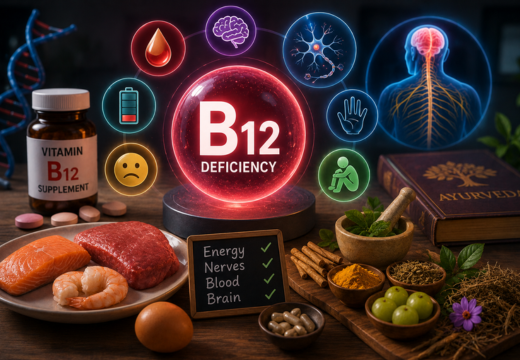
Vitamin B12 or Cobalamin is a vital water soluble vitamin that plays an essential role in maintaining overall health particularly the health of the blood and nervous system. It is crucial for DNA synthesis, red blood cell formation and the proper functioning of the brain and nerves. It is unique among vitamins because it is not made by plants or animals but is synthesized exclusively by certain bacteria and microorganisms. Humans obtain Vitamin B12 indirectly by consuming animal based foods or fortified foods and supplements where these bacteria derived forms are present. It works by acting as a coenzyme in key biochemical reactions. Vitamin B12 is released from food in the stomach, binds to intrinsic factors and is absorbed in the terminal ileum. Vitamin B12 deficiency occurs when the body lacks sufficient B12 leading to megaloblastic anemia and neurological issues.
Importance of Vitamin B12
- Vitamin B12 aids in the maturation of red blood cells in the bone marrow ensuring efficient oxygen transport and preventing abnormal cell formation.
- It protects the myelin sheath ensuring proper nerve signaling and supporting memory, focus, coordination and sensory function.
- It helps convert food into usable energy.
- It regulates homocysteine levels in the blood thus lowering the risk of heart disease.
- It is essential for converting homocysteine to methionine which is critical for DNA synthesis and red blood cell maturation.
Causes of Vitamin B12 deficiency
- Poor dietary intake especially in vegetarians and vegans.
- Malabsorption disorders such as celiac disease or Crohn’s disease.
- Lack of intrinsic factor, as seen in pernicious anemia.
- Gastrointestinal surgeries affecting the stomach or ileum.
- Long term use of certain medications such as proton pump inhibitors, metformin, etc.
Early Signs of Vitamin B12 deficiency
- Fatigue, weakness or lethargy
- Pale skin
- Numbness or tingling in hands and feet
- Poor memory, concentration difficulties
- Mood changes, irritability or depression
- Unsteady gait or difficulty walking
- Shortness of breath or dizziness
What is the Normal Range and Daily Dietary Allowance of Vitamin B12?
The serum Vitamin B12 value-
- 200–900 pg/mL = Normal
- 200–300 pg/mL = Borderline
- Below 200 pg/mL = Deficiency
The Daily Dietary Allowance of Vitamin B12 is approx. 2.4 mcg in adults, 0.4 to 0.5 mcg in infants, 0.9 to 1.8 mcg in children and 2.6 to 2.8 mcg in pregnant and lactating women.
Ayurvedic Overview
As per Ayurveda, it can be seen that due to weak agni (digestive power) food cannot be digested properly which results in the formation of ama (metabolic waste) which obstructs the srotas (channels) of the body and that hinders the absorption of nutrients in the body. When this continues for some time it results in deficiency of some nutrients. The deficiency of Vitamin B12 can be understood by the dushti (vitiation) of raktavaha srotas (channels carrying blood), majjavaha srotas (channels related to nervous system) and oja (vital immunity). Its management involves elimination of the ama (metabolic waste), stimulating the agni (digestive fire), srotoshodhana (clearing the channels), dhatu poshan (nourishing the tissues) and proper dietary and lifestyle modifications.
Natural Sources of Vitamin B12
- Meat such as beef, liver, and poultry is rich in Vitamin B12, supporting red blood cell formation and energy metabolism.
- Fish and seafood like salmon, tuna, mackerel, sardines, clams and shrimp provide high amounts of B12 along with omega-3 fatty acids for heart and nerve health.
- Eggs, especially the yolk, contain moderate levels of B12, contributing to nerve function and blood health.
- Dairy products including milk, cheese, and yogurt are good sources, offering both B12 and calcium for strong bones.
- Fortified foods such as breakfast cereals and plant-based milk alternatives help vegetarians and vegans meet their B12 requirements.
- Fish roe and organ meats are concentrated sources of B12, supporting overall vitality and neurological function.
- Recent research has shown that Amra Beej Majja Churna (powder of seed kernel of Mangifera indica) is very beneficial for Vitamin B12 deficiency.
Lifestyle Tips and Home remedies
- Include B12 rich foods like meat, fish, eggs and dairy in diet.
- Maintain healthy gut function by managing digestive disorders that results in better absorption.
- Avoid excessive alcohol consumption, which can interfere with B12 absorption.
- Practice regular exercise to improve energy levels and overall metabolism.
- Consume nutritional yeast, a plant based source of B12 for vegetarians and vegans.
- Avoid unnecessary long term use of antacids or medications that impair absorption.
Planet Ayurveda’s Remedies
Planet Ayurveda is a well known Indian company dedicated to authentic Ayurvedic medicine and wellness. Established with the mission of making traditional Ayurvedic knowledge accessible and effective for contemporary health needs, Planet Ayurveda integrates classical principles of Ayurveda with modern quality standards to offer a wide range of herbal formulations. Its natural supplements are widely used.
Vitamin B-12
These are the capsule formulations of Planet Ayurveda which are formulated using herbal sources such as moringa leaves (Moringa oleifera), wheatgrass (Triticum aestivum), amla (Emblica officinale), beetroot (Beta vulgaris), etc. and the capsule shell is also made of Hydroxypropyl Methylcellulose. All its ingredients make it a good source of Vitamin B12 which helps in promoting red blood cell formation and maintaining proper nervous and metabolic health. It is rich in chlorophyll, iron and other nutrients thus it aids in hematopoiesis and improves energy metabolism.
Dosage: 2 capsules once daily before meals with lukewarm water.
Conclusion
Vitamin B12 deficiency is a silent but impactful nutritional disorder with serious effects on blood health, neurological function, immunity and mental well being. Early recognition and holistic management are essential to prevent long term complications. While modern medicine focuses on supplementation Ayurveda emphasizes strengthening digestion, balancing Doshas and nourishing tissues for sustainable recovery. An integrative approach combining proper balanced and nutritious diet, digestive care, lifestyle discipline and targeted supplementation offers the most effective strategy for restoring optimal Vitamin B12 levels and maintaining long term vitality.

Dr. Vikram Chauhan
https://www.planetayurveda.comDr. Vikram Chauhan (MD - Ayurveda) is a Globally Renowned Ayurveda Physician with Expertise of more than 25 Years. He is the CEO & Founder of http://www.PlanetAyurveda.com, a leading Ayurveda Brand, Manufacturing, and Export Company with a Chain of Clinics and Branches in the US, Europe, Africa, Southeast Asia, India, and other parts of the World. He is also an Ayurveda Author who has written Books on Ayurveda, translated into Many European Languages. One of his Books is "Ayurveda – God’s Manual for Healing". He is on a Mission to Spread Ayurveda All Over the Planet through all the Possible Mediums. With his Vast Experience in Herbs and their Applied Uses, he is successfully treating Numerous Patients suffering from Various Ailments with the help of the Purest Herbal Supplements, Diet, and Lifestyle, according to the Principles of Ayurveda. For More Details, visit - www.planetayurveda.com, www.alwaysayurveda.com
View more posts from this author