December 13, 2025
Toxoplasmosis: A Zoonoses Associated with Cats
Abstract
Toxoplasmosis is a widespread zoonotic infection caused by Toxoplasma gondii, with cats serving as its definitive hosts and major environmental contaminators. Although most infections in humans and cats remain asymptomatic, the disease poses serious risks to pregnant women, fetuses, and immunocompromised individuals. Transmission occurs mainly through contaminated food, water, soil, or contact with infected cat faeces. Clinical signs vary depending on the immune status of the host and the organs affected. This abstract highlights the epidemiology, transmission cycle, clinical features, and preventive strategies essential for public and veterinary health.

Introduction
Cats are among the most common household pets worldwide. While they provide companionship, they also play a significant role in the epidemiology of several zoonotic diseases, including toxoplasmosis. The parasite completes its sexual phase in cats, making them key contributors to environmental contamination. Human infection is usually mild but can become life-threatening in pregnant women and those with weakened immune systems. The widespread prevalence of toxoplasmosis, combined with its potential for severe congenital and neurological complications, underscores its public health significance. Understanding the modes of transmission, clinical presentation, and preventive measures can help effectively manage this disease in both humans and animals.
Causes of Toxoplasmosis In Cats
Toxoplasmosis in cats is caused by ingestion of the protozoan parasite Toxoplasma gondii. Cats typically become infected by:
● Eating infected rodents or birds
● Consuming raw or undercooked meat
● Exposure to contaminated soil, food, milk or water
Once infected, cats may shed millions of oocysts in their faeces for a short period, contaminating the environment.
How Toxoplasma is Transmitted to Humans
Humans may acquire infection through several routes:
1. Food-borne Transmission
● Eating undercooked meat containing tissue cysts
● Consuming unwashed fruits and vegetables
● Contact with surfaces contaminated by cat faeces
2. Environmental Exposure
● Handling soil, sand, or water contaminated with oocysts
● Gardening without gloves
● Ingesting oocysts from contaminated hands
3. Mother-to-Child Transmission
A woman who becomes newly infected during pregnancy can pass the parasite to the fetus, potentially resulting in miscarriage, stillbirth, or congenital defects.
4. Rare Routes
● Organ transplantation
● Blood transfusion from infected donors
Who is at High Risk of Toxoplasmosis?
The infection poses the greatest risk to:
● Pregnant women
● Immunocompromised individuals, such as HIV patients or those undergoing chemotherapy
● Infants born to mothers with acute infection
In healthy people, the immune system often eliminates the parasite without noticeable signs.
Symptoms of Toxoplasmosis in Humans
1. In Pregnant Women
While the mother may be asymptomatic, the fetus can develop:
● Stillbirth
● Developmental delays
● Vision abnormalities
● Neurological defects
2. In Immunocompromised Patients
Symptoms may be severe and include:
● Persistent headaches
● Confusion
● Seizures
● Fever
● Facial paralysis
● Vision changes
● Weakness or loss of motor skills
● Encephalitis
● Coma in severe cases
3. In healthy individuals, the infection is usually mild and may present with
Flu-like symptoms:
● Low-grade fever
● Headache
● Muscle aches
● Fatigue
Swollen lymph nodes:
● Most commonly in the neck, but may also appear in the armpits or groin
Other possible symptoms:
● Sore throat
● Skin rash
● Mild enlargement of the liver or spleen
Symptoms in Infected Cats
Toxoplasmosis in cats can show a wide range of symptoms, although many cats remain asymptomatic. When signs do appear, they depend on the organs affected.
General/Early Signs
● Lethargy
● Loss of appetite
● Fever
● Vomiting or diarrhoea (common in kittens)
Respiratory Signs
● Pneumonia
● Breathing difficulty
● Coughing
Neurological Signs
● Poor coordination
● Seizures
● Tremors or head shaking
● Touch sensitivity
● Circling movements
Ocular Signs
● Eye swelling
● Squinting
● Discharge
● Light sensitivity
● Vision loss
Other Signs
● Jaundice
● Enlarged liver or spleen
● Swollen lymph nodes
● Muscle pain
● Pancreatitis
Toxoplasmosis Life Cycle
The Toxoplasma gondii life cycle includes a sexual phase in cats and an asexual phase in humans and other animals. Cats get infected by consuming prey or meat containing cysts and later shed oocysts in their faeces. Humans and other animals become infected by ingesting these oocysts from contaminated soil, water, or food, or by eating undercooked meat that carries tissue cysts.
Sexual Cycle – In Cats
● Cats get infected by eating raw meat or prey containing tissue cysts.
● Parasite reproduces sexually in the cat’s intestine.
● Cats shed infective oocysts in faeces for 1–2 weeks.
● Oocysts contaminate soil, water, food, and the environment.
Asexual Cycle – In Humans & Other Animals
● Infection occurs by ingesting contaminated soil/water/food or undercooked meat with cysts.
● Oocysts convert into tachyzoites, spreading rapidly in the body.
● Tachyzoites transform into bradyzoites, forming long-lasting tissue cysts (brain, eyes, muscles).
● Cats get reinfected by eating animals carrying these cysts.
● In immunocompromised humans, dormant bradyzoites can reactivate and cause severe disease.
Diagnosis of Toxoplasmosis in Infected Cats
Diagnosing toxoplasmosis in cats involves a combination of clinical assessment and laboratory tests to confirm the presence of Toxoplasma gondii infection.
● Clinical examination: Assessment of symptoms like fever, lethargy, breathing issues, or
neurological signs.
● Serology (IgM & IgG): IgM indicates recent infection; IgG shows past exposure or rising
levels in active cases.
● PCR test: Detects T. gondii DNA and confirms active infection.
● CBC & biochemistry: Checks for anaemia, inflammation, or liver involvement.
● Imaging: X-ray/ultrasound to identify organ changes.
● Faecal test: May show oocysts, but not very reliable.
Diagnosis of Toxoplasmosis in Humans
Diagnostic methods include:
● Blood tests to detect antibodies
● PCR tests
● Biopsies
● Imaging (CT or MRI) for brain involvement
● Amniocentesis for congenital cases
● Ultrasound to assess fetal complications
Prevention Strategies
Basic hygiene is the key to breaking the transmission cycle.
For the General Population
● Wash fruits and vegetables thoroughly
● Cook meat to safe temperatures
● Wash kitchen surfaces and utensils after use
● Wear gloves when gardening or handling soil
● Avoid drinking untreated water
For Cat Owners
● Have someone else change cat litter if pregnant or immunocompromised
● Clean litter boxes daily to prevent oocyst maturation
● Wear gloves and wash your hands after handling litter
● Avoid feeding raw meat to cats
● Keep cats indoors to limit hunting
Ayurvedic Overview of Toxoplasmosis
In Ayurveda, toxoplasmosis can be understood as an Agantuja Vyadhi, where an external infectious agent (Agantuka krimi) enters the body through contaminated food, water, or the environment. Once inside, it begins disturbing Vata and Pitta doshas, creating symptoms like fever, fatigue, lymph node swelling, and organ involvement. As the parasite spreads deeper, it affects the dhatus (rasa, mamsa, majja), shifting from an external to an internal doshic imbalance. Reduced Ojas or weak immunity leads to the infection intensifying or reactivating.
Herbal Remedies for Toxoplasmosis by Planet Ayurveda
Planet Ayurveda manufactures premium-quality herbal formulations prepared from 100% pure, standardised extracts of traditional Ayurvedic herbs. Each product is crafted under the guidance of expert Ayurvedic doctors using authentic classical principles. The formulations are free from chemicals, preservatives, steroids, and artificial additives, making them completely safe for long term use. All products undergo rigorous quality checks in GMP-certified and ISO-certified facilities. Planet Ayurveda focuses on delivering effective, natural, and holistic healing solutions for various health concerns. In this article, we will discuss Ayurvedic medicines for the management of Toxoplasmosis for cats
and humans:
For Cats
● Inflam-Vet tablet
● Geri Vet Tablets
● Kalmegh Ghan Vati
● Krimi Mukti Capsules
● Septrin Tablets
● Nervo Vet Syrup
Herbal Remedies For Toxoplasmosis For Cats

 1. Inflam-Vet tablet
Inflam Vet Tablet by Planet Ayurveda is a natural anti-inflammatory formulation designed to support cats suffering from toxoplasmosis-related discomfort. It contains Guggul (Commiphora mukul) and Shallaki (Boswellia serrata), two powerful herbs rich in bioactive compounds. Guggul’s
guggulsterones help reduce inflammation, support immunity, and minimise tissue damage caused by the parasite. Shallaki’s boswellic acids possess strong anti-inflammatory and analgesic properties that help soothe muscle pain, lymph node swelling, and respiratory irritation associated with toxoplasmosis. Together, these herbs help improve comfort, reduce inflammatory symptoms, and support overall healing in infected cats.
Dosage: 2 tablets twice daily mixed with food
2. Geri Vet Tablets
Geri Vet Tablet by Planet Ayurveda supports immunity and recovery in cats affected by toxoplasmosis. It contains Wheatgrass (Triticum aestivum), Giloy (Tinospora cordifolia), and Tulsi (Ocimum sanctum)—each rich in powerful bioactive compounds. Wheatgrass provides chlorophyll, superoxide dismutase (SOD), and flavonoids, which boost detoxification and reduce oxidative stress caused by parasitic invasion. Giloy contains berberine, tinosporaside, and cordifolioside, which enhance immune activity and inhibit inflammatory responses triggered by Toxoplasma. Tulsi offers eugenol, ursolic acid, and rosmarinic acid, known for strong antimicrobial, anti-inflammatory, and immunomodulatory effects. Together, these constituents help strengthen immunity, minimise tissue damage, and support faster recovery in toxoplasmosis-infected cats.
Dosage: 2 tablets twice daily mixed with food
3. Kalmegh Ghan Vati
Kalmegh Ghan Vati by Planet Ayurveda is prepared from the potent herb Kalmegh (Andrographis paniculata), known for its strong immunomodulatory and anti-parasitic action. Kalmegh contains powerful active compounds like andrographolide, neoandrographolide, and andrographine, which help inhibit inflammatory pathways and reduce tissue damage caused by Toxoplasma gondii. Andrographolide enhances macrophage activity, supporting the body’s natural defence against parasitic invasion. Its antioxidant and hepatoprotective effects help protect the liver, which is often stressed during infection. Overall, Kalmegh Ghan Vati strengthens immunity, reduces inflammation, and supports faster recovery in cats affected by toxoplasmosis.
Dosage: 2 tablets twice daily mixed with food
4. Krimi Mukti Capsules
Krimi Mukti Capsules by Planet Ayurveda contain a powerful blend of antiparasitic and immunomodulatory herbs that help support the management of toxoplasmosis in cats. The formulation includes Afsanteen (Artemisia absinthium), Palaash (Butea frondosa), Vidanga (Embelia ribes), Harad (Terminalia chebula), and Haridra (Curcuma longa). Afsanteen provides thujone and flavonoids, and Palaash seeds contain butein and butin, which help inhibit parasitic activity and reduce inflammation. Vidanga’s embelin is a potent krimighna compound that disrupts parasite metabolism. Harad offers chebulinic acid and gallic acid, supporting detoxification and boosting immunity. Haridra’s curcumin reduces oxidative stress, inflammation, and tissue damage caused by Toxoplasma gondii. Together, these herbs help lower parasitic load, support immunity, and improve recovery in toxoplasmosis-infected cats.
Dosage: 1 Capsule thrice daily mixed with food
5. Septrin Tablets
Septrin Tablets by Planet Ayurveda contain a synergistic blend of herbs that help reduce inflammation, support immunity, and improve recovery in cats affected by toxoplasmosis. The formulation includes Guggul (Commiphora mukul), Haldi (Curcuma longa), Tulsi (Ocimum sanctum), Sonth (Zingiber officinale), Marich (Piper nigrum), and Pippali (Piper longum). Guggul’s guggulsterones help reduce inflammatory damage caused by Toxoplasma gondii. Haldi provides curcumin, a strong antioxidant and immunomodulator that protects tissues and reduces parasite- induced oxidative stress. Tulsi offers eugenol and ursolic acid, which enhance immune defence and exhibit antimicrobial properties. Sonth contains gingerols, while Marich and Pippali supply piperine, all of which improve digestion, bioavailability, and immune responsiveness.
Dosage: 2 tablets twice daily mixed with food
6. Nervo Vet Syrup
Nervo Vet Syrup, containing herbs like Bacopa monnieri (Brahmi), Centella asiatica
(Mandukaparni), Convolvulus pluricaulis (Shankhpushpi), Celastrus paniculatus (Jyotishmati), and
Withania somnifera (Ashwagandha), supports toxoplasmosis management by strengthening the
nervous and immune systems. Brahmi and Shankhpushpi supply bacosides and flavonoids that reduce
neuroinflammation caused by Toxoplasma gondii. Centella asiatica’s asiaticoside promotes neuronal
repair and reduces stress on the CNS. Ashwagandha contains withanolides that enhance macrophage
activity, improving the body's natural parasite-clearing mechanism. Jyotishmati’s celastrine and
paniculatine improve cognitive stability and protect nerve cells from oxidative damage commonly
seen in chronic toxoplasmosis.
Dosage: 3 tsp thrice daily mixed with food
For Humans
● Krimi Mukti Capsules
● Vidangarisht
● Maha Sudarshan Kwath
● Amritarisht
● Curcumin Capsules
Herbal Remedies For Toxoplasmosis For Humans
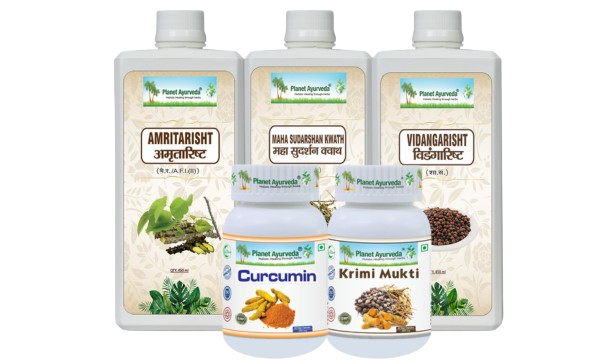
1. Krimi Mukti Capsules
Krimi Mukti Capsules by Planet Ayurveda contain potent antiparasitic and immunomodulatory herbs that support the management of toxoplasmosis in humans. Afsanteen (Artemisia absinthium) provides thujone and flavonoids that inhibit parasitic activity, while Palaash (Butea frondosa) offers butin and butein to reduce inflammation and limit parasite replication. Vidanga (Embelia ribes) supplies embelin, a strong krimighna (Anthelmintic) compound that disrupts parasite metabolism. Harad (Terminalia chebula) contributes chebulinic and gallic acids to aid detoxification and boost immunity. Haridra (Curcuma longa) with its curcumin content reduces oxidative stress and tissue inflammation. Together, these herbs help lower parasitic load and strengthen the body’s defences during toxoplasmosis.
Dosage: 2 Capsules twice daily with plain water, after a meal
2. Vidangarisht
Vidangarisht by Planet Ayurveda supports toxoplasmosis management through its antiparasitic, detoxifying, and immunomodulatory herbs. Vidanga (Embelia ribes) provides embelin, a strong krimighna (Anthelmintic) compound that helps inhibit parasitic growth. Kutaj (Holarrhena antidysenterica) and Indrayav support gut cleansing and reduce toxin load created during infection. Pippali (Piper longum) enhances bioavailability and strengthens respiratory and systemic immunity. Rasna (Pluchea lanceolata) and Amla (Emblica officinalis) reduce inflammation and oxidative stress caused by Toxoplasma gondii. It contains many other herbs apart from the above herbs that are effective in the management of toxoplasmosis.
Dosage: 2 tsp twice daily with plain water, after a meal
3. Maha Sudarshan Kwath
This is an effective formulation of Planet Ayurveda that contains Triphala (Terminalia chebula, Terminalia bellirica, Emblica officinalis), Haldi (Curcuma longa), Daruhaldi (Berberis aristata), Choti Kateri (Solanum xanthocarpum), Badi Kateri (Solanum indicum) and many more herbs. Maha Sudarshan Kwath helps in toxoplasmosis management through its broad-spectrum antipyretic, detoxifying, and immunomodulatory herbs. Its base herb, Daruhaldi (Berberis aristata), contains berberine, which exhibits strong antimicrobial and antiparasitic effects against pathogens like Toxoplasma gondii. Ingredients like Haldi (Curcuma longa) reduce inflammation, oxidative stress, and tissue damage caused during infection. Triphala strengthens digestion, detoxification, and immune resilience. Herbs like Choti Kateri (Solanum xanthocarpum) and Badi Kateri (Solanum indicum) support respiratory and systemic protection.
Dosage: 2 tsp twice daily with plain water, after a meal
4. Amritarisht
Amritarisht of Planet Ayurveda contains herbs like Giloy (Tinospora cordifolia), Bilva (Aegle marmelos), Shyonak (Oroxylum indicum), Gambhari (Gmelina arborea), Patla (Stereospermum suaveolens), Agnimanth (Clerodendrum phlomidis) and many more. Amritarisht helps in toxoplasmosis management through its strong immunomodulatory, antipyretic, and detoxifying herbs. Its main ingredient, Giloy (Tinospora cordifolia), contains tinosporaside and cordifolioside, which enhance immune response and inhibit inflammatory pathways triggered by Toxoplasma gondii. Bilva, Shyonak, Gambhari, Patla, and Agnimanth collectively support detoxification, reduce fever, and strengthen gut and systemic immunity. These herbs help minimise oxidative stress, tissue inflammation, and toxin buildup associated with infection. Amritarisht also improves metabolism and supports faster recovery during chronic or recurrent toxoplasmosis.
Dosage: 2 tsp twice daily with plain water, after a meal
5. Curcumin Capsules
Curcumin Capsules by Planet Ayurveda help manage toxoplasmosis through their strong anti- inflammatory, antioxidant, and immunomodulatory properties. Curcumin from Curcuma longa inhibits pro-inflammatory cytokines and helps reduce tissue inflammation caused by Toxoplasma gondii. Its potent antioxidant action minimises oxidative stress and cellular damage during infection. Curcumin also supports immune modulation, helping the body control parasitic replication more effectively. By promoting detoxification and boosting overall immune strength, these capsules aid in faster recovery and systemic protection during toxoplasmosis.
Dosage: 2 Capsules twice daily with plain water, after a meal
Conclusion
Toxoplasmosis remains a widely prevalent but preventable zoonosis. Although cats are essential to the parasite’s life cycle, transmission to humans occurs primarily through contaminated food, water, and the environment. Severe complications occur mainly in pregnant women and immuno compromised individuals. Since no vaccine exists for humans or cats, awareness and hygiene remain the most effective tools for controlling the disease. By following preventive measures, the risk of toxoplasmosis can be significantly reduced while maintaining a healthy coexistence with pet cats.
FAQs
1. What are the neurological signs of Toxoplasmosis in Cats?
Neurological signs include seizures, ataxia (loss of balance), tremors, disorientation, muscle hyperesthesia, and weakness due to inflammation of the brain and spinal cord. Cats may also show
behaviour changes, paralysis, or difficulty walking.
2. What are the long-term effects of Toxoplasmosis in Humans?
Long-term effects can include chronic eye inflammation (ocular toxoplasmosis), vision loss, neurological deficits, and recurrent headaches. In immunocompromised individuals and congenitally infected children, it may lead to brain damage, learning difficulties, or long-term neurological impairment.
3. How is toxoplasmosis transmitted from cats to humans?
Transmission occurs when humans ingest Toxoplasma oocysts shed in infected cat faeces, usually through contaminated soil, sand, water, or unwashed hands. Direct contact with cats is not the main route—exposure typically happens during litter box cleaning or gardening.
4. What are the symptoms of Toxoplasmosis?
Symptoms in humans may include mild fever, fatigue, swollen lymph nodes, muscle aches, and headache. Severe cases can cause eye problems, neurological symptoms, and, in immunocompromised individuals, encephalitis or seizures.
5. How do cats get Toxoplasmosis?
Cats become infected by eating infected rodents, birds, or raw/undercooked meat containing tissue cysts. They may also ingest oocysts from contaminated soil, water, or surfaces while grooming or hunting.

Dr. Vikram Chauhan
https://www.planetayurveda.comDr. Vikram Chauhan (MD - Ayurveda) is a Globally Renowned Ayurveda Physician with Expertise of more than 25 Years. He is the CEO & Founder of http://www.PlanetAyurveda.com, a leading Ayurveda Brand, Manufacturing, and Export Company with a Chain of Clinics and Branches in the US, Europe, Africa, Southeast Asia, India, and other parts of the World. He is also an Ayurveda Author who has written Books on Ayurveda, translated into Many European Languages. One of his Books is "Ayurveda – God’s Manual for Healing". He is on a Mission to Spread Ayurveda All Over the Planet through all the Possible Mediums. With his Vast Experience in Herbs and their Applied Uses, he is successfully treating Numerous Patients suffering from Various Ailments with the help of the Purest Herbal Supplements, Diet, and Lifestyle, according to the Principles of Ayurveda. For More Details, visit - www.planetayurveda.com, www.alwaysayurveda.com
View more posts from this author