Herbal Remedies of Hypercoagulabilit – Causes, Symptoms, Diagnosis & Treatment
Abstract
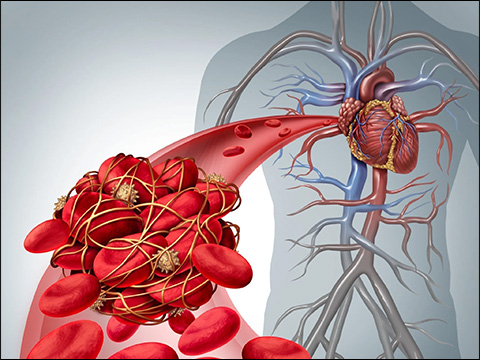
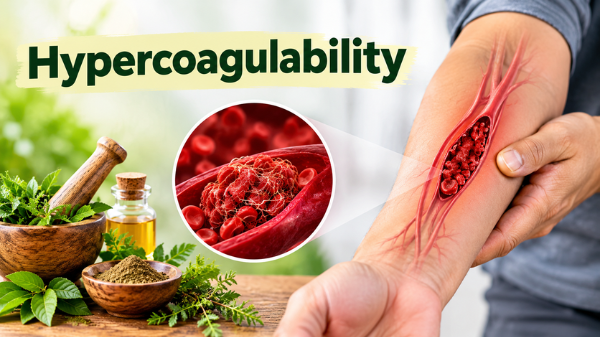
Blood is a vital connective tissue that continuously circulates throughout the body, delivering oxygen and nutrients while removing metabolic waste. Its ability to remain fluid under normal circumstances and form a clot when a blood vessel is injured is essential for maintaining health. A disturbance in this delicate balance can increase the tendency of blood to clot within otherwise intact vessels. Hypercoagulability refers to a state in which the blood has an increased tendency to form clots. It can remain unnoticed until a thrombotic event occurs and can have important consequences depending upon the blood vessel and organ involved. In this article, we shall discuss hypercoagulability in detail, explore its possible causes and manifestations, and examine its management in contemporary medicine along with an Ayurvedic perspective and herbal approaches for maintaining healthy circulation.
Introduction
The ability of blood to clot is essential for survival. Whenever a blood vessel is injured, platelets and coagulation proteins work together to form a clot and prevent excessive blood loss. At the same time, natural anticoagulant systems and fibrinolysis limit clot formation and remove unnecessary clots. Health depends upon maintaining a precise equilibrium between these opposing processes. Hypercoagulability occurs when this equilibrium becomes tilted toward thrombosis. The blood itself may have an increased tendency to generate thrombin and fibrin, or natural anticoagulant and fibrinolytic mechanisms may be impaired. Hypercoagulability is not a disease in isolation. It is a prothrombotic state that increases the probability of developing thrombosis in the appropriate circumstances. It can exist without symptoms for years and first become apparent when a blood clot develops. The risk of thrombosis is classically understood through Virchow’s triad, which consists of:
- Hypercoagulability
- Abnormal blood flow or stasis
- Vascular wall injury
These factors can act individually, but thrombosis becomes more likely when several occur together.
Hypercoagulability vs Thrombosis
These terms are related but not identical.
Hypercoagulability
The blood has an increased tendency to form clots.
Thrombosis
An actual blood clot has formed within a blood vessel.
A person can have a thrombophilic tendency without currently having a detectable clot. Conversely, thrombosis can result from the combination of several acquired risk factors even without a known inherited thrombophilia.
How Does the Blood Become Hypercoagulable?
The coagulation system contains multiple proteins that activate one another in a carefully regulated sequence. Thrombin converts fibrinogen into fibrin, which forms the structural framework of a clot.
Natural anticoagulant systems include:
- Antithrombin
- Protein C
- Protein S
- Tissue factor pathway inhibitor
The body also possesses a fibrinolytic system that breaks down fibrin once it is no longer required. Hypercoagulability can develop when there is:
- Excessive activity or concentration of clotting factors
- Reduced natural anticoagulant activity
- Impaired fibrinolysis
- Increased platelet activation
- Increased tissue-factor activity
- Endothelial dysfunction
- Inflammatory activation
The result is an increased tendency toward inappropriate thrombus formation.
Factor V Leiden
Factor V Leiden is one of the most common inherited thrombophilic abnormalities. The altered Factor V becomes relatively resistant to activated protein C, allowing coagulation to continue for longer than normal.
Prothrombin G20210A Mutation
This genetic variation is associated with increased prothrombin levels and an increased tendency toward venous thrombosis.
Antithrombin Deficiency
Antithrombin normally inhibits several activated clotting factors. Deficiency removes an important natural anticoagulant mechanism.
Protein C Deficiency
Protein C is part of an important physiological anticoagulant pathway. Deficiency increases thrombotic tendency.
Protein S Deficiency
Protein S acts as a cofactor for activated protein C. Reduced activity can therefore promote excessive coagulation.
Factor V Leiden and the prothrombin G20210A mutation are among the most common inherited causes of thrombophilia.
Acquired Hypercoagulability
Acquired thrombophilia is often more common clinically than inherited thrombophilia.
Antiphospholipid Syndrome
Antiphospholipid syndrome (APS) is an autoimmune disorder associated with:
- Venous thrombosis
- Arterial thrombosis
- Recurrent pregnancy loss
- Specific antiphospholipid antibodies
It is one of the most important acquired thrombophilic disorders.
Cancer
Malignancy can activate coagulation through several mechanisms. Tumor cells can express or release procoagulant substances, inflammatory pathways can become activated, and tumors can compress veins and produce stasis. Cancer-associated thrombosis is therefore an important cause of hypercoagulability.
Pregnancy
Pregnancy naturally shifts the coagulation system toward clot formation. Levels of several coagulation factors rise, protein S activity falls, and fibrinolysis becomes less active. These changes help protect against excessive bleeding during childbirth but also increase venous thromboembolism risk.
Estrogen Exposure
Combined hormonal contraceptives and estrogen-containing therapies can increase thrombotic risk, particularly when combined with inherited thrombophilia or other risk factors.
Immobilization : Long periods of:
- Bed rest
- Hospitalization
- Long-distance travel
- Paralysis
can cause venous stasis and substantially increase thrombosis risk.
Obesity
Obesity is associated with chronic inflammation, altered coagulation, venous stasis, and increased risk of venous thromboembolism.
Major Surgery and Trauma
Tissue injury activates coagulation, while postoperative immobility promotes venous stasis.
Inflammatory Disorders
Systemic inflammation can activate platelets, endothelial cells, leukocytes, and coagulation pathways.
Certain Medications
Depending on the drug and clinical situation, thrombotic risk can increase with:
- Estrogen-containing therapies
- Some cancer treatments
- Certain immunomodulatory medicines
- Heparin-induced thrombocytopenia
Other Causes
Hypercoagulability can also occur with
- Myeloproliferative neoplasms
- Nephrotic syndrome
- Severe dehydration
- Polycythemia
- Thrombocytosis
- Disseminated intravascular coagulation
- Catastrophic antiphospholipid syndrome
Risk Factors
The likelihood of thrombosis rises when several risk factors occur together. Important factors include:
- Previous venous thromboembolism
- Family history of thrombosis
- Prolonged immobility
- Major surgery
- Trauma
- Pregnancy and postpartum period
- Estrogen exposure
- Cancer
- Obesity
- Increasing age
- Smoking
- Autoimmune disease
- Central venous catheters
- Severe systemic infection
- Certain medications
Signs and Symptoms
Hypercoagulability itself can be silent. Symptoms generally appear when thrombosis occurs.
Deep Vein Thrombosis
A clot in a deep vein of the leg can produce:
- Swelling of one leg
- Calf pain or tenderness
- Warmth
- Redness or discoloration
- A feeling of heaviness
Pulmonary Embolism
When a clot travels to the lungs, symptoms can include
- Sudden breathlessness
- Chest pain
- Rapid heartbeat
- Cough
- Coughing blood
- Dizziness
- Fainting
Pulmonary embolism can be life-threatening.
Stroke or TIA
Arterial thrombosis can cause
- Sudden weakness
- Facial drooping
- Speech difficulty
- Loss of coordination
- Sudden visual disturbance
Heart Attack
Coronary artery thrombosis can produce
- Chest pressure or pain
- Breathlessness
- Sweating
- Nausea
- Pain radiating to the arm, shoulder, jaw, or back
Other Organ Thrombosis
Thrombosis can also affect:
- Mesenteric vessels
- Renal veins
- Cerebral venous sinuses
- Hepatic veins
Symptoms depend upon the organ involved.
When Is Hypercoagulability an Emergency?
A person with symptoms suggestive of acute thrombosis requires immediate medical assessment.
Emergency symptoms include:
Sudden breathlessness, chest pain, coughing blood, fainting, sudden neurological deficit, or rapidly developing one-sided limb swelling.
These can represent pulmonary embolism, stroke, or another serious thromboembolic event.
Investigations
There is no single blood test that simply answers whether someone is “hypercoagulable.” Evaluation depends upon whether a clot is suspected and whether an underlying thrombophilia needs investigation.
D-Dimer
D-dimer is a product of fibrin degradation. It is useful in selected patients when evaluating suspected venous thromboembolism, especially in conjunction with clinical probability.
An elevated D-dimer does not by itself prove thrombosis or thrombophilia.
Imaging for Acute Thrombosis
Depending on symptoms, investigations may include
- Compression ultrasonography for DVT
- CT pulmonary angiography for suspected pulmonary embolism
- Ventilation-perfusion scanning in selected patients
- CT or MRI for unusual-site thrombosis
- Echocardiography in selected cases
Thrombophilia Testing
When clinically appropriate, testing can include
- Factor V Leiden
- Prothrombin G20210A mutation
- Antithrombin activity
- Protein C
- Protein S
- Lupus anticoagulant
- Anticardiolipin antibodies
- Anti-beta-2 glycoprotein I antibodies
Testing should be individualized because acute thrombosis, pregnancy, inflammation, anticoagulants, and other circumstances can alter certain laboratory results.
A thrombophilia test should answer a specific clinical question rather than simply be performed because a clot has occurred.
Contemporary Management of Hypercoagulability
Management depends on whether there is an active blood clot, an underlying thrombophilic disorder, or simply an increased risk of thrombosis.
Treatment of Confirmed Thrombosis
The mainstay of treatment for venous thromboembolism is anticoagulation. Commonly used anticoagulants include:
- Direct oral anticoagulants
- Low-molecular-weight heparin
- Unfractionated heparin
- Warfarin
The medication, dose, and duration depend upon the location of thrombosis, recurrence risk, renal function, pregnancy status, cancer, bleeding risk, and other factors.
Antiphospholipid Syndrome
Patients with APS require individualized anticoagulation strategies. Treatment differs from routine management of uncomplicated venous thrombosis, particularly in patients with high-risk antibody profiles or arterial events.
Cancer-Associated Thrombosis
Patients with cancer may receive either selected direct oral anticoagulants or low-molecular-weight heparin depending upon tumor type, bleeding risk, drug interactions, renal function, and other clinical factors.
Preventive Anticoagulation
People at high risk during hospitalization, surgery, prolonged immobilization, or certain other circumstances can receive prophylactic anticoagulation when the bleeding risk allows.
Addressing the Underlying Cause
Long-term management may include:
- Treating malignancy
- Managing autoimmune disease
- Improving mobility
- Addressing obesity
- Stopping smoking
- Reviewing estrogen-containing medication
- Correcting dehydration
- Managing associated blood disorders
The objective is not merely to “thin the blood” but to correct the specific factors driving thrombosis.
Lifestyle Measures for Thrombotic Risk Reduction
Lifestyle cannot replace anticoagulant therapy when a clot has been diagnosed, but it can help reduce modifiable risk.
Stay Physically Active
Regular movement encourages healthy circulation and reduces prolonged venous stasis.
Avoid Prolonged Sitting
During travel or desk work, periodically stand, walk, and move the ankles and calves.
Maintain a Healthy Weight
Weight management reduces several cardiovascular and thrombotic risk factors.
Stay Hydrated
Adequate fluid intake helps maintain normal circulatory physiology, although hydration alone does not prevent thrombosis in high-risk situations.
Stop Smoking
Smoking contributes to vascular injury and cardiovascular risk.
Ayurvedic View and Management of Hypercoagulability
Hypercoagulability does not have a direct one-to-one disease equivalent in the classical Ayurvedic disease nomenclature. The most coherent Ayurvedic interpretation is Rakta Dushti (vitiation of blood tissue) with Rakta-Sanga (obstruction) in the Rakta Vaha Srotas (microchannels of blood tissue), particularly when the pathological state is understood through impaired circulation and abnormal accumulation within the blood channels.
The single pathway can be understood as follows:
Agni Dushti (impaired digestion) → Ama (metabolic toxins) formation → Rakta Dushti (vitiation of blood tissue) → increased Sanga (obstruction) in Rakta Vaha Srotas (microchannels of blood tissue) → impaired flow and abnormal accumulation → thrombotic tendency.
In this interpretation, disturbed Agni contributes to formation of Ama, while Pitta-Kapha involvement affects the quality and movement of Rakta. Excessive Sanga obstructs normal circulation within the Rakta Vaha Srotas, producing a state that can be conceptually related to a prothrombotic tendency.
Ayurvedic management focuses on maintaining healthy circulation by supporting Agni (balanced digestion), preventing excessive Sanga (obstruction), balancing the Doshas, and promoting overall cardiovascular wellness. Dietary management emphasizes fresh, appropriately portioned meals, adequate fiber, vegetables, fruits, whole grains, and healthy fats while reducing excessive highly processed and very heavy foods. Regular physical activity, adequate hydration, maintenance of healthy body weight, avoidance of smoking, stress management, and prevention of prolonged inactivity are important components. Selected Ayurvedic herbs are incorporated according to the individual’s constitution, metabolic status, cardiovascular risk, medications, and presence or absence of an established thrombotic disorder.
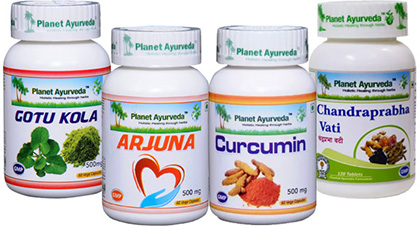
Herbal Remedies for Hypercoagulability by Planet Ayurveda
Planet Ayurveda offers Ayurvedic herbal formulations prepared from selected plant extracts and classical ingredients for cardiovascular, neurological, metabolic, and general wellness. Its product range includes formulations positioned for maintaining healthy blood circulation, cardiovascular function, metabolism, and overall physiological balance. Planet Ayurveda is pleased to present its list of products as part of an Ayurvedic wellness approach for maintaining healthy circulation and cardiovascular health. These formulations should be selected according to individual health status, particularly when a person is already taking anticoagulant or antiplatelet medication.
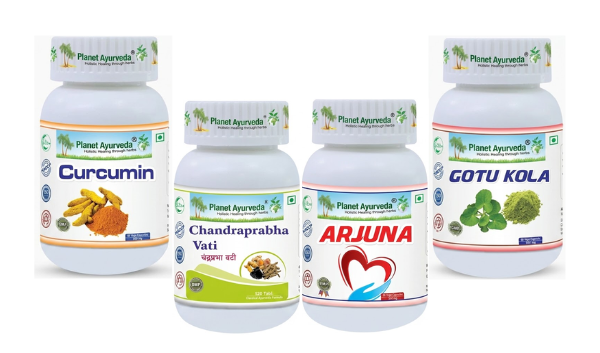
Product list
- Gotu Kola Capsules
- Arjuna Capsules
- Chandraprabha Vati
- Curcumin Capsules
Herbal Remedies of Hypercoagulabilit

Product description
1. Gotu Kola Capsules
Planet Ayurveda’s Gotu Kola Capsules are a single-herb formulation containing standardized extract of Gotu Kola or Mandukaparni (Centella asiatica), with 500 mg standardized extract per capsule. The product is known for healthy circulation, neurological function, metabolism, and cardiovascular wellness. The plant contains triterpenoid compounds including asiaticoside, along with other triterpenes, glycosides, sterols, tannins, and related constituents. These phytochemicals have been investigated for effects on vascular and connective-tissue biology. Gotu Kola is also described as Medhya (cognition enhancer) and supports healthy nervous-system function. It focuses on maintaining healthy circulation and overall vascular and neurological wellness. Therefore, it helps in normal body fluids movement.
Dosage: 1–2 capsules twice daily with plain water after meals.
2. Arjuna Capsules
Planet Ayurveda’s Arjuna Capsules contain standardized extract of Arjuna (Terminalia arjuna) bark. The formulation helps in supporting cardiovascular health, healthy circulation, metabolism, and normal heart function. Arjuna bark contains several bioactive constituents, including tannins, flavonoids, triterpenoids, glycosides, and phenolic compounds. Arjuna is an important cardiovascular herb and associates it with healthy blood circulation and cardiovascular function. Arjuna is therefore indeed an Ayurvedic cardiovascular herb centered on supporting the heart and circulatory system.
Dosage: 1–2 capsules twice daily with plain water after meals.
3. Chandraprabha Vati
Chandraprabha Vati is a classical multi-ingredient Ayurvedic formulation. The formulation contains key ingredients such as Shilajit (asphaltum), Loh Bhasma (iron calx), Vacha (Acorus calamus), Devdaru (Cedrus deodara), Coriander (Coriadrum sativum), along with a larger classical combination including Haridra (Curcuma longa), Daruharidra (Berberis aristata), Pippali (Piper longum), Chitraka (Plumbago zeylanicum), Dhanyaka (Coriadrum sativum), Triphala, Trikatu, Vidanga (Embelia ribes), Guggulu (Commiphora mukul), and other ingredients. The broad composition of Chandraprabha Vati, helps in a number of health concerns and supports general physiological functions. Herbs such as Haridra and Guduchi and others contribute antioxidant and metabolic support, while the formulation as a whole is used in Ayurvedic regimens aimed at maintaining systemic balance and healthy cardiovascular functioning.
Dosage: 1–2 tablets twice daily, or as directed by a qualified Ayurvedic physician.
4. Curcumin Capsules
Planet Ayurveda’s Curcumin Capsules contain 500 mg standardized extract of Haridra (Curcuma longa) rhizome. The product is prepared as a single-herb formulation and is positioned for overall health, immune balance, and maintenance of healthy physiological function. The major bioactive constituents are curcuminoids, particularly curcumin, which has antioxidant and inflammation-modulating properties. Persistent inflammation can influence endothelial function and coagulation pathways, making maintenance of a healthy inflammatory environment relevant to vascular wellness. In Ayurvedic terms, Haridra is associated with Pitta and Kapha balance and healthy metabolic and tissue functions and helps in the management of hypercoagulation.
Dosage: 1–2 capsules twice daily with plain water after meals.
Conclusion
Hypercoagulability is a state in which the physiological balance of coagulation shifts toward excessive clot formation. It can result from inherited abnormalities such as Factor V Leiden, prothrombin mutations, protein C or S deficiency, and antithrombin deficiency, or from acquired conditions such as antiphospholipid syndrome, cancer, pregnancy, estrogen exposure, obesity, inflammation, surgery, trauma, and prolonged immobility. Its greatest clinical significance lies in the thrombotic events it can produce. Deep vein thrombosis and pulmonary embolism are among the most important venous manifestations, while arterial thrombosis can lead to stroke or myocardial infarction. Because hypercoagulability itself can be silent, appropriate risk assessment and targeted investigations are essential. Contemporary treatment depends on the underlying cause and whether thrombosis is already present. Confirmed venous or arterial thrombosis requires evidence-based anticoagulant or antithrombotic treatment, while high-risk situations often call for preventive strategies. Management of the underlying cancer, autoimmune condition, blood disorder, hormonal exposure, obesity, or immobility is equally important. From an Ayurvedic perspective, hypercoagulability can be conceptually approached through Rakta Dushti with Rakta-Sanga in the Rakta Vaha Srotas, with the focused pathway of Agni Dushti, Ama formation, Rakta Dushti, and abnormal Sanga. Ayurvedic management emphasizes healthy circulation, balanced Agni, appropriate diet, regular movement, metabolic health, and individualized herbal care. Planet Ayurveda’s mentioned formulations centered on healthy circulation, cardiovascular wellness, metabolic balance, and maintenance of physiological function. The essential principle is that hypercoagulability should be taken seriously even when no symptoms are present. Once a clot occurs, rapid diagnosis and appropriate medical treatment become critical. Ayurveda can be incorporated into long-term health management through individualized diet, exercise, stress regulation, metabolic care, and carefully selected herbal formulations, while established anticoagulant treatment remains essential whenever medically indicated.