Herbal Remedies of Stiff Person Syndrome – Causes, Symptoms, Diagnosis & Treatment
Abstract
Neurological disorders that disturb normal muscle control can profoundly affect movement, independence, and everyday life. Some are caused by structural changes in the nervous system, whereas others arise from abnormalities in immune regulation that interfere with neural signaling. Stiff Person Syndrome (SPS) is a rare neurological disorder characterized predominantly by muscle rigidity and episodic painful spasms. It belongs to the broader group of stiff-person spectrum disorders and can present in several clinical forms, ranging from predominantly axial stiffness to severe disease involving the limbs, brainstem, and autonomic nervous system. In this article, we shall discuss Stiff Person Syndrome in detail, including its causes, clinical presentation, investigations, contemporary treatment options, Ayurvedic interpretation, and the role of selected herbal formulations in an integrated approach to neurological well-being.
Introduction
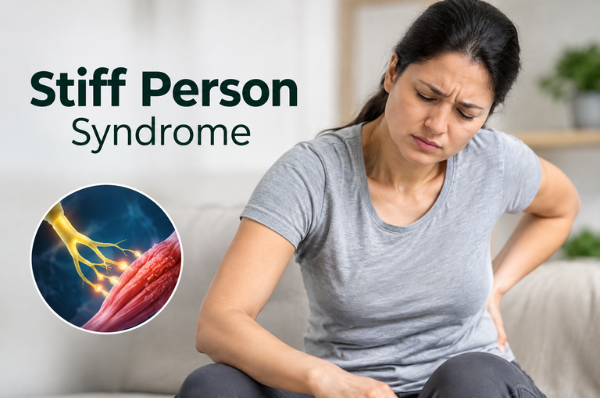
Stiff Person Syndrome is an uncommon disorder of the central nervous system in which normal inhibitory control over motor activity becomes impaired. The resulting increase in muscle activity produces persistent stiffness and episodes of spasms that can be extremely painful. The condition was originally described as “stiff-man syndrome,” although the current terminology recognizes that the disorder can affect people of any sex and can involve considerably more than generalized stiffness. SPS is now viewed as a spectrum of neuroimmunological disorders, with several clinical and antibody-defined variants. Symptoms most often begin during adulthood, commonly between the ages of 20 and 60. Women are affected more frequently than men. Because the disorder is rare and can resemble several other neurological conditions, diagnosis is often delayed. A 2023 study from a specialist autoimmune neurology center found that among people referred for suspected stiff-person spectrum disorder, only 28% ultimately received the diagnosis, illustrating the importance of specialist evaluation and confirmatory testing. Recent literature also indicates that stiff-person spectrum disorders are probably more common and more heterogeneous than previously appreciated.
What Happens in Stiff Person Syndrome?
Normal movement depends on a carefully regulated balance between excitatory and inhibitory signals within the nervous system. One of the most important inhibitory neurotransmitters is gamma-aminobutyric acid (GABA). GABA acts as a neurological “brake,” preventing excessive activation of motor pathways. In many individuals with SPS, antibodies directed against glutamic acid decarboxylase 65 (GAD65) are detectable. GAD65 is involved in the synthesis of GABA. Other patients have antibodies against proteins such as the glycine receptor or amphiphysin. These immune markers help characterize different forms of the disease, although antibody results must always be interpreted in combination with the clinical and electrophysiological findings. The result is excessive motor excitability and inadequate inhibition of muscle activity.
Stiff-Person Spectrum Disorders
SPS does not have a single presentation. The spectrum includes several phenotypes.
Classic Stiff Person Syndrome
This is the most recognized form. It usually involves progressive stiffness of the:
- Trunk
- Lower back
- Abdomen
- Hips
- Legs
Painful spasms can occur when the patient encounters an unexpected stimulus.
Stiff-Limb Syndrome
Stiffness and spasms are predominantly confined to one or more limbs.
SPS Plus
Patients can have classic SPS manifestations together with additional neurological abnormalities.
Progressive Encephalomyelitis With Rigidity and Myoclonus
This is a more extensive form involving the brainstem and spinal cord. It can be associated with:
- Severe rigidity
- Myoclonus
- Abnormal eye movements
- Swallowing dysfunction
- Autonomic disturbance
- Respiratory complications
Causes and Associated Conditions
The exact event that initiates the abnormal autoimmune response remains unclear. SPS is nevertheless strongly associated with autoimmune disease.
Anti-GAD65 Autoimmunity
GAD65 antibodies are frequently identified in classic SPS. High antibody concentrations strengthen the diagnostic picture when they occur with compatible clinical and electrophysiological findings.
Other Autoantibodies
Some patients have:
- Glycine-receptor antibodies
- Amphiphysin antibodies
- Other neural autoantibodies
These antibody profiles can be associated with distinct clinical presentations.
Associated Autoimmune Diseases
SPS can occur in association with:
- Type 1 diabetes mellitus
- Autoimmune thyroid disease
- Pernicious anemia
- Vitiligo
- Other autoimmune disorders
The National Institute of Neurological Disorders and Stroke notes that autoimmune conditions are common among individuals with SPS.
Paraneoplastic Disease
A smaller subgroup develops SPS-spectrum symptoms in association with malignancy. Amphiphysin antibodies have a particularly important association with paraneoplastic forms, making cancer evaluation relevant in appropriately selected patients.
Risk Factors
There is no single lifestyle factor that causes SPS.
Factors associated with the condition include:
- Personal autoimmune disease
- Family tendency toward autoimmunity
- Female sex
- Adult age
- Certain malignancies in paraneoplastic cases
The disorder should not be confused with ordinary muscular stiffness caused by sedentary behavior, exercise, aging, or posture.
Signs and Symptoms
The presentation develops gradually in many patients.
Persistent Muscle Stiffness : Rigidity often affects the axial muscles first, especially the abdomen and lower back. The muscles may feel continuously contracted rather than simply tight after physical activity.
Painful Spasms : Spasms are a defining feature and can occur suddenly.
Triggers include:
- Unexpected noise
- Sudden touch
- Emotional distress
- Sudden movement
- Fear
- Attempting to move rapidly
The intensity can be considerable and can sometimes cause falls or physical injury.
Abnormal Posture : Persistent contraction of the trunk muscles can produce excessive lumbar curvature and a stiff posture.
Walking Difficulty : As stiffness progresses, patients may develop:
- Slow gait
- Difficulty turning
- Difficulty climbing stairs
- Unsteadiness
- Fear of falling
- Frequent falls
Pain : Chronic muscular contraction can result in widespread musculoskeletal pain.
Exaggerated Startle Response : An unusually strong response to unexpected sensory stimuli is a distinctive clinical clue.
Anxiety : Anxiety frequently accompanies SPS. There can be a reciprocal relationship in which anxiety increases the likelihood of spasms, while fear of a future spasm increases anxiety.
Autonomic and Other Neurological Symptoms : Severe stiff-person spectrum disease can extend beyond muscle stiffness.
Possible manifestations include:
- Excessive sweating
- Fluctuations in blood pressure
- Rapid heartbeat
- Temperature dysregulation
- Difficulty swallowing
- Speech difficulties
- Abnormal eye movements
- Respiratory dysfunction
These features are particularly important in severe SPS-spectrum presentations.
How Stiff Person Syndrome Affects Daily Life
The consequences extend beyond the neurological examination. A patient may gradually reduce:
- Walking
- Travelling
- Social activities
- Employment
- Exercise
- Independent living
Some individuals become afraid of crowded or unpredictable environments because unexpected sounds or touch can provoke spasms.
This creates a cycle:
Trigger → spasm → fear → avoidance → reduced confidence → greater functional limitation
Breaking this cycle requires both neurological treatment and rehabilitation.
Investigations
Because no single test establishes every SPS diagnosis, evaluation combines clinical, laboratory, and electrophysiological information.
Neurological Examination : The physician assesses:
- Muscle tone
- Distribution of rigidity
- Deep tendon reflexes
- Startle response
- Gait
- Balance
- Coordination
- Strength
- Associated neurological findings
Autoantibody Testing : Testing can include:
- GAD65 antibodies
- Glycine receptor antibodies
- Amphiphysin antibodies
- Other neural antibody panels when indicated
High-titer GAD65 antibodies are more meaningful when combined with a characteristic clinical picture. Low levels can occur in other settings, including diabetes, and should not be interpreted in isolation.
Electromyography : Electromyography can demonstrate continuous involuntary motor-unit activity, a particularly useful finding in SPS. It also assists in distinguishing SPS from other causes of rigidity.
MRI : MRI of the brain and spinal cord is commonly used to rule out:
- Structural spinal disease
- Multiple sclerosis
- Brain lesions
- Myelopathy
- Other causes of rigidity
Cerebrospinal Fluid Analysis : Lumbar puncture can be considered when an inflammatory or encephalomyelitic form is suspected.
Cancer Screening : Patients with atypical features or antibodies associated with paraneoplastic disease may require appropriate malignancy screening.
Differential Diagnosis : A number of conditions can resemble SPS.
These include:
- Parkinsonian rigidity
- Multiple sclerosis
- Dystonia
- Spasticity from spinal cord disorders
- Neuromyotonia
- Tetanus
- Functional neurological disorder
- Drug-induced rigidity
- Myelopathy
- Other autoimmune neurological disorders
A specialist evaluation is therefore particularly valuable. The 2023 Mayo Clinic series demonstrated that misdiagnosis was substantially more frequent than confirmed SPS among referred suspected cases.
Contemporary Management : There are two principal treatment objectives: Control abnormal muscle activity and address the immune-mediated component of the disease
.Symptomatic Treatment : Treatment plans are individualized because responses differ substantially across the stiff-person spectrum. A 2025 systematic review identified considerable variation in treatment responses and emphasized the need for individualized strategies.
Benzodiazepines : Diazepam and other benzodiazepines enhance GABA-mediated inhibitory signaling and can significantly reduce stiffness and spasms. They remain an important part of symptomatic treatment.
Baclofen : Baclofen acts on GABA-B receptors and can reduce muscle overactivity.
Gabapentin and Pregabalin : These agents can be considered when pain and spasms remain troublesome.
Tizanidine : Tizanidine can provide additional muscle-relaxant effects in selected patients.
Other Agents : Dantrolene and other symptom-directed treatments can be considered according to the patient’s clinical status.
Immunotherapy : Symptom control does not address the underlying immune abnormality. Patients with significant autoimmune SPS can therefore require immunomodulatory treatment.
Intravenous Immunoglobulin : IVIG is one of the most important immunotherapies used in SPS. It can reduce stiffness and improve functional ability in appropriately selected patients.
Corticosteroids : Steroids can be used to suppress abnormal immune activity in selected circumstances.
Plasma Exchange : Plasma exchange is considered in particular severe or refractory cases.
Rituximab : Rituximab has been used in difficult-to-treat disease because of its B-cell-directed action. Evidence remains heterogeneous, and patient selection is important.
Treatment of Paraneoplastic Disease : When SPS occurs as part of a paraneoplastic syndrome, identifying and treating the underlying malignancy becomes a major component of management
Physiotherapy and Rehabilitation : Rehabilitation helps preserve independence even when neurological symptoms are chronic. A customized program can include:
- Gentle stretching
- Range-of-motion exercises
- Balance training
- Gait training
- Strength maintenance
- Occupational therapy
- Fall prevention
The pace should be individualized because sudden movement and excessive stimulation can provoke spasms.
Psychological Management : Psychological care deserves particular attention. People with SPS can become apprehensive about:
- Falling
- Sudden sounds
- Physical contact
- Leaving home
- Entering crowded spaces
- Experiencing another severe spasm
Counseling, relaxation techniques, controlled breathing, mindfulness, and treatment of clinically significant anxiety can improve coping and participation in rehabilitation.
Ayurvedic View and Management of Stiff Person Syndrome
Stiff Person Syndrome does not have a direct one-to-one equivalent in the classical Ayurvedic disease nomenclature. Considering its principal features—persistent stiffness, painful involuntary contractions, altered movement, and neuromuscular dysfunction—the most appropriate single Ayurvedic correlation is a Vata-dominant Snayu-Mamsa disorder within the broader spectrum of Vata Vyadhi. Vata governs movement, nerve-related functions, muscle activity, and coordination. Excessive exertion, irregular sleep, inadequate nourishment, chronic stress, excessive fasting, and tissue depletion can aggravate Vata. Once aggravated, Vata localizes in Snayu (ligaments), Mamsa (muscle), Asthi (bones), and Majja (soft tissue), disturbing the normal alternation between muscular contraction and relaxation. This produces:
- Stambha – stiffness
- Akshepa – involuntary contractions or spasms
- Shoola – pain
- Cheshta Vaishamya – disturbed movement
- Functional restriction
The Ayurvedic sequence can therefore be represented as:
Vata Prakopa → Snayu-Mamsa-Majja involvement → disturbance of neuromuscular movement → Stambha and Akshepa → rigidity, painful spasms and impaired mobility.
This provides a focused Ayurvedic framework for interpreting the major motor manifestations of SPS without claiming that SPS itself is explicitly described in classical texts.
The Ayurvedic approach is centered on Vata Shamana, Snehana, Swedana, Brimhana, Rasayana, and rehabilitation. Warm oil massage can help address Vata-related stiffness and muscular tension. Appropriate Swedana introduces controlled warmth to promote flexibility. In a properly selected patient, Basti can form an important part of a Vata-management program. Nourishing food, adequate sleep, gentle physical activity, meditation, Pranayama, and a regular daily routine further reinforce Vata stability. The nutritional approach should emphasize freshly prepared, warm, nourishing foods containing adequate protein, healthy fats, whole grains, vegetables, and appropriate sources of micronutrients. Excessive fasting, irregular meals, sleep deprivation, and abrupt strenuous exercise should be avoided. Ayurvedic management should be individualized according to Prakriti, Bala, Agni, age, disease severity, medication use, and neurological status.
Ayurvedic Lifestyle Plan for Neuromuscular Stiffness
Herbal management becomes more meaningful when accompanied by consistent lifestyle practices.
Warmth and Oil Application : Vata-associated stiffness benefits from an appropriately warm environment and physician-directed oil therapies.
Gentle Movement : Prolonged immobility can worsen functional decline. Safe, gradual movement should be incorporated according to the patient’s neurological status.
Sleep : Consistent restorative sleep is important for physical recovery and emotional regulation.
Breathing and Meditation : Slow breathing and meditation can reduce psychological arousal and help patients respond more calmly to triggers.
Nourishing Diet : A balanced diet with adequate protein, healthy fats, whole grains, vegetables, and micronutrients helps maintain physical strength.
Herbal Remedies for Stiff Person Syndrome by Planet Ayurveda
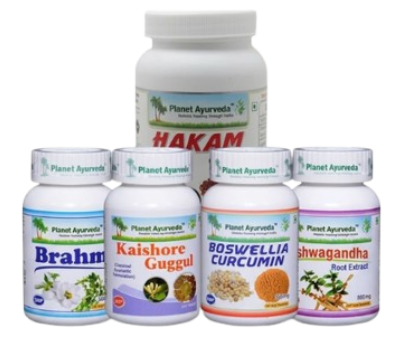
Planet Ayurveda is a dedicated Ayurvedic healthcare organization that offers a wide range of herbal formulations designed to support overall health and wellness. The company draws inspiration from the fundamental principles of Ayurveda and combines them with modern quality practices to develop convenient herbal products. Its portfolio includes capsules, tablets, powders, syrups, oils, and specialized herbal combinations prepared from carefully selected ingredients. With a focus on purity and authenticity, Planet Ayurveda aims to promote a balanced approach to wellness and help individuals incorporate the benefits of Ayurveda into their daily lives. Planet Ayurveda provides Ayurvedic herbal formulations prepared from selected herbs and classical combinations for neurological, musculoskeletal, digestive, and general wellness applications. Planet Ayurveda is pleased to present its Stiff-Man Care Pack for an Ayurvedic approach to stiffness, muscular discomfort, restricted mobility, and associated neurological well-being.
Product List
- Boswellia-Curcumin
- Hakam Churna
- Brahmi Capsules
- Ashwagandha Capsules
- Kaishore Guggul
Herbal Remedies of Stiff Person Syndrome

Produts Discription
1. Boswellia-Curcumin
Planet Ayurveda’s Boswellia-Curcumin combines Shallaki (Boswellia serrata) and Curcumin (Curcuma longa), with 250 mg of each per capsule. Shallaki provides boswellic acids, while Curcumin supplies curcuminoids with antioxidant and inflammation-modulating activity. The combination is positioned for joint and muscle health, pain management, and comfortable mobility.
Dosage: 2 capsules twice daily.
2. Hakam Churna
Planet Ayurveda’s Hakam Churna contains Chandershoor (Lepidium sativum), Kalonji (Nigella sativa), Methi (Trigonella foenum-graecum), and Ajwain (Trachyspermum ammi). These herbs provide a digestive and metabolic component to the regimen. In Ayurveda, maintaining healthy Agni (digestion) is particularly important when managing Vata-related conditions because impaired digestion. With its Vata alleviation properties, it helps in the management of stiffness and pain associated with Stiff person syndrome.
Dosage: 1 teaspoon twice daily.
3. Brahmi Capsules
Planet Ayurveda’s Brahmi Capsules contain standardized Brahmi (Bacopa monnieri) root extract, 500 mg per capsule. Brahmi is an important Medhya herb associated with cognitive and neurological well-being. Its bacosides are the principal bioactive constituents associated with its neurological activity. Within an Ayurvedic regimen for neurological health, Brahmi contributes a Medhya and mind-supporting dimension that complements physical management of stiffness and functional limitations and also helps in managing psychological stress.
Dosage: 2 capsules twice daily.
4. Ashwagandha Capsules
Planet Ayurveda’s Ashwagandha Capsules contain standardized Ashwagandha (Withania somnifera) root extract, 500 mg per capsule. Ashwagandha contains bioactive withanolides and it has Medhya (cognition enhancing), Rasayana (rejuvenation), and Dhatu Pushti (tissue replenishing) properties, with particular emphasis on Vata and Kapha balance and neurological well-being. Its place in this regimen is centered on maintaining neurological health, physical strength, resilience, and healthy stress adaptation.
Dosage: 1 capsule twice daily.
5. Kaishore Guggul
Kaishore Guggul is a classical polyherbal formulation containing Amalaki (Emblica officinalis), Bibhitaki (Terminalia bellirica), Haritaki (Terminalia chebula), Guggul (Commiphora mukul), Guduchi (Tinospora cordifolia), Ginger (Zingiber officiale), Black Pepper (Piper nigrum), Long Pepper (Piper longum), Vidanga (Embelia ribes), and other ingredients. Its combination of Guggul, Guduchi, Triphala, and Trikatu provides a formulation oriented toward metabolic balance, digestion, and inflammatory wellness. It helps in reducing stiffness and ease body movements.
Dosage: 2 tablets twice daily.
Conclusion
Stiff Person Syndrome is a rare and complex neurological disorder in which abnormal motor excitability produces persistent rigidity, painful spasms, exaggerated startle responses, and progressive difficulty with movement. Its clinical spectrum is broad, extending from classic axial stiffness to stiff-limb presentations and severe forms involving brainstem, spinal cord, myoclonus, and autonomic dysfunction. The diagnostic process requires careful clinical assessment together with appropriate antibody testing and electromyography, while MRI and other investigations help exclude alternative neurological diseases. Contemporary treatment works through two complementary pathways. Symptomatic medicines such as benzodiazepines, baclofen, gabapentin, pregabalin, and other muscle-relaxing agents help control stiffness and spasms, while immunotherapies such as IVIG, corticosteroids, plasma exchange, and selected B-cell-directed therapies address the immune component in appropriately selected patients. Rehabilitation and psychological care are essential for maintaining mobility, reducing falls, and preserving independence.
From an Ayurvedic perspective, the predominant manifestations of SPS can be understood through a Vata-dominant Snayu-Mamsa-Majja pathology, characterized by Stambha, Shoola, and Akṣepa. The Ayurvedic approach consequently emphasizes Vata Shamana, Snehana, Swedana, Brimhana, Rasayana, nourishment, regular sleep, gentle movement, and individualized Panchakarma. Planet Ayurveda’s Stiff-Man Care Pack provides a focused Ayurvedic regimen addressing musculoskeletal comfort, neurological wellness, metabolic balance, and overall vitality. A well-rounded management strategy therefore brings together accurate diagnosis, specialist neurological treatment, immunotherapy where indicated, symptom control, rehabilitation, psychological care, and individualized Ayurvedic management. The objective is to preserve movement and independence while helping the individual build a sustainable routine around a challenging neurological condition.


