Self Healing Acupressure Therapy and its Benefits
Abstract
Self-healing acupressure therapy is a complementary wellness approach based on the application of gentle pressure to specific points on the body using the fingers, thumbs, or simple tools. Rooted in traditional healing principles, acupressure is believed to support the body’s natural ability to maintain balance and promote overall well-being. Regular stimulation of selected pressure points may help relieve muscular tension, reduce stress, improve relaxation, support circulation, and enhance physical comfort. Self-acupressure is particularly valued because it is simple, non-invasive, cost-effective, and can be practiced independently after learning appropriate techniques. It may also encourage greater body awareness and active participation in personal health and wellness.
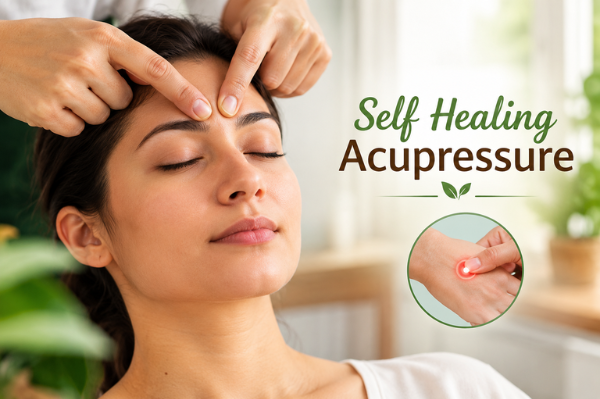
Statistics for Acupressure Therapy
- The global acupressure market is valued at USD 215.05 million and is projected to reach USD 1,239.3 million by 2035, with a CAGR of 21.49%.
- Over 40% of individuals exploring complementary and alternative therapies use or consider non-invasive approaches such as acupressure.
- Around 45% of acupressure-related research publications from 2004–2024 were produced between 2020 and 2024.
- Acupressure research involved contributions from 44 countries and regions.
- The United States contributed 134 publications in the field of acupressure research.
- Acupressure studies covered approximately 81 different academic and clinical disciplines.
Interesting Facts about Acupressure Therapy
- Acupressure is a traditional healing practice that involves applying physical pressure to specific points on the body.
- Unlike acupuncture, acupressure does not use needles and is completely non-invasive.
- The technique commonly uses fingers, thumbs, palms, elbows, or specialized acupressure tools.
- Acupressure points are traditionally believed to be located along pathways known as meridians.
- There are hundreds of recognized acupressure points across different areas of the body.
- Sessions usually involve applying steady or circular pressure to selected points for a short duration.
- Traditional acupressure principles emphasize the balance and smooth flow of vital energy, often referred to as Qi or Chi.
- The therapy requires no electricity, medication, or complex equipment for basic self-acupressure practice.
- Pressure intensity can be adjusted according to individual comfort and sensitivity.
Introduction
Self-healing acupressure therapy is a traditional complementary healing approach that involves applying gentle, controlled pressure to specific points on the body to support physical and mental well-being. The practice is based on the principles of traditional Chinese medicine, which describes a network of energy pathways, commonly known as meridians, through which vital energy or Qi flows. According to traditional concepts, disturbances in this flow may contribute to discomfort and imbalance. Acupressure aims to stimulate selected points and promote relaxation, balance, and the body’s natural healing response. Self-acupressure allows individuals to perform these techniques independently by using their fingers, thumbs, palms, or simple massage tools. It also encourages greater awareness of the body and promotes active participation in personal well-being. The practice requires minimal equipment and can often be performed at home after learning appropriate techniques.
The Five Elements and Their Traditional Associations
The Five Elements (Wu Xing) are a fundamental concept in Traditional Chinese Medicine (TCM). They describe five interconnected phases—Wood, Fire, Earth, Metal, and Water—that are used to understand relationships between nature, bodily functions, emotions, and seasonal changes.
- Wood : Wood represents spring, renewal, expansion, and growth. It is traditionally associated with the Liver and Gallbladder and is linked with the body’s capacity for movement, planning, and adaptation. Spring symbolizes the upward and outward movement characteristic of the Wood phase.
- Fire : Fire reflects the qualities of summer, warmth, activity, and transformation. The Heart and Small Intestine are traditionally connected with this element. Fire represents peak activity and is associated with vitality, enthusiasm, and the expression of emotional warmth.
- Earth : Earth symbolizes late summer, nourishment, stability, and productivity. It is traditionally related to the Spleen and Stomach and represents the processes involved in receiving and transforming nourishment. The Earth phase is also associated with harvest, abundance, and grounding.
- Metal : Metal corresponds to autumn, contraction, organization, and refinement. The Lungs and Large Intestine are its associated organ systems. This phase represents the movement from expansion toward inward reflection and is traditionally connected with processes of elimination and letting go.
- Water : Water represents winter, rest, conservation, and storage. It is traditionally associated with the Kidneys and Urinary Bladder. The Water phase reflects inward movement, preservation of resources, and the quiet, restorative quality traditionally attributed to winter.
Together, the Five Elements provide a traditional framework for describing the dynamic relationships between seasons, organs, bodily processes, and patterns of change.
The Principles of Acupressure: Traditional and Modern
Traditional Chinese medicine explains acupressure primarily through Qi, meridians, and balance, whereas modern science examines its effects through the nervous system, sensory stimulation, pain modulation, muscle relaxation, and neurochemical responses. The principles are as follows:
- Qi (Chi) : Qi is traditionally described as the vital energy that supports the body’s functions and flows through interconnected pathways called meridians. Acupressure aims to stimulate specific points along these pathways to encourage the smooth movement and balance of Qi.
- Yin and Yang : Yin and Yang represent complementary and opposing qualities within traditional Chinese philosophy. Yin is generally associated with qualities such as rest, coolness, and inward movement, while Yang represents activity, warmth, and outward movement. Traditional Chinese Medicine considers health to depend on a harmonious relationship between these two aspects.
- Meridians : Meridians are described in Traditional Chinese Medicine as pathways through which Qi circulates throughout the body. Specific acupressure points are located along these pathways. Applying pressure to selected points is traditionally believed to influence the associated functions and promote energetic balance.
- Acupressure points : Acupressure focuses on specific anatomical locations that are traditionally considered therapeutically significant. Practitioners select points according to the individual’s symptoms, traditional diagnosis, and desired therapeutic objective.
- De Qi : In traditional practice, stimulation of an acupoint may produce sensations such as mild heaviness, warmth, tingling, pressure, or a dull aching feeling. This experience is commonly referred to as De Qi and is traditionally considered an indication that the point has been adequately stimulated. It is not necessary to produce strong pain for acupressure to be performed effectively.
- Sensory nerve stimulation : Applying pressure to the skin, muscles, and underlying tissues activates sensory receptors and nerve endings. These signals are transmitted through the peripheral nervous system toward the spinal cord and brain.
- Modulation of pain signals : Acupressure may influence the way the nervous system processes pain-related information. Stimulation of sensory nerves can engage mechanisms that reduce the transmission or perception of pain signals.
- Muscle relaxation : Pressure and massage-like stimulation can help reduce localized muscular tension. Relaxation of tight muscles may contribute to improved comfort and a reduction in sensations associated with physical strain.
- Brain–body interaction : Acupressure involves continuous communication between sensory receptors, the spinal cord, and the brain. Modern research therefore investigates its effects through neurological, physiological, and psychological mechanisms.
How Does Acupressure Therapy Work?
The effects of acupressure may involve stimulation of sensory nerves, muscles, and connective tissues. Pressure applied to a particular area activates sensory receptors that send signals to the nervous system. These signals may influence how the brain processes pain and other bodily sensations. Acupressure may also influence the body’s autonomic nervous system, which regulates functions such as heart rate, breathing, and stress responses. Gentle, rhythmic pressure combined with slow breathing may encourage relaxation and reduce physical tension. The amount of pressure depends on the individual and the location of the point; excessive force is unnecessary and may cause soreness or injury. Self-acupressure can therefore work through a combination of traditional energy-based principles and physiological responses to touch and pressure.
The mechanism is as follows:
- Pressure Points : Acupressure focuses on particular areas of the body traditionally associated with meridian pathways and areas containing sensory nerve receptors.
- Applying Pressure : The selected point is gently but firmly stimulated using the thumb, fingertip, or knuckle. Pressure is generally maintained for about 1–2 minutes, depending on the technique and individual comfort.
- Physiological Response : Pressure stimulation may activate sensory nerves and influence the nervous system, potentially supporting the release of natural pain-modulating chemicals, reducing muscle tension, and promoting relaxation.
Different Acupressure Points and their Significance
Acupressure involves stimulating specific points that are traditionally associated with particular functions or areas of the body. The following are some commonly recognized points and their traditional uses:
- Yintang (Extra Point) : Located between the eyebrows, Yintang is traditionally used to promote relaxation and calmness. It is commonly stimulated during practices focused on stress, mental tension, and sleep.
- Hegu (LI4) : Found in the fleshy area between the thumb and index finger, LI4 is traditionally associated with relieving headache, facial discomfort, and general pain. LI4 should be avoided during pregnancy unless specifically advised by a qualified practitioner.
- Neiguan (PC6) : Situated on the inner forearm near the wrist, PC6 is traditionally used for nausea, vomiting, and feelings of chest or upper-abdominal discomfort. It is also commonly included in relaxation-oriented acupressure techniques.
- Zusanli (ST36) : Located below the knee, ST36 is traditionally considered an important point for digestive and general wellness. It is frequently stimulated to support digestion, energy, and physical vitality.
- Sanyinjiao (SP6) : Found on the inner lower leg above the ankle, SP6 is traditionally associated with digestive, menstrual, and pelvic health. Pregnancy requires particular caution with this point.
- Taichong (LR3) : Located on the top of the foot between the first and second toes, LR3 is traditionally used to promote relaxation and support the smooth movement of Qi.
- Fengchi (GB20) : Located at the base of the skull on either side of the neck, GB20 is commonly used in traditional practice for headache, neck tension, and stiffness.
- Shenmen (HT7) : Situated near the wrist on the little-finger side, HT7 is traditionally associated with calming the mind and is often used in acupressure approaches for relaxation and sleep support.
- Yingxiang (LI20) : Located beside the nostrils, LI20 is traditionally associated with the nose and is commonly stimulated in techniques intended to support nasal comfort.
- Taiyang (Extra Point) : Found in the temple region, Taiyang is traditionally used for headache, facial tension, and relaxation.
Benefits of Acupressure Therapy
Acupressure Therapy offers a simple, non-invasive approach that may support physical relaxation and overall well-being. Regular self-acupressure may also encourage better body awareness, stress management, and a sense of renewed energy. The benefits are as follows:
- Supports healthy circulation : Acupressure may stimulate local tissues and promote relaxation of tense muscles, potentially supporting normal blood flow and oxygen delivery to body tissues.
- Helps manage joint discomfort : Acupressure may provide supportive relief from joint stiffness and discomfort associated with conditions such as arthritis. Its effects may be related to sensory nerve stimulation, muscle relaxation, and modulation of pain perception.
- Supports digestive comfort : Certain acupressure points are traditionally used to support digestive function. Their stimulation may help promote relaxation and provide relief from occasional bloating, indigestion, nausea, and abdominal discomfort.
- Promotes emotional relaxation : Acupressure may help calm the nervous system and encourage relaxation. Regular self-acupressure can be incorporated into stress-management routines and may support better sleep and emotional well-being.
- Encourages energy and vitality : Some acupressure techniques are traditionally used to promote alertness and reduce feelings of fatigue. Gentle stimulation combined with mindful breathing may leave a person feeling refreshed and more relaxed.
- May support headache relief : Stimulation of selected points is commonly used as a complementary approach for tension-related headaches and head discomfort. Relaxation of surrounding muscles may contribute to improved comfort.
- Promotes muscle relaxation : Applying controlled pressure to appropriate points may help ease localized muscular tightness and encourage physical relaxation.
- Encourages mind–body awareness : Self-acupressure requires attention to bodily sensations and breathing, which can encourage mindfulness and greater awareness of physical and emotional well-being.
Does Acupressure Therapy require any special learning?
Basic self-acupressure does not require extensive special training, but learning the correct points and techniques is important for safe and effective practice. Following points need to be taken into account:
- Basic techniques : Simple pressure-point techniques can be learned from a qualified practitioner or reliable instructional resources.
- Correct point location : Proper identification of acupressure points helps avoid applying pressure to inappropriate areas.
- Pressure and duration : Beginners should learn how much pressure to apply and how long to stimulate each point. Pressure should feel comfortable, not painful.
- Safety knowledge : It is important to know which points or body areas should be avoided in situations such as pregnancy, acute injury, infection, or certain medical conditions.
- Professional practice : Providing acupressure as a therapeutic service to others requires more comprehensive training in anatomy, acupoint location, contraindications, and technique.
- Self-healing practice : For general self-care, basic instruction is usually sufficient for simple techniques, while complex conditions should be addressed under appropriate professional guidance.
- Understanding body anatomy : Basic knowledge of muscles, nerves, joints, and sensitive areas helps in practicing acupressure safely.
- Identifying individual needs : Different acupressure points may be selected according to the person’s symptoms and wellness goals.
- Gradual learning : Beginners can start with a few commonly used points before progressing to more advanced techniques.
Adverse Effects of Applying Pressure to Incorrect Acupressure Points
Applying pressure to an inappropriate point, using excessive force, or stimulating an unsuitable area can cause unwanted effects. Most minor effects are temporary, but incorrect technique may occasionally result in injury. The adverse effects include:
- Localised pain or tenderness : Excessive pressure may irritate muscles, connective tissues or sensitive structures, resulting in soreness or tenderness around the stimulated area.
- Bruising : Strong or prolonged pressure can damage small blood vessels beneath the skin and produce bruising, particularly in people with fragile skin.
- Swelling and irritation : Repeated or forceful stimulation may cause localized inflammation, swelling, warmth or skin irritation.
- Numbness or tingling : Pressure applied over a superficial nerve may temporarily produce tingling, pins and needles sensations or numbness. Persistent symptoms require medical assessment.
- Muscle strain : Incorrect pressure or an awkward technique can aggravate an already tense muscle and increase stiffness or discomfort.
- Dizziness : Some individuals may experience dizziness, weakness, sweating, or nausea during or after stimulation, particularly when pressure is excessive or the person is already unwell.
- Headache or increased discomfort : Incorrect stimulation may aggravate existing discomfort rather than providing relaxation, especially when excessive pressure is used around the head, neck, or other sensitive regions.
- Skin damage : Vigorous rubbing, repeated pressure or the use of hard tools can cause redness, abrasions or superficial skin injury.
- Aggravation of existing injuries : Pressure should not be applied directly over fractures, open wounds, burns, acute swelling, infections, or recently injured tissues because it may worsen local irritation.
- Risk of sensitive areas : Particular caution is required around the front of the neck, eyes, recent surgical sites and areas where major blood vessels or nerves are relatively superficial.
- Pregnancy-related precautions : Some traditionally used acupressure points are approached cautiously during pregnancy. Pregnant individuals should seek guidance from a qualified healthcare professional before using specific points therapeutically.
- Delayed medical care : The most important risk is using acupressure to manage serious symptoms without appropriate medical evaluation. Persistent, severe or unexplained symptoms should always be assessed by a physician.
Conclusion
Self-healing acupressure can become a useful part of a healthy daily routine. Regular practice may encourage relaxation, reduce everyday tension, improve comfort, and support greater awareness of bodily needs. Its simple approach makes it convenient for home use. Learning appropriate techniques and pressure levels is essential to avoid discomfort and ensure safe practice. Safe practice remains important, particularly when dealing with injuries, pregnancy or health concerns.
