Tag: Osteoporosis

Kyphosis (Hunched Back/Dowager’s Hump): Causes, Symptoms & Ayurvedic Treatment

ABSTRACT

Kyphosis, commonly known as a hunched back or hunchback, refers to an excessive forward curvature of the upper spine that results in a rounded appearance of the back. In modern times, this condition is increasingly seen due to prolonged sitting, poor posture, and extensive use of digital devices. In older individuals, it may also develop due to bone weakening conditions such as osteoporosis. From an Ayurvedic perspective, kyphosis can be associated with Vata Dosha imbalance, particularly affecting Asthi Dhatu (bone tissue) and Mamsa Dhatu (muscle tissue). Ayurveda emphasizes strengthening bones, nourishing tissues, correcting posture, and improving flexibility through herbs, therapies, and lifestyle changes.
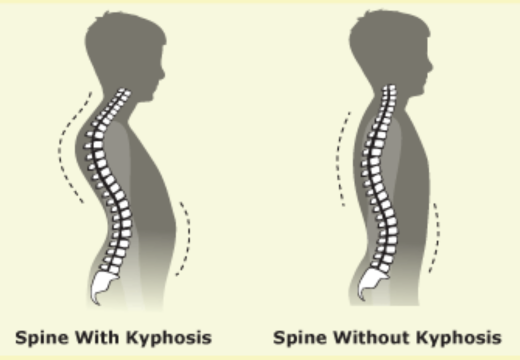
KYPHOSIS - HUNCHED BACK OR DOWAGER’S HUMP

INTRODUCTION

Kyphosis is characterized by an abnormal rounding of the thoracic spine (upper back), giving a stooped or hunched appearance. A mild curvature is natural in the spine, but when the curve becomes exaggerated, it leads to visible deformity, discomfort, and sometimes breathing difficulties. This condition may appear in adolescents due to poor posture or in elderly individuals due to degenerative bone changes. The term Dowager’s Hump is often used to describe a noticeable hump at the base of the neck, usually seen in older adults. In Ayurveda, spinal deformities are often linked to Vata aggravation, which causes dryness, degeneration, weakness, and improper alignment of bones and joints.

TYPES OF KYPHOSIS

Postural Kyphosis:

This is the most common type and usually develops due to poor posture, especially in teenagers and adults who spend long hours sitting or using mobile phones and computers.

Features:

  • Rounded shoulders
  • Forward bending of the upper back
  • Usually flexible and reversible

Structural Kyphosis:

This occurs due to structural changes in the vertebrae.

Examples include:

  • Congenital defects
  • Vertebral fractures
  • Spinal diseases

Age-Related Kyphosis (Dowager’s Hump):

Commonly seen in elderly individuals, particularly due to osteoporosis, where weakened bones collapse and create a hump-like appearance.

CAUSES OF KYPHOSIS

  • Poor posture while sitting or standing
  • Excessive mobile or computer use (Text Neck)
  • Weak back and shoulder muscles
  • Osteoporosis (bone thinning)
  • Degenerative spinal diseases
  • Spinal injuries or fractures
  • Vitamin D and calcium deficiency
  • Congenital spinal abnormalities

SYMPTOMS OF KYPHOSIS

  • Rounded upper back
  • Visible hump at the base of the neck
  • Back stiffness
  • Neck and shoulder pain
  • Muscle fatigue
  • Reduced flexibility
  • Difficulty maintaining proper posture
  • In severe cases, breathing difficulty

RISK FACTORS FOR KYPHOSIS

  • Sedentary lifestyle
  • Poor ergonomics
  • Aging
  • Osteoporosis
  • Hormonal changes (especially after menopause)
  • Nutritional deficiencies
  • Lack of physical exercise

DIAGNOSIS OF KYPHOSIS

  • Physical examination
  • Posture assessment
  • X-ray imaging
  • MRI or CT scan (if nerve involvement is suspected)
  • Bone density test (for osteoporosis)

AYURVEDIC ASPECT OF KYPHOSIS

In Ayurveda, conditions involving spinal deformity such as kyphosis can be understood under disorders caused by aggravated Vata Dosha, particularly affecting the Asthi Dhatu (bone tissue) and Mamsa Dhatu (muscle tissue). The spine (Merudanda) is considered the main structural support of the body, and its health depends on proper nourishment of bones, muscles, ligaments, and joints. Kyphosis resembles conditions described in Ayurveda as Kubjata (spinal deformity or hump formation), where abnormal curvature or bending of the spine occurs due to weakness, degeneration, or improper support of tissues.

Dosha Involvement

Vata Dosha: Vata governs movement, structure, and stability of bones and joints. When Vata becomes aggravated due to aging, poor nutrition, dryness, excessive strain, or faulty posture, it causes:

  • Degeneration of bones
  • Weakening of spinal support
  • Dryness in joints
  • Loss of flexibility
  • Structural deformity of the spine

This leads to curvature and formation of a hump-like structure.

Secondary Doshas

  • Kapha Dosha: Kapha imbalance contributes to stiffness, heaviness, and reduced mobility in muscles and joints.
  • Pitta Dosha: In some cases, Pitta involvement may lead to inflammation, pain, and burning sensation around the affected region.

Dhatu (Tissue) Involvement

Kyphosis mainly affects the following tissues:

Asthi Dhatu (Bone Tissue):

  • Weak bones
  • Vertebral deformity
  • Reduced bone density
  • Increased spinal curvature

Mamsa Dhatu (Muscle Tissue): Weakness of back muscles leads to poor support of the spine.

Majja Dhatu (Nerve Tissue): In advanced cases, nerve involvement may lead to pain, tingling, or weakness.

Ayurvedic Pathogenesis (Samprapti)

  • Improper posture, sedentary lifestyle, and poor nutrition aggravate Vata Dosha
  • Increased Vata causes dryness and degeneration of bone tissue
  • Asthi Dhatu Kshaya leads to vertebral weakness
  • Mamsa Dhatu weakness reduces muscular support
  • Structural instability results in spinal curvature and hump formation

AYURVEDIC MANAGEMENT OF KYPHOSIS

  • Pacifying aggravated Vata
  • Strengthening bones and muscles
  • Improving flexibility
  • Preventing further degeneration
  • Correcting posture

Treatment includes herbal medicines, Panchakarma therapies, external treatments, yoga, and dietary regulation.

CONCLUSION

Kyphosis, whether manifesting as postural Tech Neck or the age-related Dowager’s Hump, represents a significant structural challenge that modern sedentary lifestyles have only intensified. From an Ayurvedic perspective, the condition is a clear manifestation of Vata aggravation leading to the depletion of Asthi (bone) and Mamsa (muscle) tissues. Effective management requires a multi-dimensional approach: nourishing the skeletal matrix with bone-strengthening and rejuvenating substances, reversing muscular rigidity through targeted Panchakarma therapies like Prishtha Basti, and re-establishing spinal extension through Yoga. By combining internal tissue rejuvenation with external postural correction, individuals can halt degenerative changes, alleviate chronic pain, and restore the spine’s natural alignment and functional integrity.
Ayurvedic Remedies And Yoga Tips For Osteoporosis

Fed up of osteoporosis? Try yoga

Is it back ache or neck pain? Often concerned about your stooped posture, are you? Do your bones tend to ache while you move or do your chores? Maybe then you should read this. Have you heard about osteoporosis or are you an osteoporosis diagnosed patient? If at all you are or have the above-mentioned symptoms, then probably life must be a little hard for you since the manifestations have begun; isn’t it? Well, no use in looking back to the days instead let us help you tackle with a more innovative and soothing technique which is yoga! Many of them might have already heard it’s wonderful benefits for osteoporosis sufferers. Check out more on osteoporosis.

Know About Osteoporosis In Brief

This skeletal condition of weakening of bones is often found in women. The bones get very weak, brittle and as well as easily prone to fractures. Making itself the major reason for fractures in the elderly, it mainly affects the hip, spine and forearm. Decreased levels of estrogen are the reason behind the high ratio of osteoporosis among women while men having gradual progesterone reduction are less prone to this.

Symptoms And Causes Include

Though it comes with very less visible symptoms at the beginning, moderately starts showing few of them and fractures are the major and common one among those. Slight hits or compressions on body parts, tiny bruises etc. leads to sudden fractures. These fractures might depend on various factors to get healed, this mainly because due to this condition by now your bones would have become more fragile. Your bones undergo continuous resumption till young age, the later bone life depends on the bone strength you have already attained. Bad or poor investment on this bone sturdiness is one reason behind osteoporosis in later life. Deficiency of calcium and vitamin-D is a reason for bone density loss. Thyroid conditions and associated idle body stature are one among the causes. Other hormonal conditions related to any medications are observed as causes too.

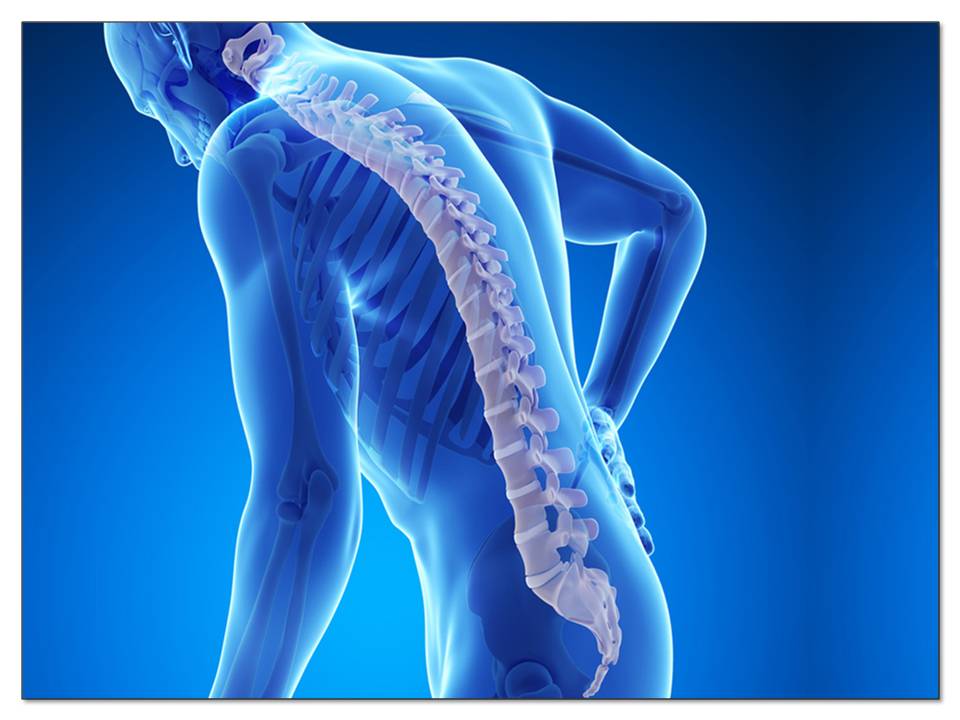
Osteoporosis

Yoga And Body Health

Yoga is a holistic practice that focuses on both physical and mental health of a person. It rejuvenates your body cells to make it ready for the external environment. Yoga includes stretching, bending and various types of expansions of one’s body while doing poses like in asanas. It gets your body to breathe and so to regulate proper blood circulation during pranayamas which actually in turn helps reach calcium and sulphur ions to the bony parts correctly. All these ensure good bone and muscle strength.

How Does Yoga Help You Battle Osteoporosis

Weakened bone density is the main symptom or more accurately, the problem that accompanies osteoporosis. So, all of the sufferers undergo the risk of bone breakage or fractures every time when something even small happens to the body. However, yoga has got your back! Want to know how?  Well, the bone strength depends on its internal structure and hence the alignment of the bone cells present internally is very important. Yoga has got that power to stimulate the constituents of bone tissues through the poses and stretches. It helps bone to breathe through and makes it flexible.

Muscles constitute the foremost supporting group for the skeletal system and during conditions like these, they have to handle the limitations of the bones. Yoga helps you to burn calories and build body muscles. Also, many of the movements that come under yoga aid in synchronizing the chemistry between the bones and muscles. Along with breathing that takes place, it helps the body in strengthening its supportive tissues like muscles and bones. Hence yoga without exception coordinates bones, muscles, joints by providing the sturdiness to each of the elements. That’s how yoga is considered as the better option for strength training.

Introduce Yourself  To Yoga

As it is known to everyone, yoga comprises asanas and pranayamas. Some of the poses (asanas) which focuses on bone strength includes

  • Virabhadrasana: also known as the warrior pose includes strengthening the chest and shoulder regions.
  • High plank pose: it strengthens your leg bones and muscles and hence the best to tackle fatigue and pain to the legs. As it also focuses on back and core strength, it also aids in maintaining the body posture.
  • Bird dog pose: In bird dogs, you can extend and neutralise your spine while strengthening your arms, legs, and core.
  • Adho mukha svanasana: This traditional posture basically strengthens the arms and legs. It promotes excellent posture of the body by encouraging body alignment.
  • Trikonasana: also known as the triangle posture, it is a great way to strengthen and extend your chest and core.
  • Vrksasana: The back and leg muscles are all strengthened in tree position. It enhances stability, balance, and as well as body posture.
  • Bananasana: With this gentle side bend, we can improve spinal flexibility which is a necessity when it comes to osteoporosis.
  • Camel pose: This high variant of camel posture is a gentle backbend that gradually makes the thoracic spine to bend inwards which is beneficial for persons with osteoporosis who are starting to round their upper backs.
  • Shavasana: We can relax in savasana as the ground’s support aids us in finding ideal spinal alignment. For osteoporosis one should avoid hugging their knees in or having a happy baby before savasana because these poses circle the back, which is not recommended for fragile bones.

Reminders To Keep Things Safe

Though all yoga asanas help you strengthen your body, certain varieties of yogic poses are better for treating osteoporosis. Practice mild, low-impact yoga such as restorative yoga. Strenuous yoga forms including ashtanga, vinyasa, and power yoga should be avoided. It’s better to do a little yoga every day than a few larger sessions per week. Every day, try to do at least 15 minutes of yoga and gradually increase the duration of your sessions from 30 to 50 minutes per day.

“To unite” is what yoga means and exercises. Attractive advantages, routine and of course the heterogeneity in the poses have always attracted people to yoga. Are you a yogi or a yoga admirer? Or haven’t even tried this yet? Then Ayurveda highly recommends you and is ready to guide you here. Keep your bones stronger like you were in your teenage years, adopt yoga against osteoporosis.