Herbal Remedies for Ocular Histoplasmosis – Causes, Symptoms, Diagnosis & Treatment
ABSTRACT
Eye health plays a vital role in maintaining overall well-being, as the eyes are highly sensitive organs that can be affected by infections, inflammation, nutritional deficiencies, and systemic disorders. Modern lifestyle factors such as continuous screen exposure, poor lighting, and environmental pollutants further increase the risk of developing various ocular conditions. Among these, certain disorders arise silently and may show symptoms only in advanced stages, leading to significant visual disturbances if not identified early. In this article, we will discuss one such condition known as Ocular Histoplasmosis Syndrome (OHS) and explore its Ayurvedic understanding and management, focusing on strengthening ocular tissues, improving retinal nourishment, and supporting overall visual function through Ayurvedic care.
INTRODUCTION
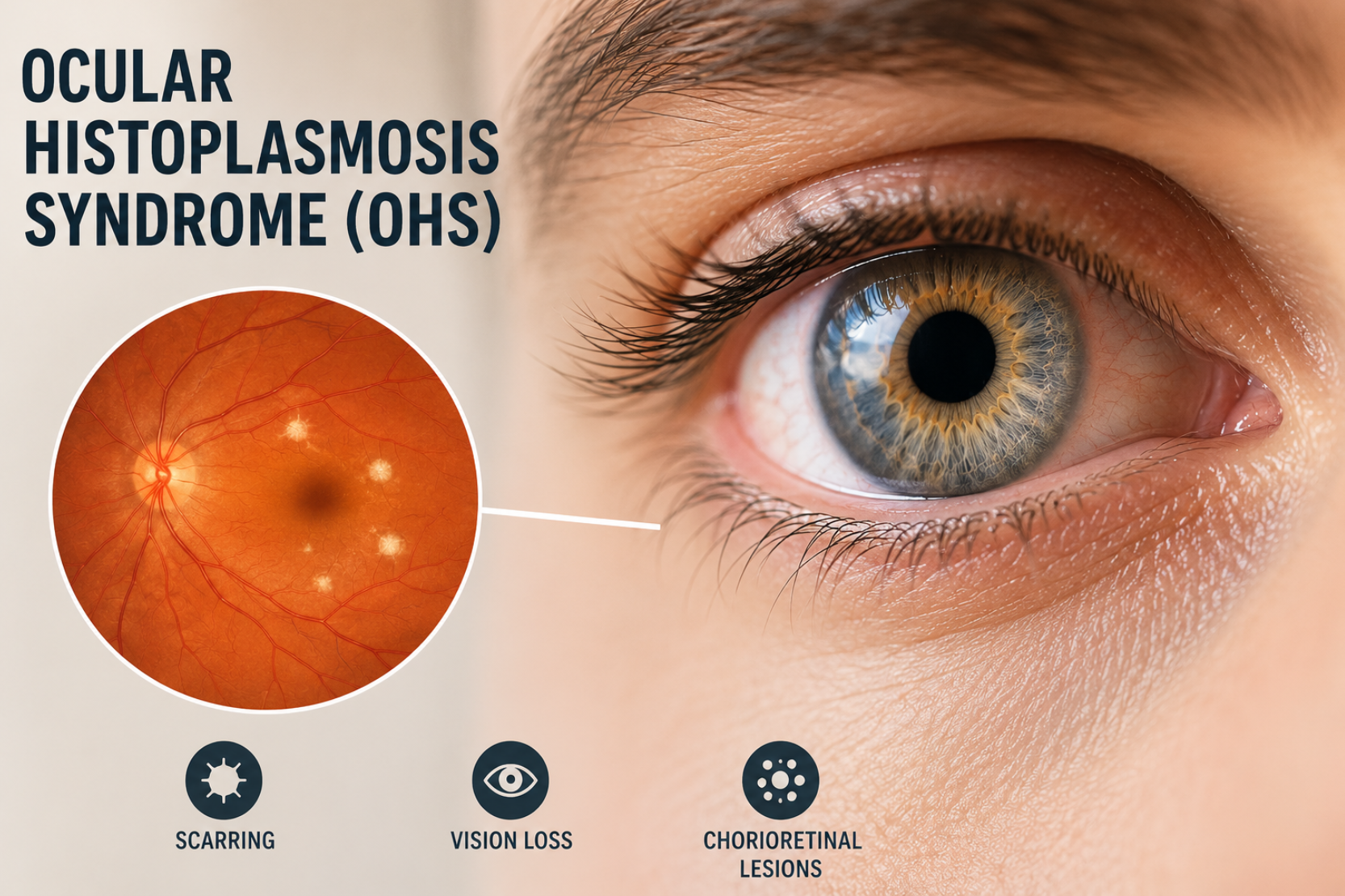
Ocular Histoplasmosis Syndrome (OHS) is an eye condition caused by a prior, often unnoticed infection with the fungus Histoplasma capsulatum, endemic to areas like the Ohio and Mississippi River Valleys. While the initial infection usually occurs in the lungs, the fungus can leave behind small, permanent scars in the retina called histo spots. The most serious complication, which typically occurs years later and causes vision loss, is the growth of abnormal, fragile blood vessels beneath these scars (choroidal neovascularization). These vessels leak and bleed, leading to blurring and distortion of the central vision, making OHS a significant cause of vision impairment in young and middle-aged adults in high-risk regions.
FACTS ABOUT OCULAR HISTOPLASMOSIS SYNDROME
- Caused by exposure to Histoplasma capsulatum, but eye disease is not due to active infection.
- Appears years or decades after the initial fungal exposure.
- Most affected individuals never had noticeable symptoms during initial infection.
- Eyes look completely normal externally.
- Ayurveda can support microcirculation, oxidative stress reduction, and retinal nourishment.
CAUSES OF OCULAR HISTOPLASMOSIS SYNDROME
Before understanding how this condition develops, it is important to explore the underlying causes that contribute to Ocular Histoplasmosis Syndrome:
- Previous Exposure to Histoplasma capsulatum : OHS begins with an earlier encounter with Histoplasma capsulatum, usually through the environment. Most people never realize they were exposed because the initial infection is mild. However, this early contact can leave behind tiny changes in the eye that may become significant years later.
- Immune System Reaction : Instead of causing immediate eye problems, the body’s defense system may react slowly over time. This delayed response can alter the deeper layers of the eye, eventually creating weak spots where new, unhealthy blood vessels may develop. These vessels are the main reason vision becomes distorted in OHS.
- Geographic Distribution and Risk : The chances of developing OHS increase for individuals who live in, or have previously lived in, areas where this organism is commonly found. Even if the exposure happened long ago, the effects can appear much later, which is why people from these regions remain at higher risk.
DIAGNOSIS OF OCULAR HISTOPLASMOSIS SYNDROME
Diagnosing Ocular Histoplasmosis Syndrome involves identifying specific changes in the eye and ruling out other conditions that may cause similar symptoms.
- Dilated Eye Exam : The doctor looks at the back of the eye to check for typical spots or changes related to OHS.
- OCT Scan : A quick scan that shows if there is swelling or abnormal vessel growth under the retina.
- Fluorescein Angiography : A dye test used to see leaking or unhealthy blood vessels.
- Vision Tests : Charts and an Amsler grid help detect blurring or distortion in central vision.
AYURVEDIC VIEW OF OCULAR HISTOPLASMOSIS SYNDROME
Ocular Histoplasmosis Syndrome can also be partially understood through the concept of Agantuj Vyadhi (externally caused disorders). The entry of fungal spores (Histoplasma capsulatum) represents an external cause, similar to how Ayurveda describes diseases triggered by external agents such as microorganisms, toxins, or environmental influences i.e. Agantuj Vyadhi. Initially, the external factor (fungal exposure) disturbs the Rakta and Pitta doshas, causing micro-injury in the retinal layers. With time, this external pathological disturbance becomes internal (nija) due to dosha imbalance—mainly Pitta-Rakta dushti—leading to scarring and later abnormal vessel growth. Thus, OHS reflects a combination of External (Agantuj) origin with External (Nija) progression, where the initial external factor triggers long-term internal pathological changes.
HERBAL REMEDIES FOR OCULAR HISTOPLASMOSIS SYNDROME BY PLANET AYURVEDA
Planet Ayurveda is a globally trusted Ayurvedic wellness brand dedicated to promoting natural healing through classical principles of Ayurveda. The company formulates authentic herbal supplements using pure, standardized extracts without chemicals, preservatives, or additives. Every product is crafted under the guidance of expert Ayurvedic doctors, ensuring safety, potency, and effectiveness. Planet Ayurveda follows a holistic approach by addressing the root cause of imbalances and supporting overall health. Its formulations are inspired by traditional Ayurvedic wisdom but produced with modern quality standards, making them suitable for global use. By understanding Ocular Histoplasmosis Syndrome through both modern insights and Ayurvedic principles, we gain a holistic perspective on retinal health. Planet Ayurveda further supports this approach with its pure, herbal formulations designed to balance doshas, nourish ocular tissues, and enhance overall eye strength—offering a natural and reliable path toward maintaining long-term vision health.
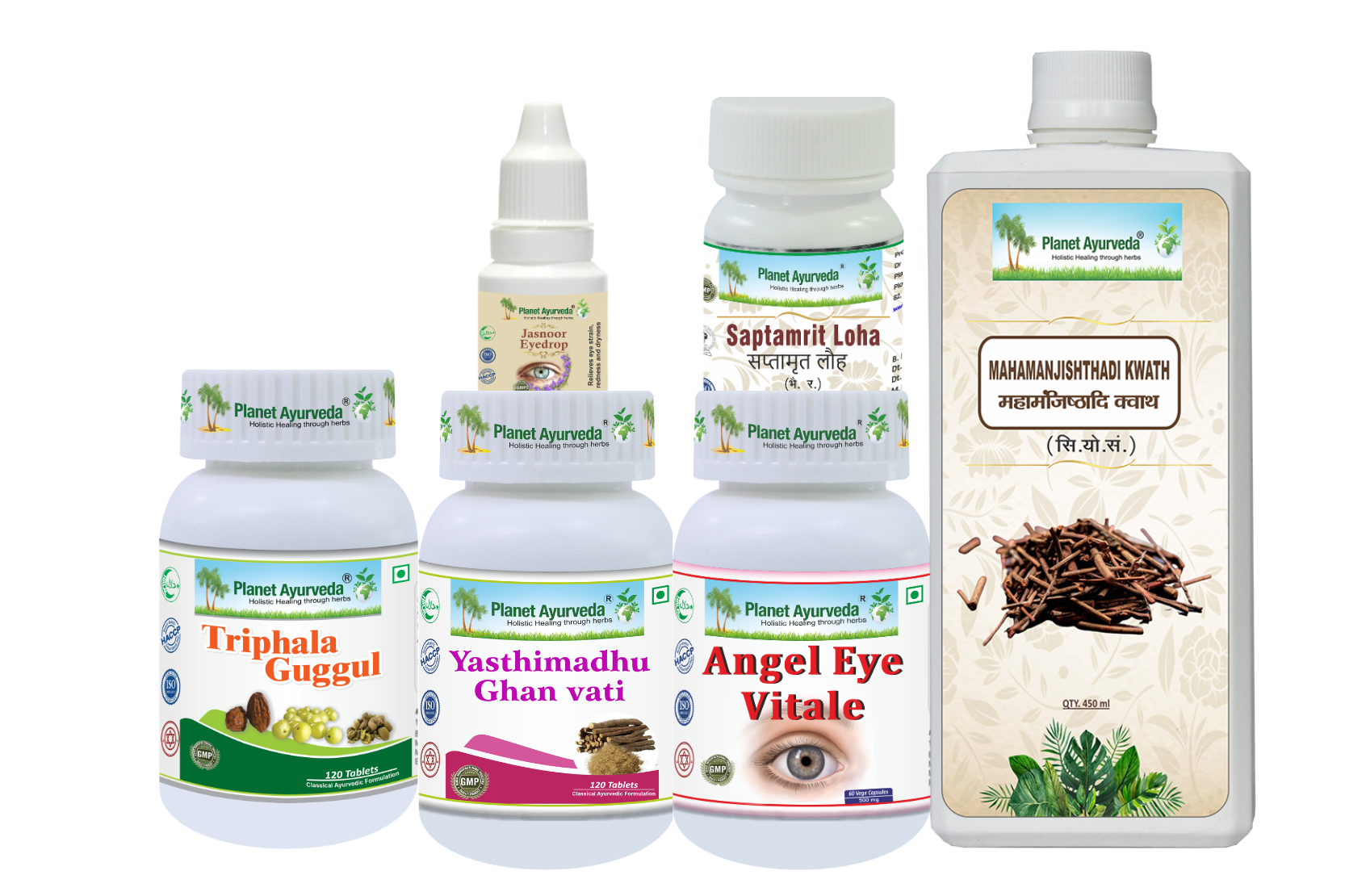
- Triphala Guggul
- Angel Eye Vitale
- Saptamrit Loha
- Mahamanjishthadi Kwath
- Yashthimadhu Ghan Vati
- Jasnoor Eye Drops
Herbal Remedies For Ocular Histoplasmosis Syndrome

PRODUCT DESCRIPTION
1. Triphala Guggul
Triphala Guggul is a classical ayurvedic formulation formulated by Planet Ayurveda as per method of preparation written in classical texts. This formulation comes in tablet form and consists of ingredients such as Amla (Emblica officinalis), Haritaki (Terminalia chebula), etc. This formulation helps in OHS by purifying Rakta, reducing inflammation, and improving microcirculation in retinal tissues. It supports the removal of Ama and prevents excessive scar buildup around affected areas. Its channel-clearing and anti-fibrotic actions strengthen retinal nourishment.
Dosage: 2 tablets twice daily with plain water after meals.
2. Angel Eye Vitale
Angel Eye Vitale is a polyherbal capsule formulation prepared by Planet Ayurveda for maintaining eye health. This formulation consists of standardised herbal extracts of Amla (Emblica officinalis), Bhringraj (Eclipta alba) and Gotukola (Centella asiatica). This remedy helps in the management of Ocular Histoplasmosis Syndrome by promoting retinal nourishment, strengthening microcirculation, and protecting ocular tissues. The herbs of this formulation help improve retinal stability, reduce oxidative stress, and support long-term visual function.
Dosage: 1 capsule twice daily with plain water after meals.
3. Saptamrit Loha
Saptamrit Loha is one of the best classical ayurvedic formulations for maintaining eye health. Planet Ayurveda formulates this medicine in tablet form and typically according to the instructions mentioned in the classical Ayurvedic texts. It helps reduce eye inflammation, supports the retina, strengthens the optic nerve, and improves blood flow to the eyes. In conditions like Ocular Histoplasmosis Syndrome (OHS), where there is irritation and weakness in the back of the eye, Saptamrit Loha can help soothe the eyes, protect the retina, and improve vision clarity.
Dosage: 1 tablet twice daily with plain water after meals.
4. Mahamanjishthadi Kwath
Planet Ayurveda prepares Mahamanjishthadi Kwath using authentic, high-quality herbs, following the traditional method using Manjistha (Rubia cordifolia), Giloy (Tinospora cordifolia), Nagarmotha (Cyperus rotundus), and other blood-purifying ingredients. This classical preparation helps purify the blood, reduce inflammation, and improve circulation, which can support eye health. It is especially useful for conditions involving Pitta and Rakta imbalance that affect the eyes, such as retinal inflammation, optic nerve stress, floaters, and mild swelling. It also supports overall tissue nourishment, helps reduce oxidative stress in ocular tissues, and promotes healthier retina and optic nerve function, making it beneficial for conditions like Ocular Histoplasmosis Syndrome (OHS).
Dosage: 2 tsp twice daily with plain water after meals.
5. Yashthimadhu Ghan Vati
Yasthimadhu Ghan Vati is one of the tablet herbal formulations manufactured by Planet Ayurveda. These tablets mainly consist of herb Yashthimadhu (Glycyrrhiza glabra). This herb plays an important role in managing Ocular Histoplasmosis Syndrome due to its anti-inflammatory, antioxidant, and tissue-nourishing properties. It helps reduce inflammation in the retina and choroid, protects ocular cells from oxidative stress, and improves microcirculation to deliver oxygen and nutrients to the optic nerve and retinal tissues.
Dosage: 2 tablets twice daily with plain water after meals.
6. Jasnoor Eye Drops
Jasnoor Eye Drops prepared by Planet Ayurveda is an Ayurvedic formulation enriched with multiple herbs known for supporting eye health. It contains herbs like Neem (Azadirachta indica), Shobhanjana (Moringa oleifera), Bhringaraja (Eclipta alba), Punarnava (Boerhavia diffusa), etc. These herbs collectively work to reduce inflammation, soothe irritation, and protect ocular tissues. They help nourish and strengthen the eyes, improve microcirculation, support retinal and optic nerve health, and provide antioxidant protection against oxidative stress. Together, these herbs maintain overall eye comfort, prevent strain, and promote healthy vision.
Method of Administration: 2 drops in each eye for 2-3 times a day.
CONCLUSION
Ocular Histoplasmosis Syndrome is a silent yet potentially vision-threatening condition that requires timely recognition and long-term care. Understanding its origin, progression, and impact on retinal structures helps create awareness and encourages early intervention. Along with modern diagnostic methods, Ayurvedic principles provide an added perspective by addressing dosha imbalance, supporting microcirculation, and promoting retinal nourishment. Planet Ayurveda’s herbal formulations further complement this approach by strengthening ocular tissues, reducing oxidative stress, and enhancing overall visual function. With consistent care, awareness, and appropriate therapeutic support, individuals can better preserve their retinal health and maintain clearer vision for the future.
