When is MRI recommended & What does it diagnose? Importance, Precautions, Cost with FAQs
Abstract
When there are conditions in the body affecting the brain, spine, nerves, joints and other soft tissues where routine tests do not give clear results, doctors prescribe MRI. In such situations, a reliable method is needed to understand what is happening inside the body without surgical intervention. MRI is a modern diagnostic tool that provides clear internal details, making it essential for accurate diagnosis and proper treatment planning.
Introduction
MRI, which stands for Magnetic Resonance Imaging, is a modern medical test that helps doctors see clear and detailed images of the inside of the human body. Unlike X-rays or CT scans, MRI does not use radiation. Instead, it uses a strong magnetic field and radio waves to create detailed images. It is widely used for imaging soft tissues such as the brain, nerves, muscles, ligaments, and organs. Due to its safety and accuracy, MRI has become an essential diagnostic tool worldwide.
Mechanism
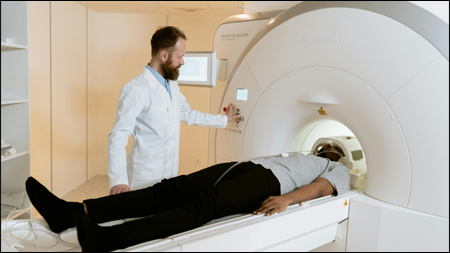
The MRI machine is a large tube-shaped device that generates a powerful magnetic field around the patient and uses radio waves to produce images. It works on the principle of nuclear magnetic resonance and primarily targets hydrogen atoms present in water and fat.
The magnetic field aligns hydrogen atoms in the body. Radio waves disturb this alignment, and when they are turned off, the atoms return to their original position and release energy signals. A computer collects these signals and converts them into detailed images of organs and tissues. This process is painless and does not harm body cells.
When is MRI Recommended
MRI is recommended when high soft tissue detail is required and radiation needs to be avoided. It is used in conditions such as suspected stroke, spinal cord compression, tumors, cysts, and infections. It is preferred over CT scan when detailed imaging of soft tissues is needed.
What Does It Diagnose
Neurological Conditions
- Multiple sclerosis
- Aneurysms
- Brain tumors
- Stroke
- Dementia-related changes
Musculoskeletal Conditions
- Ligament injuries
- Meniscus tears
- Rotator cuff injuries
- Osteoarthritis
- Avascular necrosis
Abdominal and Pelvic Conditions
- Liver diseases
- Tumors
- Pancreatitis
- Fibroids
- Endometriosis
Cardiovascular Conditions
- Heart defects
- Aortic dissection
- Myocardial viability
Oncology
- Cancer detection and staging
- Lymph node involvement
Functional MRI (fMRI)
Functional MRI is used to identify specific brain areas responsible for speech, movement, and memory by observing brain activity during tasks.
MRI with Contrast
Contrast MRI uses a dye injected into a vein to highlight organs, blood vessels, and abnormal tissues, helping in better detection of tumors, infections, and inflammation.
Importance
MRI is one of the most important diagnostic tools because it provides detailed images without radiation. It is non-invasive, painless, and safe for repeated use, including in children. It helps in diagnosis, treatment planning, and monitoring disease progression.
Precautions During MRI
- Not suitable for patients with pacemakers or metal implants
- Remove all metal objects such as jewelry and watches
- Check kidney function before contrast MRI
- Remain still during the scan
- Inform the doctor if pregnant
Cost
The cost of an MRI depends on the body part and location. In India, it ranges from ₹4,000 to ₹15,000, while in the United States it may range from $400 to $12,000. Costs may increase for contrast or advanced scans.
Frequently Asked Questions (FAQs)
1. Is MRI painful?
No, MRI is completely painless.
2. How long does an MRI take?
It usually takes 20 to 60 minutes.
3. Is MRI safe for children?
Yes, MRI is safe as it does not use radiation.
4. Can MRI detect cancer?
Yes, MRI helps detect tumors and their spread.
5. Can I eat before MRI?
In most cases yes, but fasting may be required for contrast MRI.
6. Does MRI have side effects?
No major side effects. Rare reactions may occur with contrast dye.
7. Can I bring someone with me?
Yes, but they may need to wait outside during the scan.
Conclusion
MRI is a powerful and safe diagnostic tool that provides detailed images without radiation. It plays a crucial role in diagnosing various conditions including brain disorders, joint injuries, and cancer. Understanding MRI helps patients feel more confident and prepared when undergoing this important test.
