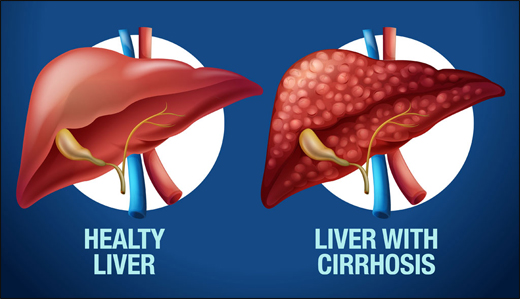
Herbal Remedies of Liver Cirrhosis – Causes, Symptoms, Diagnosis & Treatment
Abstract
Liver Cirrhosis is a long term disease in which the liver becomes damaged and develops scar tissue. This scarring cannot be reversed and make it difficult for the liver to work properly. These main causes of liver cirrhosis include long term hepatitis infection, heavy alcohol use, non- alcoholic fatty liver disease ( fat buildup in the liver), autoimmune diseases and some inherited conditions. As the disease gets worse, it can lead to serious health problems such as high blood pressure in the liver, fluid buildup in the abdomen (ascites), confusion due to liver damage (hepatic encephalopathy), bleeding from enlarged veins and liver failure. In the early stages, many people may not have any symptoms, so the disease can be difficult to detect. Doctors diagnose cirrhosis using a physical examination, blood test, image scans and sometimes a liver biopsy. Treatment aims to manage the cause of the disease, prevent complications, encourage healthy lifestyle changes and monitor the patient’s condition. If the liver is severely damaged, a liver transplant may be needed. Finding the disease early and getting proper treatment can help improve a person’s health , quality of life and chances of living longer. In this write up we will discuss it in detail!
Introduction
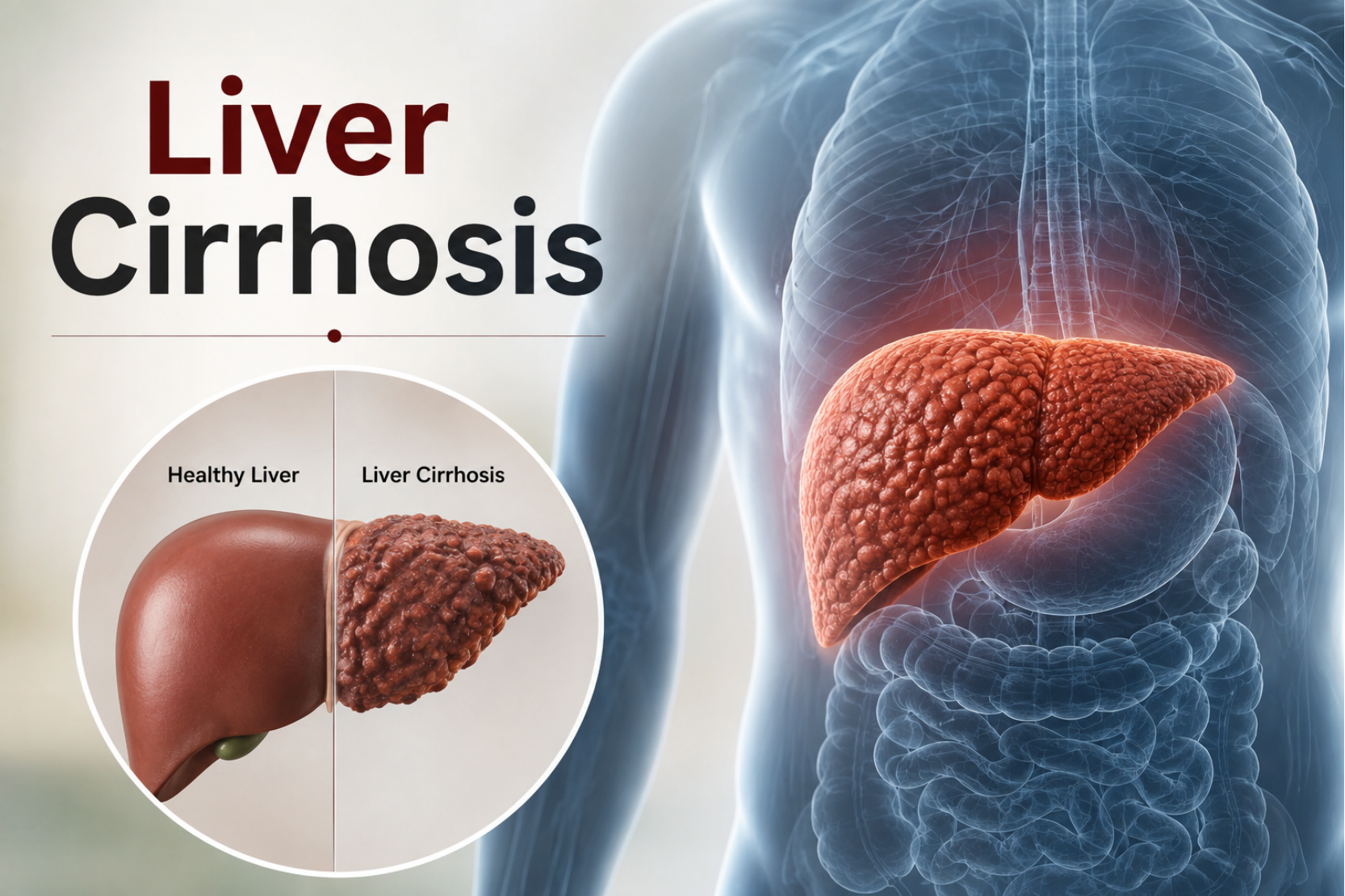
The Liver is the largest gland in the human body and performs many important functions, such as helping with digestion, metabolism and removing harmful substances(detoxification) from the blood. It has a unique ability to repair itself because liver cells (hepatocytes) can grow and replace damaged cells. However, when the liver is damaged repeatedly over a long period, such as from heavy alcohol use, chronic hepatitis B or C infection, or fatty liver disease, it cannot heal properly. Instead, inflammation occurs and scar tissue begins to form. Over time, this scar tissue replaces healthy liver tissue and forms nodules, changing the normal structure of the liver and reducing its ability to function. This condition is called liver cirrhosis. As Cirrhosis progresses, it can block normal blood flow through the liver and lead to serious complications, including liver failure. Common symptoms include extreme tiredness, yellowish of the skin and eyes (Jaundice) and swelling of the abdomen or legs. Early diagnosis and proper treatment are important to slow the disease and improve quality of life.
Causes
- Alcohol use — Heavy, long term drinking liver cells and cause swelling
- Viral Hepatitis – Ongoing infection from hepatitis B or Hepatitis C lead to continuous inflammation and tissue injury.
- Fatty Liver Disease (MASLD/MASH) – Excess fat builds up in the liver, often linked to obesity, high blood pressure and diabetes
- Autoimmune Hepatitis – Your body immune system attacks healthy liver tissues
- Bile Duct Diseases – Conditions like primary biliary cholangitis block bile flow, causing backup and damage.
- Genetic Disorders – Inherited conditions like hemochromatosis (iron buildup) or Wilson’s disease(copper buildup) harm the organ over time.
- Sedentary lifestyle
Causes According To Ayurveda
- Aggravated Pitta Dosha
- Aggravated Kapha Dosha
- Vitiated Vata Dosha
- Mandagni (Low Metabolic Fire)
- Ama Accumulation:
- Blocked Channels
- Tissue Starvation
- Madhyapa (Excessive Alcohol)
- Viruddha Ahara (Incompatible Foods
- Vegadharana (Suppressing Natural Urges)
Symptoms
- Extreme tiredness and weakness
- Yellowing of the skin and eye(jaundice)
- Fluid buildup in the abdomen (ascites)
- Loss of appetite and weight loss
- Nausea or vomiting
- Mild discomfort or pain in the upper right belly
- Redness on the palms of the hand
- Dark Urine
- Itchy skin
- Spider like small blood vessels on the skin
- Confusion, memory loss or trouble sleeping due to toxin buildup(hepatic encephalopathy)
Diagnosis
- Medical history : Ask if a patient drinks alcohol, takes any medicine or has liver disease such as hepatitis.
- Body examination: Check for yellow skin or eye(Jaundice),swollen legs or an enlarged liver.
Blood Test
- Liver Function Test – Liver works poorly → Bilirubin increased , Albumin decreased
- Blood count – Blood cells go down → Platelets decreased
- Ultrasound , CT or MRI – Liver becomes hard, small, and scarred
- Elastography – Liver is stiff
- Liver Biopsy – Confirms cirrhosis (scarring)
- Virus screen – Test for hepatitis viruses
Diagnosis According To Ayurveda
Rogi Pariksha (Patient History)
- Ask if patient drink alcohol
- Ask about eating habits
- Ask if the patient had jaundice or liver disease before
- Ask about symptoms like weakness, poor appetite, swollen abdomen and yellow eyes
Darshana (Observation)
- Look for yellow skin and eyes
- Check if the abdomen is swollen
- Check for swelling in the legs
- Look for weight loss and weakness
Sparshana (Touch/ Examination)
- Feel the abdomen to see if the liver is enlarged or hard
- Check if there is fluid in the abdomen
Prashna (Question)
- Ask if the patient has abdominal pain
- Ask about nausea or vomiting
- Ask about bowel and urine habits
- Ask about alcohol use and daily lifestyle
Ashtavida Pariksha (Eight-Fold Examination)
- Nadi (Pulse)
- Mutra (Urine)
- Mala (Stool)
- Jihva (Tongue)
- Shabda (Voice)
- Sparsha (Touch)
- Drik (Eye)
- Akruit (Body Build)
Modern Treatment
Modern Treatment of liver cirrhosis to stop further liver damage, treat complications and improve the patient’s health. If the liver is severely damaged and no longer works, a liver transplant may be needed.
- Efruxifermin : A new medicine that may reduce liver scarring(fibrosis) and help repair the liver in people with early-stage cirrhosis by fatty liver disease(MASH).
- ION224 : A new medicine that reduces fat buildup in the liver, decreases inflammation and may improve liver scarring without requiring major weight loss.
- Macrophage Cell Therapy : An experimental treatment that uses the patient’s own immune cell to repair damaged liver tissue and reduce complications in advanced liver disease.
Ayurvedic Overview
In Ayurveda, liver cirrhosis is primarily understood as an advanced stage of Yakrit Roga (liver disorders), closely linked with Kumbha Kamala (severe, chronic jaundice) and Jalodara (ascites). The liver (Yakrit) is the primary organ of Pitta dosha, specifically Ranjaka Pitta, which governs metabolism, blood cell formation (Rakta Dhatu), and nutrient processing.
Pathophysiology (Samprapti)
- Dosha Imbalance : Chronic consumption of alcohol, excessively spicy, oily, or processed foods overactivates Pitta dosha and severely impairs digestive fire (Agni).
- Channel Obstruction (Srotorodha) : Poorly digested toxins (Ama) enter circulation and block the micro-channels (Rakta-vaha srotas) supplying the liver.
- Tissue Scarring : As channel blockage persists, aggravated Vata dosha dries out hepatic tissue, causing progressive scarring, shrinkage, and loss of function—the structural equivalent of cirrhosis.
Therapeutic Approach
- Deepana & Pachana : Utilizing targeted herbs to eliminate accumulated Ama and restore metabolic Agni.
- Shodhana (Cleansing) : Carefully monitored Virechana (therapeutic purgation) to evacuate excess Pitta and systemic toxins, provided the patient has sufficient strength.
- Hepatoprotective Herbs : Classical botanicals like Kutki (Picrorhiza kurroa), Bhumyamalaki (Phyllanthus niruri), Punarnava (Boerhavia diffusa), and Kalmegh help reduce hepatic inflammation and support fluid balance.
- Diet & Lifestyle (Pathya) : A strict cooling, low-fat diet, complete abstinence from alcohol, and supportive Rasayana (rejuvenating) therapies are essential.
Ayurveda views cirrhosis as a serious, deep-seated (Gambhira) disorder requiring strict medical supervision alongside conventional clinical care.
Herbal Formulation For Liver Cirrhosis By Planet Ayurveda
Planet Ayurveda is an Indian herbal manufacturing and healthcare enterprise founded by Dr. Vikram Chauhan in Mohali, Punjab. The company specializes in producing 100% natural Ayurvedic herbal supplements made from carefully selected medicinal plants. Its product range includes standardized plant extract capsules, powders, herbal teas, and liquid formulations featuring herbs such as Ashwagandha, Curcumin, and Triphala. All products are manufactured without the use of chemicals, preservatives, artificial colors, or additives, ensuring purity and authenticity. In addition to manufacturing herbal products, the company offers Ayurvedic clinical consultations and exports its products to customers worldwide, promoting traditional Ayurvedic healthcare through natural, high-quality herbal formulations. Ayurvedic medicine forLiver Cirrhosis are following :
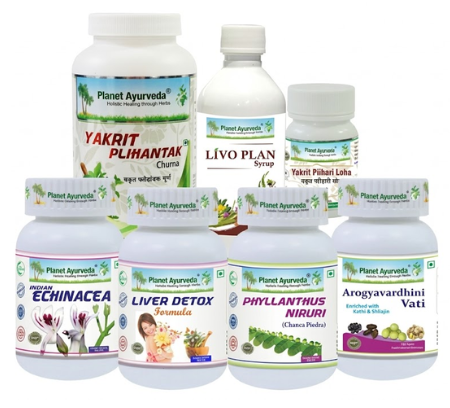
1. Indian Echinacea Capsule
2. Yakrit Plihantak Churna
3. Phyllanthus Niruri Capsule
4. Liver Detox Formula
5. Arogyavardhini vati
6. Yakrit Pihari Loha
7. Livo Plus Syrup
Herbal Remedies of Liver Cirrhosis

Product Description
1. Indian Echinacea Capsules
Indian Echinacea Capsules contain Kalmegh (Andrographis paniculata), a well-known Ayurvedic herb traditionally valued for supporting liver health and maintaining normal liver function. Kalmegh possesses antioxidant and anti-inflammatory properties that help protect liver cells from oxidative stress. According to Ayurveda, it helps maintain a healthy digestive system, supports natural detoxification, promotes healthy liver enzyme activity, and contributes to overall metabolic wellness.
Dosage : 2 capsules twice daily after meals with warm water.
2. Yakrit Plihantak Churna
Yakrit Plihantak Churna is a classical herbal formulation containing Bhumi Amla (Phyllanthus niruri), Bhringraj (Eclipta alba), Kalmegh (Andrographis paniculata), Punarnava (Boerhavia diffusa), Sharpunkha (Tephrosia purpurea), and Kaasni (Cichorium intybus). These herbs are traditionally used in Ayurveda to support healthy liver function, promote natural detoxification, aid digestion, and maintain healthy bile flow. The formulation also helps protect liver tissues from oxidative stress and supports overall hepatic wellness.
Dosage: Boil 1 teaspoon of the powder in 400 ml of water until it reduces to approximately 50 ml. Strain the liquid, discard the residue, and consume the fresh preparation twice daily.
3. Phyllanthus Niruri Capsules
Phyllanthus Niruri Capsules contain standardised extract Bhumi Amla (Phyllanthus niruri), a herb traditionally recognized in Ayurveda for promoting liver health. Rich in naturally occurring phytochemicals, it supports healthy liver cell function, assists the body’s natural detoxification processes, promotes digestion, and helps maintain normal liver function.
Dosage: 2 capsules twice daily after meals with warm water.
4. Arogyavardhini Vati
Arogyavardhini Vati is a classical Ayurvedic formulation containing herbs such as Katuki (Picrorhiza kurroa), Guggulu (Commiphora mukul), Chitraka (Plumbago zeylanica), Eranda (Ricinus communis), Haritaki (Terminalia chebula), Bibhitaki (Terminalia bellirica), and Amalaki (Emblica officinalis). Traditionally, this formulation is used to support Agni (digestive fire), promote healthy digestion, assist the body’s natural detoxification processes, support liver function, and maintain overall metabolic balance and well-being.
Dosage: 2 tablets twice daily after meals with warm water.
5. Yakrit Plihari Loha
Yakrit Plihari Loha is a classical Ayurvedic formulation prepared using Loha Bhasma (purified iron calx), Shuddha Parada (purified mercury), Shuddha Gandhaka (purified sulphur), and other traditionally processed ingredients. According to Ayurveda, it supports healthy liver and spleen function, promotes digestion and metabolism, enhances nutrient assimilation, and helps maintain overall strength and vitality. It is also traditionally used to support healthy blood formation and general wellness.
Dose: 1 tablet twice daily after meals with warm water.
6. Liver Detox Capsules
Liver Detox Capsules are a carefully formulated Ayurvedic blend of herbs traditionally used to support healthy liver function and natural detoxification. The formulation contains herbs such as Kalmegh (Andrographis paniculata), Bhumi Amla (Phyllanthus niruri), Katuki (Picrorhiza kurroa), Punarnava (Boerhavia diffusa), Makoy (Solanum nigrum), and Kaasni (Cichorium intybus). These herbs possess antioxidant and hepatoprotective properties that help protect liver cells from oxidative stress, support healthy bile secretion, promote digestion, and maintain normal liver enzyme activity. According to Ayurveda, the formulation helps balance Pitta dosha, supports the body’s natural detoxification processes, and promotes overall hepatic wellness.
Dosage: 2 capsules twice daily after meals with warm water.
7. Livo Plan Syrup
Livo Plan Syrup is a carefully formulated Ayurvedic herbal syrup containing standardized extracts of Bhringraj (Eclipta alba), Kalmegh (Andrographis paniculata), Bhumi Amla (Phyllanthus niruri), Shyonak (Oroxylum indicum), Rohitaka (Tecomella undulata),, Patol (Trichosanthes dioica) and many others . According to Ayurveda, these herbs help balance Pitta dosha, support healthy liver function, promote natural detoxification, aid digestion, and maintain healthy bile flow. The formulation also provides antioxidant and hepatoprotective support, helping protect liver cells from oxidative stress while promoting overall hepatic wellness and metabolic health.
Dosage: 1–2 teaspoons twice daily after meals, or as directed by an Ayurvedic physician.
Diet In Liver Cirrhosis
To Take
- Dal, beans,chickpeas
- Tofu,soy products
- Egg
- Fish or lean chicken
- Low Fat dairy
- Nuts and seeds
- Spinach,carrots,gourds,beans,broccoli
- Apple, berries,oranges,papaya,guava
- Whole grain,oats,whole wheat roti, brown rice,millets
- Mustard ,olive or groundnut oil
To Avoid
- Salt
- Pickles
- Papad
- Packaged snacks
- Chips
- Instant noodles
- Processed meals
- Raw shellfish
- Undercooked meat or eggs
- Unpasteurized dairy
Conclusion
At last, we can say that Liver Cirrhosis is a chronic and progressive liver disease in which healthy liver tissue is gradually replaced by scar tissue, leading to impaired liver function and potentially life-threatening complication if left untreated.Early diagnosis, timely medical management and lifestyle modification such as complete avoidance of alcohol, a balanced nutrition diet and regular monitoring are essential to slow disease progression and improve quality of life.Modern medicine focuses on treating the underlying cause, preventing complication, and considering liver transplantation is advanced cases.From an Ayurvedic perspective, cirrhosis is correlated with condition such as Kamala, Yakrit Roga and Udara Roga where treatment aims to restore the balance of the dosha, improve digestion(Agni) eliminate Ama and support liver health through herbal formulation, dietary regulation and healthy lifestyle practices. As integrative approach that combines evidence-based medical care with supportive Ayurvedic measures under qualified healthcare supervision may help improve symptoms management and overall well-being.However, herbal medicine should never replace standard medical treatment and patient should always consult their healthcare provider before starting any new therapy to ensure safety and avoid potential interaction