Nephrotic Syndrome – An Ayurvedic View and Treatment
Abstract
Kidneys are a pair of organs in our body that regulates very essential body functions and secretion of certain hormones. The entire kidney and the whole urinary system are combined referred to as the Renal system. Any abnormality in this system hampers the body’s functioning a lot. The nephrons, and glomerulus, are a part of our renal system that is responsible for nephritic syndrome. The abnormality of nephrons is referred to as nephritic syndrome in which protein-related abnormalities are seen. In this article, we will discuss those abnormalities of the renal system. All possible causes, symptoms, and treatment methods will be detailed in this article so that you may understand the disease very well and can choose Ayurvedic management for yourself and your close ones.
Introduction
Nephrotic syndrome is defined as an abnormality of the renal system in which excessive protein is released from the body through urine. Adequate protein levels are maintained by our body, which is disturbed in this condition. Low proteins in the body will result in abnormalities in normal body functioning in which proteins are required. The glomeruli in the kidneys are responsible for the filtration of waste products from the urine. An abnormality in which glomeruli fails to do their function properly, and excrete excess protein, and albumin from the body. Regular follow-up is mandatory for kidney diseases. Certain medications are recommended for the treatment of these disorders. Decreased protein levels in the body primarily show symptoms of edema, which shows swelling in the legs and ankle region due to water retention in the lower extremities due to low protein levels in the blood. This will cause weight increase and weakness at the same time. You can also notice excess foam in the urine, which may indicate the presence of protein in the urine.
Ayurvedic Aspect
According to Ayurveda nephritic syndrome occurs due to the blockage of minute channels called Srotas of the renal system. The mutraveh srotas carry urine from the body to outside the body. Any abnormality in these channels leads to abnormal symptoms in the renal system. The srotas fail to clean the abnormalities and the required protein from the body starts excreting from the body. Ayurveda offers very effective treatment for all types of kidney-related disorders and decreases the requirement for modern treatment facilities.
Causes
Certain causes for Nephrotic syndrome are-
- Genetic causes
- Autoimmune disorders like- Diabetes
- Certain medications have an adverse impact
- Glomerulonephritis
Symptoms
Abnormal symptoms of nephritic syndrome include
- High Protein levels in urine
- Fatigue
- Weakness
- Low protein in the blood
- Weight gain
- Decreased urine output
- Hypertension
- Hypoalbuminemia
- Hyperlipidemia
- Edema
- Foam in urine
Diagnosis
Diagnosis is based on
- Physical examination
- Medical test
- Blood test
- Lipid profile
- Serum albumin
- Urinalysis
- Kidney function test
- Ultrasound
- CT scan
- MRI scan
- Kidney biopsy
Treatment
Treatment of Nephrotic syndrome includes
- Steroids
- Immunosuppressive drugs
- Diuretics
- Angiotensin-converting enzyme infusion
- Anticoagulants
- Protein intake cut in diet
Ayurvedic medicines for the treatment of Nephrotic Syndrome by Planet Ayurveda
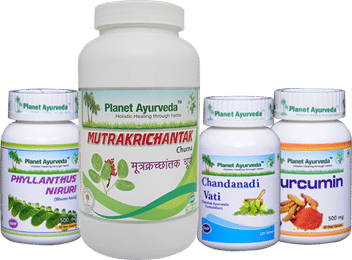
Planet Ayurveda has its roots straight in treating all diseases from their root cause. our doctors rule out the exact cause of the disease and the naturally prepared herbal medicines are used to eliminate the cause and the existence of the disease. Whereas there are certain limitations too. The medicines used are recommended after a complete evaluation of the medicine as well as the disease. The medicines are 100% pure and need to be prescribed very carefully under strict provisions. Different medicines prepared by Planet Ayurveda, that are recommended to treat Nephrotic Syndrome are
Products List
- Phyllanthus Niruri
- Mutrakrichantak churna
- Chandanadi Vati
- Curcumin Capsules

Products Description
1. Phyllanthus Niruri
Phyllanthus niruri commonly known as Bhumi Amalaki is an essential ayurvedic herb that is used in the preparation of these wonderful herbal capsules. As described in Ayurveda texts it is an herb with multiple benefits like other Ayurvedic herbs. The special properties of this herb such as mild diuretic, blood purifier, balanced Pitta dosha, etc make it useful for the treatment of nephritic syndrome disease. This is also used as a general tonic to overcome body debility.
Dosage- Take 2 capsules twice daily.
2. Mutrakrichantak churna
This ayurvedic churna contains standard extracts of herbs such as- Varun (Crataeva nurvala), Gokshur (Tribulus terrestris), etc. This is a well-known powerful diuretic churna that has certain health benefits. The essential properties of this medicine help manage abnormal symptoms of nephritic syndrome like more kidney and whole renal system-related problems.
Dosage– Take 1 teaspoon twice daily.
3. Chandanadi Vati
This polyherbal formulation helps treat various disorders related to the renal system. Each tablet contains herbs such as Safed chandan (sandalwood), Kapur, Pashanbhed, Kattha, etc. These tablets have cool potency and have proved to be effective in diseases such as- cystitis, nephritic syndrome, kidney stones, uric acid levels, etc. They maintain healthy blood circulation throughout the body. Balanced Pitta and Kapha dosha will maintain good body metabolism that is extremely helpful in treating the disease.
Dosage– Take 2 tablets twice daily.
4. Curcumin Capsules
These capsules are used as natural herbal supplements for many disorders. These capsules have supplementary properties along with other disease-curing properties too, such as anti-inflammatory properties, anti-allergic properties, etc. It cures many abnormalities such as- itching, skin diseases, Pitta dosha aggravation, Digestive problems, joint-related problems, and problems in the renal system and kidney. Taking medicine in the right amount normalizes the metabolism and treats many diseases.
Dosage– Take 2 capsules twice daily.
Contact Planet Ayurveda Support Team to provide you the costing / ordering and delivery information at – costing.planetayurveda@gmail.com or Call at 0172-521-4040 (India), +91-172-521-4040 (Outside India) or Whatsapp at (+91) 9915-593-604
Conclusion
Kidney patients are increasing in number in the world due to various causes and wrong lifestyles. Treating these problems with Ayurveda is now very affordable and well-manageable. You can choose Ayurveda for a complete side effects-free, complications-free, toxins-free, and steroids free treatment. Various herbal remedies, therapies, products, and medicines are used in the management of your disease of the renal system. Different therapies and modifications are recommended to different patient’s accordingly, depending on various factors such as the severity of the disease, body prakriti, region, etc. For any related query and to know more about the treatment, you can contact us at our official website www.planetayurveda.com