Herbal Remedies of Jock Itch – Causes, Symptoms, Diagnosis & Treatment
ABSTRACT
Skin health is an essential aspect of overall physical comfort and well-being, acting as a primary barrier against environmental pathogens and irritants. However, the skin is vulnerable to various superficial fungal infections, particularly in warm, moist areas of the body. Among these, Jock Itch—medically known as tinea cruris—is one of the most common and uncomfortable dermatological conditions. Characterized by an itchy, red, or discolored rash, it primarily affects the groin and upper inner thighs. Unlike systemic skin disorders, jock itch is a superficial fungal infection that spreads easily under conducive conditions like friction, sweat, and tight clothing. While modern medicine utilizes topical and oral antifungals for swift management, Ayurveda addresses the condition holistically by balancing internal doshas, clearing systemic toxins, and soothing the skin using potent herbal formulations. In this article, we shall learn more about its causes, symptoms, diagnosis, and comprehensive management.
INTRODUCTION
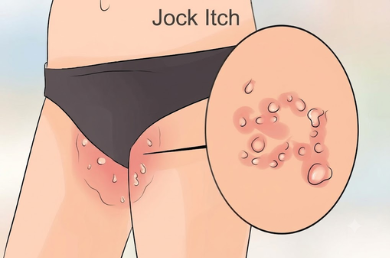
Jock itch, medically known as tinea cruris, is a common fungal infection caused by dermatophytes—a group of microscopic fungi that thrive on keratinized tissues such as skin, hair, and nails. The infection typically targets the warm, damp folds of the skin, most notably the groin, perineum, and upper inner thighs.
The underlying fungi multiply rapidly in dark, humid environments, leading to skin inflammation, intense itching, and scaling. While jock itch is generally non-serious and restricted to the superficial layers of the epidermis, it is highly contagious and can easily spread via direct body contact or contaminated personal items such as towels, bed sheets, and athletic gear. It frequently co-occurs with an athlete’s foot (tinea pedis), as the infection can be transferred from the feet to the groin while dressing. Although it can affect anyone, it is most frequently observed in adult men, athletes, and individuals living in humid climates. Early recognition and targeted treatment are vital to prevent deep skin excoriation, secondary bacterial infections, and chronic recurrences.
CAUSES
Jock itch develops when dermatophytes (most commonly Trichophyton rubrum or Epidermophyton floccosum) overgrow on the outer layer of the skin.
Common causes include
- Prolonged Moisture and Sweat: Trapped perspiration in the groin area creates an ideal breeding ground for dermatophytes.
- Friction and Chafe: Continuous rubbing between the thighs or against tight clothing damages the epidermal barrier, facilitating fungal colonization.
- Spread from Athlete’s Foot (Tinea Pedis): Transferring fungus from the feet to the groin area via hands or towel usage.
- Sharing Personal Belongings: Using unwashed towels, gym gear, or clothing belonging to an infected individual.
- Warm and Humid Climates: Living in or visiting regions with high heat and humidity levels.
Risk factors include
- Male gender (due to natural skin fold anatomy)
- Wearing tight, non-breathable undergarments or synthetic clothing
- Excess body weight or obesity (creating deeper skin folds)
- Excessive sweating (hyperhidrosis)
- Weakened immune system (e.g., diabetes mellitus, HIV, or immunosuppressive therapy)
- Poor personal hygiene practices
SIGNS AND SYMPTOMS
The symptoms of jock itch typically start in the crevice of the groin and can spread outward onto the inner thighs, buttocks, and abdomen, usually sparing the scrotum.
Common symptoms include
- An itchy, burning, or stinging rash in the groin area
- Red, purple, or brown discoloration depending on skin tone
- Flaking, peeling, scaling, or cracking skin along the affected region
- A raised, well-defined outer border that may appear ring-shaped or active
- Blistering or oozing in severe inflammatory cases
- A rash that worsens with exercise, physical activity, heat, or tight clothing
- Darkening of the skin (hyperpigmentation) in chronic, long-standing cases.
INVESTIGATIONS
A clinical evaluation is usually sufficient to diagnose tinea cruris, though specific lab tests are conducted in persistent or atypical cases to rule out conditions like psoriasis, intertrigo, or erythrasma.
Clinical Assessment
- Visual inspection of the characteristic rash border and location
- Detailed medical history regarding hygiene, physical activities, and climate
- Assessment for concomitant fungal infections (e.g., examining the feet for athlete’s foot)
Diagnostic Testing
- KOH Examination: Direct microscopic visualization of skin scrapings treated with Potassium Hydroxide (KOH) to detect fungal hyphae.
- Fungal Culture: Isolating the specific pathogen in a culture medium to guide targeted therapy for drug-resistant cases.
- Wood’s Lamp Examination: Ultraviolet illumination used to rule out bacterial infections like erythrasma (Corynebacterium minutissimum), which fluoresces coral-red.
MANAGEMENT
Management of tinea cruris aims to eliminate the fungal pathogen, alleviate itching, restore the skin barrier, and prevent future recurrences.
Conventional treatment options include
- Topical antifungal creams, ointments, or sprays (e.g., terbinafine, clotrimazole, miconazole) applied daily for 2 to 4 weeks
- Oral antifungal medications (e.g., fluconazole, itraconazole, oral terbinafine) for extensive, severe, or treatment-resistant infections
- Mild topical corticosteroids (short-term) combined with antifungals to rapidly reduce severe inflammation and itching
Preventative Lifestyle Measures
- Washing the groin area daily with mild soap and drying thoroughly with a clean towel.
- Changing undergarments daily, or immediately after strenuous physical exercise.
- Wearing loose-fitting, breathable cotton underwear and avoiding tight synthetic trousers.
- Dusting antifungal or absorbent powders in skin folds to reduce excess moisture.
- Treating an active athlete’s foot concurrently to eliminate fungal reservoirs.
- Avoiding the sharing of towels, clothes, or personal athletic equipment.
AYURVEDIC VIEW AND MANAGEMENT
In Ayurveda, skin diseases are categorized under the umbrella term Kushtha. Jock itch closely correlates with Dadru Kushtha, a condition primarily driven by an imbalance in Pitta and Kapha Doshas, which subsequently vitiates the Rasa (plasma) and Rakta (blood) tissues.
- Kapha aggravation manifests as excessive moisture, itching (Kandu), and scaling.
- Pitta aggravation causes local inflammation, redness (Raga), burning sensations (Daha), and elevated temperatures.
Unhealthy dietary choices (such as excessive consumption of oily, spicy, sour, or fermented foods), humid weather, improper hygiene, and sedentary habits lead to the accumulation of toxins (Ama) in the body, creating an environment favorable for Dadru.
Ayurvedic management focuses on detoxifying the body (Rakta Shodhana), balancing Pitta-Kapha doshas, clearing structural channels (Srotas), and applying soothing, anti-fungal (Kusthagna) external formulations.
General Ayurvedic measures include
- Following a Pitta-Kapha pacifying diet rich in bitter, astringent, and light foods while avoiding sour, salty, and excessively spicy dishes.
- Avoiding dairy products like yogurt (Dahi) and heavy, fried, or fermented food items.
- Maintaining immaculate personal hygiene and keeping skin folds clean and dry.
- Applying soothing herbal pastes (Lepa) containing neem, turmeric, or aloe vera locally under expert guidance.
- Utilizing classical therapies like Virechana (therapeutic purgation) or Raktamokshana (bloodletting) in severe, recurrent skin conditions.
HOME REMEDY: NEEM AND TURMERIC PASTE
Neem and Turmeric paste is a traditional Ayurvedic topical remedy widely recognized for its potent antifungal, antibacterial, and anti-inflammatory properties, making it highly effective in soothing symptoms of jock itch.
Ingredients
- Fresh Neem leaves (or organic Neem powder): 10–12 leaves (or 1 tablespoon powder)
- Turmeric powder (Haridra): 1/2 teaspoon
- Clean water or Rose water: As needed to form a fine paste
Method of Preparation
- Wash fresh neem leaves thoroughly with clean water.
- Grind the leaves with a small amount of water to form a smooth paste (or mix neem powder with water).
- Add the turmeric powder to the mixture and blend thoroughly.
- Transfer the prepared paste to a clean container.
WHY NEEM AND TURMERIC?
Neem
In Ayurveda, Neem (Azadirachta indica) possesses Tikta (bitter) and Kashaya (astringent) tastes with a cooling energy (Shita Virya), making it an ideal herb to calm aggravated Pitta and Kapha. Phytochemically, neem contains bioactive compounds like azadirachtin and nimbidin, which exhibit strong antifungal activity against dermatophytes, reduce localized swelling, and calm intense skin itching.
Turmeric
Turmeric (Curcuma longa) contains curcumin, a potent natural antioxidant and antimicrobial agent. In Ayurveda, turmeric is celebrated as a premier Varnya (complexion-enhancing) and Kusthagna (skin-disease relieving) herb. It effectively clears skin toxins, accelerates epidermal repair, and forms a protective antimicrobial barrier over cracked skin folds.
HOW TO USE
- Clean the affected groin area gently with water and pat completely dry with a tissue or clean towel.
- Apply a thin layer of the paste over the affected skin folds.
- Allow it to sit for 15 to 20 minutes until dry.
- Rinse off gently with lukewarm water and thoroughly dry the area. Repeat once daily.
Caution & Note
Ensure the area is dried completely after washing, as moisture encourages fungal growth. Discontinue use if localized skin irritation or allergic contact dermatitis occurs.
HERBAL REMEDIES BY PLANET AYURVEDA FOR JOCK ITCH
Planet Ayurveda is a globally recognized herbal healthcare organization committed to promoting wellness through authentic Ayurvedic formulations. Prepared in GMP-certified facilities using high-grade, standardized herbal extracts, Planet Ayurveda’s products are free from synthetic chemicals, additives, preservatives, and heavy metals. By combining traditional Ayurvedic wisdom with modern quality standards, Planet Ayurveda offers specialized herbal supplements designed to support skin integrity, balance internal doshas, and soothe skin conditions like Dadru (jock itch).
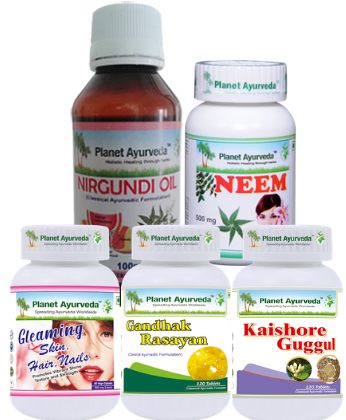
Planet Ayurveda presents the following list of products to support skin health and manage fungal skin conditions:
1. Neem Capsules
2. Gandhak rasayan
3. Kaishore Guggul
4. Gleaming Skin Hair Nail Formula
5. Nirgundi Oil.
Care Pack of Jock Itch

PRODUCT DETAILS
1. Neem Capsules
Formulated with pure standardized extract of Neem (Azadirachta indica), these capsules act as a natural blood purifier (Rakta Shodhak) and antifungal agent. They balance Pitta and Kapha doshas, soothe skin redness, relieve intense itching (Kandu), and destroy deep-seated fungal pathogens causing skin lesions.
Dosage: 2 capsules twice daily, with plain water after meals.
2. Gandhak Rasayan
Gandhak Rasayan is a classical Ayurvedic mineral-based formulation containing purified Sulfur (Shuddha Gandhak). Renowned for its rejuvenating (Rasayana) and antimicrobial properties, it aids in clearing toxins, combating fungal skin infections, mitigating chronic skin burning, and improving overall dermal health.
Dosage: 2 tablets twice daily, with plain water after meals.
3. Kaishore Guggul
Kaishore Guggul is a classical polyherbal formulation containing Guduchi (Tinospora cordifolia), Triphala, and Shuddha Guggulu (Commiphora mukul). It works by eliminating metabolic toxins (Ama) from the bloodstream, balancing Pitta dosha, reducing local inflammation, and accelerating tissue recovery in persistent dermatological issues.
Dosage: 2 tablets twice daily, with plain water after meals.
4. Gleaming Skin Hair Nail Formula
This herbal blend combines powerful skin-nourishing herbs like Manjistha (Rubia cordifolia), Pit Papda (Fumaria officinalis), Chirata (Swertia chirata), and Ghrit Kumari (Aloe barbadensis). It promotes healthy microcirculation to the dermis, neutralizes blood toxins, and helps calm skin irritation and hyperpigmentation.
Dosage: 1–2 capsules twice daily, with plain water after meals.
5. Nirgundi Oil
A classical medicated oil prepared from Nirgundi (Vitex negundo) leaves processed in sesame oil base. Known for its strong anti-inflammatory, analgesic, and antimicrobial properties, external application helps reduce local redness, swelling, burning sensations, and skin discomfort.
Dosage: Apply a few drops gently over the cleaned, dry affected area once or twice daily.
CONCLUSION
Jock itch (tinea cruris) is an uncomfortable and persistent fungal skin infection that can significantly impair daily comfort and confidence. While dermatophyte growth is driven by localized factors like warmth, humidity, and friction, effective management requires both targeted topical care and preventative hygiene measures. Modern antifungal interventions offer prompt relief, while Ayurveda offers a thorough, holistic path by addressing internal Pitta-Kapha imbalances, cleansing toxins from the blood, and employing natural botanical remedies to protect skin health. Integrating proper daily hygiene, loose cotton clothing, balanced nutrition, and appropriate Ayurvedic therapies ensures rapid recovery and reduces the likelihood of recurrent infections.
