Vitamin D3 Sources – Benefits, Deficiency, Diet & Ayurvedic Management
Abstract
Strong bones and a good immune system are essential for leading an active, healthy and independent life. Healthy bones provide structural support, protect vital organs and allow smooth movement thus helping to prevent fractures, joint problems and age related weakness and a strong immune system protects the body from infections, supports faster recovery and maintains overall vitality. And Vitamin D3 plays a crucial role in both these areas by enhancing calcium absorption for bone strength and supporting immune cell function. But when the levels of Vitamin D3 are insufficient in the body it can lead to weak bones, muscle pain, fatigue and frequent infections. So, let’s discuss in detail about the role of Vitamin D3 in our body.
Introduction
Vitamin D3 which is also known as cholecalciferol is a fat soluble nutrient essential for calcium metabolism, bone health and immune function. Unlike many vitamins that must come primarily from diet, it is synthesized in the skin under sunlight exposure. Nearly one out of every five persons these days suffers from Vitamin D deficiency with children, adolescents, pregnant women and the elderly being the most vulnerable. This widespread deficiency is closely associated with health problems such as rickets, osteoporosis, chronic fatigue and pregnancy related complications like pre-eclampsia, etc. Its deficiency is frequently seen in individuals who are lactose intolerant, allergic to milk or who follow ovo vegetarian or vegan diets. It can also occur in people with inadequate sun exposure in those whose kidneys are unable to convert 25(OH)D into its active form or in individuals with impaired intestinal absorption.
What exactly is Vitamin D3 and its importance?
Vitamin D refers to a group of fat soluble secosteroids and mainly exists in two forms Vitamin D2, which comes from plant sources and fortified foods and Vitamin D3, which is synthesized in the skin through sunlight exposure and is also found in animal based foods. Among these Vitamin D3 is considered more effective because it is better absorbed and maintains adequate Vitamin D levels in the body for a longer duration. It is initially inactive and requires two hydroxylation steps to become biologically active. The first step takes place in the liver where it is converted into 25-hydroxyvitamin D [25(OH)D] commonly called calcidiol and the second step occurs mainly in the kidneys producing 1,25-dihydroxyvitamin D [1,25(OH)₂D] known as calcitriol which is the active form responsible for its physiological effects.
- It enhances calcium absorption in the gut.
- Vitamin D plays a key role in reducing inflammation in the body.
- It helps regulate cell growth and supports normal cellular functioning.
- Vitamin D is involved in maintaining healthy neuromuscular activity.
- It supports and modulates immune system responses.
- Vitamin D contributes to proper glucose metabolism.
- Vitamin D3 supports muscle strength which is essential in preventing falls especially in older adults.
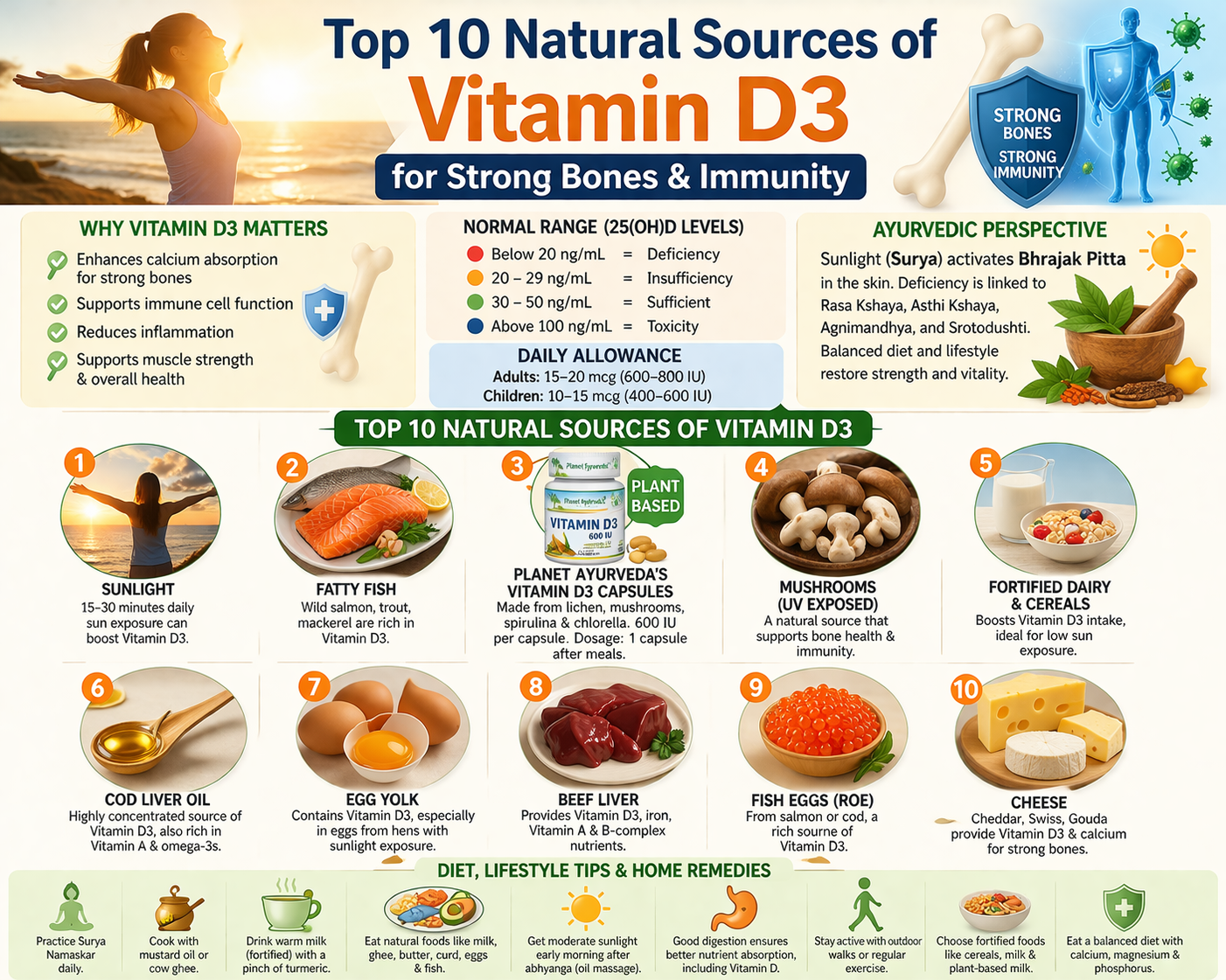
What is the Normal Range and Daily Dietary Allowance of Vitamin D3?
The normal range of vitamin D is determined by measuring serum 25-hydroxyvitamin D [25(OH)D] levels where values–
- below 20 ng/mL = deficiency
- levels between 20 and 29 ng/mL = insufficiency
- levels from 30 to 50 ng/mL = sufficient
- levels above 100 ng/mL = toxicity
The daily Dietary Allowance in adults is 15 to 20 mcg (600 to 800 IU) and in infants, children and adolescents it is 10 to 15 mcg (400 to 600 IU).
Ayurvedic Overview
In Ayurveda, there is no exact description of Vitamin D3 but the importance of sunlight and adequate diet is explained in detail. It can be concluded that the bhrajak pitta (a type of pitta dosha residing in the skin) is helpful in the conversion using the sunlight and is responsible for the action. Deficiency of Vitamin D3 can be correlated with Rasa kshaya (Reduced vital fluid) and asthi kshaya (reduced bone tissue) that are occurring due to agnimandhya (Poor Digestive Fire), Rasavaha and Asthivaha srotodushti (Vitiation of channels carrying nourishing fluid and related to metabolism of skeletal tissue) and various aharaj (dietary) or viharaj (lifestyle) modifications.
Top 10 Natural Sources of Vitamin D3
- Sunlight: It is the most efficient and natural source of Vitamin D3. Exposure to the sun for about 15 to 30 minutes daily can produce substantial Vitamin D3.
- Fatty Fish: Fatty fish like Wild salmon, Rainbow trout, Mackerel, etc. are among the richest natural dietary sources due to their high lipid content that efficiently stores this fat soluble vitamin.
- Planet Ayurveda’s Vitamin D3 Capsules: These are the plant based capsules prepared by Planet Ayurveda that include lichen, mushrooms, spirulina and chlorella and provides natural supplementation of Vitamin D3 and the shells are made from hydroxypropyl methylcellulose and free from any chemicals or preservatives. Each capsule contains 600 IU of vitamin D3.Dosage: 1 Capsule with plain water after meals.
- Mushrooms (UV exposed): Mushrooms which are exposed to sunlight serve as a natural source and are beneficial for bone health, immunity and calcium absorption.
- Fortified Dairy and cereals: These are important dietary sources especially for individuals with limited sun exposure. Consuming fortified cereals with milk or plant based fortified milk further enhances Vitamin D3 intake.
- Cod liver oil: It is one of the most concentrated natural sources of Vitamin D3. It also contains Vitamin A and omega 3 fatty acids. Its small teaspoon can provide enough levels that are daily required.
- Egg Yolk: Egg yolks contain Vitamin D3 because chickens synthesize it similarly to humans. Farm raised eggs from hens exposed to sunlight have higher Vitamin D3 content.
- Beef Liver: It provides modest amounts of Vitamin D3 along with iron, Vitamin A and B complex vitamins thus making it a nutrient rich source that supports overall metabolism.
- Fish Eggs: Fish eggs or roe from species like salmon or cod provide a rich source of vitamin D3.
- Cheese: Cheese like cheddar, Swiss, Gouda, etc. contain Vitamin D3 along with calcium that strengthens the skeletal system and including it in daily diet can be very beneficial.
Diet, Lifestyle Tips and Home remedies
- Practice Surya Namaskar daily to enhance sunlight utilization and bone strength.
- Prepare meals using healthy fats like mustard oil or cow ghee.
- Drink warm milk (fortified) with a pinch of turmeric.
- Natural foods such as milk, ghee, butter, curd, eggs and fish are recommended to support Vitamin D levels from diet.
- Enjoy moderate sunlight early in the day after a light oil massage (abhyanga).
- Good digestion is essential for proper utilization of nutrients including Vitamin D.
- Regular outdoor activities like walking or exercising.
- Choose foods fortified with Vitamin D such as breakfast cereals, fortified milk and plant based milk alternatives.
- Eat a balanced diet that includes supportive nutrients like calcium, magnesium and phosphorus which work synergistically with Vitamin D.
Conclusion
Vitamin D3 plays a vital role in maintaining strong bones and a strong immune system. Since it is primarily synthesized in the skin through sunlight and is present in limited amounts in food ensuring adequate Vitamin D3 intake has become increasingly important in today’s lifestyles. Consuming natural sources such as sunlight, fatty fish, fortified dairy, eggs and fish can effectively boost Vitamin D3 levels. Ayurvedic wisdom complements modern science by emphasizing sunlight exposure, balanced nutrition, and lifestyle practices that support skeletal health and immunity. By regularly monitoring Vitamin D3 status, including natural sources in the diet and following holistic lifestyle practices, individuals can strengthen their body’s defenses and promote long term vitality.
