Herbal Remedies of Encapsulating Peritoneal Sclerosis – Causes, Symptoms, Diagnosis & Treatment
Abstract
Encapsulating Peritoneal Sclerosis (EPS) is a rare yet potentially life-threatening disorder characterised by the progressive formation of a thick fibrocollagenous membrane around the small intestine. This abnormal membrane restricts bowel movement, leading to recurrent episodes of intestinal obstruction, malnutrition, weight loss, and severe gastrointestinal complications. EPS is most commonly associated with long-term peritoneal dialysis, although it may also develop secondary to abdominal infections, autoimmune disorders, previous surgeries, or prolonged inflammation of the peritoneum. Early diagnosis remains challenging because the initial symptoms are often nonspecific and resemble other gastrointestinal conditions. Modern management includes discontinuation of peritoneal dialysis, nutritional support, immunosuppressive therapy in selected patients, and surgical intervention for advanced disease. From an Ayurvedic standpoint, EPS can be understood as a disorder involving derangement of Vata Dosha, accumulation of Ama, impairment of Agni, and obstruction of bodily channels (Srotorodha). Ayurvedic management focuses on restoring digestive fire, reducing inflammation, supporting tissue health, and maintaining systemic balance through individualised therapies.
Introduction
The peritoneum is a thin, transparent membrane that lines the abdominal cavity and covers most abdominal organs. It provides lubrication, protects internal organs, and facilitates smooth movement of the intestines. Chronic irritation or inflammation of this membrane can trigger excessive fibrosis, resulting in Encapsulating Peritoneal Sclerosis. The condition was initially recognised in patients undergoing long-term continuous ambulatory peritoneal dialysis (CAPD). Over time, repeated exposure of the peritoneal membrane to dialysis solutions may promote chronic inflammation and progressive scarring. However, EPS is not limited to dialysis patients. Similar fibrotic changes may occur following abdominal tuberculosis, recurrent peritonitis, liver transplantation, certain medications, or autoimmune diseases. Although uncommon, EPS carries significant morbidity because it interferes with intestinal function and nutritional status. Prompt recognition and multidisciplinary management improve outcomes and reduce complications. It was first described in detail in the late 20th century. EPS is distinguished from simple peritoneal sclerosis by its aggressive inflammatory-fibrotic cascade and characteristic macroscopic structural changes.
Understanding Encapsulating Peritoneal Sclerosis
EPS is characterised by excessive collagen deposition within the peritoneum. As fibrosis progresses, the bowel becomes surrounded by a dense fibrous capsule that restricts intestinal motility. The encapsulating membrane gradually compresses the intestines, preventing normal passage of food and digestive contents. Consequently, patients develop recurrent bowel obstruction, abdominal pain, nausea, vomiting, and progressive malnutrition. The disease often progresses slowly over months or years before becoming clinically apparent.
Epidemiology and Etiological Factors
The overall incidence of EPS in the global PD population ranges between 0.5% and 4.4%. Although relatively low in absolute numbers, the condition carries a disproportionately high mortality rate, historically reported between 25% and 50% within twelve months of diagnosis. The single most significant determinant for EPS development is the duration of peritoneal dialysis. The incidence rises dramatically after 5 years of therapy, with risk increasing exponentially after 8 to 10 years. Key etiological drivers and risk factors include:
Long-Term Exposure to Dialysate Solutions
High glucose concentrations, low pH, high osmolality, and elevated levels of glucose degradation products (GDPs) induce persistent mechanical and chemical stress on mesothelial cells.
Recurrent or Severe Peritonitis
Frequent bacterial peritonitis episodes, particularly those caused by Staphylococcus aureus, fungal pathogens, or Pseudomonas species, trigger severe intra-abdominal inflammation that accelerates fibrotic remodelling.
Genetic and Host Susceptibility
Interindividual variations in cytokine production, particularly transforming growth factor-beta 1 (TGF beta1) and vascular endothelial growth factor (VEGF), influence individual vulnerability to membrane sclerosis.
Cessation of PD and Kidney Transplantation
Paradoxically, stopping PD or undergoing successful renal transplantation can act as a trigger for rapid EPS manifestation. The sudden withdrawal of dialysate flushes and the introduction of calcineurin inhibitors can amplify local inflammatory and fibrotic signalling.
Abdominal Tuberculosis
Tuberculosis affecting the peritoneum can lead to severe inflammation followed by extensive scar formation.
Autoimmune Disorders
Diseases associated with chronic inflammation, such as systemic lupus erythematosus, may increase the risk.
Previous Abdominal Surgery
Surgical trauma occasionally contributes to abnormal healing and excessive fibrosis.
Medications
Certain medications have been implicated in isolated cases, although this association remains uncommon.
Liver Disease and Transplantation
Patients with chronic liver disease or those who have undergone liver transplantation may rarely develop EPS.
Pathophysiology and the Two-Hit Hypothesis
The development of EPS is currently conceptualised through the Two-Hit Hypothesis, which explains the transition from simple uremic peritoneal adaptation to fulminant encasing fibrosis.
The First Hit: Chronic Membrane Conditioning
Continuous exposure to bioincompatible dialysates, uremic toxins, and advanced glycation end-products (AGEs) causes chronic microvascular damage and denudation of the protective mesothelial cell layer. Mesothelial cells undergo Epithelial-to-Mesenchymal Transition (EMT), losing their protective, anti-adhesive phenotypes and acquiring myofibroblast-like characteristics. This transition results in baseline submesothelial matrix expansion, neoangiogenesis, and mild, diffuse sclerosis.
The Second Hit: The Inflammatory Trigger
An acute or subacute systemic or local inflammatory event acts as the secondary stimulus. This trigger may be a severe episode of bacterial peritonitis, hemoperitoneum, surgical intervention, or the sudden cessation of PD. The secondary hit activates persistent pro-inflammatory cascades dominated by interleukins (IL-1, IL-6), tumour necrosis factor-alpha (TNF-alpha), TGF-beta1, and VEGF. Myofibroblasts produce excessive Type I and Type III collagen, suppressing extracellular matrix degradation through the upregulation of tissue inhibitors of metalloproteinases (TIMPs). The resulting uninhibited collagen deposition matures into dense, hypovascular sheet-like fibrous tissue that shrinks and encapsulates the abdominal contents.
Clinical Presentation and Staging
The clinical trajectory of EPS is highly variable, often evolving over months or years. To standardise clinical recognition, EPS is typically divided into four sequential stages:
Stage 1: Pre-EPS Stage
Patients are typically asymptomatic from a gastrointestinal standpoint but demonstrate persistent ultrafiltration failure on peritoneal function tests. Pathophysiologically, mesothelial disruption and submesothelial thickening are already underway.
Stage 2: Inflammatory Stage
Characterized by systemic inflammation and subtle abdominal signs. Patients present with low-grade fever, unexplained weight loss, elevated C-reactive protein (CRP) levels, loss of appetite, and mild abdominal discomfort. Ultrafiltration failure worsens markedly.
Stage 3: Encapsulating Stage
Marked by the onset of active cocooning. Clinical features include recurrent episodes of partial small bowel obstruction, mid-abdominal distension, nausea, vomiting, localised abdominal masses (corresponding to loculated ascites or matted bowel loops), and progressive malnutrition.
Stage 4: Chronic Burnt-out Stage
The acute inflammatory phase subsides, leaving dense, rigid, avascular fibrous tissue encapsulating the intestines. Patients present with severe, complete mechanical intestinal obstruction, severe malabsorption, intractable abdominal pain, and extreme cachexia.
Clinical Manifestations
Symptoms often develop gradually. Common manifestations include:
- Recurrent abdominal pain
- Persistent nausea
- Vomiting
- Bloating
- Abdominal distension
- Loss of appetite
- Progressive weight loss
- Constipation
- Episodes of intestinal obstruction
- Fatigue due to malnutrition
Advanced disease may produce severe bowel obstruction requiring emergency treatment.
Complications
Without appropriate management, EPS may lead to serious complications. These include:
- Chronic intestinal obstruction
- Severe protein-energy malnutrition
- Electrolyte imbalance
- Dehydration
- Intestinal perforation
- Sepsis
- Reduced quality of life
- Increased mortality
Nutritional deficiencies significantly contribute to disease progression and poor outcomes.
Diagnosis
Early diagnosis of EPS requires combining clinical suspicion with radiological, laboratory, and pathological evidence.
Diagnostic Imaging
Abdominal Computed Tomography (CT) with intravenous contrast is the gold standard diagnostic modality. Characteristic CT features include:
- Diffuse, thick peritoneal calcification or enhancement.
- Tightly matted small bowel loops localised centrally within the abdomen (“cocooning”).
- Loculated fluid collections (peritoneal cysts).
- Bowel wall thickening, luminal dilation, and delayed transit.
Ultrasound may serve as an initial screening tool, demonstrating tethered bowel loops that lack normal respiratory excursion and peristaltic movement.
Laboratory Parameters
Laboratory markers are non-specific but useful for monitoring inflammatory activity and nutritional status. Key markers include elevated CRP, elevated erythrocyte sedimentation rate (ESR), hypoalbuminemia, anaemia of chronic disease, and altered peritoneal fluid cell counts.
Histopathology
Peritoneal biopsy, when feasible, demonstrates severe loss or complete absence of the mesothelial lining, marked submesothelial fibrous matrix expansion, vascular hyalinosis, fibroblast proliferation, and sparse lymphocytic infiltration without active acute infection.
Surgical Confirmation
In uncertain situations, exploratory surgery confirms the diagnosis by demonstrating the characteristic fibrous cocoon surrounding the intestines.
Conventional Medical and Surgical Management
Managing EPS requires a coordinated multidisciplinary approach involving nephrologists, gastrointestinal surgeons, dietitians, and pain specialists.
Pharmacological Strategies
Medical management focuses on attenuating inflammation, inhibiting fibrogenesis, and modulating angiogenesis:
- Immunosuppressive Agents: Corticosteroids (e.g., oral prednisolone) form the cornerstone of medical therapy during the active inflammatory stages (Stages 2 and 3). Immunosuppressants such as tamoxifen, azathioprine, and mycophenolate mofetil are frequently added to suppress TGF-beta1 production and connective tissue proliferation.
- Anti-Fibrotic Therapies: Tamoxifen, a selective estrogen receptor modulator, has shown significant clinical efficacy by inhibiting fibroblast growth factor production and suppressing collagen synthesis.
Nutritional Support
Malnutrition is a major predictor of mortality in EPS. Early total parenteral nutrition (TPN) is frequently required to achieve bowel rest, improve nitrogen balance, and stabilise patients prior to surgical intervention or during acute obstructive phases.
Surgical Intervention: Enterolysis
Surgery is indicated for complete intestinal obstruction, ischemic bowel, or non-responsiveness to medical management. The primary surgical procedure is peritoneal enterolysis (surgically peeling away the dense encapsulating membrane from the bowel loops). This procedure is technically demanding, carrying significant risks of enterotomy, prolonged postoperative ileus, sepsis, and recurrent adhesion formation.
Prevention
Preventive measures are particularly important in long-term dialysis patients. Strategies include:
- Preventing recurrent peritonitis
- Maintaining sterile dialysis techniques
- Regular monitoring of peritoneal membrane function
- Early recognition of declining ultrafiltration
- Timely transition to alternative dialysis modalities when appropriate
Ayurveda Insight: Conceptualising EPS
While classical Ayurvedic literature does not name Encapsulating Peritoneal Sclerosis directly, its clinical presentation aligns closely with concepts of Gulma (abdominal mass/encapsulation), Baddha Gudodara (obstructive abdominal pathology), and chronic Dhatu Kshaya (tissue wasting) driven by deep-seated Agni (digestive fire) dysfunction and severe Vata-Kapha exacerbation.
Pathophysiological Dynamics (Samprapti)
In Ayurveda, the peritoneal cavity, mesentery, and abdominal membranes relate directly to the Kloma, Vasavaha Srotas (fatty tissue channels), and Mamsavaha Srotas (muscle and structural tissue channels).
- Vitiation of Agni (Digestive Fire) and Amavisha (Toxic metabolic waste) Formation: Continuous exposure to bioincompatible dialysates acts as an external biological stressor (Agantuja Hetu). This disrupts localised cellular metabolism (Dhatvagni Mandya), leading to the accumulation of toxic metabolic byproducts (Ama). Over time, this Ama (Toxins) transforms into Amavisha (Toxic metabolic waste), circulating within the abdominal vascular and lymphatic beds.
- Vata and Kapha Sthanasamshraya (Localisation of disease): Vata (specifically Samana and Vyana Vayu, which govern peristalsis, circulation, and tissue movement) becomes severely obstructed (Vrana/Srotorodha). Simultaneously, Kapha (specifically Kledaka Kapha and Mamsa-Medo Dhatu elements) undergoes morbid proliferation in response to chronic chemical irritation.
- Fibrous Encapsulation (Sclerosis as Khara {Rough} Guna{Quality}): The uninhibited combination of aggravated Vata (drying, hardening properties) and vitiated Kapha/Medas (structural buildup) causes abnormal tissue hardening (Sthairya and Kadhinathva). This manifests as dense encapsulation wrapping around the intestines (Antra-Veshtana), directly echoing the symptoms of Baddha Gudodara (obstructive abdominal pathology).
Diagnostic Parallels
The clinical stages of EPS closely map to the six stages of disease progression (Shatkriyakala):
- Accumulation and Aggravation (Sanchaya/Prakopa): Early peritoneal irritation and ultrafiltration loss reflect Kapha-Vata accumulation in the Koshtha (abdominal cavity).
- Relocation (Prasara): Inflammatory cytokine surges represent the spread of Pitta-Rakta toxins throughout the submesothelial matrix.
- Localisation (Sthanasamshraya): The aggravated Doshas along with Ama (toxins) localise in the Peritoneum (Parietal and Visceral Peritoneal tissues) due to Khavaigunya (tissue susceptibility created by chronic inflammation and repeated injury). At this stage, Srotorodha (obstruction of channels) develops, initiating fibrocollagenous deposition, mesothelial injury, and the earliest structural changes that precede the clinical manifestations of EPS.
- Manifestation and Structural Changes (Vyakti/Bheda): Cocooning, severe obstruction, structural rigidity, and profound weight loss mirror the final stages of Udara Roga (abdominal diseases), where Vata dominates, causing complete loss of peristaltic movement (Anulomana failure) and severe emaciation (Karshya).
Integrative Management Concepts
From a traditional perspective, addressing a chronic fibrotic condition like EPS requires a delicate balance: clearing profound internal blockages (Srotoshodhana) while simultaneously nourishing severely depleted tissues (Brimhana).
Pitta-Rakta (Blood) Shamana (Balance) and Shothahara (Anti-inflammatory)
Managing the acute inflammatory stages requires cooling, anti-inflammatory, and blood-purifying approaches to quiet endothelial and mesothelial hyper-reactivity.
Vata Anulomana (Downward Movement)
Restoring downwards movement of intestinal air and digestive fluids is crucial to prevent full intestinal obstruction.
Lekhana (Scraping) and Chhedana (Sclerolytic Principles)
To address dense, hardened fibrous sheets (Sthira, Kadhina Kapha), traditional pharmacology utilises drugs with scraping (Lekhana) and tissue-softening properties, targeting the Mamsavaha and Medovaha Srotas (Channels for muscle and adipose tissue) without further irritating the compromised intestinal mucosa.
Agni Deepana (Kindling of digestive fire) and Tissue Preservation
Restoring central digestive strength (Jatharagni) through light, highly bioavailable liquid nourishment prevents end-stage metabolic exhaustion and muscle wasting.
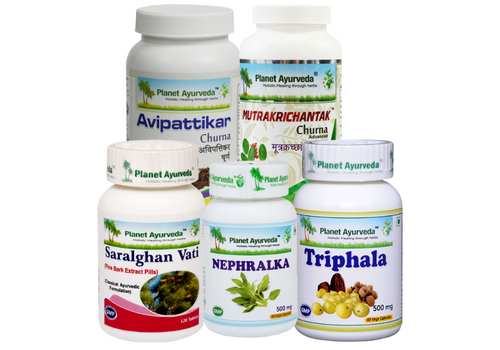
Herbal Remedies for Encapsulating Peritoneal Sclerosis by Planet Ayurveda
Planet Ayurveda is a trusted name in Ayurveda, committed to delivering authentic herbal healthcare solutions based on the principles of classical Ayurvedic texts. Established by Dr Vikram Chauhan, the company manufactures high-quality herbal supplements prepared from standardised extracts and pure herbs without harmful chemicals or preservatives. With a mission to make Ayurveda accessible worldwide, Planet Ayurveda offers expert online consultations, personalised wellness guidance, educational resources, and natural formulations for various health concerns. Its products are manufactured under stringent quality standards, reflecting a commitment to purity, safety, authenticity, and the timeless wisdom of Ayurveda for holistic health and well-being. In this article, we will discuss Encapsulating Peritoneal Sclerosis management.
- Mutrakrichantak Churna
- Nephralka Capsules
- Saral Ghan Vati
- Triphala Capsules
- Avipattikar Churna
Herbal Remedies Of Encapsulating Peritoneal Sclerosis


Product Description
1. Mutrakrichantak Churna
Mutrakrichantaka Churna, containing Varun (Crataeva nurvala), Bhumi Amalaki (Phyllanthus niruri), Gokshur (Tribulus terrestris), and Kalmegh (Andrographis paniculata), may provide supportive care in patients with Encapsulating Peritoneal Sclerosis (EPS) by promoting urinary health and helping maintain fluid balance. From an Ayurvedic perspective, these herbs help pacify Vata and Kapha, support healthy Mutravaha Srotas (Channels for the urinary system), and assist in reducing Ama (toxins) through improved metabolic function. Varun and Gokshur are traditionally valued for supporting urinary tract function, while Bhumi Amalaki and Kalmegh help maintain a balanced inflammatory response. By promoting normal metabolism, supporting the body’s natural detoxification processes, and nourishing tissues, this formulation may complement the holistic Ayurvedic management of EPS and contribute to overall systemic well-being.
Dosage: 1 tsp twice daily with Lukewarm water after a meal.
2. Nephralka Capsules
These capsules contain Bhumi Amla (Phyllanthus niruri), Mooli Satva (Raphanus sativus), Revandchini (Rheum emodi), Kalmegh (Andrographis paniculata), and Punarnava ( Boerhavia diffusa), which may provide supportive care in the holistic management of Encapsulating Peritoneal Sclerosis (EPS) by supporting renal and metabolic functions. In Ayurveda, chronic peritoneal inflammation is associated with Ama (Toxins), Srotorodha (channel obstruction), and aggravated Vata-Kapha Dosha. Punarnava is traditionally valued for maintaining physiological fluid balance, while Revandchini supports regular bowel function, an important consideration in patients prone to intestinal stasis. Mooli Satva helps support digestive efficiency, reducing further accumulation of Ama, whereas Bhumi Amla and Kalmegh contribute to balanced metabolic activity and tissue homeostasis. Collectively, these herbs support proper Mutravaha and Annavaha Srotas (Channels for urinary and digestive system)function, complementing a holistic Ayurvedic approach to maintaining abdominal health and overall physiological balance in individuals with EPS.
Dosage: 1 Capsule twice daily after a meal with plain water.
3. Saralghan Vati
Saral Ghan Vati, prepared from Sarala (Chir Pine, Pinus roxburghii), may offer supportive Ayurvedic care in the management of Encapsulating Peritoneal Sclerosis (EPS) by helping maintain the health of the peritoneal tissues and supporting normal tissue remodelling. According to Ayurveda, EPS involves Vata-Kapha aggravation, Ama (toxins) accumulation, and Srotorodha (obstruction of bodily channels), resulting in impaired abdominal function and progressive fibrosis. Sarala is traditionally described as having Lekhana (scraping), Shothahara (anti-inflammatory), and Srotoshodhaka (channel-cleansing) properties, which may help reduce excessive tissue stagnation and support unobstructed physiological pathways. Its Tikshna and Ushna qualities help balance aggravated Kapha, while promoting the normal movement of Vata within the abdominal cavity. By supporting healthy connective tissue metabolism and maintaining the integrity of abdominal channels, Saral Ghan Vati complements a holistic Ayurvedic approach to managing the chronic pathological changes associated with EPS.
Dosage: 2 tablets twice daily after a meal with plain water.
4. Triphala Capsules
Triphala Capsules, containing Amalaki (Indian Gooseberry, Emblica officinalis), Haritaki (Chebulic Myrobalan, Terminalia chebula), and Bibhitaki (Belleric Myrobalan, Terminalia bellirica), may offer supportive Ayurvedic care in Encapsulating Peritoneal Sclerosis (EPS) by helping maintain the normal movement of Apana Vata (Downward movement of Vata), which is essential for coordinated intestinal motility. In EPS, progressive fibrotic encasement restricts bowel movement, resulting in recurrent intestinal obstruction and impaired digestive transit. Triphala is traditionally recognised for supporting Koshtha Shuddhi (maintenance of a healthy bowel lumen) and promoting balanced Vata function without causing dependency. Its gentle Rasayana action also supports the nourishment and regeneration of body tissues (Dhatus), which may help preserve gastrointestinal resilience during chronic disease. By promoting intestinal regularity, reducing bowel stagnation, and supporting healthy digestive dynamics, Triphala complements the holistic Ayurvedic management of EPS.
Dosage: 1 Capsule twice daily after a meal with plain water.
5. Avipattikar Churna
Avipattikar Churna, containing classical Ayurvedic herbs such as Trivrit (Operculina turpethum), Haritaki (Chebulic Myrobalan, Terminalia chebula), Bibhitaki (Belleric Myrobalan, Terminalia bellirica), Amalaki (Indian Gooseberry, Emblica officinalis), Musta (Nut Grass, Cyperus rotundus), Vidanga (False Black Pepper, Embelia ribes), Ela (Cardamom, Elettaria cardamomum), and Shunthi (Dry Ginger, Zingiber officinale), may provide supportive care in the management of Encapsulating Peritoneal Sclerosis (EPS) by helping maintain balanced Pachaka Pitta and Samana Vata, both of which are essential for coordinated digestion and intestinal transit. In EPS, chronic peritoneal fibrosis can impair gastrointestinal function, leading to abdominal fullness, reduced appetite, and delayed gastric emptying. Avipattikar Churna is traditionally used to promote smooth digestive processing and reduce excessive heat and irritation within the gastrointestinal tract while supporting physiological bowel function. By fostering efficient digestion and maintaining a favourable internal environment for nutrient assimilation, it helps sustain digestive comfort and complements the holistic Ayurvedic management of individuals with EPS.
Dosage: ½ tsp twice daily after meals with warm water.
Conclusion
Encapsulating Peritoneal Sclerosis remains one of the most formidable complications of long-term peritoneal dialysis. Characterised by dense, fibrotic wrapping of the gastrointestinal tract, EPS transitions from subtle ultrafiltration failure to severe mechanical obstruction and high mortality. Early identification through routine clinical monitoring, advanced CT imaging, and prompt intervention during the active inflammatory stage are vital to improving survival outcomes. Integrating conventional medical therapies—such as anti-fibrotic agents, systemic corticosteroids, and meticulous surgical enterolysis—with classical holistic insights into Agni (Digestive fire), Srotorodha (Channel blockage), and tissue sclerosis offers a comprehensive lens for understanding chronic peritoneal failure. Continued research into biocompatible dialysates, molecular targets inhibiting mesothelial-to-mesenchymal transition, and early biomarker detection remains essential to eradicating this complex clinical entity.