SPORT INJURIES AND AYURVEDIC TREATMENTS – Causes, Symptoms, Diagnosis & Treatment
ABSTRACT
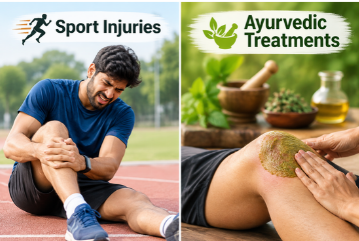
Sports injuries are physical injuries that occur during athletic activities, exercise, training, or recreational sports. They may affect muscles, tendons, ligaments, bones, and joints, ranging from minor strains and sprains to severe fractures and ligament tears. These injuries can develop suddenly due to falls, collisions, twisting movements, or excessive force, or gradually as a result of repetitive stress and inadequate recovery. Common manifestations include pain, swelling, stiffness, muscle weakness, and restricted movement, which may interfere with physical performance and daily activities. The severity and recovery period depend on the type of injury, the tissues involved, and the extent of damage. Early diagnosis, appropriate treatment, rehabilitation, adequate nutrition, and preventive measures play an important role in restoring physical function and reducing the risk of recurrent injuries.
INTRODUCTION
Sports and physical activities play an important role in maintaining physical fitness, muscular strength, cardiovascular health, and overall well-being. However, excessive physical exertion, repetitive movements, sudden twisting, and direct impact can lead to sports injuries. These injuries commonly affect muscles, tendons, ligaments, bones, and joints, particularly in the knees, ankles, shoulders, and lower back. They may occur suddenly due to falls, collisions, or awkward movements, or develop gradually because of repetitive stress and inadequate recovery. Depending on their severity, sports injuries can cause pain, swelling, stiffness, muscle weakness, and restricted mobility. Timely diagnosis, appropriate treatment, rehabilitation, proper nutrition, and preventive measures are essential for restoring physical function, maintaining athletic performance, and reducing the risk of recurrent injuries.
COMMON TYPES OF SPORTS INJURIES
Sports injuries can be broadly classified into acute injuries and chronic or overuse injuries:
Muscle Strain
A muscle strain occurs when muscle fibres or their associated tendons are overstretched or torn due to excessive force. It commonly affects the hamstrings, quadriceps, calf muscles, and lower back. Symptoms include sudden pain, tenderness, muscle weakness, swelling, and difficulty moving the affected area.
Ligament Sprain
A sprain involves stretching or tearing of ligaments, which connect bones and provide stability to joints. Ankle sprains are particularly common in sports involving running, jumping, and sudden changes in direction. Knee and wrist sprains may also occur.
Tendinitis and Tendinopathy
Tendons connect muscles to bones and help transmit muscular force during movement. Repetitive loading and inadequate recovery can cause tendon-related pain and dysfunction. Common examples include Achilles tendinopathy, patellar tendinopathy, and rotator cuff tendinopathy.
Tennis Elbow
Tennis elbow, medically known as lateral epicondylitis or lateral elbow tendinopathy, is associated with pain around the outer side of the elbow. It commonly develops due to repetitive gripping, wrist extension, and forearm movements.
Runner’s Knee
Runner’s knee, commonly associated with patellofemoral pain syndrome, causes pain around or behind the kneecap. It may develop due to repetitive running, jumping, increased training intensity, or biomechanical factors.
Shin Splints
Shin splints, medically known as medial tibial stress syndrome, cause pain along the inner border of the shinbone. They are frequently associated with running, jumping, sudden increases in training intensity, and repetitive impact.
Anterior Cruciate Ligament (ACL) Injury
The ACL is an important ligament responsible for maintaining knee stability. It may be injured during sudden stopping, twisting, pivoting, or awkward landing movements. Severe injuries may cause knee instability and require surgical evaluation.
Stress Fractures
Stress fractures are small cracks in bones caused by repetitive loading and insufficient recovery. They commonly affect the feet, ankles, and lower legs, particularly in athletes involved in running and jumping activities.
CAUSES AND RISK FACTORS OF SPORTS INJURIES
Several factors can contribute to sports injuries, including:
- Inadequate warm-up before exercise or sports activities.
- Sudden increases in exercise intensity, duration, or frequency.
- Repetitive movements and excessive training without adequate recovery.
- Improper sports techniques and incorrect body mechanics.
- Weak muscles and inadequate joint stability.
- Muscle imbalance and restricted flexibility.
- Wearing unsuitable footwear or using improper sports equipment.
- Training on hard, uneven, or inappropriate surfaces.
- Previous injuries and incomplete rehabilitation.
- Dehydration, nutritional deficiencies, and inadequate sleep.
AYURVEDIC TREATMENTS FOR SPORTS INJURIES
Ayurveda describes several therapeutic approaches for managing musculoskeletal discomfort and supporting tissue health. The selection of treatment depends on the stage of injury and the condition of the affected structures.
1. Abhyanga (Therapeutic Oil Massage)
Abhyanga involves the external application of medicated oils with appropriate massage techniques. It is traditionally used to pacify aggravated Vata Dosha, nourish tissues, and support flexibility and mobility.
Some commonly used Ayurvedic oils include:
- Maha Narasimha Thailam: Traditionally used in musculoskeletal conditions associated with Vata Dosha.
- Kshirabala Taila: Traditionally used for Vata-related disorders and associated discomfort.
- Jai Shree Dhanwantharam Oil: Traditionally used in musculoskeletal and neuromuscular conditions.
- Barleria Sehchar Thailam: Traditionally used in conditions involving stiffness and restricted movement.
The selection of oil should be based on the individual’s condition. Massage should be avoided over fresh injuries, suspected fractures, acute ligament tears, and areas with significant swelling or inflammation until medically assessed.
2. Swedana (Sudation Therapy)
Swedana refers to therapeutic procedures involving the application of heat to induce sweating. In Ayurveda, it is traditionally used to alleviate stiffness, heaviness, and certain Vata-related complaints.
Different forms include:
- Nadi Sweda: Localised steam application through a tube.
- Bashpa Sweda: Steam therapy using a specialised chamber.
- Patra Pinda Sweda: Fomentation using a bolus containing medicinal leaves.
- Valuka Sweda: Fomentation using heated sand.
Swedana may be considered in selected subacute or chronic musculoskeletal conditions. However, heat therapy should be avoided during the initial phase of an acute injury when significant swelling, bleeding, or inflammation is present.
3. Lepana (Herbal Paste Application)
Lepana involves applying medicinal herbal pastes externally over the affected area. Depending on the formulation, it is traditionally used to support local comfort and manage swelling and inflammation.
Some commonly used herbs include:
- Nirgundi (Vitex negundo): Traditionally used in Ayurvedic preparations for musculoskeletal discomfort.
- Eranda (Ricinus communis): Used in various traditional formulations for Vata-related conditions.
- Haridra (Curcuma longa): Traditionally valued for its anti-inflammatory properties.
- Shunthi (Zingiber officinale): Traditionally used in formulations addressing inflammatory and painful conditions.
The choice of herbal paste depends on the injury and the condition of the affected tissues. It should not be applied over open wounds, damaged skin, or suspected fractures without appropriate medical guidance.
4. Localised Basti (Oil Pooling)
- Janu Basti: This procedure involves retaining warm medicated oil within a specially prepared boundary over the knee joint. It is traditionally used in knee-related discomfort and stiffness.
- Kati Basti: In this procedure, warm medicated oil is retained over the lower back region. It is traditionally used for lower back discomfort and stiffness.
- Greeva Basti: This procedure involves retaining warm medicated oil over the cervical region and is traditionally used for neck-related discomfort.
These procedures may provide symptomatic support in selected conditions but should not be considered methods for repairing torn ligaments, healing fractures, or replacing necessary surgical treatment.
IMPORTANT AYURVEDIC HERBS FOR MUSCULOSKELETAL HEALTH
Several medicinal herbs are traditionally used in Ayurveda to support muscle, bone, joint, and connective tissue health:
1. Ashwagandha (Withania somnifera)
Ashwagandha is classified as a Rasayana (rejuvenative herb) in Ayurveda. It is traditionally used to support physical strength, stamina, and recovery. Research has also explored its potential role in exercise performance and muscle strength, although further clinical evidence is required.
2. Bala (Sida cordifolia)
Bala is traditionally valued for its Balya (strength-promoting) properties. It is used in various Ayurvedic formulations intended to support muscle strength and neuromuscular health.
3. Guggulu (Commiphora mukul)
Guggulu is widely used in traditional Ayurvedic formulations for joint and musculoskeletal conditions. It is included in several classical preparations intended to support joint comfort and mobility.
4. Shallaki (Boswellia serrata)
Shallaki is traditionally used in joint-related conditions. Its resin contains boswellic acids, which have been investigated for their potential anti-inflammatory activities.
5. Hadjod (Cissus quadrangularis)
Hadjod is traditionally recognised for its use in bone-related conditions. Also it has been investigated for its potential role in bone healing.
HERBAL REMEDIES FOR SPORTS INJURIES BY PLANET AYURVEDA
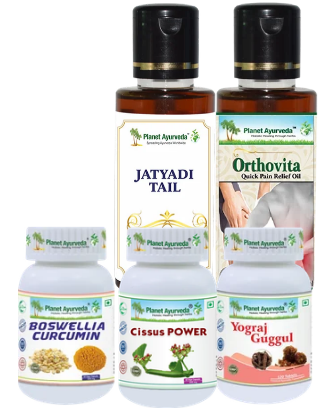
Planet Ayurveda is a trusted name in Ayurvedic healthcare, dedicated to promoting natural wellness through traditional Ayurvedic knowledge and modern quality standards. We offer a wide range of herbal formulations prepared under the guidance of experienced Ayurvedic doctors, following strict quality-control practices. Our products are designed to support overall health and well-being through the principles of Ayurveda. Understanding the importance of proper care and recovery after sports-related injuries, Planet Ayurveda offers a specially curated Sports Injury Care Pack. This pack combines selected Ayurvedic herbal formulations to support joint, muscle, ligament and tendon health. It is intended to complement an appropriate injury-management and rehabilitation plan, helping support the body’s natural recovery process.
Sports Injury Care Pack
- Boswellia Curcumin
- Yograj Guggul
- Cissus Power Capsules
- Jatyadi Tail
- Orthovita Oil
Care Pack of Sports Injuries

Product Description
1. Boswellia Curcumin
Boswellia Curcumin is an Ayurvedic herbal formulation prepared by Planet Ayurveda under the guidance of M.D. Ayurveda doctors. It contains standardised extract of Boswellia (Boswellia serrata) and Curcumin (Curcuma longa), traditionally valued for their Shothahara (anti-inflammatory) and antioxidant properties. These herbs may help support joint comfort, manage exercise-related inflammation and maintain musculoskeletal health.
Dosage: 2 capsules twice daily with plain water after meals.
2. Yograj Guggul
Yograj Guggul is a classical Ayurvedic formulation prepared by Planet Ayurveda according to traditional Ayurvedic principles, under the guidance of M.D. Ayurveda doctors. It contains ingredients such as Guggul (Commiphora wightii), Chitraka (Plumbago zeylanica), Ajwain (Trachyspermum ammi), etc. It is traditionally used for Vata-related musculoskeletal complaints and may help support joint mobility, flexibility and physical comfort.
Dosage: 2 tablets twice daily with plain water after meals.
3. Cissus Power Capsules
Cissus Power Capsules are a herbal formulation by Planet Ayurveda containing Cissus (Cissus quadrangularis), a plant traditionally used in Ayurveda for supporting Asthi Dhatu (bone tissue) health. It may help support bone strength and musculoskeletal wellness. Cissus is also being investigated for its potential role in bone healing and recovery.
Dosage: 1 capsule twice daily with plain water after meals.
4. Jatyadi Tail
Jatyadi Tail is a traditional Ayurvedic oil prepared using herbs such as Jati (Jasminum officinale), Nimba (Azadirachta indica), Patola (Trichosanthes dioica) and other ingredients. It is traditionally used for external application in minor wounds, cuts and skin injuries. Its Vranaropana (wound-healing) properties make it relevant for supportive skin care in minor sports-related injuries.
Method of Application: Clean the affected area gently with clean water or saline and pat it dry. Apply a thin layer of Jatyadi Tail over the affected skin using clean hands or sterile gauze, as appropriate. It may be applied once or twice daily, or as directed by an Ayurvedic healthcare professional.
5. Orthovita Oil
Orthovita Oil is an external-use formulation from Planet Ayurveda containing ingredients such as Shul Gajendra Oil, Gandhapura Oil, Turpentine Oil, etc. These ingredients are traditionally used in external applications for their warming and soothing properties. The formulation may help provide temporary relief from muscular discomfort, joint stiffness and soreness associated with physical exertion. It can be used as supportive external care for sports-related muscle and joint discomfort.
Method of Application: Warm the oil through the water bath method before application. Never warm the hot through direct heating. Apply it on the affected area and massage gently.
CONCLUSION
Sports injuries can affect muscles, ligaments, tendons, bones and joints, making timely diagnosis, appropriate treatment and proper rehabilitation essential for recovery. Ayurveda offers various traditional approaches, including herbal formulations, medicated oils and external therapies, that may provide supportive care for musculoskeletal health. Planet Ayurveda offers a specially curated Sports Injury Care Pack comprising Boswellia Curcumin, Yograj Guggul, Cissus Power Capsules, Jatyadi Tail and Orthovita Oil. These formulations are intended to complement appropriate injury management by supporting joint comfort, bone health, muscle function and external skin care. A balanced diet, adequate rest, gradual return to physical activity and supervised rehabilitation are equally important for recovery and prevention of recurrent injuries.
