AYURVEDIC ALTERNATIVE OF METFORMIN / GLUCOPHAGE
ABSTRACT
Diabetes is one of the most challenging lifestyle disorders in the present era. It is a condition where the body cannot properly control blood sugar, leading to high glucose levels in the blood. It can cause fatigue, excessive thirst, frequent urination, and long-term complications if not managed. Metformin is a commonly prescribed oral medicine for type 2 diabetes. It works by reducing sugar production in the liver and improving the body’s response to insulin. It is often the first choice for doctors worldwide in managing type 2 diabetes. Though it provides temporary control it often leads to various side effects. Ayurveda however offers a timeless, holistic, and side-effect-free solution. The goal of Ayurveda is not merely to lower glucose but to restore complete metabolic harmony (Dhatu Samya).
INTRODUCTION
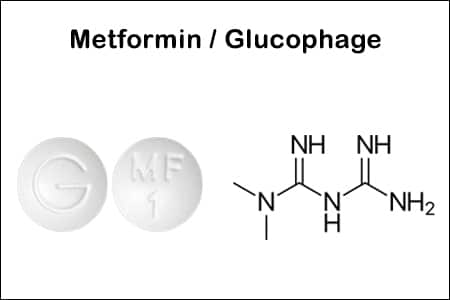
Metformin is an anti diabetic drug that is commonly used for the management of diabetes. It is a biguanide drug that is a first choice medication in case of diabetes. It is commonly prescribed as monotherapy or in combination with other drugs. It is available as both immediate and extended release formulations. It does not stimulate pancreatic β cells. It also improves lipid profile in type 2 diabetic patients. Its absorption mainly occurs in the intestine and the presence of food affects the rate of absorption. Glucophage: It is the brand name for metformin. It is most commonly prescribed in type 2 diabetes. It is taken 2-3 times in a day. Other brand names are Fortamet, Glumetza, Metabet, Diagemet.
MODE OF ACTION
- The mechanism involves activation of AMPK enzyme (Adenosine monophosphate activated protein kinase).
- It suppresses gluconeogenesis from the liver and prevents glucose output from the liver.
- It enhances insulin mediated glucose uptake and disposal in skeletal muscle and fat.
- Metformin reduces intestinal absorption of glucose.
INDICATION
- Type 2 Diabetes
- Antipsychotic-induced weight gain (AIWG)
- Gestational Hypertension
- Oligomenorrhea due to PCOS
CONTRAINDICATION
- Severe renal dysfunction
- Hypersensitivity reactions
- Hepatic impairment
- Heart disorders
- Diabetic ketoacidosis
- Hypotension
ADVERSE EFFECTS
- Diarrhea
- Nausea and vomiting
- Chest discomfort
- Headache
- Lactic acidosis
- Abdominal pain
- Malaise and weakness
In Ayurveda, Diabetes type 2 correlates with Madhumeha which is one of the 20 types of prameha. It is primarily a Vata-predominant metabolic disorder caused by derangement of Kapha and Meda (fat tissue) leading to Agnimandya (weak digestion) and improper Meda-Dhatu (fat body tissue) metabolism. Over time, this also results in Ojas Kshaya (depletion of vital essence). There are various drugs that are used in the management. Some of them are:
Gurmaar
- Gurmaar or Gymnema slyvestre is known as Gurmaar which means sugar destroyer. Gymnemic acids in it block sugar absorption in the intestine and stimulate insulin secretion. It exhibits inhibitory effects on the levels of plasma glucose.
- It temporarily suppresses the sweet taste sensation on the tongue and reduces sugar cravings.
- Chewing its leaves daily is very beneficial for diabetic patients.
Vijaysar
- Pterocarpus marsupium or vijaysar is an Ayurvedic herb known for its anti-diabetic properties that help regulate blood sugar. It helps in managing diabetes (Madhumeha) by enhancing insulin sensitivity and reducing blood sugar levels. It increases cAMP content of the islets which helps in increasing insulin release and conversion of proinsulin to insulin.
- बीजक: कुष्ठविसर्पश्वित्रमेहगुदकृमिन।। (भावप्रकाश)
It means बीजक (Pterocarpus marsupium ) is used in diabetes (मेह).
- Its heartwood decoction is very effective in Diabetes Type II. Drinking water kept in vijaysar bark wood glasses in the morning helps to keep blood sugar levels in control.
Methika
- Trigonella foenum-graecum or fenugreek is widely used in diabetes mellitus. An amino acid (4-hydroxyisoleucine) is found in fenugreek which contains the anti-diabetic properties.
- It contains alkaloids like trigonelline, gentianine, carpaine and is rich in soluble fiber (galactomannan). It increases glucose uptake by peripheral tissues (muscle and fat), enhancing insulin receptor activity.
- Taking its seeds or seed powder daily is beneficial in diabetes.
Jambu
- Syzygium cumini or jamun is widely used to manage diabetes. Its seeds are mostly used in hyperglycaemia and polyuria. It contains bioactive compounds like jamboline, jambosine, ellagic acid, and anthocyanins which helps to regulate blood sugar levels.
- It has jamboline which slows down starch conversion into sugar in the intestines.
- 300mg – 1gm powder of its dry seeds helps to stop the release of sugar in urine.
Karvellak
- Momordica charantia or karela is also one of the most well known herbs used in diabetes. Its active constituents like charantin, polypeptide-p, vicine, and momordicin helps in stimulating insulin secretion, improving glucose uptake by cells, and inhibiting glucose production in the liver.
- It is Kleda shoshaka (reduces excess fluid), Medohara (reduces fat) and Rakta prasadaka (improves blood quality).
- Its fresh fruit juice is beneficial in diabetes and cooked fruit can also be used.
Saptarangi
- Salacia chinensis or saptarangi has active component Salacinol which is a unique thiosugar sulfonium compound that inhibits intestinal α-glucosidase enzyme thus reducing postprandial glucose absorption and the kotalanol helps to delay carbohydrate digestion and glucose absorption.
- It reduces the urine output and regulates blood sugar levels. Its root powder twice daily is effective to manage diabetes.
Shilajit
- Shilajit or Asphaltum punjabinum is a sticky blackish compound and is rich in many bio active compounds.
- It helps to regulate blood sugar levels by enhancing the body’s response to insulin and the fulvic acid in it enhances mitochondrial function and this further increases glucose metabolism and thus benefits the diabetic person by promoting better energy balance and glucose management.
- It is considered as Rasayana (Rejuvenator) in ayurveda and as diabetes often causes weakness and fatigue, Shilajit helps to restore energy.
PLANET AYURVEDA’S PRODUCTS
Planet Ayurveda is a reputed herbal manufacturing company that provides pure, natural and authentic Ayurvedic products formulated on the foundation of ancient wisdom and produced under modern quality standards. All the products are prepared in compliance with strict GMP (Good Manufacturing Practice) guidelines. Products are formed under the supervision of MD doctors and following all the principles of ayurveda.
Planet Ayurveda offers various formulations that have verified results in Diabetes and we will discuss some of the products:-
Combo Pack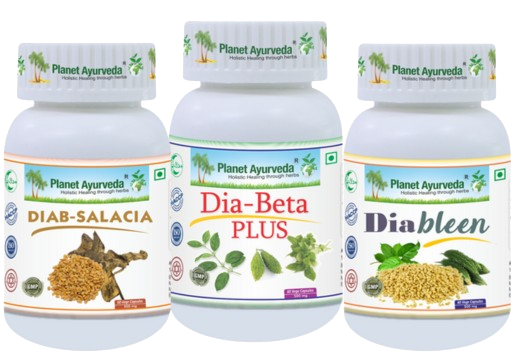

DIA-BETA PLUS
It is a capsule formulation of Planet Ayurveda. Its main ingredients are Gurmaar (Gymnema slyvestrae), Karela (Momordica charantia), Vijaysar (Pterocarpus marsupium), etc. which are known for their potent action in Prameha (Diabetes). It enhances the body’s ability to utilize glucose. It promotes pancreatic beta-cell regeneration, reduces blood sugar. It specifically acts on Medo dhatu (Fat body tissue) and Kapha dosha which are primarily involved in Prameha (Diabetes).
Dosage – 1-2 capsules twice a day with plain water ½ hour before meals.
DIAB SALACIA
It is another capsule formulation of Planet Ayurveda. Its ingredients are Saptarangi (Salacia chinensis) and Fenugreek (Trigonella foenum-graecum ). Its active constitution includes Salacinol, kotalanol which inhibits intestinal α-glucosidase enzymes. It enhances insulin sensitivity, regulates lipid metabolism, and protects pancreatic β-cells from oxidative stress.
Dosage – 1-2 capsules twice a day with plain water after meals.
DIABLEEN CAPSULES
It is also a capsule formulation of Planet Ayurveda which is very beneficial in Diabetes. It consists of Methika (Trigonella foenum-graecum), Gurmaar (Gymnema slyvestre), Jambu (Syzygium cumini), etc. Its active compounds like Trigonelline, gymnemic acid and ellagic acid are responsible for the anti-diabetic property. Tikta (bitter), Kashaya (astringent) rasa (taste) and Ruksha (Dry), Laghu (light) properties reduce Kapha Dosha and Medo (fat) Dhatu (tissue) and normalize sugar metabolism.
Dosage – 1-2 capsules twice a day with plain water after meals.
CONCLUSION
Metformin is a widely used modern medicine for type 2 diabetes, providing rapid and effective blood sugar control through reduction of hepatic glucose production and improved insulin sensitivity. However it primarily manages symptoms and may cause side effects like gastrointestinal upset and vitamin B12 deficiency. Ayurveda, on the other hand, approaches diabetes (Prameha) holistically, focusing on balancing Kapha Dosha and Medo (fat) Dhatu (tissue), enhancing Agni (metabolic fire), and improving overall metabolism. Herbal remedies like Gudmar (Gymnema sylvestre), Vijaysar (Pterocarpus marsupium), Fenugreek (Trigonella foenum-graecum) support blood sugar regulation naturally. Ayurvedic management addresses root causes, promotes lifestyle changes, and has minimal side effects. Ayurveda offers a safe, natural, and holistic alternative while Metformin provides rapid symptomatic relief.