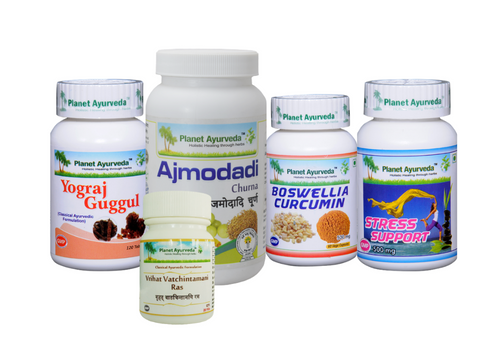
Herbal Remedies of Piriformis Syndrome – Causes, Symptoms, Diagnosis & Treatment
ABSTRACT
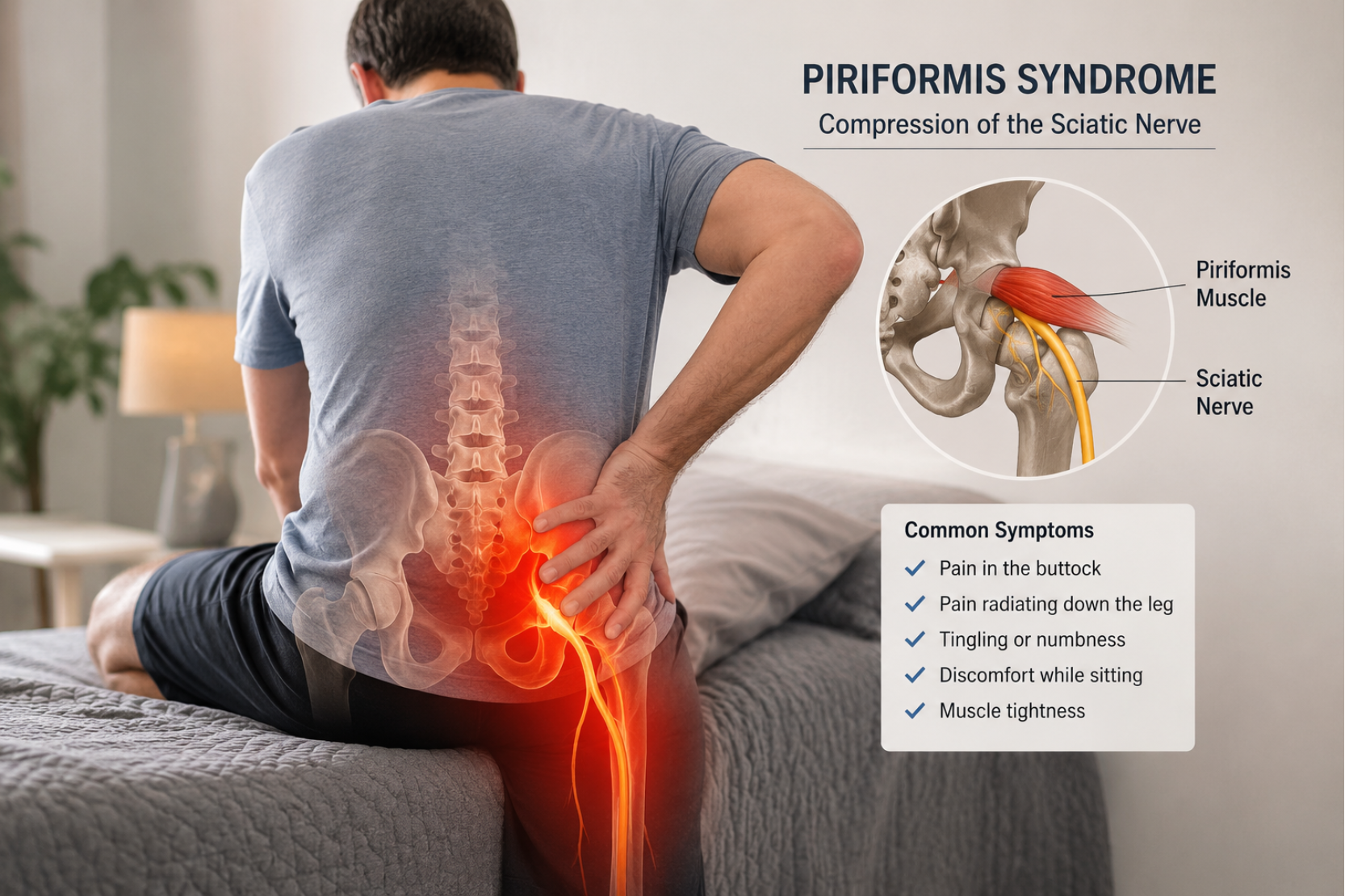
Piriformis Syndrome is a neuromuscular disorder characterized by compression or irritation of the sciatic nerve due to tightness, inflammation, or spasm of the piriformis muscle. This condition commonly presents with deep buttock pain, radiating leg discomfort, tingling sensations, and difficulty sitting for prolonged periods. Although it mimics lumbar sciatica, Piriformis Syndrome originates primarily from muscular dysfunction rather than spinal pathology. Modern lifestyle factors such as prolonged sitting, sedentary work patterns, and repetitive strain injuries have significantly increased its prevalence. Anatomical variations in the course of the sciatic nerve further contribute to individual susceptibility. From an Ayurvedic perspective, Piriformis Syndrome closely resembles Gridhrasi (Sciatica) and Snayu Gata Vata, conditions associated with aggravated Vata Dosha affecting muscles, nerves, and ligaments. Ayurvedic management emphasizes reducing Vata imbalance through herbal medicines, Panchakarma therapies, diet regulation, yoga, and lifestyle modification. Integrating modern physiotherapy exercises with Ayurvedic treatments offers a comprehensive approach to relieving symptoms, restoring mobility, and preventing recurrence. This article provides an in-depth exploration of the causes, anatomy, nerve involvement, exercises, Ayurvedic therapies, Panchakarma procedures, and dietary strategies for effective long-term management of Piriformis Syndrome.
INTERESTING FACTS ABOUT PIRIFORMIS SYNDROME
- The piriformis muscle, though small, plays a major role in stabilizing the hip joint during walking and movement.
- The sciatic nerve, the largest nerve in the body, travels very close to the piriformis muscle, making it vulnerable to compression.
- Around 15–20% of individuals have anatomical variations where the sciatic nerve passes through the piriformis muscle rather than beneath it.
- Piriformis Syndrome contributes to nearly 6–8% of all sciatica cases, yet it remains underdiagnosed.
- People who sit for more than 6–8 hours daily are at significantly higher risk.
- Athletes, especially runners and cyclists, frequently experience piriformis tightness due to repetitive strain.
- Women are slightly more prone to Piriformis Syndrome due to differences in pelvic anatomy.
INTRODUCTION
Piriformis Syndrome occurs when the piriformis muscle becomes tight, inflamed, or spasmodic, leading to compression of the sciatic nerve. The piriformis muscle helps rotate the hip outward and stabilize the pelvis during walking and movement. When this muscle becomes tight or irritated, it can press against the sciatic nerve, causing symptoms such as:
- Deep buttock pain.
- Pain radiating down the leg.
- Tingling or numbness in the leg.
- Difficulty sitting for long periods.
- Pain while climbing stairs.
- Reduced hip mobility.
CONNECTION BETWEEN PIRIFORMIS SYNDROME AND THE SCIATIC NERVE
The sciatic nerve is the largest nerve in the human body, running from the lower spine through the buttocks and down each leg. Normally, the sciatic nerve passes beneath the piriformis muscle. However, anatomical variations may cause the nerve to pass through or above the muscle. When the piriformis muscle becomes inflamed or tight:
- It compresses the sciatic nerve
- Causes nerve irritation
- Leads to radiating pain along the nerve pathway
- Mimics symptoms of sciatica
This condition is often confused with lumbar disc herniation, but unlike spinal causes, Piriformis Syndrome pain usually worsens with sitting and improves with walking
COMMON CAUSES OF PIRIFORMIS SYNDROME
- Prolonged sitting
- Muscle overuse
- Injury or trauma to the buttock
- Sudden increase in physical activity
- Poor posture
- Repetitive movements
- Running or cycling injuries
- Long-distance driving
RISK FACTORS OF PIRIFORMIS SYNDROME
Certain conditions increase susceptibility
- Sedentary lifestyle
- Obesity
- Improper exercise technique
- Leg length discrepancy
- Pregnancy
- Previous hip injury
- Lumbar spine problems
DIAGNOSIS OF PIRIFORMIS SYNDROME
In Physical Examination Doctors assess
- Pain location
- Muscle tenderness
- Range of motion
- Hip rotation ability
Imaging Tests to rule out spinal causes
- MRI
- CT scan
- Ultrasound
- Special Tests such as FAIR Test (Flexion-Adduction-Internal Rotation) and Piriformis stretch test
HELPFUL EXERCISES FOR PIRIFORMIS SYNDROME
Regular stretching and strengthening exercises are highly effective in reducing muscle tightness and relieving nerve compression. Following exercises are particularly suggested in such patients:
Piriformis Stretch
How to do
- Lie on your back
- Cross the affected leg over the opposite knee
- Gently pull the lower thigh toward your chest
- Hold for 20–30 seconds
Benefits
- Relaxes piriformis muscle
- Reduces nerve compression
Figure-4 Stretch
How to do
- Sit or lie down
- Cross ankle over opposite knee
- Lean forward gently
Benefits
- Improves hip flexibility
- Relieves buttock tension
Knee-to-Chest Stretch
How to do
- Lie flat
- Pull one knee toward chest
- Hold for 20 seconds
Benefits
- Reduces nerve pressure
- Improves lower back mobility
Clamshell Exercise
How to do
- Lie on side
- Keep knees bent
- Lift upper knee slowly
Benefits
- Strengthens hip muscles
- Prevents recurrence
Glute Bridge
How to do
- Lie on back
- Lift hips upward
- Hold for few seconds
Benefits
- Strengthens gluteal muscles
- Improves pelvic stability
AYURVEDIC PERSPECTIVE ON PIRIFORMIS SYNDROME
- In Ayurveda, Piriformis Syndrome can be correlated with Gridhrasi and Snayu Gata Vata, conditions primarily caused by aggravated Vata Dosha affecting muscles (Mamsa), ligaments (Snayu), and nerves (Nadi). The term Gridhrasi is derived from the Sanskrit word Gridhra (vulture), indicating the characteristic gait of the patient, who walks with difficulty and altered posture due to pain radiating from the hip region to the leg.
- Vata Dosha is responsible for all movements in the body, including neuromuscular coordination and nerve impulses. When Vata becomes aggravated due to improper diet, excessive physical strain, trauma, or prolonged sitting, it accumulates in the pelvic and gluteal region. This leads to dryness, stiffness, and contraction of muscles, resulting in tightness of the piriformis muscle and subsequent compression of the sciatic nerve.
- Snayu (ligaments and tendons) play a crucial role in stabilizing joints and maintaining muscular balance. When Vata Dosha localizes in Snayu, it causes stiffness, restricted movement, and pain radiating along nerve pathways. This pathology closely resembles the clinical features of Piriformis Syndrome.
NIDANA (CAUSES) ACCORDING TO AYURVEDA
The causative factors (Nidana) can be broadly categorized into Dietary Causes, Lifestyle Causes, and Physical Causes, each contributing to Vata imbalance in different ways. Following are the causative factors that aggravate Vata Dosha and contribute to conditions resembling Piriformis Syndrome:
Dietary Causes: Diet plays a crucial role in maintaining the balance of Doshas. Improper dietary habits that increase dryness, roughness, and coldness in the body are considered major contributors to Vata aggravation. Excess intake of certain foods and irregular eating patterns weaken digestive fire (Agni), reduce tissue nourishment, and promote stiffness in muscles and ligaments.
Excess intake of the following foods is particularly harmful
- Dry Foods: Regular consumption of excessively dry foods such as roasted grains, dry snacks, packaged chips, popcorn, and baked foods increases dryness within body tissues. Such foods lack adequate lubrication and nourishment, leading to depletion of muscle strength and increased stiffness. Over time, dryness affects Snayu (ligaments) and Mamsa Dhatu (muscle tissue), making them more susceptible to contraction and pain.
- Cold Foods: Frequent intake of cold foods and beverages such as refrigerated items, ice cream, chilled drinks, and cold salads can significantly aggravate Vata Dosha. Cold substances reduce digestive fire and promote stiffness in muscles. In individuals predisposed to musculoskeletal disorders, cold dietary habits can worsen nerve irritation and increase muscle tightness.
- Stale or Reheated Food: Consumption of stale, leftover, or reheated food leads to formation of Ama (metabolic toxins). Ama obstructs microchannels (Srotas), impairing nutrient supply to muscles and nerves. This obstruction weakens tissue function and contributes to chronic pain and inflammation in localized areas such as the hip and buttock region.
- Excess Fasting: Frequent fasting or prolonged gaps between meals deprive the body of essential nourishment. This leads to depletion of tissues (Dhatu Kshaya) and aggravation of Vata Dosha. Muscle weakness and reduced tissue resilience increase susceptibility to strain and injury, especially in muscles like the piriformis that support hip movement.
- Low-Fat Diet: Extremely low-fat diets lacking healthy fats such as ghee or oils increase dryness in the body. Fats provide lubrication to joints and muscles, maintaining flexibility and resilience. Absence of adequate lubrication leads to friction within tissues, causing stiffness and increased risk of nerve compression.
- Excess Bitter and Astringent Foods: Although bitter and astringent tastes have therapeutic value in moderation, excessive consumption can increase dryness and roughness in the body. Foods such as excessive leafy greens, lentils without proper cooking, and highly fibrous items may contribute to Vata aggravation when consumed in large amounts.
- Irregular Meal Timings: Skipping meals or eating at irregular times disturbs digestive rhythm and weakens Agni. Improper digestion leads to incomplete assimilation of nutrients, resulting in poor muscle nourishment and increased vulnerability to stiffness and pain.
Lifestyle Causes: Lifestyle factors play an equally important role in the development of Piriformis Syndrome. Modern sedentary routines and faulty daily habits significantly contribute to Vata aggravation and musculoskeletal strain.
Several lifestyle factors contribute significantly
- Prolonged Sitting: Sitting for extended periods, especially on hard surfaces, places continuous pressure on the gluteal muscles, including the piriformis muscle. Reduced movement leads to poor circulation and accumulation of stiffness. Individuals working in desk-based occupations or long-distance drivers are particularly prone to developing muscle tightness due to lack of mobility.
- Excessive Travelling: Frequent travelling, especially by road, involves prolonged sitting and exposure to vibrations. Continuous vibration affects muscle stability and increases fatigue in the pelvic region. Long journeys without adequate stretching increase the risk of muscular contraction and nerve compression.
- Overexertion: Excessive physical effort without adequate rest weakens muscle endurance and leads to tissue fatigue. Overexertion also increases dryness in the body, aggravating Vata Dosha and promoting stiffness.
- Improper Posture: Incorrect sitting posture, such as slouching or uneven weight distribution, places abnormal strain on the pelvic muscles. Over time, faulty posture leads to imbalance between muscle groups, increasing tension in the piriformis muscle.
- Lack of Stretching: Failure to perform regular stretching reduces muscle flexibility. Tight muscles exert pressure on surrounding nerves and reduce joint mobility. Lack of stretching is a major contributor to recurrent muscular tightness.
- Excessive Physical Strain: Repeated lifting of heavy objects or sudden intense activities without proper preparation leads to strain on muscles and ligaments. Continuous strain weakens supportive structures and predisposes individuals to chronic pain conditions.
- Sleeping on Hard Surfaces: Sleeping on excessively hard or uneven surfaces reduces proper cushioning to muscles. Continuous pressure on the hip region during sleep increases stiffness and aggravates Vata Dosha.
- Exposure to Cold Environment: Cold weather and exposure to cold wind constrict blood vessels and reduce muscle flexibility. Cold conditions promote stiffness and aggravate Vata-related disorders, especially in individuals with pre-existing muscular tightness.
Physical Causes: Physical trauma and repetitive strain are among the most direct contributors to Piriformis Syndrome. These factors cause localized damage to muscles and ligaments, leading to inflammation and contraction.
- Trauma to Hip Region: Direct injury to the buttock or hip region, such as falls, accidents, or sports injuries, can cause swelling and inflammation in the piriformis muscle. Trauma disrupts muscle integrity and increases pressure on nearby nerve structures.
- Sudden Twisting Movements: Abrupt rotational movements of the hip during activities such as sports or heavy lifting can strain the piriformis muscle. Sudden twisting without proper warm-up increases risk of muscle spasm.
- Heavy Weight Lifting: Improper lifting techniques place excessive stress on pelvic muscles and lower back. Continuous lifting without strengthening exercises weakens supportive muscles and increases susceptibility to injury.
- Repetitive Strain Injuries: Activities involving repeated movements, such as running, cycling, or climbing stairs, place constant stress on hip muscles. Overuse leads to microtrauma, muscle fatigue, and eventual tightness.
- Excessive Running or Cycling: Athletes engaged in long-distance running or cycling frequently develop piriformis tightness due to repetitive motion and inadequate recovery periods. Continuous strain reduces flexibility and increases risk of nerve compression.
- Weak Supporting Muscles: Weak gluteal and core muscles shift excessive load to the piriformis muscle, increasing risk of fatigue and tightness.
- Uneven Body Mechanics: Leg length discrepancy or improper gait pattern creates uneven pressure on muscles. Over time, this imbalance leads to chronic muscle tension and nerve irritation.
PANCHAKARMA MANAGEMENT OF PIRIFORMIS SYNDROME
Panchakarma plays a highly significant role in the management of neuromuscular disorders associated with Vata imbalance. These therapies help remove accumulated toxins, lubricate tissues, improve circulation, and reduce inflammation.
The following Panchakarma therapies are particularly beneficial
1. Abhyanga (Therapeutic Oil Massage)
Abhyanga is an important therapy for managing Vata-related disorders such as Piriformis Syndrome. It involves gentle massage using warm medicated oils over the lower back, buttock, hip joint, and thigh region. The massage is performed in rhythmic strokes for about 30–40 minutes, allowing the oil to penetrate deep into tissues. This therapy helps relax the piriformis muscle, reduce muscle spasm, improve blood circulation, nourish muscles and ligaments, and enhance flexibility. Commonly used oils include Mahanarayana Taila, Dhanwantharam Taila, Sahacharadi Taila, and Bala Taila, which possess strong Vata-pacifying and tissue-strengthening properties.
2. Swedana (Herbal Fomentation)
Swedana is usually performed after Abhyanga to enhance its therapeutic effects. It involves the application of heat to the affected area, which helps relieve stiffness and improve circulation. Nadi Sweda, where herbal steam is directed toward the affected region, helps reduce stiffness and relieve pain. Patra Pinda Sweda involves the use of warm herbal boluses prepared from medicinal leaves such as Nirgundi, Eranda, and Arka. This therapy helps relieve muscular spasm, improve mobility, and reduce inflammation in the affected muscles.
3. Kati Basti
Kati Basti is a localized oil retention therapy used to strengthen the lower back and pelvic region. In this procedure, a dough ring is placed over the lumbar area, and warm medicated oil is retained within it for approximately 30 minutes. This allows deeper penetration of the oil into tissues, helping reduce pain, relieve nerve compression, improve lubrication, and strengthen supporting muscles. It is particularly beneficial when Piriformis Syndrome is associated with lower back stiffness.
4. Matra Basti (Medicated Oil Enema)
Matra Basti is considered highly effective in pacifying Vata Dosha. It involves the administration of a small quantity of medicated oil through the rectal route, which nourishes nerves and lubricates internal tissues. This therapy helps relieve chronic pain, improve neuromuscular coordination, and enhance overall tissue strength. Oils such as Dhanwantharam Taila, Bala Taila, and Sahacharadi Taila are commonly used for this purpose.
5. Agnikarma (Therapeutic Heat Application)
Agnikarma is used in chronic cases where persistent pain and stiffness are present. It involves the application of controlled therapeutic heat to the affected area, which helps provide immediate pain relief, reduce muscle stiffness, and improve circulation. This therapy is particularly beneficial in long-standing cases with severe discomfort.
AYURVEDIC HERBAL MANAGEMENT FOR PIRIFORMIS SYNDROME
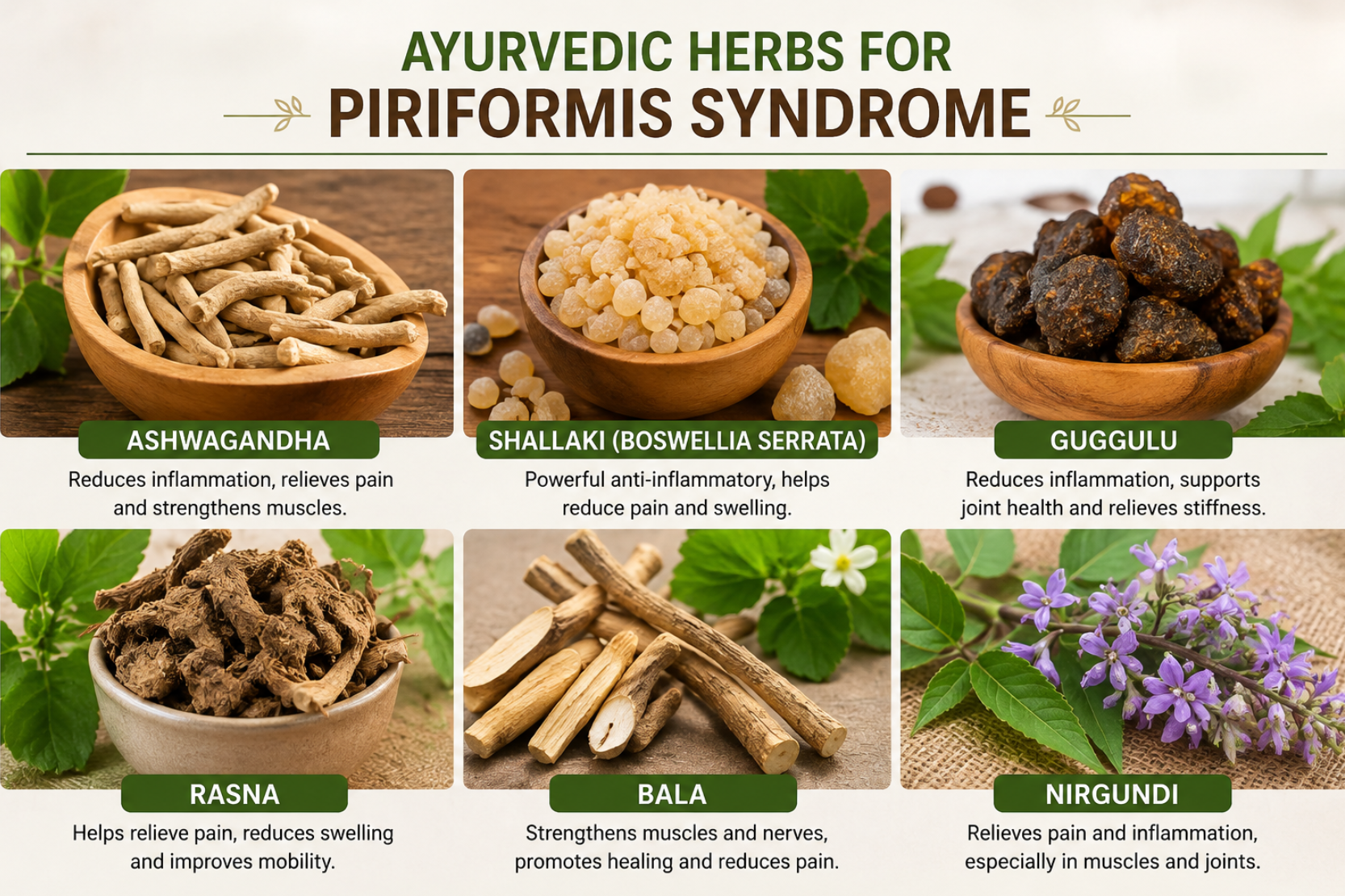
Ayurvedic herbal management plays a significant role in relieving pain, reducing inflammation, strengthening muscles, and improving nerve function in Piriformis Syndrome. Since this condition is primarily associated with aggravated Vata Dosha affecting Snayu (ligaments) and Mamsa Dhatu (muscles), herbs possessing Vata-pacifying, anti-inflammatory, and rejuvenating properties are commonly recommended. These herbs help reduce muscular tightness, improve circulation, and support long-term recovery.
1. Ashwagandha (Withania somnifera)
Ashwagandha is widely known for its strengthening and rejuvenating properties. It acts as a powerful Rasayana that nourishes muscles and nerves while improving overall strength and endurance. In Piriformis Syndrome, Ashwagandha helps reduce muscle fatigue, improve tissue repair, and enhance neuromuscular coordination. Its anti-inflammatory properties also help reduce pain and stiffness, making it beneficial in chronic muscular conditions.
2. Shallaki (Boswellia serrata)
Shallaki is well recognized for its anti-inflammatory and analgesic properties. It helps reduce swelling and inflammation in muscles and joints, thereby relieving pain associated with nerve compression. Shallaki also supports joint mobility and reduces stiffness in surrounding tissues. Regular use of this herb helps improve flexibility and promotes faster recovery from muscular strain.
3. Guggulu (Commiphora mukul)
Guggulu is commonly used in Ayurvedic formulations for managing musculoskeletal disorders. It helps reduce inflammation, improve circulation, and support tissue healing. Guggulu also aids in the removal of toxins (Ama) from the body, which contributes to improved mobility and reduced stiffness. Its ability to strengthen connective tissues makes it particularly beneficial in conditions involving ligament and muscle tightness.
4. Rasna (Pluchea lanceolata)
Rasna is traditionally used to relieve Vata-related pain and stiffness in muscles and joints. It helps reduce muscular tightness and supports normal movement of affected regions. Rasna also possesses anti-inflammatory properties that help reduce discomfort and improve flexibility. It is especially useful in conditions involving radiating pain along nerve pathways.
5. Bala (Sida cordifolia)
Bala is known for its strengthening effect on muscles and nerves. It helps nourish weakened tissues and improve muscular endurance. In Piriformis Syndrome, Bala supports recovery by reducing weakness and enhancing stability in the affected region. It also helps improve nerve function and reduce pain caused by compression.
6. Nirgundi (Vitex negundo)
Nirgundi is commonly used for relieving pain and inflammation in muscular and joint disorders. It possesses strong analgesic and anti-inflammatory properties that help reduce swelling and muscular tightness. Nirgundi also improves circulation and helps relax tense muscles, making it beneficial in relieving symptoms of Piriformis Syndrome.
CONCLUSION
Piriformis Syndrome is a challenging neuromuscular condition that significantly affects mobility and daily activities. Compression of the sciatic nerve by the piriformis muscle results in persistent pain, stiffness, and restricted movement. While modern medicine provides diagnostic clarity and physiotherapy-based management, Ayurveda offers a holistic and long-term approach to addressing the root cause of the disorder. Ayurvedic understanding of Piriformis Syndrome as Gridhrasi or Snayu Gata Vata highlights the central role of Vata Dosha in disease development. Panchakarma therapies such as Abhyanga, Swedana, Basti, and Kati Basti effectively reduce muscle tightness, improve nerve health, and restore mobility. Herbal medicines further support tissue nourishment and recovery. An integrated treatment strategy combining exercises, Panchakarma, dietary regulation, and lifestyle correction provides sustainable relief and prevents recurrence. With proper management and preventive care, individuals suffering from Piriformis Syndrome can achieve significant improvement in pain levels, flexibility, and overall quality of life.