Tag: Asthi Dhatu

Kyphosis (Hunched Back/Dowager’s Hump): Causes, Symptoms & Ayurvedic Treatment

ABSTRACT

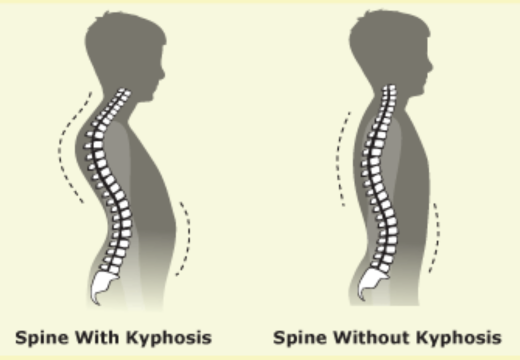
Kyphosis, commonly known as a hunched back or hunchback, refers to an excessive forward curvature of the upper spine that results in a rounded appearance of the back. In modern times, this condition is increasingly seen due to prolonged sitting, poor posture, and extensive use of digital devices. In older individuals, it may also develop due to bone weakening conditions such as osteoporosis. From an Ayurvedic perspective, kyphosis can be associated with Vata Dosha imbalance, particularly affecting Asthi Dhatu (bone tissue) and Mamsa Dhatu (muscle tissue). Ayurveda emphasizes strengthening bones, nourishing tissues, correcting posture, and improving flexibility through herbs, therapies, and lifestyle changes.

KYPHOSIS - HUNCHED BACK OR DOWAGER’S HUMP

INTRODUCTION

Kyphosis is characterized by an abnormal rounding of the thoracic spine (upper back), giving a stooped or hunched appearance. A mild curvature is natural in the spine, but when the curve becomes exaggerated, it leads to visible deformity, discomfort, and sometimes breathing difficulties. This condition may appear in adolescents due to poor posture or in elderly individuals due to degenerative bone changes. The term Dowager’s Hump is often used to describe a noticeable hump at the base of the neck, usually seen in older adults. In Ayurveda, spinal deformities are often linked to Vata aggravation, which causes dryness, degeneration, weakness, and improper alignment of bones and joints.

TYPES OF KYPHOSIS

Postural Kyphosis:

This is the most common type and usually develops due to poor posture, especially in teenagers and adults who spend long hours sitting or using mobile phones and computers.

Features:

  • Rounded shoulders
  • Forward bending of the upper back
  • Usually flexible and reversible

Structural Kyphosis:

This occurs due to structural changes in the vertebrae.

Examples include:

  • Congenital defects
  • Vertebral fractures
  • Spinal diseases

Age-Related Kyphosis (Dowager’s Hump):

Commonly seen in elderly individuals, particularly due to osteoporosis, where weakened bones collapse and create a hump-like appearance.

CAUSES OF KYPHOSIS

  • Poor posture while sitting or standing
  • Excessive mobile or computer use (Text Neck)
  • Weak back and shoulder muscles
  • Osteoporosis (bone thinning)
  • Degenerative spinal diseases
  • Spinal injuries or fractures
  • Vitamin D and calcium deficiency
  • Congenital spinal abnormalities

SYMPTOMS OF KYPHOSIS

  • Rounded upper back
  • Visible hump at the base of the neck
  • Back stiffness
  • Neck and shoulder pain
  • Muscle fatigue
  • Reduced flexibility
  • Difficulty maintaining proper posture
  • In severe cases, breathing difficulty

RISK FACTORS FOR KYPHOSIS

  • Sedentary lifestyle
  • Poor ergonomics
  • Aging
  • Osteoporosis
  • Hormonal changes (especially after menopause)
  • Nutritional deficiencies
  • Lack of physical exercise

DIAGNOSIS OF KYPHOSIS

  • Physical examination
  • Posture assessment
  • X-ray imaging
  • MRI or CT scan (if nerve involvement is suspected)
  • Bone density test (for osteoporosis)

AYURVEDIC ASPECT OF KYPHOSIS

In Ayurveda, conditions involving spinal deformity such as kyphosis can be understood under disorders caused by aggravated Vata Dosha, particularly affecting the Asthi Dhatu (bone tissue) and Mamsa Dhatu (muscle tissue). The spine (Merudanda) is considered the main structural support of the body, and its health depends on proper nourishment of bones, muscles, ligaments, and joints. Kyphosis resembles conditions described in Ayurveda as Kubjata (spinal deformity or hump formation), where abnormal curvature or bending of the spine occurs due to weakness, degeneration, or improper support of tissues.

Dosha Involvement

Vata Dosha: Vata governs movement, structure, and stability of bones and joints. When Vata becomes aggravated due to aging, poor nutrition, dryness, excessive strain, or faulty posture, it causes:

  • Degeneration of bones
  • Weakening of spinal support
  • Dryness in joints
  • Loss of flexibility
  • Structural deformity of the spine

This leads to curvature and formation of a hump-like structure.

Secondary Doshas

  • Kapha Dosha: Kapha imbalance contributes to stiffness, heaviness, and reduced mobility in muscles and joints.
  • Pitta Dosha: In some cases, Pitta involvement may lead to inflammation, pain, and burning sensation around the affected region.

Dhatu (Tissue) Involvement

Kyphosis mainly affects the following tissues:

Asthi Dhatu (Bone Tissue):

  • Weak bones
  • Vertebral deformity
  • Reduced bone density
  • Increased spinal curvature

Mamsa Dhatu (Muscle Tissue): Weakness of back muscles leads to poor support of the spine.

Majja Dhatu (Nerve Tissue): In advanced cases, nerve involvement may lead to pain, tingling, or weakness.

Ayurvedic Pathogenesis (Samprapti)

  • Improper posture, sedentary lifestyle, and poor nutrition aggravate Vata Dosha
  • Increased Vata causes dryness and degeneration of bone tissue
  • Asthi Dhatu Kshaya leads to vertebral weakness
  • Mamsa Dhatu weakness reduces muscular support
  • Structural instability results in spinal curvature and hump formation

AYURVEDIC MANAGEMENT OF KYPHOSIS

  • Pacifying aggravated Vata
  • Strengthening bones and muscles
  • Improving flexibility
  • Preventing further degeneration
  • Correcting posture

Treatment includes herbal medicines, Panchakarma therapies, external treatments, yoga, and dietary regulation.

CONCLUSION

Kyphosis, whether manifesting as postural Tech Neck or the age-related Dowager’s Hump, represents a significant structural challenge that modern sedentary lifestyles have only intensified. From an Ayurvedic perspective, the condition is a clear manifestation of Vata aggravation leading to the depletion of Asthi (bone) and Mamsa (muscle) tissues. Effective management requires a multi-dimensional approach: nourishing the skeletal matrix with bone-strengthening and rejuvenating substances, reversing muscular rigidity through targeted Panchakarma therapies like Prishtha Basti, and re-establishing spinal extension through Yoga. By combining internal tissue rejuvenation with external postural correction, individuals can halt degenerative changes, alleviate chronic pain, and restore the spine’s natural alignment and functional integrity.

Concept of Sapta Dhatu in Ayurveda

Sapta Dhatu in Ayurveda

Abstract

According to the Ancient Ayurvedic texts- to maintain Swasthya i.e. health our Sharira (body) needs to have maintained compatibility between Dosha, Dhatu, and Mala. Basically, harmony among these components is essential to maintain health. ‘Sapta Dhatu’(The seven bodily tissues) as the name itself says – ‘Sapta’ means seven and ‘Dhatu’ is that which supports or better to say holds the body. Let’s discuss it in detail!

Sapta Dhatu in Ayurveda

Introduction

According to Texts and Samhitas of Ayurveda, these Dhatus provide

Nourishment & growth to the entire body. Here the 7 dhatus consist of

  • Rasa (Plasma, WBC, lymph)
  • Rakta (RBCs & platelets)
  • Mamsa (Muscle tissues)
  • Meda (Adipose/fat tissue)
  • Asthi (Bones/Skeletal tissues)
  • Majja (Bone marrow)
  • Shukra (Reproductive tissue)

These are responsible for prime functions of the body. Rasa which is first

among all the dhatus provides nourishment to the other 6 dhatus. Rasa indicates Ahara rasa (Chyle) which is absorbed from Ahara is the diet we consume. Dhatu refers to the 7 structural components of the body, Acharya Sushruta in (S.Su.14/10) says that Rasa dhatu provides nourishment to rakta dhatu, rakta dhatu to mamsa dhatu, mamsa dhatu to meda dhatu, meda dhatu to asthi dhatu and so on.

समदोषः समाग्निश्च समधातु मलःक्रियाः।

प्रसन्नात्मेन्द्रियमनः स्वस्थइतिअभिधीयते॥  (S.Su 14/41)

  • Acharya Sushruta says that the sense of well being of Atma (soul), Mana (mind) and Indriyas (sense organs) is attained by a state of equilibrium between dosha, dhatu and mala. And alteration in them causes diseases.
  • So, Ayurveda believes that all the dhatus are nourished by the food we eat. If vitiation of dosha takes place in any dhatu then it will affect all the next dhatus.
  • When dhatus are at the state of equilibrium, it prevents diseases,elements of tissues develop properly hence it slows down ageing. Each of these seven dhatus have their own updhatus (Produced by dhatus during metabolism), particular pramanas (normal values) in Anjali pramana (its a unit of measurement of liquid in Ayurveda) & predominance of different
  • Mahabhutas (According to Ayurveda all living and nonliving things are made of 5 mahabhuta – Prithvi, Agni, Vayu, Jala & Akash are called Panchmahabhutas).
  • According to Acharya, Sushruta dosha gets severity (mahatwa) and stability (sthiratwa) when it invades the Dhatus of the body. It becomes even more difficult to manage, when they have invaded the deeper dhatu and say this should be treated as soon as possible to avoid severity.

Rasa Dhatu

Rasa dhatu has a predominance of Jala Mahabhuta. So this predominance keeps rasa dhatu in liquid form. Rasa basically means something that is mobile, hence this dhatu provides mobility. Dhatu which is circulated continuously in the body is the Rasa dhatu. This dhatu is formed from previously digested food.The important karma/function of Rasa dhatu is Prerana that means satisfaction or feeling of freshness. Acharya Sushruta in S.Su15/51 says that Rasa dhatu by supplying fluid & minerals to every cell of the body keeps the body and mind fresh.

  • Predominant Mahabhuta – Jala
  • Updhatu of Rasa Dhatu- Stanya (breast milk), rajas (menstrual fluid)
  • Pramana – 9 Anjali

Physiological Functions of Rasa Dhatu Includes

When the rasa dhatu is in sam awastha that is neither increased or decreased the person feels cheerful, happy and as it nourishes the skin so the skin too looks nourished moisturised and also it nourishes the next dhatu that is rakta dhatu.

When the rasa dhatu depletes it makes one’s skin dry and hard, the person is pale, lean, fatigued, the person can’t tolerate loud noises or voices, the person experiences exhaustion, thirst, feeling of fear, pain in chest.

When the rasa dhatu elevates the person loses appetite , saliva secretion increases, nausea, vomiting, feels heavy, feels cold and sleeps a lot more than usual and bad taste in mouth is felt.

Rakta Dhatu

The physiological function of rakta dhatu that can be correlated to blood (RBC,WBC & Platelets) in modern Science.

  • Updhatu of Rakta Dhatu – Kandara (tendons) & sira (blood vessels)
  • Predominant mahabhuta – Agni & Jala
  • Pramana – 8 anjali

The main function of rakta dhatu is to nourish mamsa dhatu. The rakta dhatu is inseparable from the Pitta dosha. So when rakta dhatu decreases from its usual pramana it diminishes the pitta dhatu and that makes the person feel cold.Even the lustre of skin loses and becomes dull and dusty.

Elevation of Rakta dhatu increases the guna (properties) of Pitta dosha and that makes the person feel warmer than usual. The built up heat in the body, tries to release it along with the malas of the body.this ultimately increases bowel movements of the body even the stools can be loose too. This also increases the frequency of urine.

Mamsa Dhatu

The physiological function of Mamsa dhatu is to strengthen the body, to build tissues of muscle in various regions of the body like in the neck, shoulders and thighs. Also the Mamsa dhatu provides nourishment to Meda dhatu.

  • Updhatu of Mamsa Dhatu includes Vasa (fatty material), Shat twacha (seven layers of skin).
  • Predominant Mahabhuta – Prithvi
  • Pramana – Male – 500 & Female – 520 in nos.
  • Depletion of mamsa dhatu causes debility to the sense organs,it emaciates the cheeks and buttocks,or collapse of blood vessels may also take place, and a person can also experience joint pain.
  • Elevation of the Rakta dhatu can cause obesity, breathing disorders, increase of the abdomen and flanks, fatigue, bad smell from one’s body etc.

Meda Dhatu

Meda dhatu which can be correlated to Adipose Tissue in modern, The General function of meda dhatu is Snehan (that which provides lubrication). Its function consists of nourishment of asthi dhatu.

  • The Updhatus – sweda(sweat) Snayu (ligament), sandhi (joints).
  • Predominant mahabhutas are Prithvi & Jala.
  • Pramana – 2 anjali

If  Meda dhatu depletes it can cause enlargement of spleen and also difficulty in movement of joints. Its depletion also increases the urge to eat fatty food.

When Meda dhatu increases than its usual amount the person feels tired and fatigued, fat in regions like abdomen, neck, thighs etc. the person has a foul smell in his/her sweat and experiences breathlessness.

Asthi Dhatu

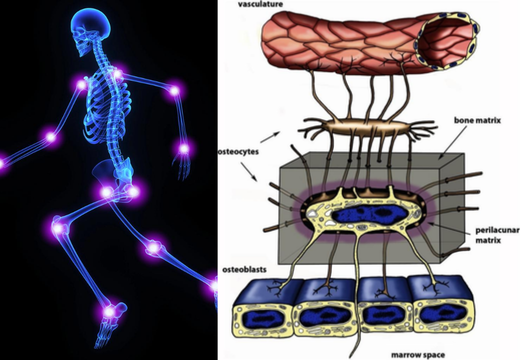
Asthi dhatu can be correlated with the skeletal tissues or the bones. Dharana can be considered as the general function of Asthi dhatu.

  • Its updhatu includes Danta (teeth).
  • Predominant mahabhuta are Prithvi & Vayu.
  • Pramana – 360 in nos.

So as per qualities of vayu mahabhuta, Asthi is dry & rough and as like prithvi mahabhuta it is strong & heavy. Physiological functions of Asthi dhatu are that it gives good stability and structure to the body along with a hard working capacity. It nourishes the majja dhatu.

When the amount of Asthi dhatu decreases that its required amount there will be pain in bones (pricking type of pain) & the bones become porous which makes the bone prone to fractures even with a mild trauma. Depletion of this dhatu also leads to hair fall, fragile nails or even falling of teeth.

Similarly, increase in the dhatu leads to unusual growth of bones, teeth can be developed one over the other.

Majja Dhatu

This dhatu is located deep inside the asthi dhatu and are formed when during the formation of asthi dhatu a cavity is left in them, it is formed by nourishing tissues of fat. The Majja dhatu strengthens the bone and also makes the bone flexible. It also balances the dryness of asthi dhatu.

  • Its updhatu is Kesha (hair).
  • Predominant mahabhuta – Jala
  • Pramana – 1 anjali

So, depletion in the levels of Majja dhatu weakens the bones which eventually causes pain in the joints, giddiness and also the depletion of this dhatu causes depletion of Shukra dhatu too.

Elevations in the level of this dhatu leads to heaviness of the whole body especially eyes.

Shukra Dhatu

Shukra is the seventh and the final dhatu in the dhatu formation cycle. Ayurveda considers shukra as the male semen and the female egg. Hence a person with healthy shukra has a brightness of confidence in his/her eyes, and also has a brighter skin.

  • Predominant mahabhuta is Jala (water)
  • Its updhatu is Ojas (immunity)
  • Pramana – ½ anjali

In case of depletion of Shukra dhatu ejaculation is delayed or even semen mixed with blood can ejaculate, which ultimately causes pain in the testicles. The person will also be weak and an increase in thirst can also be seen. Exhaustion, dryness in mouth, general body aches, impotency can also be seen.

Elevation in Shukra dhatu may lead to a person’s increased desire towards

coitus, development of stone in the seminal tract can take place.

Conclusion

The above article concludes that the elevation or depletion of any particular dhatu leads to disease. That’s why all the dhatu should be nourished well for their proper functioning and to attain good immunity in order to stabilise the body. A proper harmony between the doshas and dhatus should also be maintained in order to attain a healthy life.