Natural Remedies for Anterior Cruciate Ligament Tear(Acl Tear)
ABSTRACT
Anterior cruciate ligament tear is one of the most common knee injuries. The people who are at risk of an anterior cruciate ligament tear are the athletes who play sports like basketball, soccer, football, etc. If any person has an ACL tear, then surgery may or may not be required it depends on several factors such as the severity of the injury and how much you are involved in activities that are involved in any movement.
Herbal remedies are the best solution for this medical condition as herbal remedies are 100% natural without any additives or preservatives and chemicals which can help you to get healthy and you can feel better by the use of Ayurvedic medicines.
INTRODUCTION
The anterior cruciate ligament is one of the ligaments of the knee which holds the bone of the knee. The ACL tear occurs mainly with the sound of pop and then the severe pain in the knee arises. After this, swelling of the knee starts, and because of the ligament tear and swelling, it becomes very difficult for the person to straighten the knee.
In Ayurveda, ACL tears are managed under the category of Sandhigatavata. Janu Basti is given to the patient followed by various herbal remedies which help to improve this condition.

SYMPTOMS OF ANTERIOR CRUCIATE LIGAMENT
Depending upon the severity, symptoms may differ from person to person but some of the common symptoms are explained below
- A loud pop sound is heard when the ligament is torn.
- Inflammation on the knee is seen.
- Due to inflammation, it is very difficult to straighten the knee. Hence the range of motion of the leg becomes limited.
- Inability to bear their own body weight.
CAUSES OF ANTERIOR CRUCIATE LIGAMENT INJURY
Generally, ACL tear occurs in those people who are more active in sports like soccer, basketball, etc. When an ACL is injured it can be a partial injury or it can be a full tear. When the full tear happens the ligament is divided into two pieces. The causes of ACL tear are described below
- When you are in a resting position and you suddenly make movements like jump or turn.
- If your body is in motion and you suddenly stop or tend to change your direction.
- If you extremely distend your knee joint.
- ACL can also occur in case of any trauma to the knee.
- If you are not landing in a proper position after a jump.
- If you are giving regular strain on the knee then the ligament loses its elasticity and may tear.
COMPLICATIONS OF ANTERIOR CRUCIATE LIGAMENT
ACL tear directly affects the knee and can create problems in the movement such as walking, jumping, etc. if neglected. Here are some of the complications which may arise due to ACL tear
- It may directly affect the motion of your leg and the range becomes limited.
- A person is at high risk of developing osteoarthritis.
- Joint cartilage may get damaged.
- A person may start walking with a limping effect.
DIAGNOSIS
During the diagnosis process, the first clinician should check the deformity of the knee physically which is for tenderness or inflammation.
Regarding Radiological Examination following imaging test are to be done such as
- X-ray
- MRI SCAN
DOES IT NEED SURGERY?
The answer to this question lies in the severity of ACL tear. So if it is an extreme case of ACL injury then surgery may be advised. There is one more procedure to detect the severity of this medical condition known as arthroscopy in which a small cut is made by a surgeon and an arthroscope is inserted into it, to look inside and detection of injury is done.
HERBAL REMEDIES BY PLANET AYURVEDA


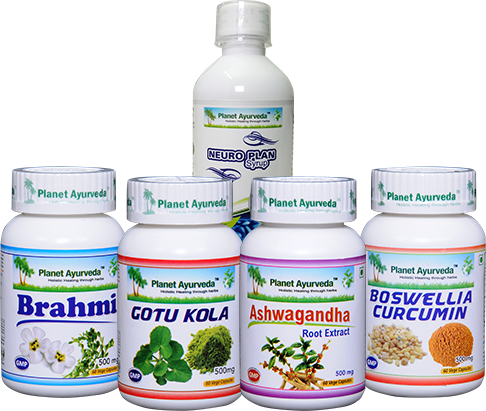
Planet Ayurveda offers a range of products that can help in the relief of complications and problems of ACL tear. The products manufactured by Planet Ayurveda are 100% natural and are formulated under the guidance of MD Ayurveda doctors. So below is the description of the products which can help to support this medical condition
1. BOSWELLIA CURCUMIN CAPSULES
It is the most effective combination of anti-inflammatory herbs offered by Planet Ayurveda. The joint pain relief can be seen after using these capsules within a few days.
Benefits of Boswellia curcumin capsules are:
- Reduces joint pain and swelling
- Increases mobility by reducing joint stiffness
Dosage: 2 capsules twice daily.
2. CORAL CALCIUM COMPLEX
It is a pure and natural extract that contains a combination of Praval pishti, Akik pishti, Jawar Mohra pishti, Mukta pishti, etc.
Benefits of the Coral Calcium Complex are explained below:
- Helps to maintain the calcium level in the body.
- Helps to maintain a healthy immune system.
- Enhances bone strength.
Dosage: 1 cap twice daily.
4. JOINT AID PLUS CAPSULE
This is a 100% natural formulation and is manufactured by Planet Ayurveda which has ingredients like Guggul, Ashwagandha, Shallaki, etc. It helps to act against inflammations and pain.
Benefits of Joint Aid Plus are
- It has great anti-inflammatory properties which also relieves the pain.
- It has an amazing property of rejuvenation.
- It helps to reduce fatigue, stress, and weakness.
Dosage: 1 capsule twice daily.
5. YOGRAJ GUGGUL
It contains pure guggul, pippali, ela, etc. It is a highly effective medicine for joint pain and arthritis, its benefits are described below:
- Supports healthy muscles and joints
- Balance the three energies of the body (vata,pitta and kapha)
Dosage: 2 tabs twice daily.
6. ORTHOVITA OIL
Orthovita oil is amazing herbal oil which is a combination of different herbs and its application on the affected area helps to support joints and muscles. This oil has a wonderful property to eliminate the toxins which are in the tissues of the body. Some of the ingredients of this oil are: Camphor, Turpentine oil, Shul Gajendra oil, etc.
Its benefits are explained below
- This oil helps to remove the rigidity of the joints.
- It provides a soothing effect to the nerves.
- This oil helps in the greasing of the joints which results in the increased movement of the joints.
METHOD OF APPLICATION
Take 5 to 10 ml of Ortho vita oil in your palm and massage gently over the affected joint, and then wrap the affected joint with cloth for at least 2 to 3 hours.
HOME REMEDIES, DIET, AND LIFESTYLE RECOMMENDATIONS
Surely treatment and medication will bring the positive result in ACL tear but some of the home remedies, diet, and lifestyle changes may support the medical condition and can help the patient to recover early in addition to medication.
They are Enlisted Below
USE OF ICE PACK: Use of ice packs on the affected area for at least 15 to 20 minutes will help to reduce the inflammation as well as the pain.
USE OF TURMERIC: As we all know turmeric can do magic in many of the medical conditions. Take one tablespoon of turmeric and mix it with water and make a paste of it. Apply that paste on the injured area and cover it with cotton cloth, leave it overnight. This remedy will surely help to recover from the situation. You can also have milk added with turmeric also known as Golden Milk.
GET PROPER NUTRITION: Nutritious food is the basis to recover from any injury or disease. Consume proteins that are present in dairy products, citrus fruits, chicken, or fish. Eat nutrient-rich vegetables such as spinach, etc.
TAKE SUFFICIENT REST: Having proper rest and sleep is very important. During sleep, our body promotes healing and repairs the damaged tissues so 8 hours of sound sleep is very necessary.
YOGA POSES FOR ACL INJURY: Yoga will help to fix the ACL injury in addition to medications.
Some of the yoga poses are described below
- Reclined leg raises
- Leg slides
CONCLUSION
On average, approximately there are 1,50,000 ACL injury cases per year. Depending upon the severity, symptoms arise which are explained above.
With proper medication, diet, and exercises a person can heal ACL injury, which also may not require surgery. Herbal Remedies for Anterior cruciate ligament tear are the natural solution for any medical condition as they have no side effects and have good results too