Fenbendazole and Ivermectin in Tumor Management: A Clinical Overview with Integrative and Ayurvedic Perspectives
ABSTRACT
The exploration of unconventional therapies in oncology has intensified interest in drug repurposing, particularly agents with established safety records. Among these, Ivermectin and Fenbendazole are traditionally used as antiparasitic drugs that have drawn attention for their potential role in tumor management. Experimental studies suggest that these compounds may interfere with tumor growth through mechanisms such as inhibition of cell proliferation, disruption of microtubules, immune modulation, and metabolic interference. However, despite promising laboratory findings, clinical evidence in humans remains limited. This article provides a comprehensive and scientifically grounded overview of these drugs, focusing on their potential role in tumor biology, safety concerns, and complementary herbal approaches supported by research.
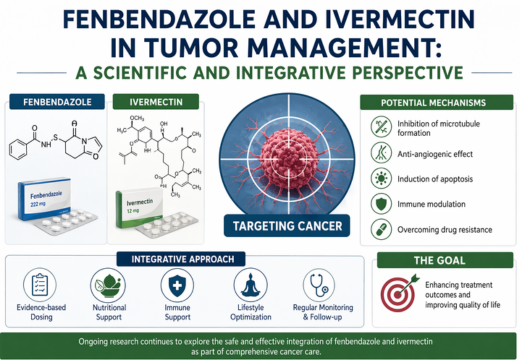
FUNDAMENTALS OF TUMOR DEVELOPMENT
A tumor refers to an abnormal growth of tissue that arises when normal cellular regulation is disrupted, leading to excessive cell division and reduced programmed cell death. These growths may vary in behavior, with some remaining confined to their original location, while others exhibit aggressive characteristics and the ability to spread to distant parts of the body. Tumor formation and progression are driven by several underlying biological mechanisms:
- Continuous and uncontrolled multiplication of cells
- Failure of cells to undergo apoptosis (programmed cell death)
- Development of new blood vessels to supply nutrients (angiogenesis)
- Ability to evade detection and destruction by the immune system
At the molecular level, tumor growth is regulated by complex signaling networks. Pathways such as Wnt/β-catenin, PI3K/Akt, and NF-κB play a crucial role in maintaining tumor survival, promoting proliferation, and supporting resistance to conventional therapies.
CONCEPT OF USING EXISTING DRUGS IN TUMOR TREATMENT
Using already available medicines for new treatment purposes has become an important area of research in tumor care. This approach helps in saving time and cost, as these drugs are already known for their safety and effects in the body.
- Researchers study how these drugs affect tumor growth and development
- Tumor growth involves uncontrolled cell division, resistance to cell death, angiogenesis, and immune evasion
- Repurposed drugs may help slow down or control these tumor processes
- Many non-cancer drugs have shown effects on tumor cells in recent studies
- These drugs may work by altering cell signaling pathways
- They can disrupt tumor metabolism and affect the tumor microenvironment
- Antiparasitic drugs like Ivermectin and Fenbendazole are being widely studied
- They may act by disturbing microtubule formation in tumor cells
- They may also increase oxidative stress, leading to tumor cell damage
- Most of the current evidence comes from laboratory and animal studies
- Human clinical trials are still needed to confirm safety and effectiveness
- These drugs should not be used without proper medical guidance
- Their role in tumor treatment is still under research and considered experimental
POTENTIAL MECHANISMS OF FENBENDAZOLE IN TUMOR CONTROL
Fenbendazole is being explored in research for its possible effects on tumor cells through multiple biological actions:
- It can increase the production of reactive oxygen species (ROS), leading to cellular stress, DNA damage, and triggering of programmed cell death (apoptosis) in tumor cells.
- It may affect tumor metabolism by limiting the ability of cells to utilize glucose efficiently, thereby reducing their energy supply and slowing growth.
- It interferes with the formation of microtubules by binding to tubulin, which is essential for cell division. This disruption can prevent tumor cells from multiplying properly.
POSSIBLE ACTIONS OF IVERMECTIN IN TUMOR MANAGEMENT
- It can promote programmed cell death (apoptosis) by increasing oxidative stress and affecting mitochondrial function in tumor cells.
- It may support the immune system by improving the ability of immune cells, like T-cells, to recognize and attack tumor cells.
- It can slow down tumor growth by disrupting the normal cell cycle and reducing uncontrolled cell division.
- It may interfere with important cell signaling pathways, such as Wnt/β-catenin, which are involved in tumor growth and survival.
CURRENT SCIENTIFIC EVIDENCE
Despite growing public interest, the scientific validation of Ivermectin and Fenbendazole in oncology remains at an early stage. Most available data originates from in vitro (cell culture) and in vivo (animal) studies, where these compounds have shown potential effects on tumor cell metabolism, microtubule function, and apoptotic pathways. However, robust human clinical trials are largely absent. The existing evidence is insufficient to establish efficacy, safety, or standardized treatment protocols in cancer patients. As a result, these agents are currently classified as investigational and are not included in established oncology guidelines or evidence-based treatment frameworks.
POTENTIAL SAFETY CONCERNS AND CLINICAL RISKS
- Risk of Toxicity with Improper Use: Unsupervised or high-dose usage of Ivermectin has been associated with neurological complications such as dizziness, confusion, tremors, and, in severe cases, neurotoxicity. Similarly, prolonged exposure to Fenbendazole may place stress on hepatic function, raising concerns about liver toxicity.
- Lack of Standardized Human Dosage: One of the major limitations is the absence of clinically validated dosing regimens for cancer therapy. The dosages used in laboratory settings do not directly translate to safe or effective human doses, creating uncertainty and potential risk when used outside controlled environments.
- Possible Drug Interactions: Both drugs may influence liver enzyme systems, particularly cytochrome P450 pathways, which are crucial for metabolizing many chemotherapy agents. This raises the possibility of:
- Reduced effectiveness of anticancer drugs: Increased toxicity due to altered drug clearance and unpredictable pharmacokinetic interactions.
- Concerns with Non-Human Formulations: Fenbendazole is primarily approved for veterinary use, not for humans. Products intended for animals may contain impurities, inappropriate excipients, or inconsistent dosing standards, making them potentially unsafe for human consumption.
A CAUTIOUS AND EVIDENCE-BASED APPROACH
While early findings on Ivermectin and Fenbendazole are scientifically interesting, their translation into clinical cancer care remains unproven. Most evidence comes from laboratory and animal studies, which do not guarantee similar outcomes in humans. The absence of large-scale clinical trials means there are no established guidelines regarding effective dosing, safety, or long-term outcomes. Cancer is a complex and highly variable disease, and unverified treatments may interfere with standard therapies like chemotherapy or immunotherapy. Additionally, unsupervised use can increase the risk of toxicity and adverse interactions. From a medical standpoint, patient safety is paramount. Therefore, these drugs should only be considered under strict medical supervision or within clinical trials. Until stronger human evidence emerges, relying on evidence-based treatments remains the safest and most responsible approach.
AYURVEDIC PERSPECTIVE ON TUMOR
In Ayurveda, a tumor is understood under the concept of Arbuda, which refers to an abnormal growth arising due to imbalance of the three Doshas; Vata, Pitta, and Kapha. Among these, Kapha Dosha plays a major role in forming dense, slow-growing masses, while Pitta contributes to inflammation and rapid changes, and Vata supports abnormal cell movement and spread. Tumor formation is linked to accumulation of Ama (toxins) due to weak digestive fire (Agni). Vitiation of Rakta (blood) and Mamsa Dhatu (muscle tissue) creates a favorable environment for abnormal growth. Obstruction in body channels (Srotas) leads to improper circulation and nourishment of tissues. From an Ayurvedic view, the condition is not just a localized growth but a systemic imbalance affecting the whole body.
HERBS FOR SUPPORTING TUMOR MANAGEMENT
Ayurveda approaches disease at a systemic level, while modern drugs often act on specific molecular targets. Interestingly, some herbs naturally influence multiple pathways at once.
- Multi-Pathway Regulation vs Single Target Action: Modern drugs like Ivermectin (Ivermectin) are typically designed to target specific cellular signaling pathways, such as Wnt/β-catenin, which may help in controlling tumor cell proliferation. However, their effect is limited to a single molecular mechanism. In contrast, Ayurvedic herbs act on multiple biological pathways simultaneously, offering broad-spectrum modulation. For example, Turmeric (Curcuma longa) regulates NF-κB, PI3K/Akt, and inflammatory cytokines, whereas Ashwagandha (Withania somnifera) modulates stress, immune, and apoptosis-related pathways. Marich (Piper nigrum) not only has its own bioactive effects, including antioxidant and metabolic support, but also enhances the bioavailability of other herbs like turmeric, improving their systemic efficacy. This multi-targeted approach allows the body to control abnormal cell growth from different angles rather than relying on a single mechanism.
- Creating an Unfavorable Environment for Tumor Cells: While certain drugs may directly stress tumor cells, Ayurveda emphasizes creating a systemic environment that is inhospitable for tumor development. This involves reducing Ama (toxins) and balancing Agni (metabolism) to support healthy cellular function. Herbs such as Neem (Azadirachta indica) and Guduchi (Tinospora cordifolia) purify the blood and tissues, enhancing detoxification. Marich (Piper nigrum) supports digestion and metabolic efficiency, strengthening the body’s natural defenses. By focusing on internal terrain modification, Ayurveda indirectly weakens tumor survival conditions, making the body less conducive for abnormal cell proliferation and improving overall resilience.
- Enhancement of Immune Surveillance: Ivermectin has been studied for its immunomodulatory properties, but Ayurvedic herbs provide a more holistic approach to immune enhancement. Guduchi (Tinospora cordifolia) has been shown to enhance macrophage and natural killer (NK) cell activity, crucial for recognizing and eliminating abnormal cells. Tulsi (Ocimum sanctum) supports adaptive immune responses, helping the body respond more effectively to threats. Marich (Piper nigrum) also contributes by improving immune function and antimicrobial defense. Through these mechanisms, Ayurveda empowers the body’s innate and adaptive defenses to detect and remove potentially malignant cells, reducing the need for direct cytotoxic intervention.
- Regulation of Oxidative Stress: Oxidative stress is a double-edged sword: it can damage tumor cells but also harm normal tissues if uncontrolled. Ivermectin may induce oxidative stress specifically in tumor cells. Ayurvedic herbs, however, act selectively, providing antioxidant protection for healthy cells while promoting controlled pro-oxidant effects in abnormal cells. Moringa (Moringa oleifera) and Turmeric (Curcuma longa) are well-documented for maintaining this balance, and Marich (Piper nigrum) enhances antioxidant enzyme activity and reduces cellular damage. This dual action supports normal tissue health while contributing to tumor cell vulnerability, ensuring safer systemic regulation of oxidative processes.
- Influence on Cellular Metabolism: Tumor cells often rely on altered metabolic pathways, including high glucose consumption and anaerobic energy production. Ayurvedic herbs help normalize metabolism and maintain energy homeostasis. Methi (Trigonella foenum-graecum) supports glucose regulation, while Guduchi (Tinospora cordifolia) helps balance overall metabolic activity. Moringa (Moringa oleifera) influences cellular energy pathways, and Marich (Piper nigrum) stimulates digestion and nutrient absorption, indirectly supporting energy metabolism. By regulating metabolic processes, these herbs may limit tumor growth by preventing the excessive resource supply that abnormal cells require.
- Detoxification and Channel Clearance (Srotas Shodhana): Ayurveda emphasizes clearing body channels (Srotas) to ensure proper nutrient flow and waste removal. Herbs with Lekhana (scraping) properties prevent abnormal tissue accumulation and improve tissue health. Marich (Piper nigrum) enhances circulation and metabolic activity, complementing the detoxification effects of other herbs. Neem (Azadirachta indica) and Guduchi (Tinospora cordifolia) further purify blood and tissues, supporting systemic cleansing. Regular detoxification reduces the accumulation of metabolic waste and abnormal cellular debris, creating a healthier internal environment that discourages tumor progression.
- Adaptogenic and Supportive Effects: Many conventional drugs impose systemic stress, leading to fatigue, hormonal imbalance, or immune suppression. Ayurvedic adaptogens help mitigate these effects. Ashwagandha (Withania somnifera) reduces cortisol, improves energy, strength, and resilience, and supports recovery during conventional therapies. Marich (Piper nigrum) enhances digestive efficiency and metabolic function, indirectly reducing systemic stress and promoting overall vitality. Together, adaptogens and supportive herbs help maintain patient strength and resilience, enabling better tolerance of standard treatments while supporting the body’s natural recovery mechanisms.
INTEGRATIVE PERSPECTIVE IN TUMOR CARE
An integrative approach to tumor management emphasizes combining conventional oncology treatments with evidence-based supportive therapies to optimize patient outcomes. While modern drugs like Ivermectin (Ivermectin) and Fenbendazole (Fenbendazole) have shown promising results in experimental studies—such as modulation of tumor cell signaling, inhibition of proliferation, and immune activation—their clinical use in humans remains investigational. These agents should only be considered under strict medical supervision, ideally within controlled clinical trials, due to uncertain dosing, potential toxicity, and interactions with standard therapies. Complementing conventional treatments, Ayurvedic herbal therapies provide multi-faceted support. Herbs such as Turmeric (Curcuma longa), Ashwagandha (Withania somnifera), Guduchi (Tinospora cordifolia), Moringa (Moringa oleifera), Marich (Piper nigrum), and Methi (Trigonella foenum-graecum) act on multiple biological pathways, enhance immune surveillance, regulate oxidative stress, and improve metabolic and digestive health. By creating a favorable internal environment, reducing systemic stress, and supporting detoxification, these herbs can improve resilience, minimize treatment-related side effects, and potentially enhance the efficacy of conventional therapies. Ultimately, an integrative tumor care model prioritizes patient safety, quality of life, and holistic health, aligning modern pharmacology with traditional wisdom to support long-term recovery and well-being.
CONCLUSION
Ivermectin and Fenbendazole represent emerging candidates in the field of drug repurposing for tumor management. Their ability to interfere with tumor signaling pathways, metabolism, and cell division makes them scientifically interesting. However, current evidence is insufficient to support their routine clinical use. Until validated by large-scale human trials, their use should remain cautious and supervised. Meanwhile, research-supported herbal medicine offers a safer complementary approach in enhancing patient well-being and supporting tumor care.