Category: Skin Health

Dercum’s Disease – Causes, Symptoms and Ayurvedic Treatment

ABSTRACT

Dercum’s disease is a rare disease of unknown aetiology. It is characterised by painful, multiple fatty lipomas (subcutaneous deposition of adipose tissues) on the body. This disease is likely to be more common in women after menopause, especially obese women. Lipomas are located primarily in the trunk region and on the extremities close to the trunk of the body. Dercum’s disease is a chronic condition, which means that it is a long-lasting condition. This article covers important information regarding the disease and its management in both modern and ayurvedic aspects.
Dercum's Disease

INTRODUCTION

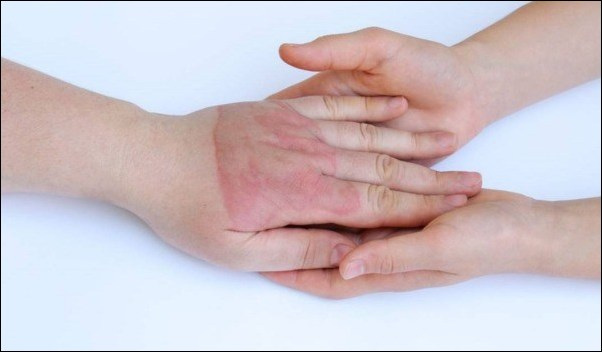
Dercum’s disease is also known as Adiposis dolorosa, Ander’s syndrome, or Dercum Vitaut. This disease is generally characterised by the development of painful subcutaneous adipose tissue of different sizes, multiplicity, and localization. Dercum’s disease is a rare disorder that appears in almost all adults and is predominant in individuals aged 35–50 years. Fat tissues are known as loose connective tissue, hence it is a disease of loose connective tissue. People with Dercum’s disease have many painful, fatty lumps that grow just below their skin.

CAUSES

The causes of Dercum’s disease are not clear yet. But some of the causative factors are:

  1. Hereditary factor

Some experts think that this disease may come from a mutated gene that is passed down in families.

  1. Autoimmune disorder

Others think that it is an autoimmune disorder, which means that the immune system is not working properly.

  1. It may be a result of hormonal or nervous system problems.

SYMPTOMS OF DERCUM’S DISEASE

  1. Fatty tissues may appear all over the body.
  2. Weakness and pain (burning and searing types) on the lumps.
  3. Obesity
  4. Mental issues like stress, depression, or feeling confused
  5. Pain in fatty parts of the body that lasts for more than 3 months
  6. Patients may feel bruises, headaches, and stiffness after resting.
  7. Lumps are soft and well-demarcated.
  8. No signs of skin pigmentation or cutaneous breakage

 MANAGEMENT

Although there is no specific management for Dercum’s disease, it is managed symptomatically.

  1. Medicines: Some drugs are helpful to ease specific symptoms. Diuretics (water pills) are sometimes prescribed to reduce swelling. They help the body get rid of extra water. Some of the painkillers help reduce pain.
  2. Emotional support: chat with friends, family members, or a mental health provider. They may help you cope better with this chronic disease.
  3. Eating healthy: Fatty lumps likely won’t go away with diet and exercise, but an improved lifestyle could also be helpful.

AYURVEDIC VIEW

It is comparable to Medoja granthi in Ayurveda. The vata becomes vitiated as a result of exposure to the etiological causes. The vitiated vata causes the kapha, meda dhatu, rakta dhatu, and mansa dhatu to become vitiated as well, leading to the raised, rounded expansion of the body. Meda makes up an enormous quantity of the Granthi.

DEFINITION OF GRANTHI

The aggravated vata adi dosha contaminates the rakt (blood), mansa (flesh), and meda (fat) dhatus, which results in the formation of a knotty and rounded inflammation called granthi.

SYMPTOMS

Sushrut Nidan, 11/7

  1. Smooth to touch
  2. Big in size
  3. Itching
  4. There is no pain
  5. After rupturing, there is an oily discharge (like ghee).

MANAGEMENT

Herbs used in the management of Medaj granthi

  1. Haridra (Curcuma longa)
  2. Shankhini (Euphorbia dracunculoides)
  3. Ativisha (Aconitum heterophyllum)
  4. Chitraka ((Plumbago zeylanica)
  5. Arka (Calotropis procera)
  6. Kustha (Saussurea lappa)

PANCHKARMA

  1. Vamana (induced vomiting)
  2. Virechan (induced purgations)
  3. Lepa (coating of medicated herbs)

HERBAL REMEDIES FOR DERCUM’S DISEASE BY PLANET AYURVEDA

Planet Ayurveda is an herbal pharmaceutical company that formulates and prepares herbal medicines. All the products are herbal and free of impurities and any kind of adulterant. The company is GMP-certified. Qualities of products are checked by the doctors thoroughly. Planet Ayurveda provides some of its best medicines for Dercum’s disease. Here is a list of the products used to manage Dercum’s disease.

  1. Medohar Guggul
  2. Arogyavardhini vati
  3. Agnitundi vati
  4. Navkarshik churna
  5. Kaishore Guggul
  6. Mahamanjisthadi kwath.

PRODUCT DESCRIPTION

1. MEDOHAR GUGGUL

This is an excellent classical preparation which has ingredients like Amla (Emblica officinalis), Ginger (Zingiber officinalis), Pippali (Piper longum), Mustak (Cyperus rotundus), and many others. Medohar guggul stimulates fat metabolism that burns excessive body fat. It also improves digestion. It has an impressive effect on obesity.

Dosage: 2 tablets daily with lukewarm water.

2. AROGYAVARDHINI VATI

This vati is formulated by Planet Ayurveda and contains components like Triphala (three dry herbs), Katuki (Picrorhiza kurroa), and others. Because of its shodhana (detoxification) character, this extraordinary preparation helps to regulate body weight and other digestive system issues by enhancing metabolism and eliminating waste items from the body. It effectively reduces obesity. Obesity is the outcome of the buildup of ama in the form of excessive fat, an imbalance of meda dhatu, and the accumulation of ama. Due to its deepan (appetiser) and pachan (digestive) characteristics, Arogyavardhini Vati is an Ayurvedic remedy that effectively reduces body weight by lowering ama (toxins that stay in the body as a result of incorrect digestion). It is beneficial.

Dosage: 2 tablets daily with lukewarm water.

3. NAVKARSHIK CHURNA

This formulation is prepared by Planet Ayurveda and has ingredients like Amla (Emblica officinalis), Haritaki (Terminalia chebula), Bahera (Terminalia bellerica), Vacha (Acorus calamus), and many others. This is an amazing product that acts as an immunomodulator. It also has anti-inflammatory and antibacterial properties. It gives relief in pain and strengthens joints and ligaments of the body.

Dosage: Half or 1 tablespoon twice daily with lukewarm water.

4. AGNITUNDI VATI

This is an amazing preparation by Planet Ayurveda, including ingredients like Triphala (3 dried fruits of amla, haritaki and bibhitaki), Gandhak (purified and processed sulphur), Visha (Aconitum ferox), and many such others. It is an excellent vata Nashak herb. Agnitundi vati has the specific properties of Deepan (Appetizer) and Pachan (digestive) properties that imbalances the doshas of the body. It also increases the digestive fire which results in the increase of appetite.

Dosage: 1 tablet twice daily with lukewarm water.

5. KAISHORE GUGGUL

These are the capsules formulated by Planet Ayurveda with ingredients like Amlaki ( Emblica officinalis), Haritaki (Terminalia chebula), Bibhitaki (Terminalia billerica), Guggul (Commiphora mukul), and many others. It gives support and balances the tridoshas of the body. It is also helpful in low digestive strength. Kaishore guggul has some anti-inflammatory properties that help to reduce swelling and pain.

Dosage: 2 tablets twice daily with lukewarm water.

6. MAHAMANJISTHADI KWATH

This is the manufacturing of Planet Ayurveda, which has ingredients like Manjistha (Rubia cordifolia), Nagarmotha (Cyperus rotundus), Giloy (Tinospora cordifolia), and many others. It is a detoxifying herbal medicine that cleans the blood, brings a glow to the skin, cures inflammation, and prevents infections. This formulation has no side effects. It is helpful in reducing obesity and has a great effect on rakta vaha and medovaha srotas.

Dosage: 2 tablespoons twice daily with lukewarm water.

Contact my assistant to provide you the costing / ordering and delivery information at – costing.planetayurveda@gmail.com or call at +91-172-5214040

CONCLUSION

This article includes all the main content regarding Dercum’s disease. This is a rare disease that has no specific causes or management. Dercum’s disease has only symptomatic management as per modern aspects. Moreover, Planet Ayurveda provides the best medicines to aid this chronic disease. 
Sting Associated Vasculopathy Infancy Dependent Treatment in Ayurveda

Abstract

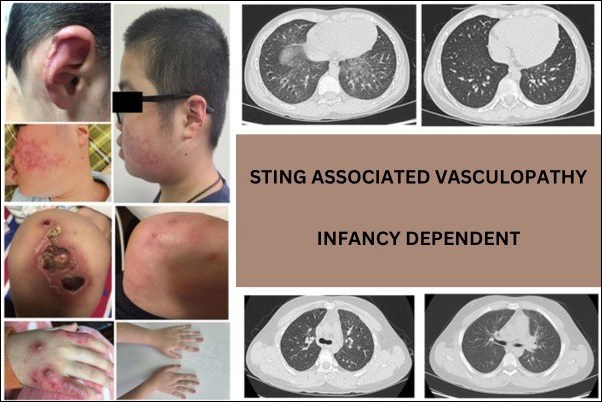
Sting-associated vasculopathy is an uncommon disorder that causes aberrant inflammation and skin and interstitial lung disease lesions. It was originally found in 2014. Because of the gene mutation that results in it, it is a hereditary condition. High death rates are associated with its characteristic neonatal onset. Now, we discuss sting-associated vasculopathy in detail. The affected person experiences the Raynaud phenomenon, in which the affected area turns red with exposure to cold and stress and changes color from white to blue. It might also be required for amputation.

Sting Associated Vasculopathy, Infancy Dependent

Introduction

The hereditary disorder known as “sting-associated vasculopathy” causes aberrant inflammation throughout the body, with the skin, blood vessels, and lungs experiencing the most of the effects. It is an auto-inflammatory illness and a rare condition. It begins during infancy. Vasculopathy and interstitial lung disease are its primary characteristics.

Causes of SAVI

Genetic changes are the root cause of sting-associated vasculopathy. A mutation in the STING1 gene results in an overproduction of the inflammatory proteins that harm tissue and increase inflammation. This gene is important for producing the STING protein, which produces cytokines that cause inflammation.

Symptoms Of SAVI

  • Unhealing wound
  • Minimal fever
  • Joint rigidity
  • Muscle soreness
  • Dyspnea
  • Respiratory lesions
  • Enlarged lymph node
  • Failing to flourish
  • Coughing
  • Lungs with interstitial disease
  • Hypermobility
  • Skin blemishes can be found on the cheeks, nose, ears, fingers, and soles of the feet.
  • A fibrotic lung

Diagnosis Of SAVI

  • Chest X-rays
  • Magnetic resonance imaging
  • Blood culture
  • Lung biopsy
  • CT scan
  • Genetic testing

Treatment

This illness has no specific treatment. Management can only be supportive.

  • Corticosteroids
  • Biological agents
  • Immunosuppressant

Ayurvedic Aspect of Sting Associated Vasculopathy

In Ayurveda, we can correlate the sting-associated vasculopathy with onset in infancy with Bija dushti (Abnormal ovum and sperm).

According to Acharya Charaka: (च. शा. ३/१७)

This theory holds true for each and every srota (channel). Any Beeja Bhaga gene whose function is compromised by the doshas (Vata, Pitta, and Kapha) manifests as a sickness or disease. It falls under the heading of a hereditary disease called Sahaja or Kulaj roga. Genes, or bija bhaga avayava, are the fundamental building blocks of all living things. Genes contain the instructions needed to create, maintain, and pass genetic features to progeny in an organism. If the male and female are both bija damaged totally, neither can generate new offspring, but if just one is contaminated, the offspring will be defective. The bija bhaga avayava is where abnormal doshas (Vata, Pitta, and Kapha) enter, causing disease to develop there with symptoms like dyspnea, growth retardation, skin lesions, joint stiffness, and pulmonary diseases.

Treatment

Genetic or hereditary illnesses cannot be cured. There is no known cure for this illness. Only supportive care can be provided to control symptoms and halt the spread of the disease. The following list of herbal treatments for SAVI is provided by Planet Ayurveda as supportive management.

Some Herbal Remedies for Sting Associated Vasculopathy by Planet Ayurveda

Planet Ayurveda is a certified ayurvedic clinic, and the formulation of different types of remedies is performed here to provide relief from diseases. All formulations at Planet Ayurveda are made organically without the use of preservatives. These remedies are formulated under the guidance of MD Ayurvedic practitioners. Planet Ayurveda offers a variety of herbal products that have no negative effects for treating sting associated vasculopathy.

Product Lists

  1. BOSWELLIA CURCUMIN
  2. ARVINDASAV
  3. INFEE SYRUP
  4. MANJISHTHA CAPSULE

Product Description

1. Boswellia Curcumin

Boswellia curcumin is a multi-herbal capsule that includes haridra (Curcuma longa) and shallaki (Boswellia serrata). It has a spicy and bitter flavour. It harmonizes the body’s three doshas—Pitta, Kapha, and Vata. It is unctuous, dry, sticky, sharp, and light. It includes mineral stuff such as calcium, silicon dioxide, iron, volatile oil, and magnesium, as well as organic molecules and inorganic ions. For a variety of joint issues, including osteoarthritis, gout, and rheumatoid arthritis, it is a very helpful medication. It aids in lowering joint inflammation-related discomfort, soreness, and swelling.

Dosage: with plain water, after meals, take 1 capsule twice daily.

2. Arvindasav

Arvindasav is a multi-herbal formulation that is formulated by Planet Ayurveda by using herbs like arjun (Terminalia arjuna), khairati (Sida cordifolia), mulethi (Glycyrrhiza glabra), manjith (Rubia cordifolia), and some other herbs. It has an unctuous, rich, heavy, and cold effect. All three doshas—Vata, Pitta, and Kapha—are calmed by it. It is a drug that acts as an antipyretic, anti-inflammatory, and wound healer. It enhances the complexion, soothes eye issues, acts as an antacid, and is also a potent general tonic. Calcium, glucose, starch, vitamin B, and potassium are all present in it. It liquifies the mucus and helps in its smooth excitation. It is indicated for cough, asthma, bronchitis, and other chest conditions. It enhances voice quality, supports body weight, and counteracts excessive thirst and weariness. It stimulates the digestive system.

Dosage: after meals, with equal amounts of water (10 ml twice daily).

3. Infee Syrup

Infee is a multi-herbal syrup that is formulated with the help of yashtimadhu (Glycyrrhiza glabra) and guduchi (Tinospora cordifolia). It balances the kapha, pitta, and vata-vitiated doshas. Additionally, it has antipyretic, anti-inflammatory, and wound-healing properties. It is unctuous, spicy, astringent and bitter. Fatty acids, alkaloids, volatile oils, and glycosides are all present. It is prescribed for conditions like gout, rheumatoid arthritis, fever, dyspepsia, and urinary disorders. It contains rejuvenating, immunomodulating, and antioxidant effects. It helps reduce the level of uric acid.

Dosage: 5 drops in infants and 1/2 tsp with water.

4. Manjishtha Capsules

Manjistha capsules are a single herbal formulation that is formulated by Planet Ayurveda with the help of Manjistha (Rubia cordifolia). It is a blood purifier, detoxifier, hematopoietic system booster, and complexion enhancer. Additionally, it functions as an antibacterial, hemostatic, digestive, and carminative agent. It has uterine stimulant and anti-inflammatory effects. It has a hot, dry, and heavy effect while tasting bitter, astringent, and sweet. It calms down the kapha and pitta doshas. It is advised in cases of dysentery, persistent fever, diarrhea, and uterine and urinary infections. It helps with scars, acne and blemishes and also repairs the skin tissues that have been harmed or infected.

Dosage: after meals, with plain water, 1 capsule twice daily.

Contact Planet Ayurveda Support Team to provide you the costing / ordering and delivery information at – costing.planetayurveda@gmail.com or Call at 0172-521-4040 (India), +91-172-521-4040 (Outside India) or Whatsapp at (+91) 9915-593-604

Conclusion

Sting-associated vasculopathy is an uncommon disorder that causes aberrant inflammation and skin and interstitial lung disease lesions. It was originally found in 2014. Because of the gene mutation that results in it, it is a hereditary condition. It is an auto-inflammatory illness and a rare condition. It begins during infancy. Vasculopathy and interstitial lung disease are its primary characteristics. In Ayurveda, we can correlate the sting-associated vasculopathy with onset in infancy with Bija dushti (Abnormal ovum and sperm). On Planet Ayurveda, there are some herbal formulations that are used for the management of sting-associated vasculopathy without causing any side effects.