Category: Skin Health

Treatment for West’s Syndrome (Infantile Syndrome) & Lennox Gastaut Syndrome

ABSTRACT

West syndrome is a type of epilepsy which mainly affects babies. Infantile spasms are the type of seizures that are linked to epileptic condition known as west syndrome. Epilepsy is a chronic communicable disease of the brain that affects 50 million people around. It is characterized by recurrent seizures with involuntary movement including the whole part of the body and sometimes partial with loss of consciousness and bladder control. These are the result of excessive electric discharge in brain cells. Epilepsy is two or more unprovoked seizures, different parts of the brain can be the site of discharge, they can vary from brief lapse to jerks for prolonged convulsions. In ayurveda it can be correlated with apsarmara. In this condition we will discuss its causes, signs, symptoms and its ayurvedic aspect to maintain a healthy life.

INTRODUCTION

West syndrome (infantile spasms, epileptic spasms, hypsarrhythmia) causes seizures which last for a few seconds but they happen in bunches called clusters. 150 seizures in a cluster but babies have 60 clusters in a day. There is a triad of infantile spasms with changes in EEG known as hypsarrhythmia. This syndrome is caused by brain dysfunction whose origin can be prenatal, perinatal, postnatal. This can be seen in older patients known as epileptic spasms. Infantile spasms are linked with mental delays. These spasms begin in the early months after birth and sometimes get relief by medications. They are known as flexor spasms due to their appearance. Infants often cry during and after seizure. Babies who have infantile spasms stop developing, or they lose skills like sitting, rolling, lose their interest in surroundings and they interact less socially. Most infantile spasms start by 1 year of age and stop by 2-4 years of age.

west syndrome

FACTS

  1. Epilepsy is a chronic non communicable disease of the brain that affects all age groups.
  2. 50 million people worldwide have epilepsy.
  3. It is estimated that 70% of people living with epilepsy could live seizure free if treated well.
  4. 80% of people with epilepsy live in low and middle income countries.
  5. The risk of premature death is three times higher than the general population.

CAUSES

  1. Metabolic disorders
  2. Brain infection
  3. Brain injury due to lack of oxygen
  4. Malfunction of neurotransmitter
  5. Alteration in GABA transmission process.
  6. Hyper production of corticotropin releasing hormone.
  7. It can be divided into 3 groups-
  8. Symptomatic- epilepsy is a known or suspected disorder.
  9. Cryptogenic- The cause is hidden, it is presumed to be symptomatic
  10. Idiopathic- No underlying cause, possibility of hereditary factor.
  11. Patients with down syndrome- 1 to 5% of infants with down syndrome appeared with west syndrome. Difficult to treat, as seizures are very difficult to control.
  12. Cryptogenic- When the cause is not known the case is referred to as cryptogenic west syndrome. Most commonly seen in boys is X linked hereditary.

SYMPTOMS

  1. Loss of appetite
  2. Regression
  3. Upper body bending towards knees.
  4. Head thrown back
  5. Knee curled toward body
  6. Lightning attack- Severe myoclonic convulsions on the entire part of the body and legs are bent.
  7. Nodding attacks- Conclusion of throat and neck flexor during which the chin is jerked towards the breast and the head is moved inwards.
  8. Salaam/ jackknife attacks- Rapid bending of the head, raising and bending of the arms with partially hands in front of the chest.

DIAGNOSIS

  1. History of child development
  2. Neurological examination
  3. EEG (Electroencephalogram)
  4. MRI (magnetic resonance imaging)
  5. MEG (magnetoencephalography)
  6. CT Scan

TREATMENT

  1. ACTH Hormone
  2. Vigabatrin ( a seizure medication)
  3. Steroid like prednisone
  4. Vitamin B6
  5. Ketogenic diet- High in fat and low in carbohydrate.
  6. Surgery- if a scan shows some lesion then the baby undergoes brain split surgery. After surgery there might be seizures but the intensity will be lower. About 7-10 babies might get autism, tuberous sclerosis complex ( a condition caused by non cancerous tumors in the body and brain) Usually seen before 10 years of age.

AYURVEDIC MANAGEMENT

In ayurveda epilepsy is correlated with apasmara. Epilepsy is a condition where there is transient loss of consciousness for a certain period of time which lasts for a few seconds to minutes. It is generated from cerebral neurons. It may be associated with loss of memory, feeling of entering a dark room with involuntary movements. Aggravated doshas get accumulated in the brain which exerts illusion of mind, hallucination, seizures, tonic clonic movement of limbs. Later on this phase passes and the person goes back to sleep. In apasamar doshas are vitiated and are related to vata and rajo dosha. The main feature is impairment of memory (smriti).

Causative factors

  1. Consumption of unwholesome food and habits.
  2. Debilitated mind
  3. Over excited doshas
  4. Subconscious fear
  5. Delusion of mind.

PREMONITORY SYMPTOMS

  1. Contracted eyebrows
  2. Auditory hallucination
  3. Fatigue
  4. Fainting
  5. Giddiness
  6. Expiratory dyspnea
  7. Head retraction to one side
  8. Involuntary speech
  9. Dribbling of saliva
  10. Red and black discoloration on the body.

TYPES

  1. Vataja apasmara- Due to vata dosha which is characterized by-
  2. Trembling
  3. Vomiting froth
  4. The patient aura is rough, black.
  5. Rigorous breathing
  6. Pittaja apasmara- Due to pitta dosha which is characterized by-
  7. Yellowness in limbs, face, eyes
  8. Visual aura yellow red spots
  9. Thirst
  10. Heat
  11. Kaphaja apasmara- Due to kapha dosha which is characterized by-
  12. Feeling of coldness
  13. Heaviness
  14. Patient aura is white
  15. White color foam of body, face and eyes.
  16. Shalaismika – Due to kapha dosha.
  17. Sannipatika- Due to imbalance of three doshas.

SAMPRAPTI GHATAKA

  • DOSHA- Vata dosha predominant with raja and tama dosha
  • DUSHYA- Smriti nash( loss of memory)
  • ADHISTHANA- hridya and manovaha srotas
  • SROTAS- Manovaha and sangyavaha.

TREATMENT

This restores the activities of heart, channels and mind which are blocked by doshas by remedies like vamana.

  1. For vataj apasmara- Basti
  2. For pitaja apasmara- virechana
  3. For shlaismika apasmara- vamana

HERBS USEFUL IN WEST SYNDROME

1. Brahmi

Brahmi (Bacopa monnieri) is the best remedy for epilepsy, has anti aging, anti diabetic and antioxidant properties. It is useful in depression, manic depressive disorder, insomnia, hearing and vision loss. Bacopa is useful in treating high B.P so controls stress and anxiety which further protects nerves and blood vessels. It improves the digestion power, in skin diseases, and in spleen disorders. Act as a good cardiac tone, reduces blood sugar level due to its antioxidant property and improves cell tissues. It is a natural detoxification herb and extensively used in ADHD (attention deficit hyperactivity disorder). It is used as an anti stress tonic.

2. Shankhapushpi

Shankhapushpi (Convolvulus pluricaulis) is used to improve memory and intelligence. Has tikta (bitter) taste, coolant in nature, and has snigdha and picchil properties. Shankhapushpi balances pitta and kapha doshas. Improves life expectancy, useful in cough, cold, mental disorders and depression, in skin disease, induces sleep. It has mild diuretic action so relieving fluid retention, treating migraines, and high blood pressure. It improves hair growth and quality of hair.

3. Choraka

Chorka (Angelica glauca) is used in treatment of various skin diseases and in psychiatric disorders. Has ushna guna, katu (pungent) rasa. It reduces the vitiated kapha and vata dosha, strengthens the heart muscles and induces alertness. Helpful in many skin diseases, bites from poisonous animals. It is a shrub growing in himalaya region having green white flowers. Used to treat rhinitis, to control fever, improves the memory of a person, induces appetite, improves the evacuation of bowel movement.

4. Jyotishmati

Jyotishmati (Celastrus paniculatus) has katu, tikta rasa, ushna veerya, used as medhya rasayan. It balances vata and kapha dosha, improves digestion, and intelligence. Useful in liver disorder, anaemia, herpes virus. It relieves constipation and helps in quick healing of wounds. Mainly found in Punjab and kashmir. Induces vomiting, improves memory. It has a strong pungent taste.

5. Rasona

Rasona (Allium sativum) Eliminate the mercury out of the urine. It offers hepatoprotective effect, Garlic has the whole taste except sour taste. It induces motility, causes diarrhoea, and increases pitta dosha. Balances vata and kapha, Has ushna veerya, useful in treating skin diseases and relieve worm infestation and used in infected wounds. Has anti inflammatory action, and has tissue rejuvenating property, used in treatment of fractures and further strengthening bone, Reduces cholesterol level improves blood circulation.

HERBAL REMEDIES BY PLANET AYURVEDA

Planet ayurveda is a GMP certified hub for manufacturing of ayurvedic products. It has many branches overseas, products are made according to classical ayurvedic texts. The products formulated by planet ayurveda are free from any conservatives, resins, colors, the products made are free from any animal origin, they are pure and completely vegetarian. The products are free from any side effects and provide many health benefits to one being.

PRODUCTS LIST

  1. Neurogenie Capsules
  2. Saraswatarisht
  3. Neuroplan Syrup
  4. Kumar Kalyan Ras
  5. Brahmi Ghrit
  6. Anu Tailam

herbs for west syndrome

Treatment of West Syndrome

PRODUCTS DESCRIPTION

1. Neurogenie Capsules

They are polyherbal capsules formulated by planet ayurveda using ingredients like – Brahmi (Bacopa monnieri) Ashwagandha (Withania somnifera). These capsules are helpful in improving both mental and physical health. It reduces the free radicals which are helpful in removing toxins out of the body. Neurogenie capsules are reducing vata dosha and are effective in  neurodegenerative disorders. It has brahami which improves memory and reduces anxiety and ashwagandha has the property of improving the activity of brain memory.

Dosage– 1 capsule twice daily with plain water after meals.

2. Saraswatarist

It is an alcoholic preparation which is formulated by planet ayurveda by many herbs consisting of Brahmi (Bacopa monnieri), Harad (Terminalia chebula), Saunf (Foeniculum vulgare), Shatavari (Asparagus racemosus) and many more. It is a nerve tonic used in treatment of epilepsy and memory weakness. It promotes brain sharpness, improves immunity, cures digestive and bowel problems. Useful in both males and females fertility, and quality of semen. It helps to improve digestion and voice.

Dosage– 2 tsp twice a day with equal amount of water.

3.Neuro Plan Syrup

It is polyherbal syrup which is formulated by planet ayurveda consisting of ingredients like Brahmi (Bacopa monnieri), Mandukaparni (Centella asiatica), Bhojpatra (Betula utilis), Sonth (Zingiber officinale), Madhuyashti (Glycyrrhiza glabra) and many more. This syrup is used as a nerve tonic for calming and relaxing effects on the brain. It manages the symptoms of eye blinking, shoulder movements ( elevation and rotation), lip contraction, opening and closing of mouth.

Dosage– 2 tsp twice a day with equal amount of water.

4. Kumar Kalyan Ras

It is herbal mineral ayurvedic formulation in the form of tablets  prepared by planet ayurveda using ingredients like- Mukta bhasma (Calx of pearl ), Swarna bhasma (Calx of gold), Loha bhasma (Calx of iron) and many more. It is used to treat pediatric (fever, jaundice, vomiting, digestive power) and heart related ailments. Kumar kalyan ras balances pitta dosha.

Dosage- 1 tablet once daily with plain water after meals.

5. Brahmi Ghrit

Brahmi ghrit is classical ayurvedic preparation formulated by planet ayurveda using ingredients like-  Brahmi (Bacopa monnieri), Kutha (Saussurea lappa), Ghee (cow’s ghee), Shankhpushpi (Convolvulus pluricaulis) and many more. It balances tridosha (vata, pitta, kapha). Used in the treatment of improving intelligence and learning skills. Brahmi ghrit is useful in skin diseases, myalgia, and stress disorder.

Dosage– 3 drops of brahmi ghrit twice daily, but if the child is 7 yrs of age then 1/2 tsp with warm milk.

6. Anu Tailam

It is ayurvedic herbal oil used as nasal drops to maintain healthy organs, which is formulated by planet ayurveda using ingredients like-  Til tail, Aja dugdha, Jivanti, Ushir, Yashtimadhu (Glycyrrhiza glabra) Agar and many more. Anu tailam is used as nasya (nasal instillation) strengthens the ear, nose, tongue. Balances tridosha, used in the treatment of headache, hairfall, premature graying of hair.

Dosage– 2 drops in each of the nostrils (if child is above 7 yr of age)

Contact Planet Ayurveda Support Team to provide you the costing/ordering and delivery information at – costing.planetayurveda@gmail.com or Call at 0172-521-4040 (India), +91-172-521-4040 (Outside India) or Whatsapp at (+91) 842-749-4030.

CONCLUSION

West syndrome is a type of epilepsy which mainly affects babies. This syndrome is caused by brain dysfunction whose origin can be prenatal, perinatal, postnatal. This can be seen in older patients known as epileptic spasms. In ayurveda epilepsy is correlated with apasmara. Here we discussed many herbal remedies by planet ayurveda which show effective results in patients.

Ayurvedic Management of Lumpy Skin Disease in Cows and Buffaloes

Abstract

Pandemic and epidemics have become so common in today’s world. This impacts the human in a number of perspectives. These epidemics can affect certain living organisms such as chickens, ducks, buffaloes, cows and humans as well. All of us now have heard in the news about the lumpy skin disease that has been rapidly affecting the cows in almost every state. Lumpy skin disease left many cows skin pigmented and many of the cattle have died of this virus. In the following text, we shall discuss some details of lumpy skin disease and its management. Let’s see!!

Introduction

Lumpy skin disease is an infectious condition caused by a virus. Recently, in India almost twenty two states out of twenty nine have reported lumpy skin disease in cows. The disease was first observed in Zambia in 1929, which further spread to most African countries extensively, followed by West Asia, Southeastern Europe and central Asia and more recently spreading to South Asia and China in 2019. Lumpy skin disease is currently endemic in several countries across Africa, parts of West Asia and Turkey. In India over 16 lakh cattle have been affected so far. Nearly 75 thousand cattle have been killed so far by the disease.

Lumpy Skin Disease in Cows and Buffaloes

Causes of Lumpy Skin Disease

The causative virus is lumpy skin disease virus which belongs to the family of poxviridae. It is also known as Neethling virus.

Incubation period

Between 4 and 14 days post-infection

Signs and symptoms

  • Nodules in the skin
  • Pyrexia
  • Anorexia
  • Rhinitis
  • Depression
  • Conjunctivitis
  • Dysgalactia
  • Pneumonia
  • Lesions in mouth and upper respiratory tract
  • Emaciation
  • Reduced milk production

Transmission

  • The mode of transmission is not clearly understood.
  • Epizootiology strongly suggests the involvement of insect vectors such as mosquitoes and flies.
  • The virus can be spread through nasal discharge, lacrimal secretions,semen, blood and saliva.
  • The disease can also spread via infected milk.

Investigations

  • Antigen testing
  • Elisa (Enzyme linked immunosorbent assay)

Management of Lumpy Skin Disease

  • Goat Pox Vaccine.
  • Spread control measures.
  • Controlled movement and quarantining of bovine animals.
  • Implementing biosecurity through vector control by sanitising sheds and spraying insecticides.
  • Strengthening active and passive surveillance.

Ayurvedic aspect and Management of Lumpy Skin Disease

Lumpy skin disease is a condition that occurs due to lumpy skin disease virus (LSDV) which is a member of the capripoxvirus genus of the poxviridae family. In Ayurveda, there is no text available that refers to the lumpy skin disease in particular. Yejella Shri Ramulu Chaudari had written many books on various aspects of cattle and horses including etiopathogenesis and treatment with Ayurvedic drugs from the year 1928. The books included Pashuvaidyacintamani, Pashuvranachikitsa, Bheshajakalpamu, Svasthavrittamu, Pashuchikitsasaramu etc which are filled with great wisdom of ayurvedic veterinary knowledge.

As there is no direct correlation of the lumpy skin disease but we see this condition with the following view, there is mention of aupsargik (infectious) diseases and janpadodhwans (epidemic/pandemic), so as we see the spread of the disease we can establish its correlation with janpadodhwans.

As the condition is related to the skin therefore we can simply relate it with the rakta and pitta dushti. As the dushti leads to the inflammatory, itching and other skin related issues so the management protocol depends on cleansing the blood that will clear or remove the toxins from the bloodstream that would eventually clears the skin also.

The herbal management is based on killing the virus and pacifying the dosha or cleansing the toxins produced by the infective organisms.

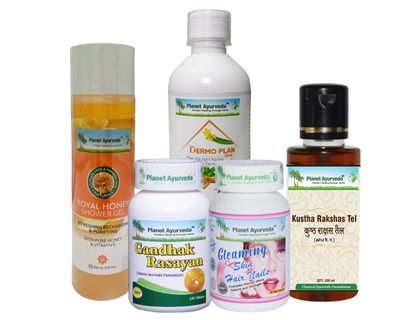
Gandhak Rasayan, Punarnava Mandoor, Giloyghan Vati, Khadirarishta, Arogyavardhini vati, Mahamanjishthadi kwath etc are available formulations that effectively manage the lumpy skin disease.

Herbs including neem (Azadirachta indica), lashun (Allium sativum), tulsi (Ocimum sanctum), haridra (Curcuma longa), marich (Piper nigrum) etc are beneficial in cleansing the blood and fights the toxins produced by the infectious agents.

Herbal Remedies for Lumpy Skin Disease by Planet Ayurveda

Planet Ayurveda is a well known GMP certified, ISO 9001:2015 certified and US-FDA registered Ayurvedic Company, which adhered to the aim of manufacturing quality Ayurvedic products as mentioned in the various ancient texts of Ayurveda. formulations are manufactured without additives and preservatives and other kinds of chemicals or artificial flavouring agents which causes a number of side effects on the human body. Products prepared at Planet Ayurveda are pure and do not contain any kind of adulteration. The products are purely organic and vegetarian and gluten free. Planet Ayurveda presents its products which are beneficial in Lumpy Skin Disease.

Following is the list of products that are great in managing Lumpy Skin Disease

  1. GANDHAK RASAYAN
  2. GILOYGHAN VATI
  3. NEEM CAPSULES
  4. KAISHORE GUGGUL

Herbal Supplements for Lumpy Skin Disease

Herbal Supplements for Lumpy Skin Disease

Product Description

1. GANDHAK RASAYAN

Gandhak Rasayan is a classical formulation in tablet form and contains shuddha gandhak (purified sulphur). Gandhak Rasayan benefits the body in a number of conditions. It reduces fever, treats skin conditions such as rashes and blisters and acts as a potent antimicrobial, antiviral, antibacterial, anti inflammatory, anthelmintic, antioxidant and antipyretic agent. With all these properties Gandhak Rasayan is beneficial as it reduces lumps and inflammation of the skin by its anti-inflammatory properties. And also soothes the skin and provides a healthy skin. Therefore with these wonderful actions, Gandhak rasayan is a marvellous medicine that manages the lumpy skin disease to the maximum.

Dosage : Two tablets thrice a day after meal with plain water

2. GILOYGHAN VATI

Giloyghan vati is filled with the rasayana properties of herb giloy (Tinospora cordifolia) and it is ghan (concentrated part) of giloy. As giloy is rasayan it affects every system of the body positively. Furthermore, giloy cleanses the blood and removes toxins out of it. Giloy pacifies all the three dosha thus benefiting in the condition of lumpy skin disease. As it cleanses the blood and pacifies the pitta dosha thus overcomes the condition of lumpy skin disease.

Dosage : Two tablets thrice a day after meal with plain water

3. NEEM CAPSULES

Neem capsules is a miraculous ayurvedic herbal remedy for skin health consisting of pure herbal standardised extract of single herb neem (Azadirachta indica) . This formulation is rich in several properties such as tikta (bitter) and kshaya (astringent) taste and sheeta (cold) potency. The herbal remedy purifies the blood, prevents the growth of free radicals, flush out toxins and maintains healthy skin. As per ayurveda neem possesses various health benefits such as grahi (cleans moisture from the skin), pittahara (reduces pitta dosha), krumihara (alleviates worm infestation), vranahara (heals wounds). Due to anti-inflammatory properties and reducing the abnormal lumps and antiviral properties helps in management of lumpy skin disease.

Dosage : Two capsules twice a day after meal with plain water

4. KAISHORE GUGGUL

Kaishore Guggul is a classical ayurvedic formulation which is beneficial in a number of disorders. It possesses antiinflammatory, healing and blood purifying properties. The formulation contains a variety of herbs such as guggulu (Commiphora mukul), amalaki (Emblica officinale), bibhitaki (Terminalia bellirica), haritaki (Terminalia chebula), guduchi (Tinospora cordifolia), shunthi (Zingiber officinale), black pepper (Piper nigrum) etc. the herbs pacifies the vata, kapha and pitta dosha. Above mentioned properties makes kaishore guggul a must used remedy in the managing lumpy skin disease.

Dosage : Two tablets thrice a day after meal with plain water

Contact Planet Ayurveda to provide you the costing / ordering and delivery information at – costing.planetayurveda@gmail.com or call at +91-172-5214040 Or Check Website – www.PlanetAyurveda.com

Conclusion

Lumpy skin disease has become a topic of concern as it started affecting the  health of cattle and also its impact has started to appear on the economical aspect. So as it is spreading like wildfire, therefore the scenario needs to be taken seriously. And many cattle have died of lumpy skin disease, though the government is planning its containment at an authoritarian level. But the treatment and management of the lumpy skin disease is not offering much help. In this condition, Ayurveda promises to manage the condition perfectly and the above mentioned products of Planet Ayurveda are really beneficial in the condition of lumpy skin disease. Thus choosing ayurveda to take good care of cattle is necessary in the present times.